
Year 1 Bulletin
Maths
Year 1 Bulletin
Maths
Learning Intention: To identify number sequences and patterns.
Learning Experience Overview:
Fluency: We use this website, and students were to watch each number jumper and identify the counting pattern that was shown. After watching a few, we observed the instructions and students made guesses about what pattern they would be observing when it was run.
Whole:
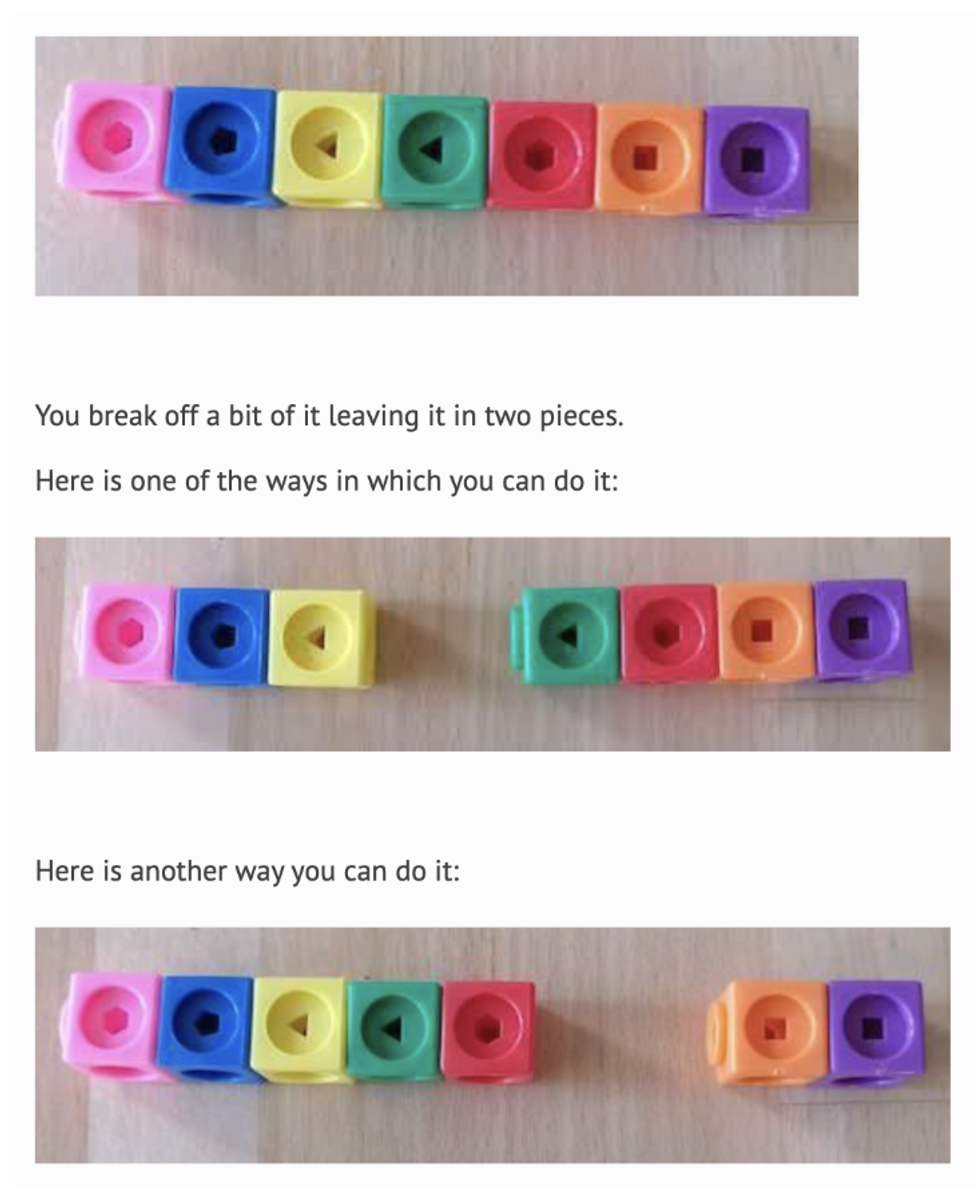
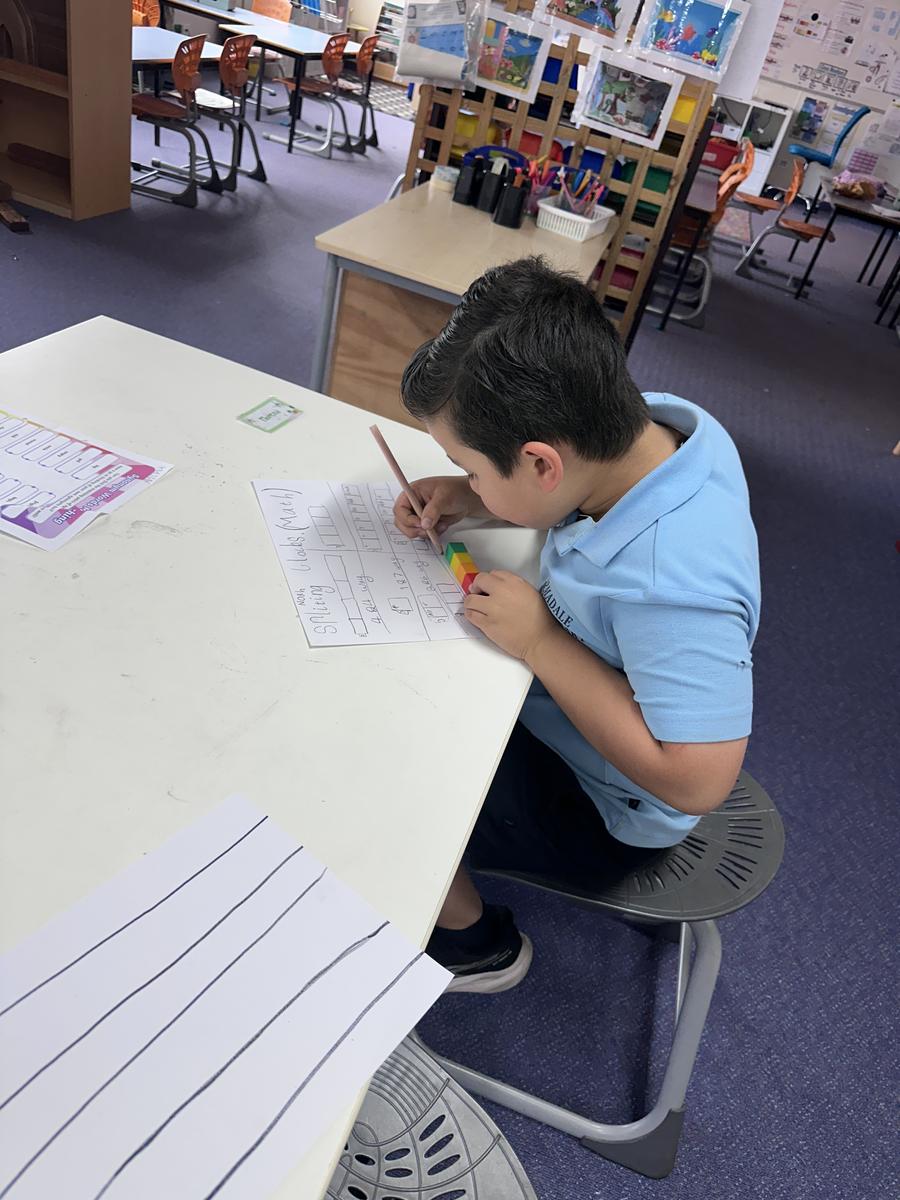
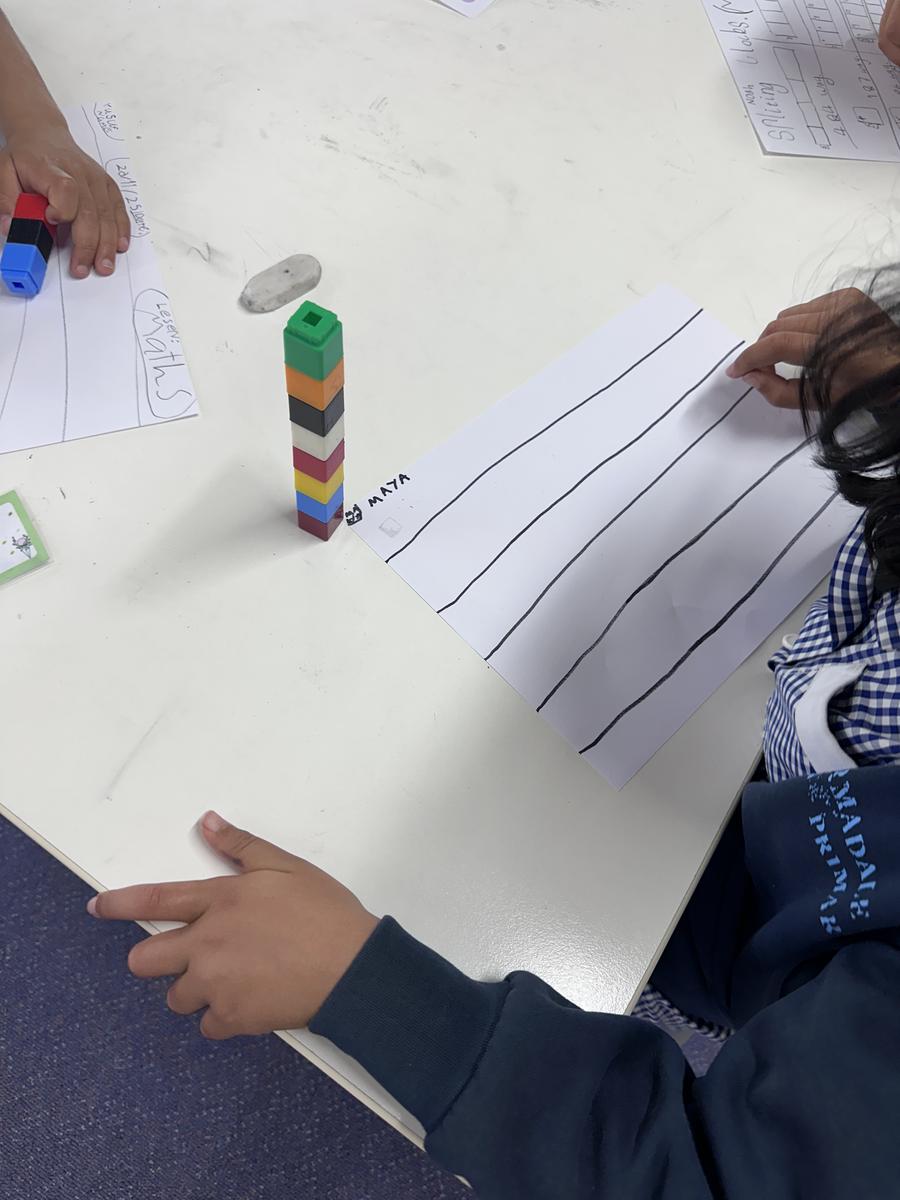
We introduced the task and explained that the cubes stayed connected. We looked at what a “break” meant and practised sliding our finger along the stick to show different break points. We recorded a few examples together, such as 1 + 6 and 2 + 5, to see how to write the two connected parts. We made sure we understood that we needed to find all possible breaks.
Small:
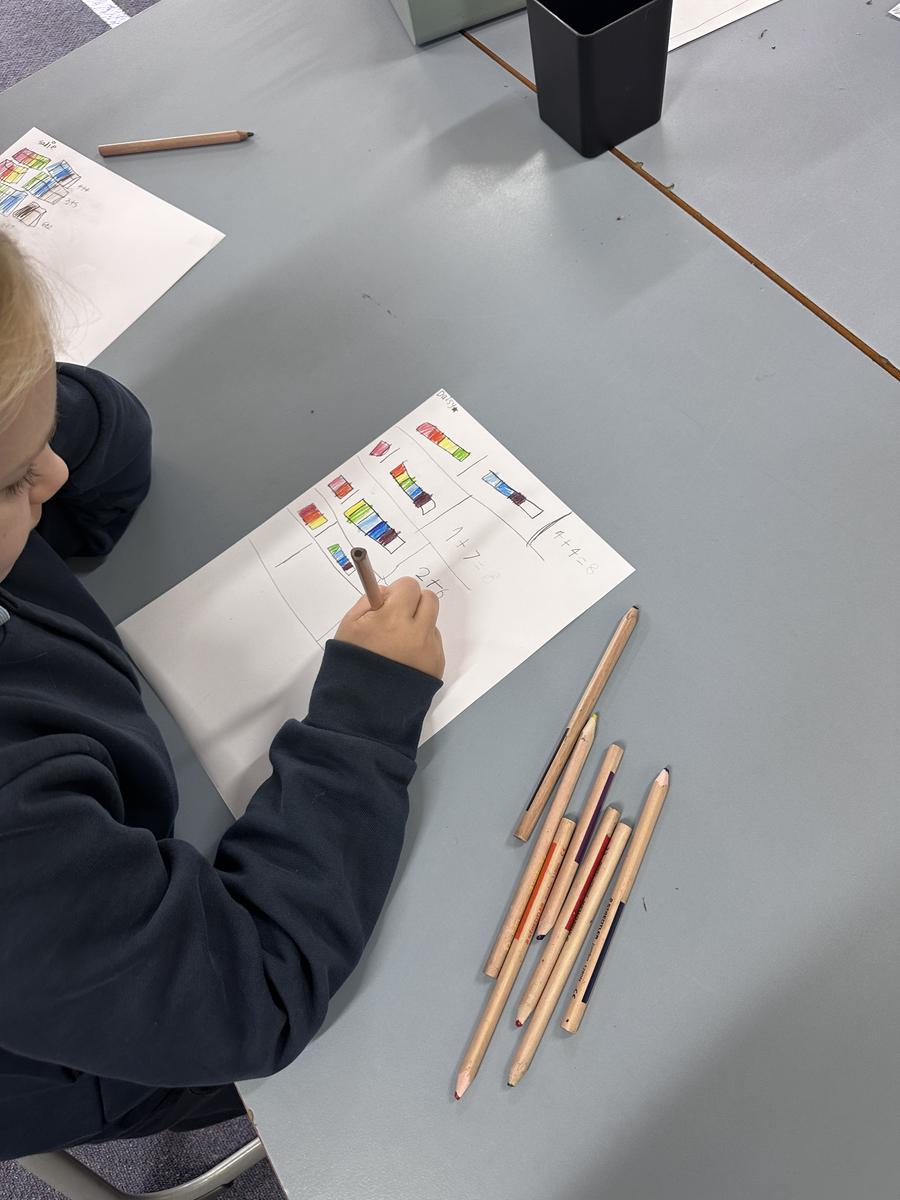
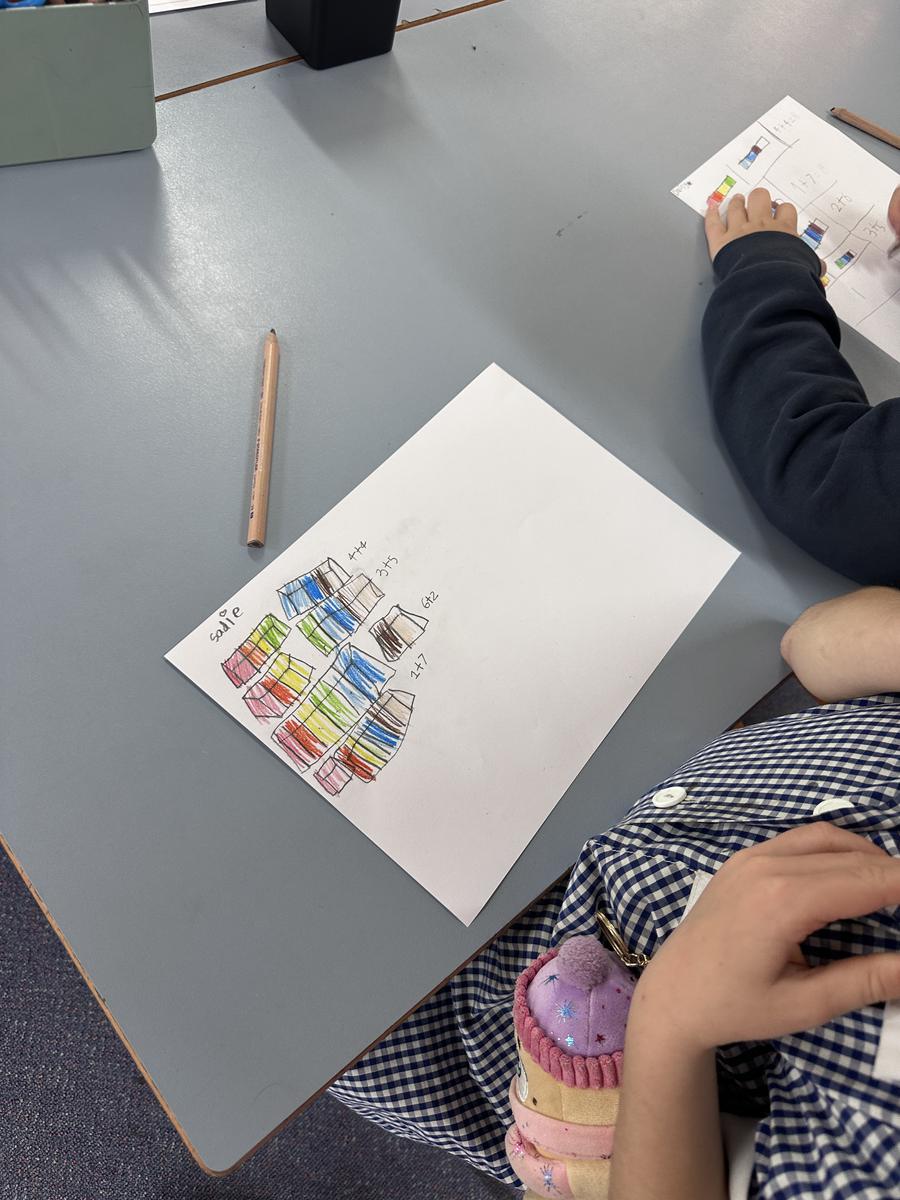
We worked independently with our own sticks of cubes. We slid our fingers along the sticks to show each break and recorded the two parts as numbers. The students all had to draw the sticks to match the breaks. They had to make sure to check each place along the stick so we did not miss any possibilities. Some of us tried longer sticks and predicted the number of breaks before checking.
Whole:
Share and Reflect:
Throughout the lesson, we paused to share what we found. We made a class list of all the breaks. We noticed patterns, such as one side counting up while the other counts down, and that the total of the two parts stayed the same. We saw that the number of breaks was always one less than the total number of cubes. We talked about the strategies we used and what we might predict for longer sticks.
Prompts:
How you might like to continue learning at home:
Kind regards,
Rosanna, Jarryd and Stef
The Year 1 Team
rosanna.caruso@education.vic.gov.au
jarryd.lamb@education.vic.gov.au
stephanie.lampard@education.vic.gov.au