
Teens & Screens
Digital Habits - tips for parents/carers

Teens & Screens
Digital Habits - tips for parents/carers
Image‑Based Abuse: A Growing Risk for Young People
Creating AI images can be fun…until it isn’t.
One of the fastest‑growing issues in Australian schools is the use of AI to create fake images of real people, often in sexual or humiliating situations. These images can spread quickly, and the damage can be huge.
Any sharing, or threatening to share nude, sexualized or humiliating images of a real person without their consent is known as image-based abuse under Australian law, regardless of whether the images are real, fake or AI-generated images.
Why it’s a problem
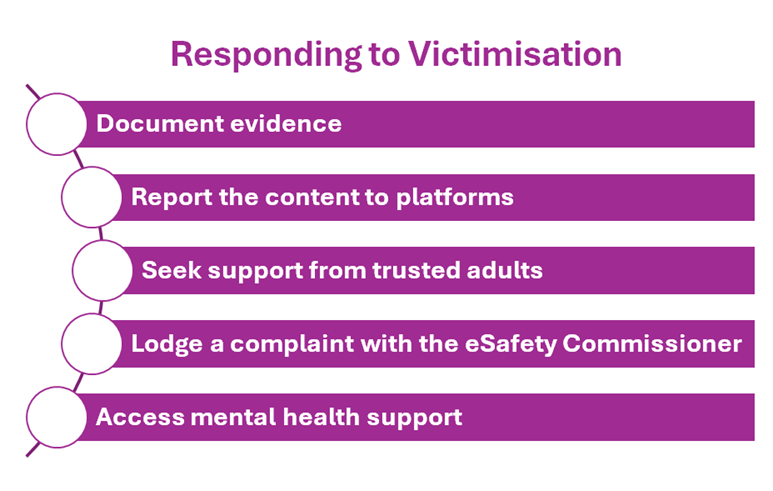
Deepfake images are being used to embarrass someone, get revenge after a fight or breakup, pressure someone into doing something and make someone feel unsafe or ashamed, just to name a few. Victims often feel anxious, scared, and alone. Many avoid school or friends because they’re terrified the image will spread.
Legal implications in Australia
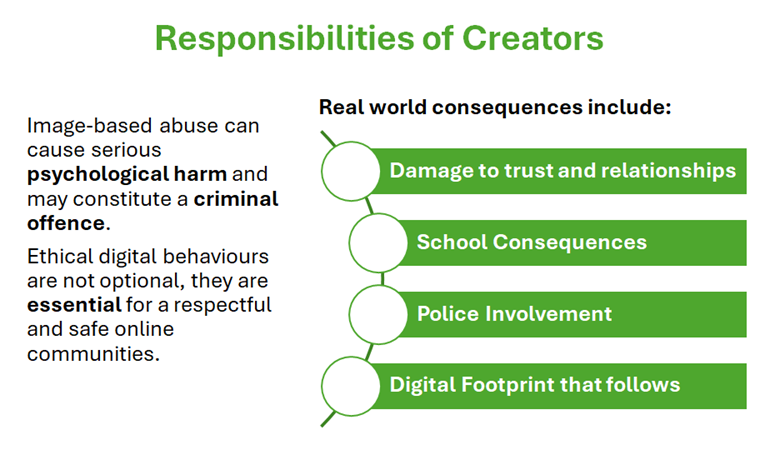
Under the Online Safety Act 2021, the eSafety Commissioner can intervene in cases involving AI‑generated intimate images. State and territory laws also criminalise the creation or distribution of non‑consensual intimate images, including synthetic ones. Young people who create or share such content may face school disciplinary action, police involvement, criminal charges and long‑term digital footprint consequences that affect employment, university applications, and reputation.
Gendered Patterns of Image‑Based Abuse
Image‑based abuse, including deepfakes, disproportionately targets girls, young women, and gender‑diverse students. Research in Australia shows these groups experience higher rates of sexualised deepfake victimisation, often because perpetrators use gendered stereotypes to shame, control, or humiliate them. This pattern reflects broader trends in technology‑facilitated gender‑based violence, where digital tools amplify existing inequalities. Understanding these gendered dynamics helps schools respond with sensitivity and ensures that prevention efforts address the groups most at risk.
The School’s Duty of Care
Schools have a responsibility to provide a safe learning environment, which includes responding to digital harms that affect student wellbeing, even when incidents occur off‑campus or after hours. When deepfake or image‑based abuse impacts a student, the school’s duty of care involves supporting the victim, taking steps to prevent further harm, engaging families, and working with relevant authorities when necessary. This also includes educating students about respectful digital behaviour and ensuring clear reporting pathways so young people know they will be taken seriously and supported.
Understanding Coercion and Digital Blackmail
Deepfakes are increasingly used as tools for coercion, by pressuring someone to comply with demands, stay silent, or maintain a relationship. Perpetrators may threaten to share a fake image unless the victim sends real photos, money, or personal information. This is a form of digital blackmail, and it can be deeply frightening for young people who feel trapped or ashamed. Recognising coercion is essential: any threat to share an image, real or fake, is abusive behaviour, and victims should know they can seek help without judgement.
Why It Isn’t “Just a Joke”
Deepfake abuse is often dismissed by teens as “banter” or “just a meme,” but the impact on victims is anything but trivial. Even when the image is fake, the humiliation, fear, and reputational damage are real and long‑lasting. What feels like a joke to one person can cause another to withdraw from school, lose friendships, or experience significant anxiety. Understanding the seriousness of these actions helps shift the culture from minimising harm to preventing it. It is abuse. It is not just a joke. It is a criminal offence.
Tanya Moran
Leader of Professional Practice