
Chaplain's Reflection
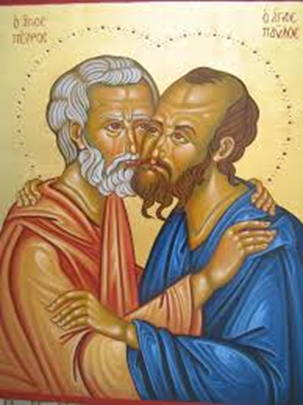
Peter and Paul
Why does the church put these two great saints, these very different men, together for this feast day?
Peter, we imagine as an unlettered fisherman from Bethsaida who had probably travelled nowhere except for an annual trek down to Jerusalem. A bit rough around the edges, married or widowed, generous, impulsive, unreliable at times, but also, brave, loyal and insightful. Peter is commonly depicted in Christian art as a big round-faced, dark eyed man with short white curly hair and a curly beard. Leader of the apostles, Jesus appointed Peter to lead his church.
Paul on the other hand, we know from Acts and from his own writings, was born in Tarsus, a Roman citizen, a proud Pharisee – educated and travelled, described in early Christian writings as a small but solid man of olive complexion, not conventionally handsome, crooked legged, bald with a prominent nose and a unibrow. He is depicted in art with longish face and pointy beard. There is no evidence of him being married, though he did have a sister living in Jerusalem. He didn’t know Jesus and pro-actively tried to stamp out that infant Christian Church.
Together they were founders of Christianity.
From tentative and uncertain beginnings, Peter went from strength to strength, leading from the front, encouraging his church and fearlessly proclaiming the Word. When Peter heard that Paul had flipped from being passionately anti-Christ to a vehement supporter, he was initially wary. But so it proved to be!
Rome was the centre of the world and so it is unsurprising that Peter was drawn there to proclaim the Good News and, as first Pope, to found the church there and to be crucified.
Paul became apostle to the gentiles, spreading the Good News across the Mediterranean basin through his remarkable missionary journeys. Eventually led to Rome a prisoner, he died a martyr for the faith.
Peter is buried directly beneath the main altar of St. Peter's Basilica in Vatican City while Paul's tomb is located at the Basilica of Saint Paul Outside the Walls.
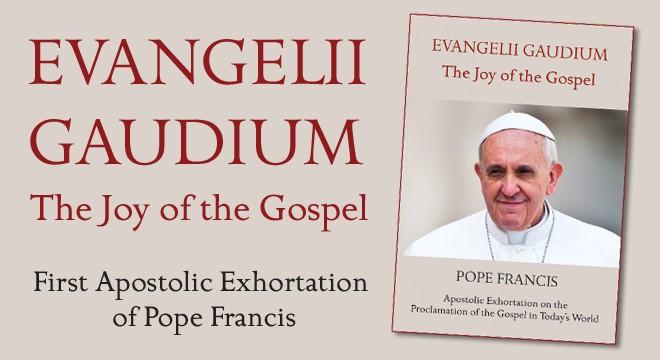
Legacy of Pope Francis No 1: Evangelii Gaudium 2013
Taken chronologically this series is a summary of the seven most important writings of Francis’ papacy.
Major Themes
1. The Basic Proclamation of the Gospel
Evangelization, according to Pope Francis, must begin with the simple and profound message of the Gospel: “Jesus Christ loves you; he gave his life to save you; and now he is living at your side every day to enlighten, strengthen, and free you” (#164). This foundational proclamation should be central to all efforts at Church renewal, repeated throughout the Christian journey.
2. Two Sources of Evangelization
Evangelization is only possible because God loved us first, initiating a relationship with humanity (cf. 1 Jn 4:19). Our ability to share the Gospel depends on accepting this love and letting it transform us. As Pope Francis writes, “If we have received the love which restores meaning to our lives, how can we fail to share that love with others?” (#9).
3. Missionary Disciples
The concept of the “missionary disciple” is key to Evangelii Gaudium. Every Baptized member of the Catholic faith is called to evangelize and is called to be a missionary disciple. This call is best described through Pope Francis’ words below:
“In virtue of their baptism, all the members of the People of God have become missionary disciples (cf. Mt 28:19). All the baptized, whatever their position in the Church or their level of instruction in the faith, are agents of evangelization” (#120).
“What I would like to propose is something much more in the line of an evangelical discernment. It is the approach of a missionary disciple, an approach ‘nourished by the light and strength of the Holy Spirit’” (#51).
“The Church is herself a missionary disciple” (#40).
4. The Role of the Parish
Parishes play a critical role in evangelization. Pope Francis envisions them as “communities of communities” that are centers of missionary outreach, not isolated from the world but deeply engaged with it (#28). He stresses the importance of simplifying the message of the Gospel in homilies, focusing on what is essential, beautiful, and necessary.
5. The Poor
A major focus of Evangelii gaudium is a 2013 apostolic exhortation is the Church’s preferential option for the poor. Pope Francis emphasizes that evangelization cannot be separated from the real, concrete needs of people, especially the marginalized. The Church is called to be an instrument of liberation and promotion for the poor (#187). He reminds us that the presence of the poor marks the entire history of salvation, as Christ himself “became poor” for our sake (2 Cor 8:9).
6. Decentralization of the Papacy
One of the more unexpected themes in the document is the need for decentralization within the Church. Pope Francis expresses the belief that the Pope should not take the place of local bishops in addressing every issue. Instead, a healthy decentralization will empower the local Church to better respond to the needs of its community (#16).
Pope Francis offers a bold vision for a Church that is joyfully engaged in the world, with a renewed missionary impulse in every aspect of Church life, rooted in the love of Christ and the joy that comes from knowing Him. This document is not just a call to action for Church leaders but for every baptized Christian, inviting all to be missionary disciples in today’s world.
Deacon Mark Kelly – adapted from focus.org
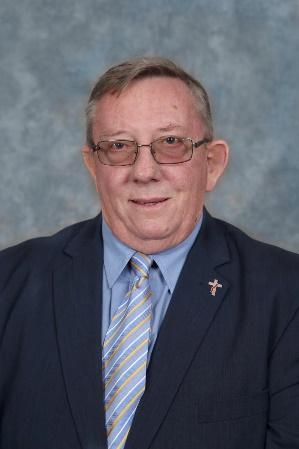
Deacon Mark Kelly
College Chaplain