
Wellbeing and Inclusion Update

Monitoring Children’s Access to Technology is Crucial
Technology is now a significant part of children’s everyday lives. With rising living costs and more families spending time at home, devices are often being used more regularly for entertainment, communication and social connection. While technology can provide many positive opportunities, it is important that we continue working together to help children use it safely, respectfully and responsibly.
Understanding Online Risks
Digital technology plays an important role in children’s lives and can provide valuable opportunities for learning, communication and entertainment. However, children can also encounter risks online, including harmful content, cyberbullying, unsafe communication and privacy concerns, making guidance and supervision essential.
Many families also experience the pressure of children wanting access to apps or social media because “everyone else has it”. While this can be difficult to navigate, it is important to remember that it is okay to say no, or “not yet”. Access to social media and online platforms should be based on what is developmentally appropriate for your child, not peer pressure.
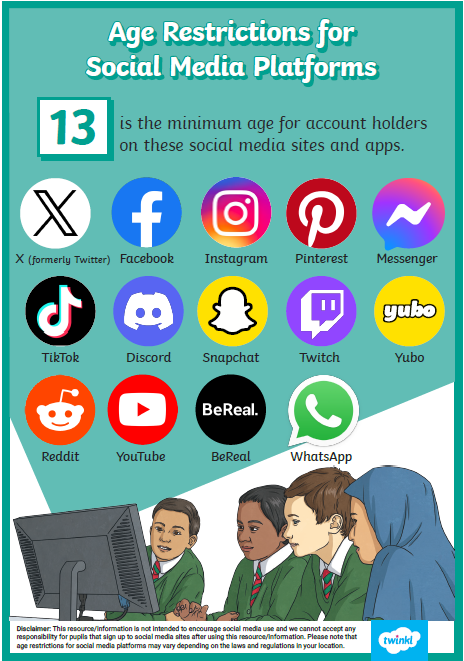
The infographic below highlights that many popular platforms such as Snapchat, Instagram, TikTok and Discord have a minimum age requirement of 13 years and older. These restrictions are designed to help protect children from content and interactions that may not be suitable for younger users. We strongly encourage families not to create accounts using false ages, as this removes important safety protections and can place children at greater risk online.
Online Behaviour Matters
Another important conversation to have with children is around how we communicate online. Often, it can feel easier to say things online that we would never say face-to-face because we cannot immediately see the impact our words have on others. Hurtful comments, exclusion from group chats, or unkind messages can have a significant impact on a child’s wellbeing.
Encouraging children to pause before posting or sending a message and asking themselves, 'Would I say this to someone in person?' can help promote respectful and empathetic online behaviour.
Supporting Safe Technology Use at Home
Families can support safe and healthy online habits by:
Setting clear expectations and time limits around device use.
Encouraging a balance between screen time, outdoor play, hobbies and family time.
Using parental controls and privacy settings on devices and apps.
Keeping communication open and regularly checking in about online experiences.
Ensuring devices are not taken to bedrooms overnight to support healthy sleep and reduce unsupervised use.
Working Together
Navigating the online world can feel overwhelming at times. Open and honest conversations between parents and children are essential in helping children feel supported and more likely to seek help if something goes wrong online.
Ultimately, online safety is everyone’s responsibility. Schools, families and the broader community all play an important role in helping children build the skills needed to be safe, respectful and responsible digital citizens.
For further information and support, we recommend visiting the eSafety Commissioner website: www.esafety.gov.au.

Connected, supported, thriving.
Rachel Gathercole
Assistant Principal – Wellbeing and Inclusion