
Teacher Only Day:

This Friday, our Community of Learning Kahui Ako schools are engaged in a Teacher-Only Day hosted at St Dom's.
The day features Professor Emeritus Russell Bishop and Laurayne Tafa.
If you read the summaries of their work below, you will see that our school and the way we operate are built on their theories. It is always good to revisit these principles with the best in the business and come away refocused on the core elements that will make the biggest differences in each learner's life.

Russell Bishop ONZM was a professor of Māori education at the University of Waikato and the director of Te Kotahitanga, a research programme focused on raising student achievement and engagement through meaningful, relational connections between students and teachers. He has a PhD from the University of Otago and co-authored 'Culture Counts: Changing Power Relations in Education'.
In the 2016 New Year Honours, Bishop was appointed an Officer of the New Zealand Order of Merit for services to Māori and education.
Russell is famous for his works, "Teaching to the North-East" and "Leading to the North-East".
Relationships First: Teaching to the North-East
How do we truly accelerate achievement for Indigenous and marginalised learners? Relationships First shifts the focus away from what students "lack" to how educators relate and interact.
Rejecting the "Deficit" Discourse
Early in his teaching career, Bishop challenged the prevailing "cultural deprivation" theory that blamed a student's home life for lower achievement. Listening to the students themselves revealed a different reality: the true barrier was toxic classroom relationships.
True Culturally Responsive Pedagogy (CRP) is not about trying to master the details of every student's culture—an impossible task that often leads to stereotyping. Instead, it is about implementing a dynamic, relational pedagogy that values the knowledge and sense-making processes students bring to the classroom.
The "North-East" Framework
Bishop visualises effective teaching and leadership on a scatter plot combining two vital scales:
- Moving East: Building strong, extended family-like relational contexts.
- Moving North: Implementing effective, dialogic learning interactions.
When teachers and school leaders operate in the North-East intersection, disparities shrink, and student performance thrives.
The Profile of a North-East Educator
To lead and teach effectively from the North-East, educators focus on three core actions:
- Create a Family-Like Context: Actively reject deficit explanations, project high expectations, and care for the learner's identity.
- Interact Dialogically: Share power, co-construct the learning process, draw on students' prior knowledge, and provide robust feedback and feed-forward.
Monitor for Self-Determination: Track student progress to ensure they are taking ownership of their learning—setting goals, articulating how they learn best, and becoming self-regulating.
The Bottom Line: When school culture and classroom practice are intentionally anchored in the North-East, relationships matter, interactions empower, and all students are positioned to succeed.
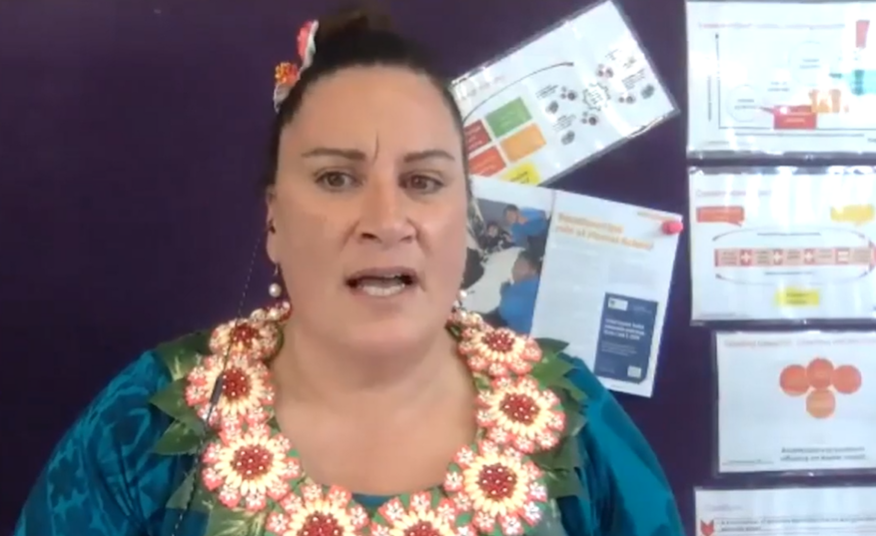
Laurayne Tafa's focus is on challenging deficit theories and building affirmative action to address disparities and inequities in New Zealand schools. She demonstrates how we can all build more equitable leadership.
A summary of her five key points around equity in leadership follows.
Leaders Who Accelerate Equity: 5 Key Success Factors
Insights from the work of Laurayne Tafa
How do we move from talking about equity to actually delivering it? True equity leadership requires shifting mindsets, challenging systems, and focusing heavily on classroom practice.
Five key success factors for leaders ready to accelerate equity:
1. Reject Deficit Thinking
Stop attributing disparities to the students or their backgrounds. Equity leaders actively reject deficit language and the "downward spiral" it creates. Instead, give equal status and support to ākonga Māori (Māori learners) and mātauranga Māori (Māori knowledge), while exposing the biases hidden within standard school structures.
2. Target the "Why" Behind Disparities
It is not enough to know where students are falling behind; you must understand why the system is failing them. Remember, a school system reflects its leader’s discourse.
Reflection: How do you explain why some students succeed in your system while others do not? What do your leadership decisions legitimise?
3. Implement Proven Pedagogies
The most critical interactions happen between the learner and the teacher. Focus heavily on relationships and culturally responsive teaching practices where "culture counts." Ensure your school uses a clear, common code of practice based on proven, evidence-based pedagogies that accelerate outcomes for Indigenous, Pasifika, and marginalised groups.
4. Own Your Professional Learning System
Make teaching effectiveness the single most important focus by stripping away competing priorities. Create a collaborative culture where teachers receive non-judgmental, evidence-based feedback. Leaders must respectfully support teachers in confronting harmful practices and reforming them.
Reflection: How many competing initiatives are active in your school right now? Streamline them so you can clearly know what is working, why, and for whom.
5. Lead System Change
Real equity requires a willingness to reorganise institutional frameworks and engage in structural reform. Use robust, reliable data to guide "problem-solving talk" rather than swapping unhelpful anecdotes. Always look inward to see how your own decisions might be creating barriers.
He koha – I laid it down, you pick it up.
This challenge has been laid down. It is up to you to pick it up on behalf of your entire community.