Anecdotes from the Archives
Margaret Rootes, Heritage Officer
Anecdotes from the Archives
Margaret Rootes, Heritage Officer
It was about this time 158 years ago that the newly appointed Hobart Bishop, Daniel Murphy, asked his sister—a Presentation Sister at the Fermoy Convent in Ireland—to travel to Tasmania to establish a school for the poor and neglected children of Hobart.
Within months, Mother (Ellen) Francis Xavier Murphy, accompanied by a small band of eight Presentation women, had set sail to cross hemispheres and establish their school, following the charism of their founder, Nano Nagle.
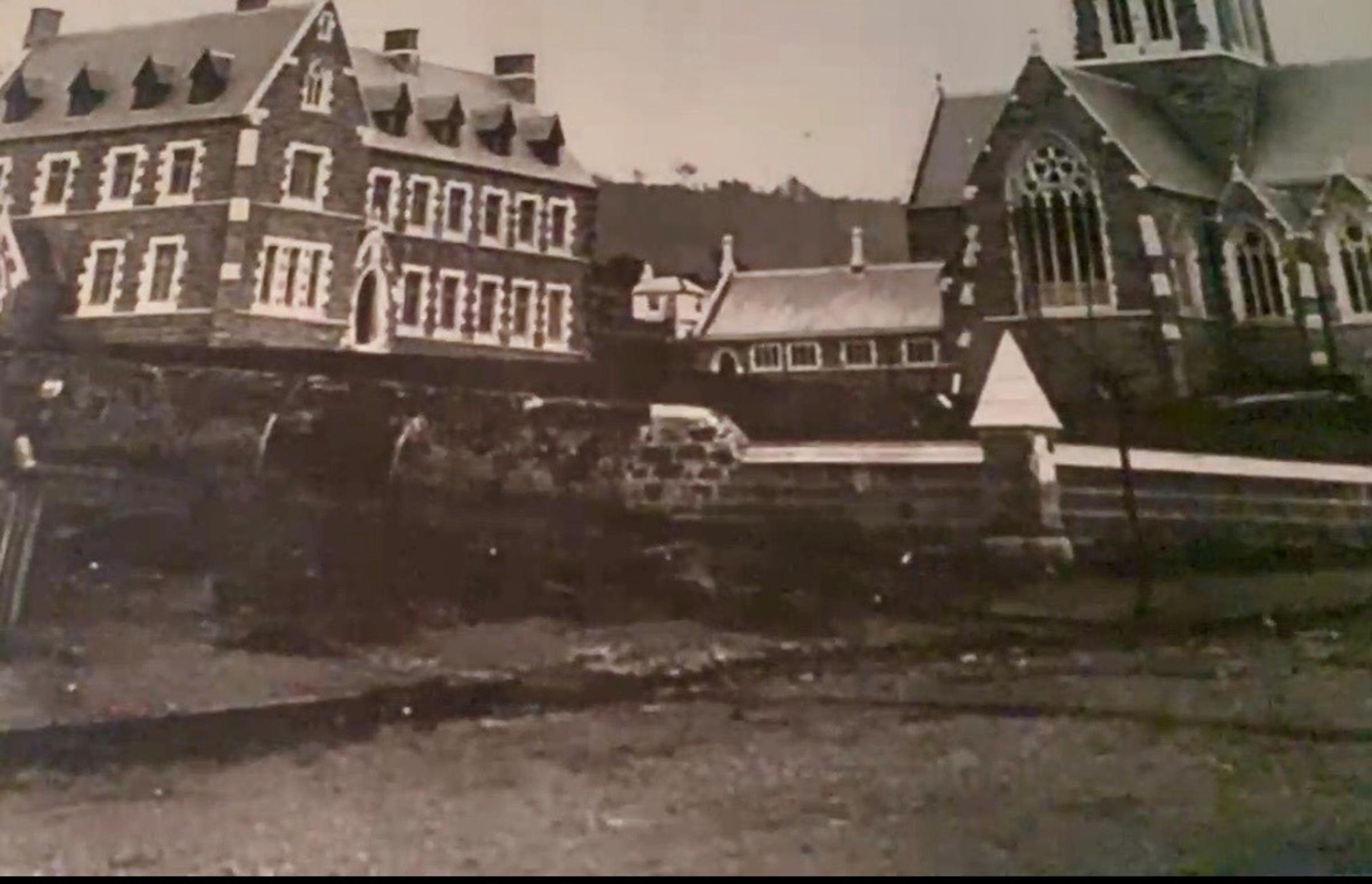
The women arrived in Hobart on 31 October 1866 and lived and worked in Richmond until early January 1868, when they moved into their beautiful convent building in Harrington Street, overlooking the growing city and its bustling wharves.
On 3 February, the Sisters opened Mount St Mary’s to its first intake of students. There is no doubt that our first days back over the last few weeks were very different from that first day on 3 February 1868. Sadly, no documentation remains to tell us how many students were enrolled, nor their names or addresses. There are, however, a few odd facts—such as one student from that day who later became the first Tasmanian‑born Presentation Sister.
We can assume that most students came from the immediate environs of the College, as there was little public transport available. There were certainly ferry services to Bellerive, so we cannot rule out students from across the river, although the population there was sparse.
So, on that far‑off February day in 1868, we can imagine children of all ages converging on the school. Perhaps they entered from Barrack or Patrick Street, or through the Harrington Street or Brisbane Street entrances. The boys would have been dressed in shorts (perhaps knickerbockers) and shirts, while the girls were most likely in long dresses. Perhaps everyone wore a hat. Certainly no earrings, false eyelashes, or dyed hair.
The Sisters were forced to use the ground floor of their stunning new convent as classrooms at first. Little wonder that within a few years a second gable was added to the building and a separate poor school was built on the Brisbane Street side. Evidence suggests that from the earliest days in 1868, there were classes for fee‑paying students as well as classes for the so‑called poor school.
Prayer and lessons in the faith would have been a priority on that first day. As the Sisters’ Chapel was not yet built, perhaps the whole school and the Sisters attended Mass in the Cathedral to mark their first day of teaching and learning.
What did the children do when released for recess and lunch breaks? Perhaps the boys ran wildly up the steep hill behind the school and helter‑skelter down again. Perhaps they were given hoops and balls to play with. Maybe the girls ran around too, or gathered in small groups in the shade of the trees around the school. Did one of the Sisters ring a handbell to signal the end of breaks? There was still no bell tower at that time; it would be a few more years before the Angelus bell rang out over the school and the town.
Did they bring their lunches with them – or perhaps no lunch at all? Maybe the Sisters provided food in those early days; we can only conjecture.
Outside privies would have served as toilets; what the state of hygiene was, we can only imagine. Certainly, there were no water fountains or water bottles to quench their thirst on a hot February day.
At the end of the school day, the students probably flew out into relative freedom once again. Some would have returned to genteel sandstone homes with maids preparing the evening meal, but many would have gone back to dark and overcrowded cottages, with no promise of a meal at all.
And the Sisters? Perhaps they prayed together before their own light meal, their thoughts already turning to the busy day ahead.