
Wellbeing and Inclusion

Neurodiversity Celebration Week 2026 – March 16th – March 20th 2026
What is Neurodiversity Celebration Week?
Founded by Siena Castellon in 2018, Neurodiversity Celebration Week is a worldwide initiative that challenges stereotypes and misconceptions about neurological differences. It aims to transform how neurodivergent individuals are perceived and supported by providing schools, universities, organisations, and others around the world with the opportunity to recognise the many skills and talents of neurodivergent individuals, while creating more inclusive and equitable cultures that celebrate differences and empower every individual.
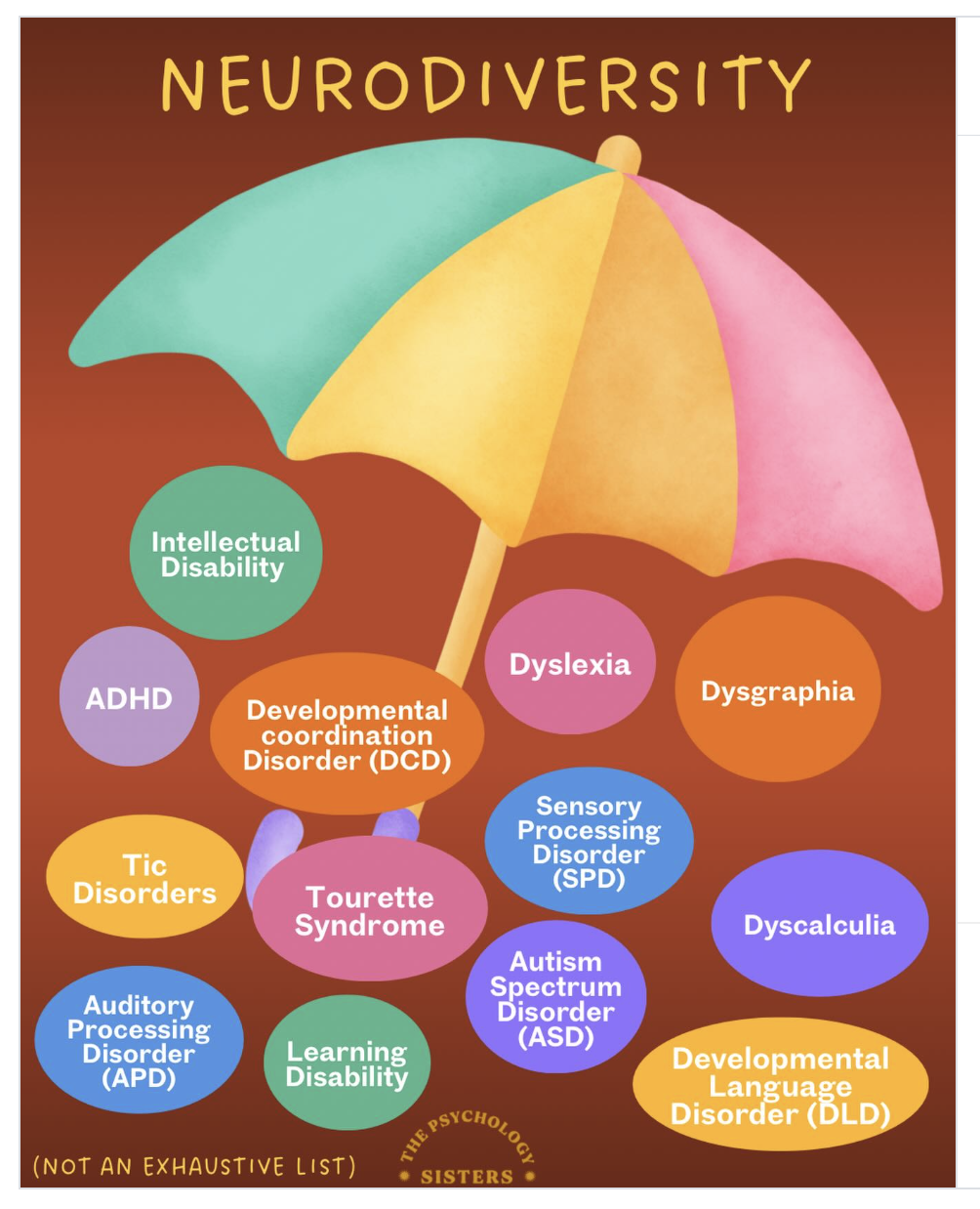
What is Neurodiversity?
When it comes to inclusion, neurodiversity refers to a world where neurological differences are recognised and respected as all other human variations.
Depending on how our brains are wired we think, move, process information and communicate in different ways. Many people in our community use neurodiversity as an umbrella term used to describe alternative thinking styles such as Dyslexia, DCD (Dyspraxia), Dyscalculia, Autism and ADHD. But regardless of labels, neurodiversity is about recognising those who think differently. And no matter whether you are a school, university or organisation you can benefit from different thinkers! Approximately 15-20% of population has a neurological difference. Instead of labelling people with deficits or disorders, when we use the term neurodiversity, we take a balanced view of an individual’s unique strengths and challenges. Many challenges neurodivergent people face are more to do with the environment and systems they are placed in, often designed by a majority population.
Click the links below to find out more information about some of the specific neurodifferences:
Did you know?
- No two people are the same and so we will all have different profiles
- Although we talk about specific neurodifferences such as Autism and Dyslexia, the reality is that these can co-occur
- Every neurodivergent individual has a unique pattern of strengths and challenges
- We tend to operate on an approach to diagnosis and labels which can mean that quite often the focus is on the challenges rather than the many strengths and talents of neurodivergent individuals
- It is important that we take a person-centred approach, by tailoring strategies to each individual
- It is important to harness the strengths and talents of neurodivergent individuals, this helps to build confidence and self-esteem, and ensures individuals are given the opportunity to flourish in their day-to-day
For more information, go to https://www.neurodiversityweek.com/
The Resilience Project (TRP) - Week 8 Focus
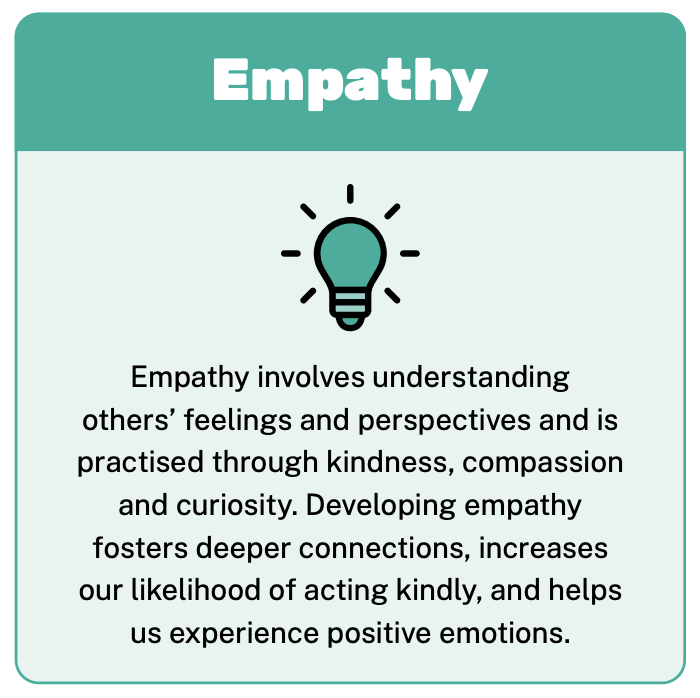
Foundation
Kindness is Our Strength
In this week's Empathy lesson students explored the benefits of kindness for both the giver and receiver.
Year 1 and 2
Spreading kindness through compliments
In this Empathy lesson students explored how meaningful and heartfelt compliments have the power to uplift and empower others. Students learnt ways to compliment the character of others and describe the emotions they experienced when giving and receiving compliments.
Year 3 and 4
ACT with Empathy
In this Empathy lesson students defined what empathy is through videos and discussion. Students learnt the acronym ACT: ‘acknowledge’ the challenge, be a ‘companion’ and listen to the other person ‘talk’ as a strategy to help support and show empathy to others who are experiencing challenges.
Year 5 and 6
Empathy is…
In this Empathy students explored empathy through ‘empathy interviews’ to reinforce its presence in our lives. Students created a mood board to visually present the idea of empathy and will reflect on how they can contribute to a classroom culture that values empathetic behaviours.