
PYP

Mathematical Modelling at MPS
At the end of 2025, Murrumbeena Primary School embarked on an exciting journey to implement a whole-school approach to mathematical modelling. Mathematical modelling, a key focus of the Victorian Curriculum 2.0, is a powerful tool for making sense of real-world situations. It enables students to use mathematics to explore, predict, justify and solve meaningful problems.
Our journey began with professional learning led by Di Liddell from the Mathematical Association of Victoria (MAV). Di supported staff to deepen their understanding of mathematical modelling and how it differs from traditional problem solving. While both processes require reasoning, creativity and persistence, modelling tasks are grounded in authentic contexts- situations students could realistically encounter in everyday life and that carry genuine purpose.
Throughout our professional learning, we developed an understanding of mathematical modelling as a dynamic process. It begins with a real-world problem, which is then formulated by identifying key assumptions, variables and parameters needed to understand the situation. Strategies are generated and refined, leading to the development of provisional models that represent reasoning and test the plausibility of different approaches. Modelling rarely produces a single definitive solution; instead, it often results in multiple valid models, each shaped by different assumptions and interpretations.
Below are reports prepared by teachers Elle Avery (Year 3) and Maxine Riley (Year 4) describing their students’ mathematical modelling experiences. These are reports from Term 4, 2025.
Year 3: Designing for Sustainability: Reimagining the Stephanie Alexander Kitchen Garden
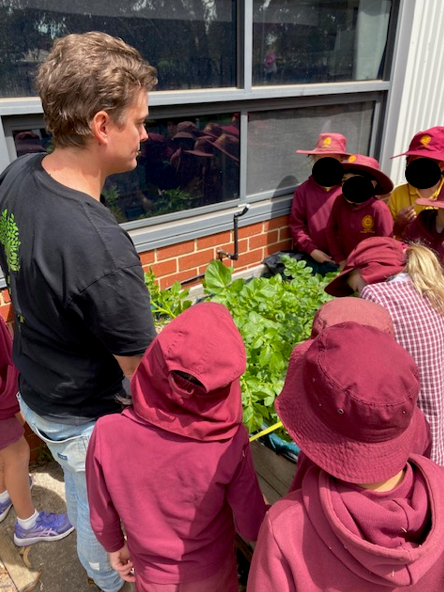
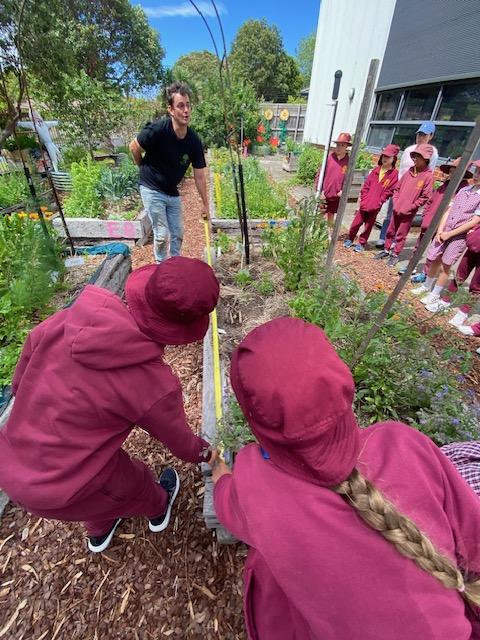
In Year 3, students engaged in a rich modelling task focused on redesigning the Stephanie Alexander Kitchen Garden (SAKG) space. This project brought together mathematics, sustainability and design thinking, providing a highly authentic learning experience. The task began with a visit from a professional landscaper, who introduced students to blueprint designs and explained the garden design process from initial planning through to construction.
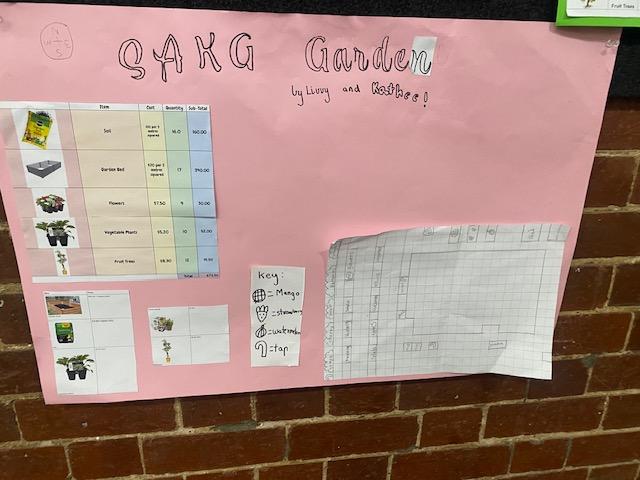
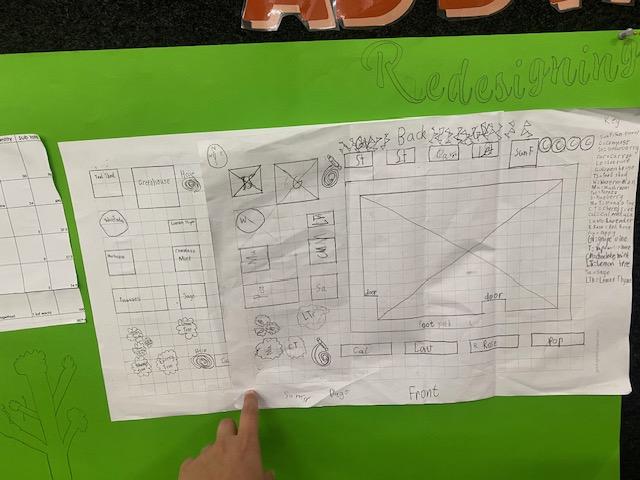
Students learned to measure garden spaces accurately and calculate the amount of soil required for planter boxes. They explored key measurement concepts, including length, width, area and volume, while applying the four operations to manage budgets and quantities. Working in small groups, students created draft designs, carefully considering layout, plant placement and functionality.
A critical component of the task involved budgeting. Within a set financial limit, students researched material costs and used Excel spreadsheets to track their spending. They applied addition, subtraction, multiplication and division in a purposeful context, revising their plans to remain within budget. Students quickly discovered the importance of compromise and prioritisation, recognising that creative ideas must often be balanced against practical constraints.
In the final stage, students refined their designs into polished plans and proudly presented them at the Year 3 Unit Share. These presentations demonstrated strong mathematical understanding alongside communication skills, teamwork and growing problem-solving confidence. Through this modelling experience, students developed a deep appreciation of how mathematics informs real-world decision-making, reinforcing its relevance beyond the classroom.
Elle Avery
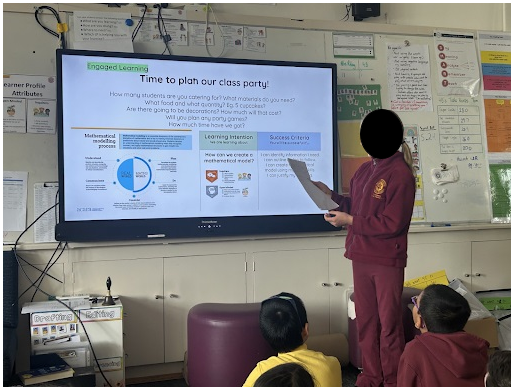
Year 4: Planning the Perfect Party: Mathematics Meets Celebration
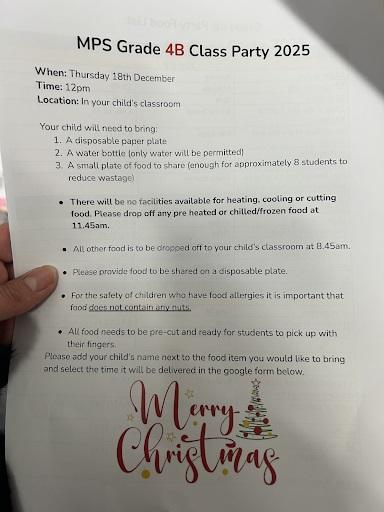
In Year 4, students tackled a modelling task centred on planning their end-of-year class party. This engaging context allowed them to apply a broad range of mathematical skills while collaborating toward a shared goal. The challenge required budgeting, operations, measurement, time management, estimation, data organisation and spatial reasoning, all within a motivating and meaningful scenario.
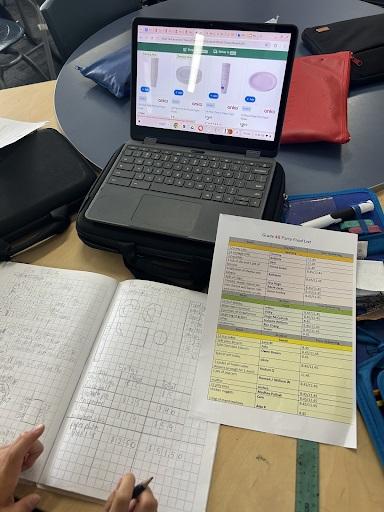
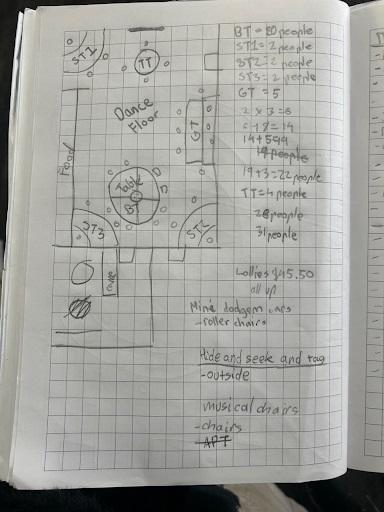
Students began by developing budgets for decorations, food and party supplies, using tables to track expenditure and ensure spending remained within limits. This process encouraged careful planning, financial literacy and strategic decision-making. They applied all four operations as they calculated food quantities, determined fair sharing and assessed whether available resources met the needs of the group. For example, students calculated how many sausage rolls each class member would receive and how seating arrangements could be organised with a limited number of tables.
Spatial reasoning was strengthened as students calculated table layouts using concepts of area and perimeter. They designed seating plans that ensured sufficient space, comfort and accessibility. Time management also played a key role, with students creating detailed schedules to balance games, eating time, setup and pack-up. This fostered understanding of sequencing, elapsed time and organisation- essential life skills supported through mathematical thinking.
Estimation and categorisation further enriched the task. Students predicted how much food would be required, sorted supplies into functional groups and evaluated which items would best suit their classmates’ preferences. Throughout the process, they justified decisions, revised plans and reflected on assumptions, embodying the iterative nature of mathematical modelling.
Maxine Riley
Looking Ahead
Murrumbeena Primary School’s first whole-school exploration of mathematical modelling has been both inspiring and transformative. Teachers have reported increased student engagement, deeper conceptual understanding, and stronger reasoning and confidence in mathematics. Students have embraced opportunities to apply mathematics meaningfully, recognising that numbers, measurements and calculations are powerful tools for participating in the world around them.
As we continue to embed modelling across our mathematics curriculum, we look forward to refining our practice, sharing insights and further empowering our students through meaningful, engaging, real-life learning experiences.
Andy McKibbin
Numeracy Learning Specialist