
Prep Bulletin
A Snapshot into Spelling
Learning Intention: To identify the sound or sounds in a word that don’t follow a pattern.
Learning experience overview:
In this learning experience, students explored the irregular word "is."
When learning irregular words, we follow a step-by-step process to help us learn the word by heart. We use this process because these words can be difficult to spell or remember, as they do not follow regular spelling patterns. We call these heart words.
Fluency: We revised our previous irregular word, "the" by writing it in the air, on the floor, and on a partner's back.
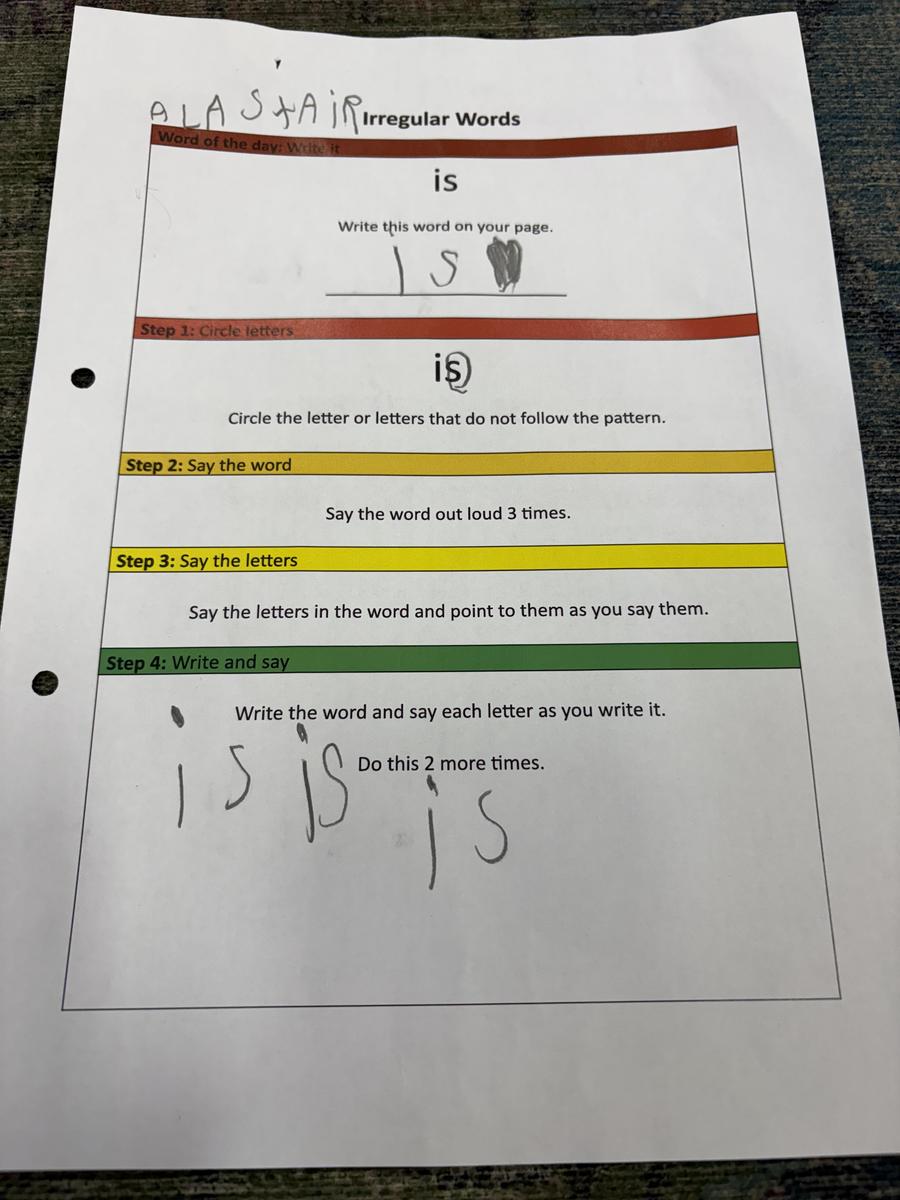
We then followed our 7 step process to learn our new irregular word, "is."
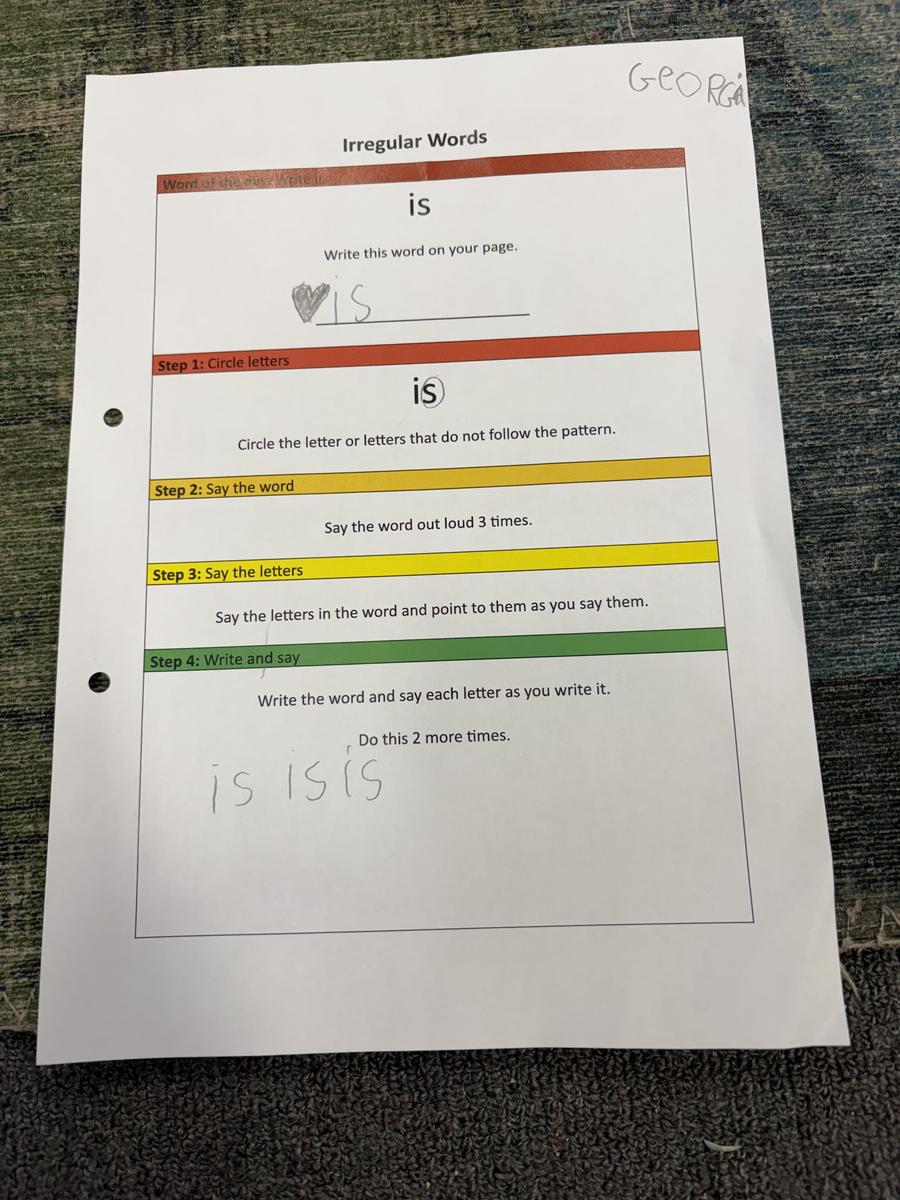
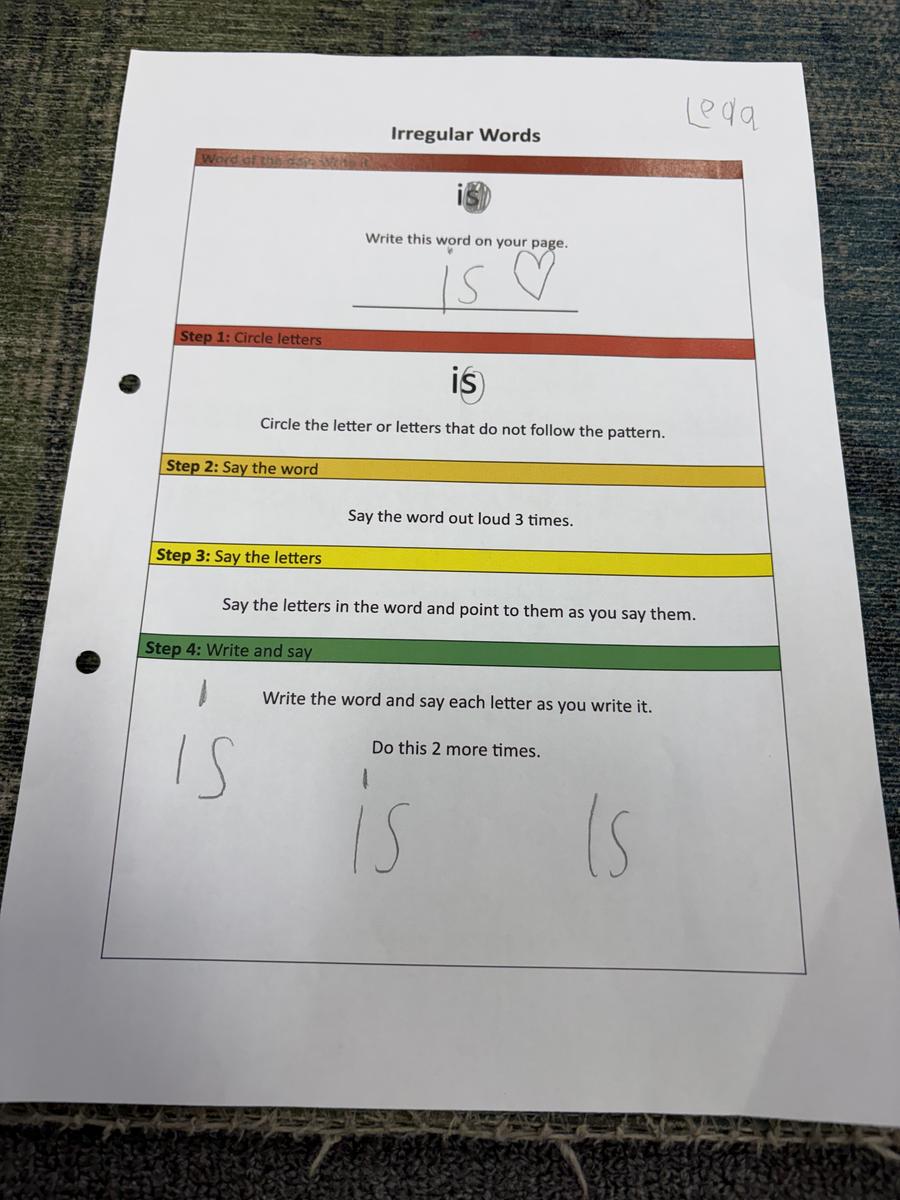
Step 1: Circle the letter or letters that do not follow the pattern.
For example, the word ‘is’ is pronounced as /iz/. Therefore, students circle the letter s.
Step 2: Say the word out loud 3 times.
Step 3: Say the letters in the word and point to them as you say them.
Step 4: Write the word and say each letter as you write it. Do this 3 times.
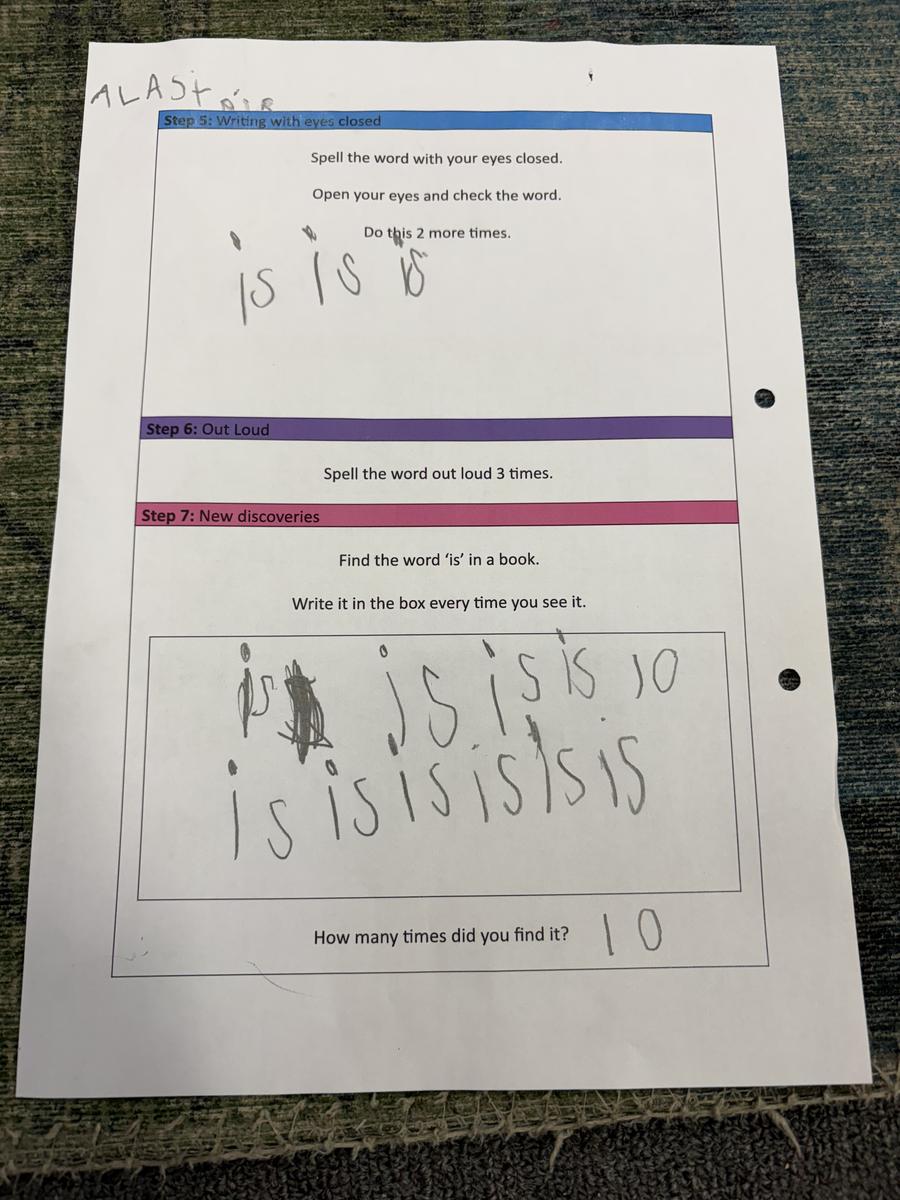
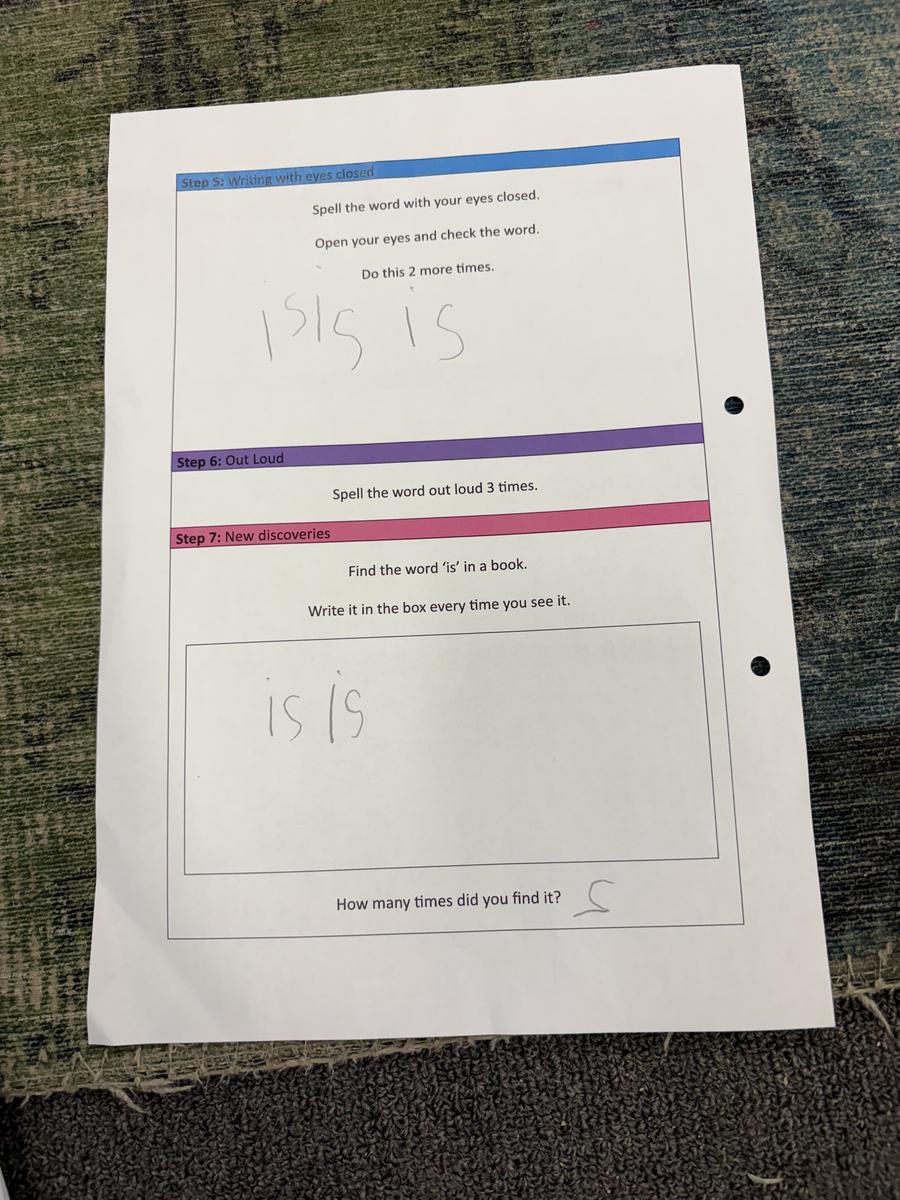
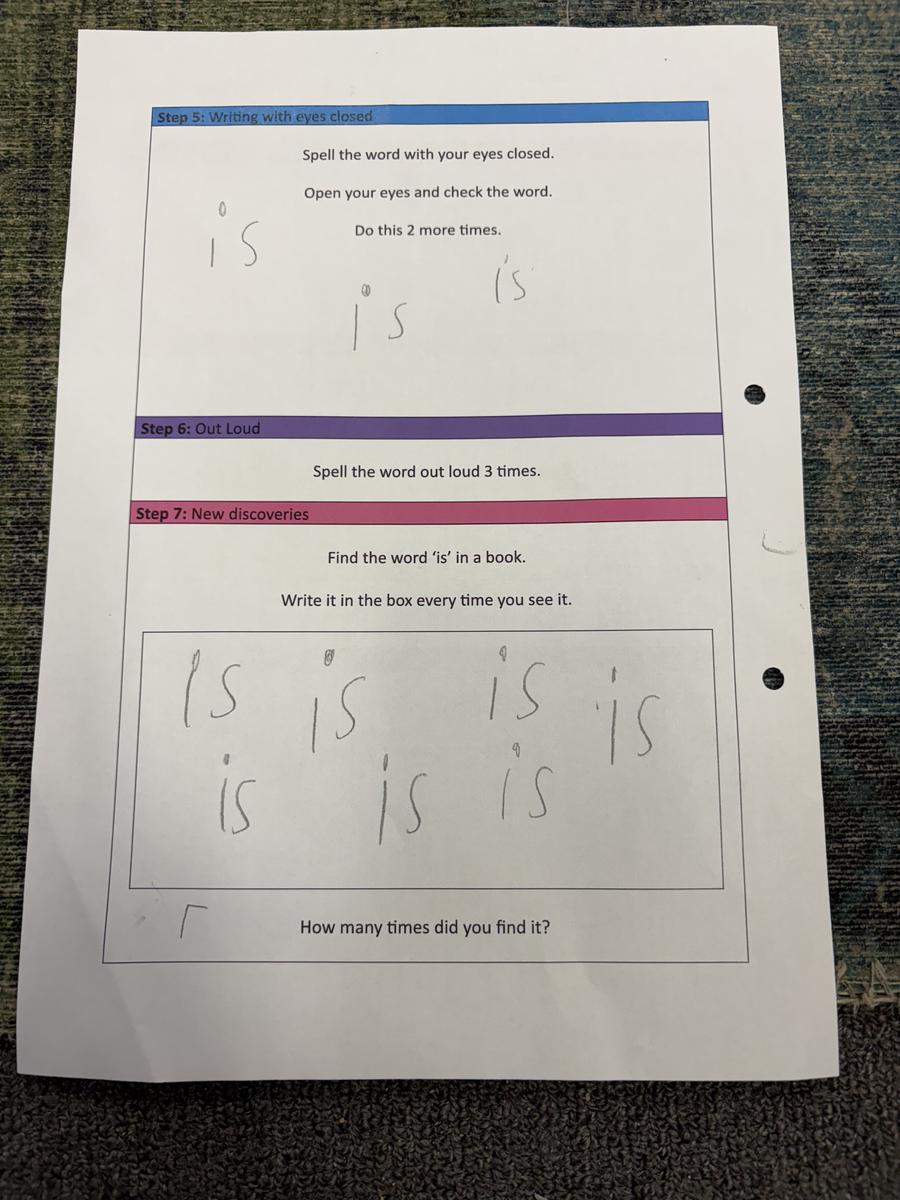
Step 5: Spell the word with your eyes closed. Do this 3 times.
Step 6: Spell the word out loud 3 times.
Step 7: Find the word ‘is’ in a book. Write it every time you see it.
In this learning experience, students will work towards:
- Identifying letters that don’t follow a spelling pattern
- Matching phonemes (sounds) with graphemes (letters)
- Memorising the spelling of the irregular word
Examples of students work
What you can do to continue the learning at home:
- When reading books together, see if your child can find the irregular word "is" on the page.
- Discuss the meaning of the word and read the sentence it is in to help your child understand it in context.
- Talk about the letters in the word that do not follow regular spelling patterns, making it a heart word.
- Encourage your child to spot the word "is" in everyday life, such as in books, on signs, on television, or in songs.
- Practise writing the word "is" in fun ways, such as in the air, with chalk, or using magnetic letters.
Warm Regards,
Prep Team