Community News






Child Dental Benefits Schedule (CDBS)
ADAQ is the peak professional body for dentistry in Queensland. Our mission is to support and advocate for the profession as the trusted source of knowledge and information about clinical practice. We believe all Queenslanders deserve excellent oral health and equitable access to ethical and effective dental care driven by clinical excellence.

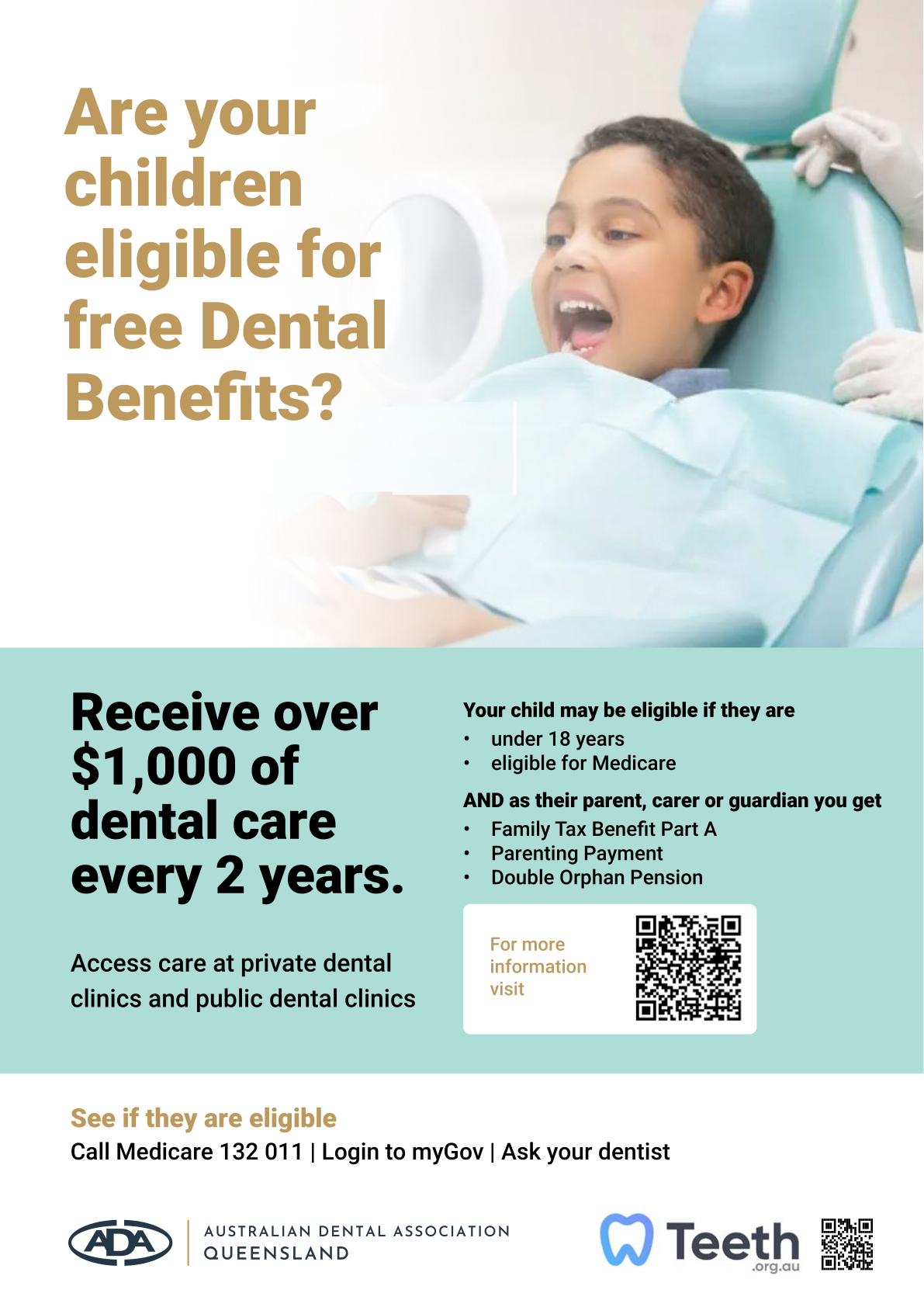
The CDBS is an Australian Government funded program that supports access to a range of essential dental services for eligible children aged 0–17 years who are Medicare eligible and whose parent, carer or guardian receives an eligible government payment.
Eligible children can receive general dental treatment at both public and private dental clinics. At most private clinics, services are bulk billed, meaning no out-of-pocket cost to families. The scheme provides up to $1,158 in dental benefits over a two-year period.
Despite this, underutilisation of the CDBS remains a major concern. A recent ADA survey of 25,000 Australians found that only 38% of eligible families are currently using the benefit.
Services Covered by the CDBS Eligible children can receive benefits for a range of dental services, including:
- Preventive care: examinations, X-rays, and professional cleaning
- Interventive treatments: fissure sealants, fillings, extractions, and root canal treatments.
Please note that the CDBS does not cover orthodontic treatment, cosmetic dental procedures, or services provided in a hospital setting.
For further information, visit the ADA’s consumer information website: Child Dental Benefits Schedule (CDBS) | teeth.org.au
School Zone Safety
Dear Parents and Caregivers,
The Queensland Government is writing to inform you that Ironside State School is committed to ensuring the safety of students travelling to and from schools and will install flashing school zone signs (FSZS) in 100 school zones across Queensland, during the 2025–26 financial year.
As part of this rollout, that Ironside State School will be receiving FSZS in the Ironside Street school zone.
Installation of FSZS at Ironside State School will improve visibility of the school zone and serve as an active reminder for motorists to slow down when children are out and about.
Several important factors are considered when assessing school zones for flashing lights, such as crash history, traffic volumes, pedestrian movements, the speed limit and visibility.
This ensures FSZS are delivered to priority sites across Queensland. FSZS have been a success since the program was introduced in 2012. Since then, FSZS have been installed at more than 1499 Queensland school zones.
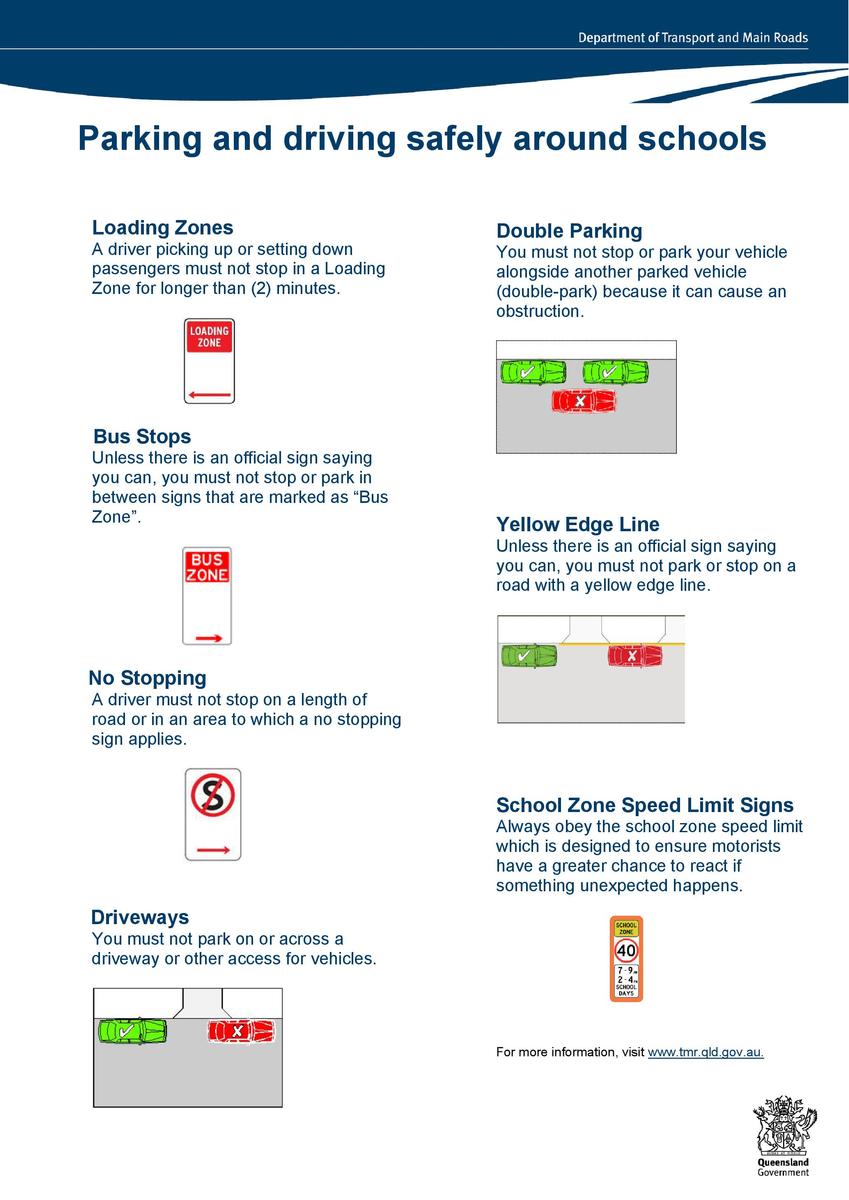
Child safety is paramount, and illegal parking within school zones remains a significant concern for parents, residents, and schools. Limited parking spaces around peak drop-off and pick-up times often leads to competitive and potentially dangerous parking behaviours.
While we understand the challenges parents face in navigating school zone drop-off and pick-up, it is crucial to prioritise safety.
Over the coming term, Council officers will be conducting regular patrols around your school to monitor parking compliance.
Our enforcement approach will use a combination of foot patrols and our highly visible Community Safety and Regulation vehicles that can identify alleged offences using Automatic Number Plate Recognition and GPS software. Compliance action will be taken on any observed breaches.
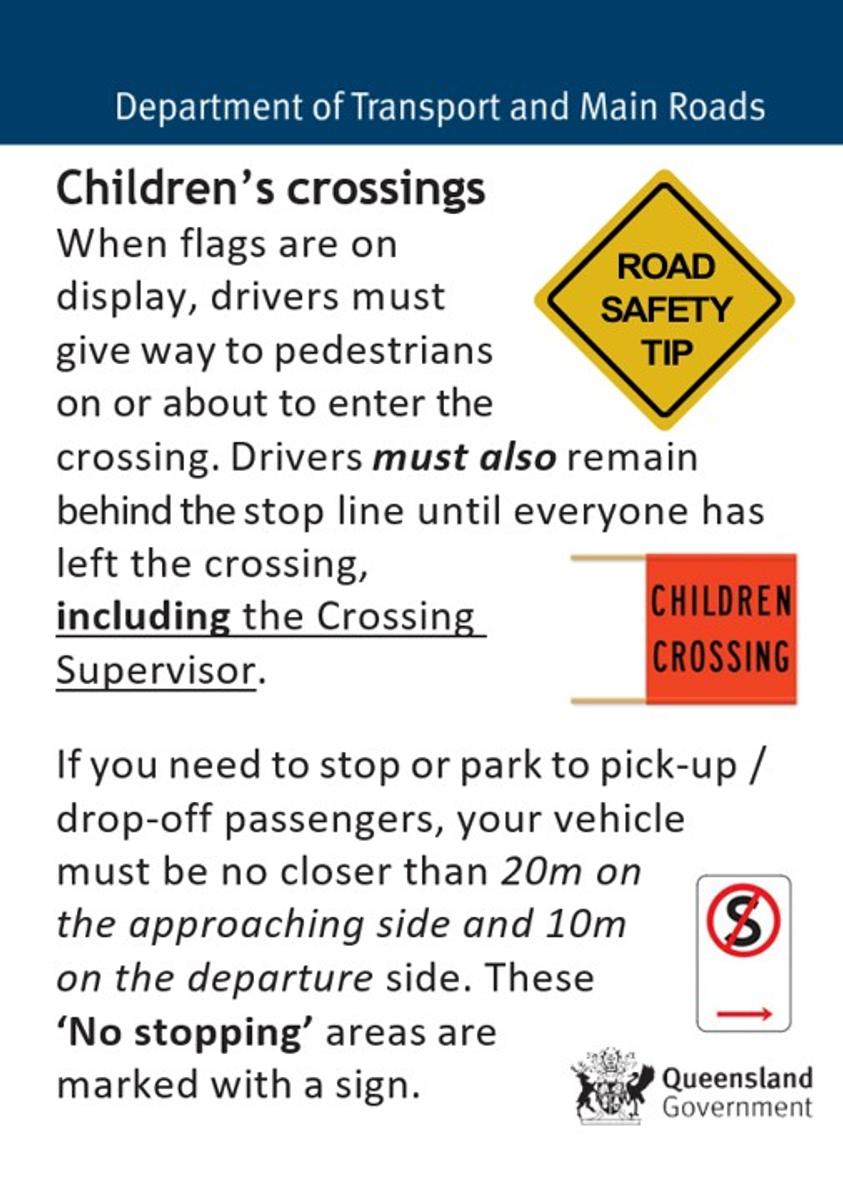
School zone signs are displayed as you approach the school and shows both the speed limit and the times you need to reduce your speed around the school. Children's crossing are identified by children crossing flags, which are displayed near crossings before and after school hours.
When the crossing is supervised, you as a motorist must:
- wait until allpedestrians, bicycle or personal mobility device riders have crossed the road and the crossing supervisor has returned to the footpath
abide by the direction given by the School Crossing Supervisor.
If the crossing is unsupervised, you as a motorist must:
- give way to pedestrians, bicycle or personal mobility device riders on or entering a children’s, pedestrian or marked foot crossings
- give way to pedestrians, bicycle or personal mobility device riders on or entering a road you’re turning into
- give way to pedestrians, bicycle or personal mobility device riders on a slip lane
- give way to pedestrians in a share zone
travel at a speed allowing you to stop safely at a crossing if needed
As a driver, it's important to make sure you give way to all pedestrians, bicycle or personal mobility device riders such as skateboards, e-scooters.
You must also give way to pedestrians using a motorised mobility device such as a motorised wheelchair or a mobility scooter.
Some of our most vulnerable road users are children getting to and from school, so it’s important to slow down and abide by the crossing rules, as it won’t make much difference to the trip time, but it could very well save lives.
Visit the Street Smarts website to find more information about what to do at pedestrian and children crossings.