Therapy News
Understanding sensory processing and regulation

Therapy News
Understanding sensory processing and regulation
Throughout the school day, students are constantly taking in sensory information. Noise, movement, smell, touch, changes in routine, and social demands all add up. One helpful way of understanding this is through the idea of “filling up the cup”.
Each student has an invisible cup that represents their capacity to tolerate sensory input. Every sensory event adds to the cup. A noisy bus ride, a strong smell in the room, hot weather cancelling movement breaks, a new food in the lunchbox, or someone standing too close can all be small scoops that slowly fill the cup over time. At the same time, some students can “empty” their cups with self-regulatory strategies they have leaned with our support. This can include, taking a walk, listening to their favourite music, and using the quiet space in their break room.
When a student’s cup “overfills”, students may move out of their optimal zone. This can look like increased aggression, emotional outbursts, withdrawal, avoidance, or difficulty engaging in learning. More importantly, this is not a choice or misbehaviour. It is a sign that the nervous system is overloaded.
Level of Arousal
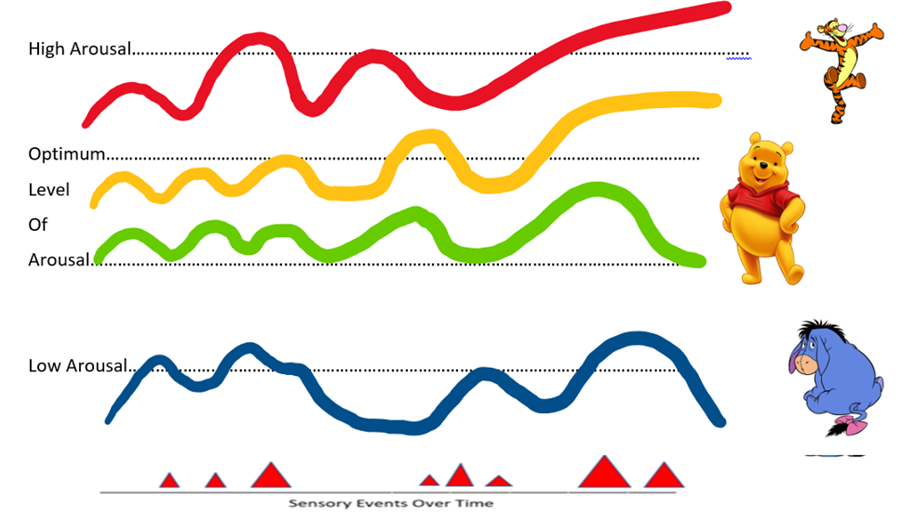
When the cup is within a student’s optimal level of arousal, they are calm, alert, and ready to learn. What’s optimal looks different for every student. Some students have a high tolerance and can tolerate lots of sensory input, while others have a much smaller tolerance and can feel overwhelmed very quickly.
On the other hand, some students are constantly in the low arousal zone despite multiple sensory events throughout the day, this may mean students often look like they are not willing to engage in any activities, preferring to sit or lie on the ground, or may engage in persistent self-stimulatory behaviour (e.g., rocking back and forth, humming, hand flapping, twirling ribbons, etc.)
Understanding sensory regulation reminds us that behaviour is communication. By recognising what fills a student’s cup and how we can help them empty it, we can better support participation, learning, and wellbeing throughout the school day.
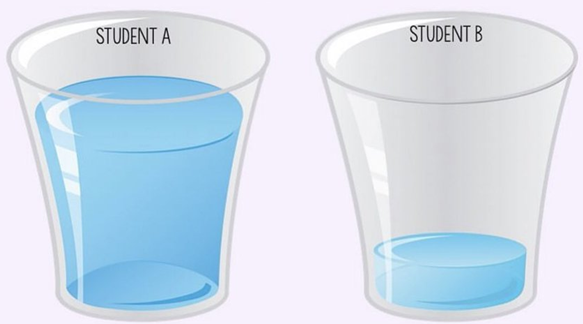
Student A comes to school with his cup almost full. He had a terrible morning because his younger brother was crying in car throughout the journey to school and his mum had to drive dad’s car to school today. Minor sensory events in school may send him over the edge. Upon seeing a CRT in class, he absconded from school.
Student B comes to school with her in the optimal range and is ready to learn. She has a fidget toy she can play with on her way to school. She wore her noise cancelling headphones while on the bus. She can tolerate minor sensory events in school. The replacement teacher she had in class today did not seem to bother her.
Regulation Toolkit
With a better understanding of sensory processing now, consider developing a regulation toolkit for your students. Please email a member of the Therapy Team for an instructional guide on how to create a regulation toolkit.
-------------------------------------------------------------------------------------------------------------------
Curriculum Cupboard Resources
The curriculum cupboard will be open every Monday (2:00pm – 2:30pm) and Thursday (8:15am – 8:45am) for staff to borrow classroom resources. Please contact the Therapy Team if you need access to resources outside of these times.
Climbing Gym & OT Rooms 1 & 2
Please follow the protocols before entering the OT Rooms and Climbing Gym. There is a “Stop” sign with the rules on the door of each space. These spaces are to be used as proactive regulation spaces, rather than as a breakout space for a student who is already heightened.
Any staff who supports students in these spaces must complete a short induction with a Therapy Team Member. Please submit a Therapy Referral if you have not completed this training and would like to book one of these spaces.
Please only use these spaces at the times that you have booked via SharePoint (Resource Booking).
SPOTBites Weekly Activities
Please look out for an email from our Allied Health Assistant, Angela Psiroukis, regarding the Therapy Team's SPOTBites activities for students. Activity packs will be released three times per term, in the main Staff Room in the Admin building.
Therapy Referral System
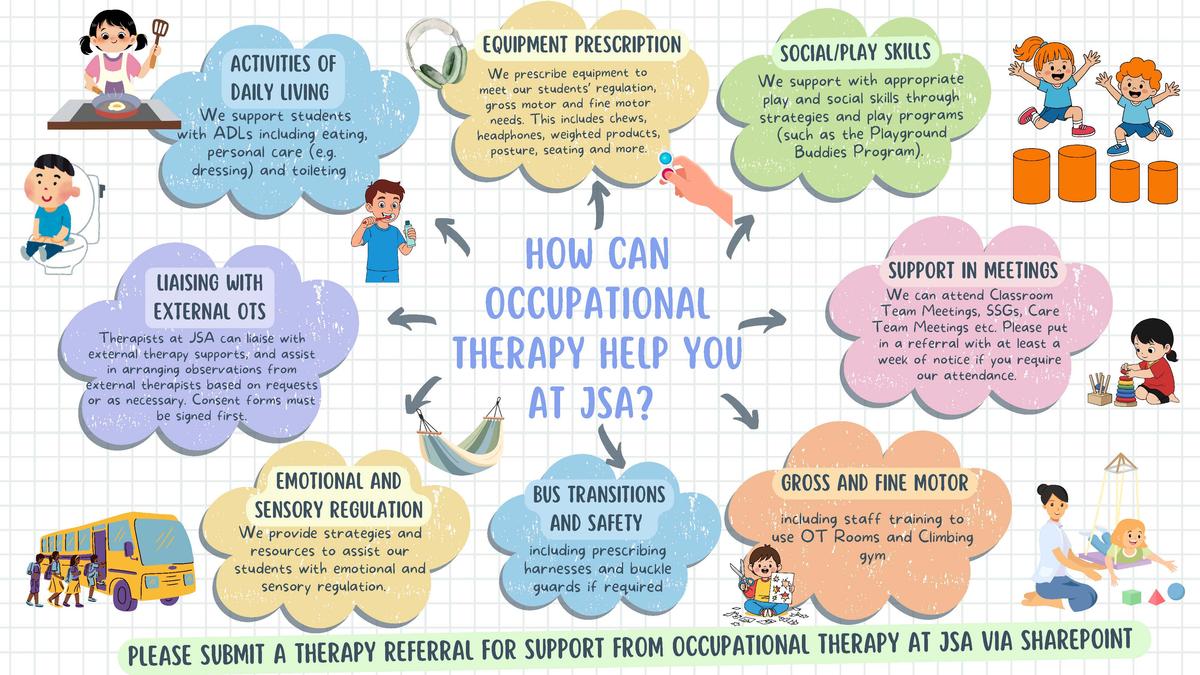
Please submit any requests for support from a therapist via the Therapy Referral Tab on SharePoint. Our team triages new referrals every Monday morning and allocates a therapist and priority to these new referrals. This ensures that the most urgent referrals are addressed in a timely manner. You can submit referrals for SP and OT support, including requesting for us to attend classroom team meetings, care team meetings, SSGs etc. Please note that due to limited capacity, we may not be able to attend every meeting request, but we will prioritise any urgent requests.