Specialist Programs

MDD
This term middle and senior school students have been working towards performing short, scripted plays [3-4] and a 100 word monologue [5-6], using the following learning success criteria:
- Character voice
- Suitable actions
- Staging
Knowledge of the script [can they perform without it?].
This has been very successful, with many students able to perform in character without the need for the script for support, entertaining their audiences.
Next term, we look forward to putting these skills into practice as we begin to rehearse our Year 3-6 school production.
Mrs Congiusta
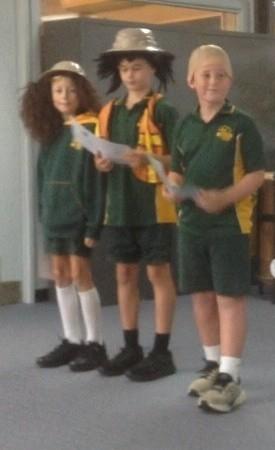
Jack and the Beanstalk
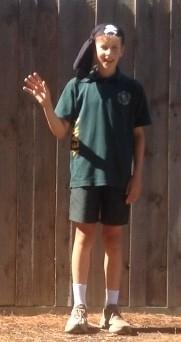
Alex the Pirate
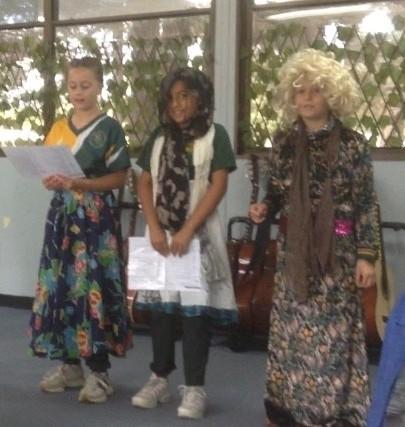
Snow White
Jack and the Beanstalk
Alex the Pirate
Snow White
STEM
This term in STEM, all students have been exploring the wonderful world of Biological Science.
Junior students have been learning to classify living things into plants, animals and fungi and understanding what each group needs to survive.
PREP STEM
Our Prep students have been exploring the exciting world of Biological Science, developing their skills as curious 'little scientists.' They have been learning how to identify living and non-living things by asking four key questions:
- Can it breathe?
- Can it grow?
- Can it have babies?
- Can it change (adapt) to its environment?
Students have also investigated how animals are grouped by their body coverings (fur, feathers, scales, shells or skin) and explored unique Australian animals, especially marsupials. They learned that marsupials have fur, pouches, and live young (with the exceptions of the echidna and platypus), and discovered that fruit bats are not marsupials.
You can extend this learning at home by:
- 🕵️♀️ Going on a “living or non-living” hunt around the house or garden
- 🐾 Sorting animals by their coverings using books or pictures
- 🦘 Spotting and discussing Australian animals when out or reading together
- 🎨 Drawing and labelling a favourite animal
It’s been wonderful to see the students’ curiosity grow - keep the conversations going at home!
Mrs Congiusta
Year 1-4 STEM
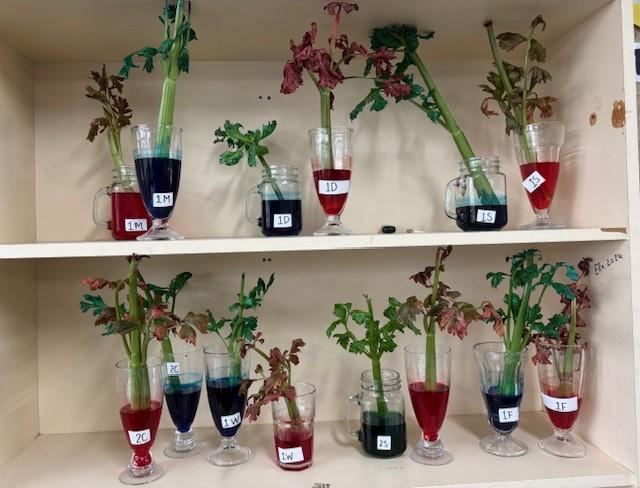
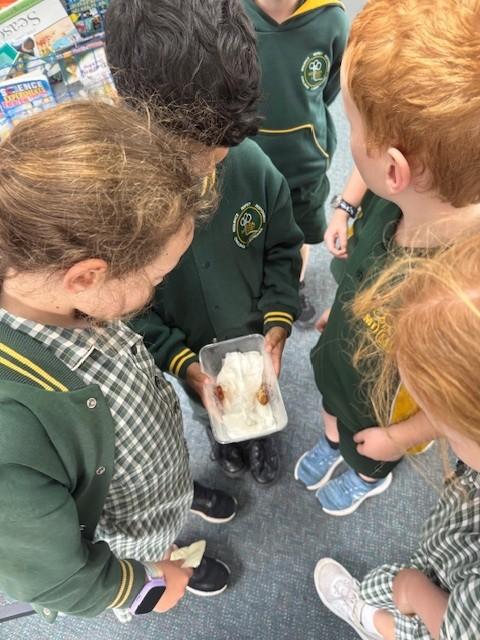
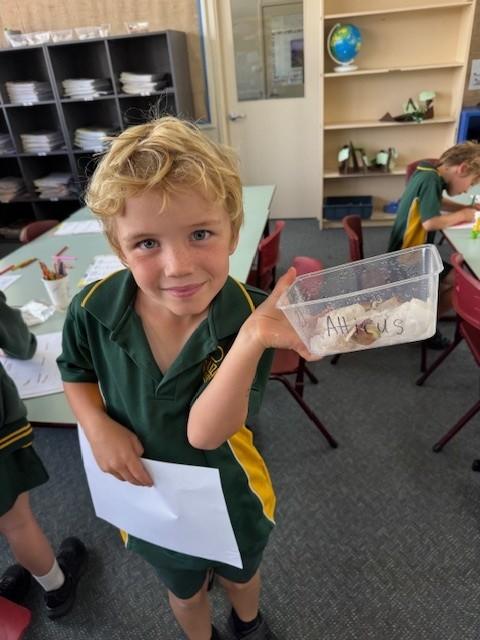
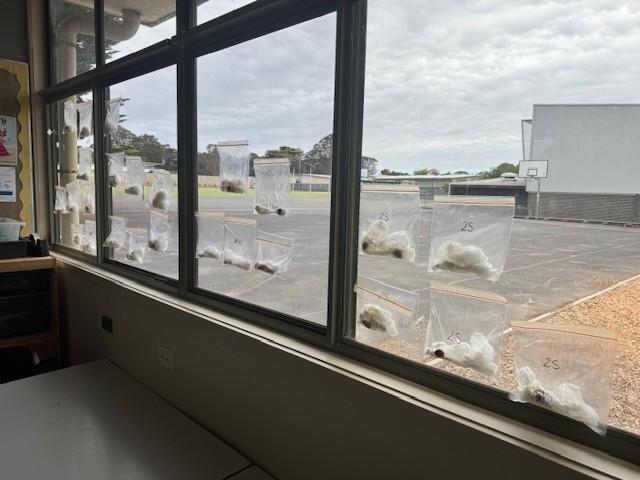
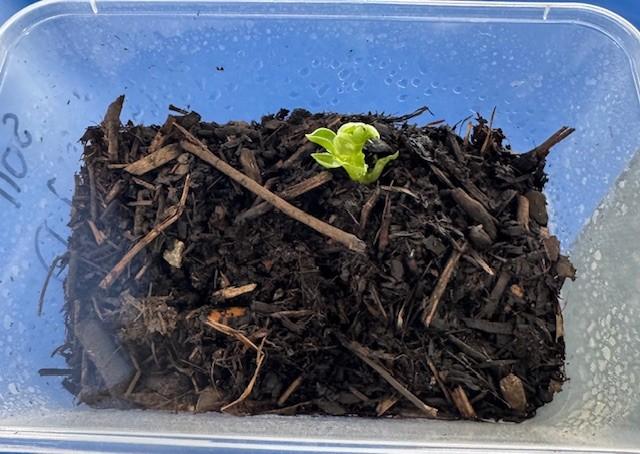
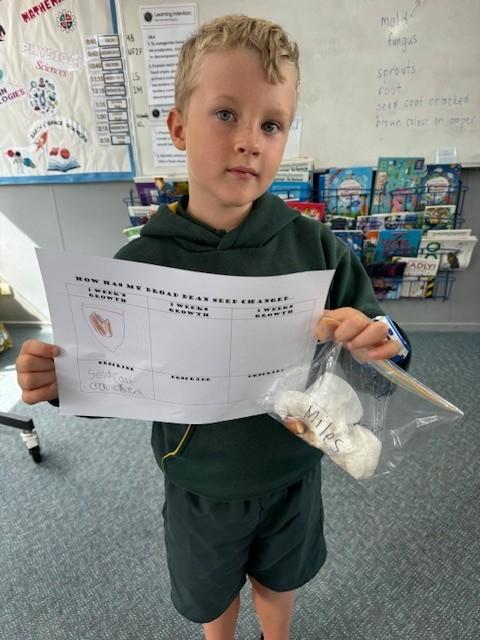
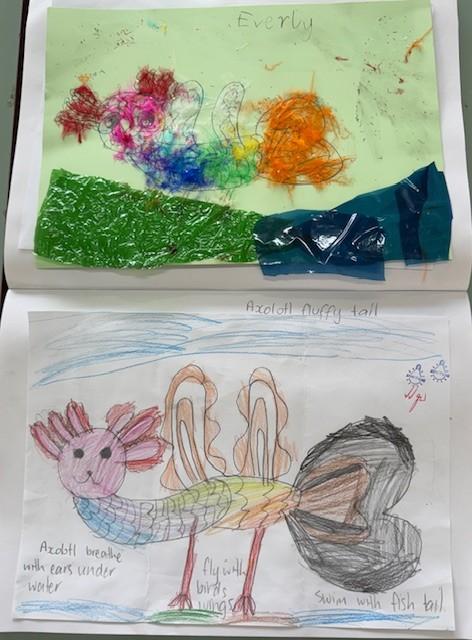
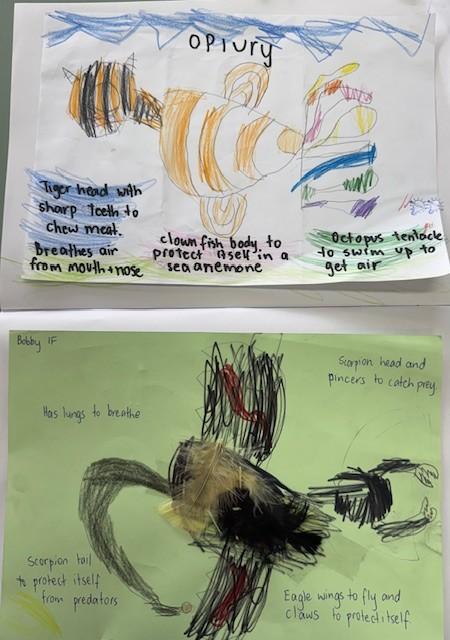
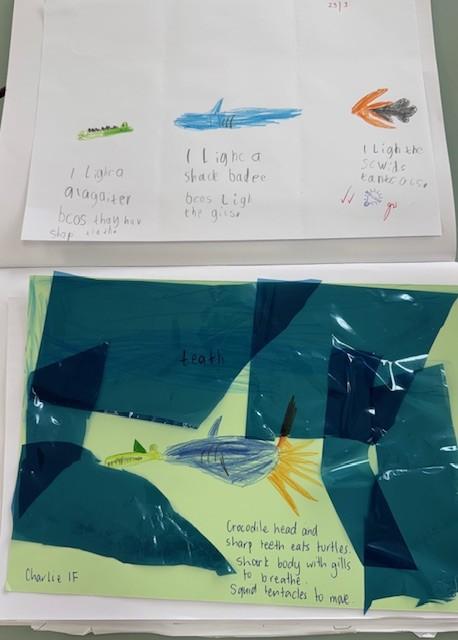
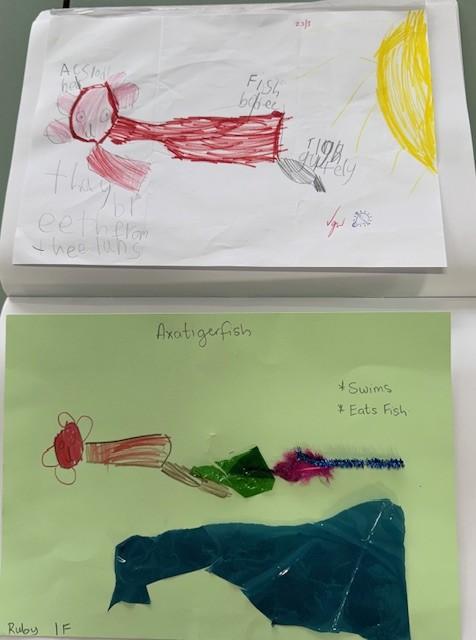
Our Year 1 and 2 students have been busy learning about plants. They labelled the different parts of a plant, discovered what plants need to grow and were even introduced to photosynthesis! A highlight was their celery experiment, where they observed how water travels up through the plant to its leaves. Students also explored how a broad bean grows, describing the seed as a “seed lunchbox” that stores energy to help it sprout roots and shoots. Along the way, they discovered that fungi, mould and bacteria also grow, helping to break down seeds and return nutrients to the soil. We hope the seeds sent home continue to grow into healthy broad bean plants! Students then investigated what animals need to survive and what physical features different animals had, that helped them live. They chose three animals with different physical features and mixed them up to create a 'trianimal'. Students explained how their 'trianimal' breathed, moved, ate and protected itself.
Year 3 and 4 students began the term by learning how to create safe, strong and memorable passwords. They also became “Photo Detectives”, exploring how personal information can be identified in images using tools like Google Lens, and discussing how to stay safe online. Later in the term, students investigated food chains and how they vary across different habitats and biomes. They worked in small groups to create food chains from a given biome, and included labels for producers, consumers (primary, secondary and tertiary) and decomposers. Students can now identify whether a food chain is green or brown, and whether it is aquatic or terrestrial.
Mrs Westlake
Year 5-6 Stem
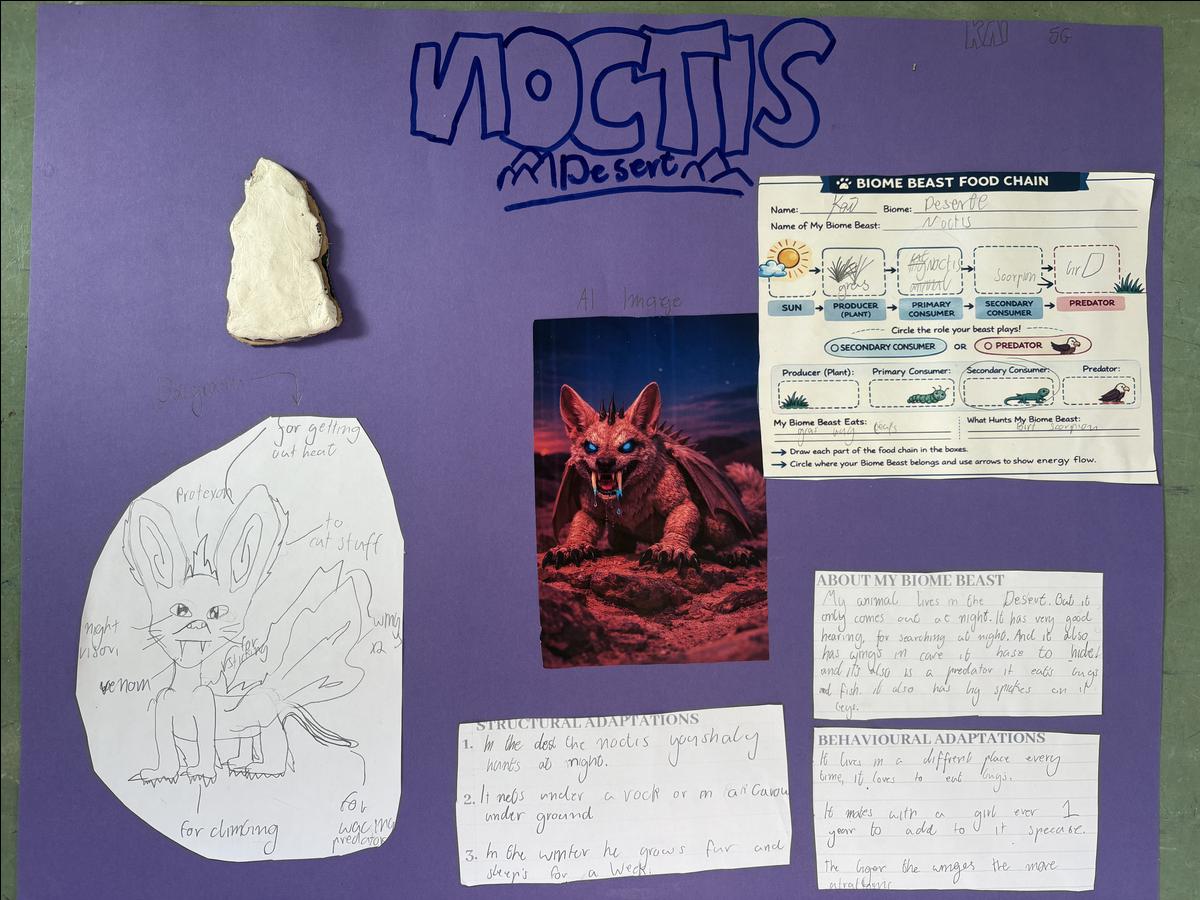
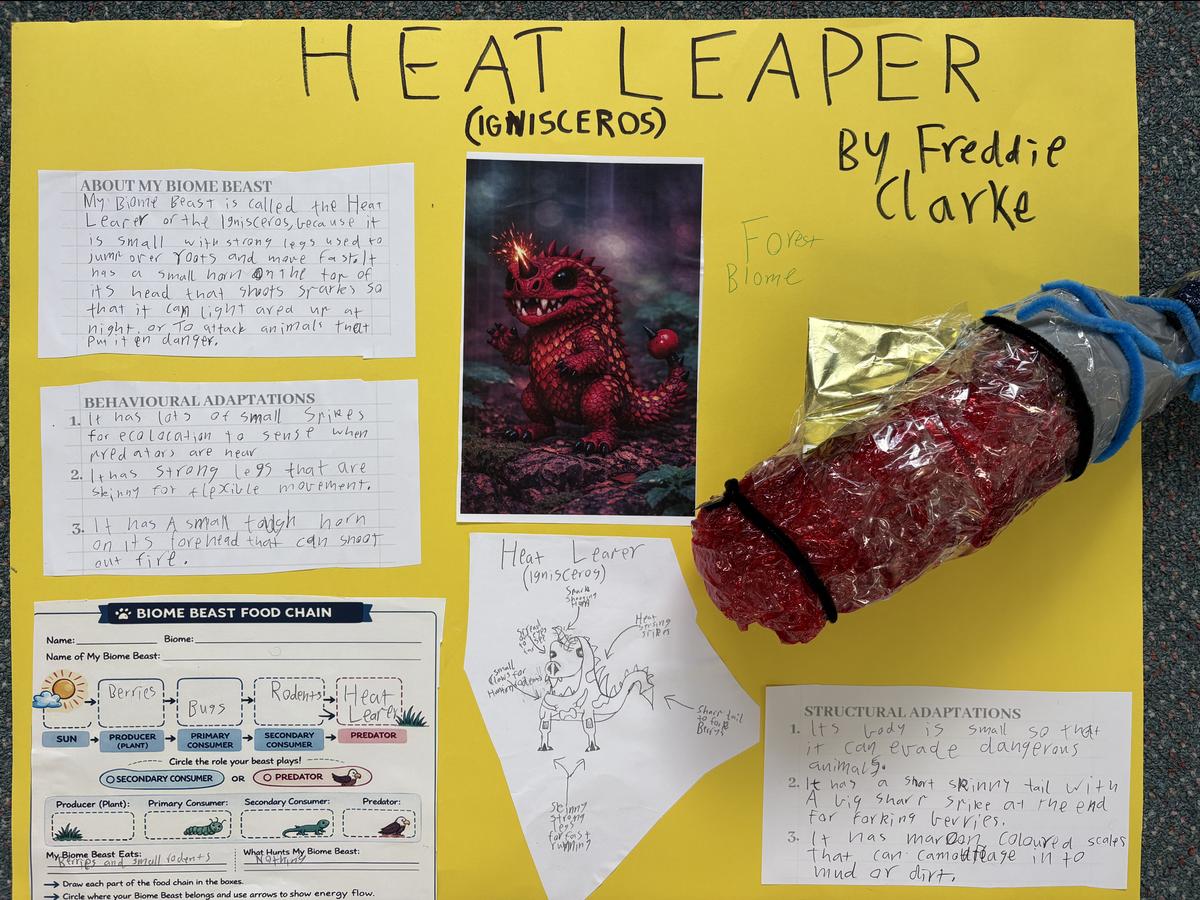
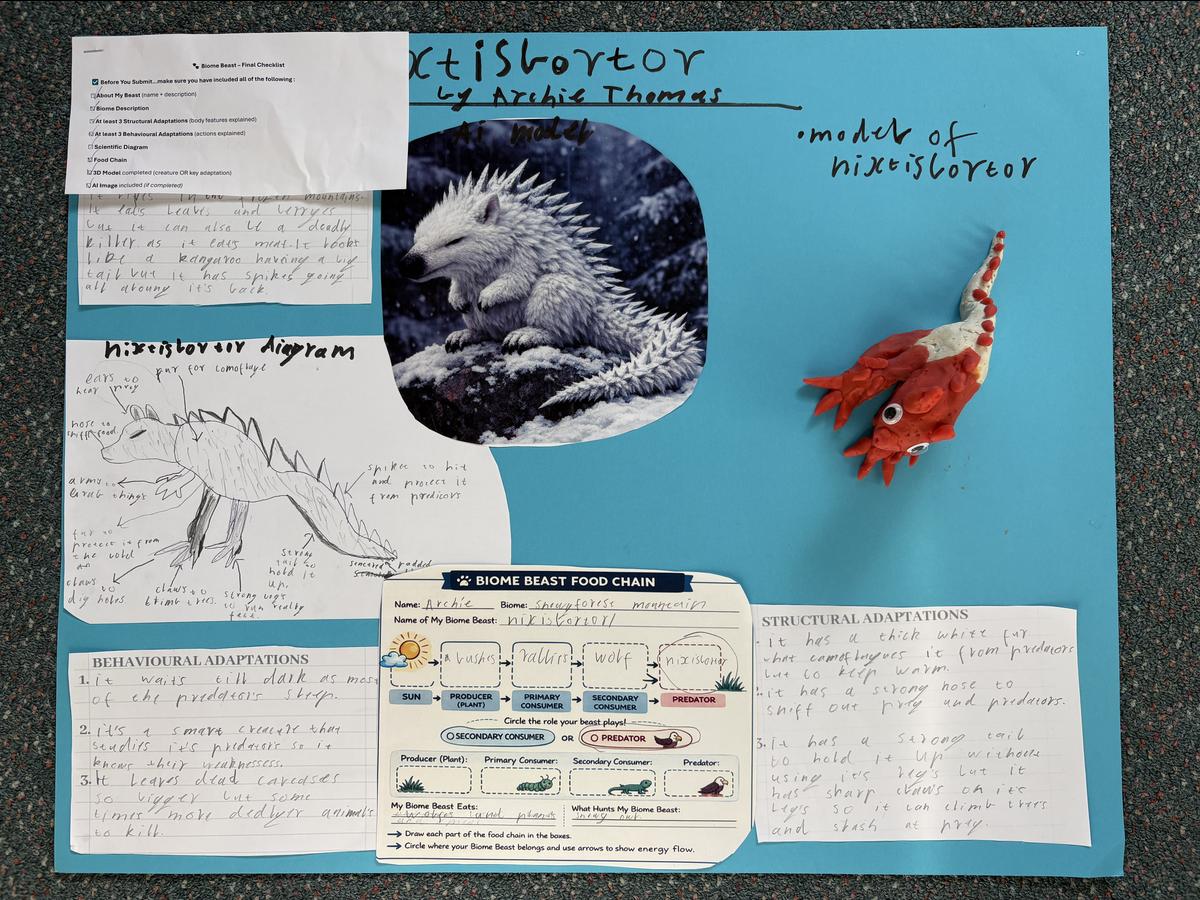
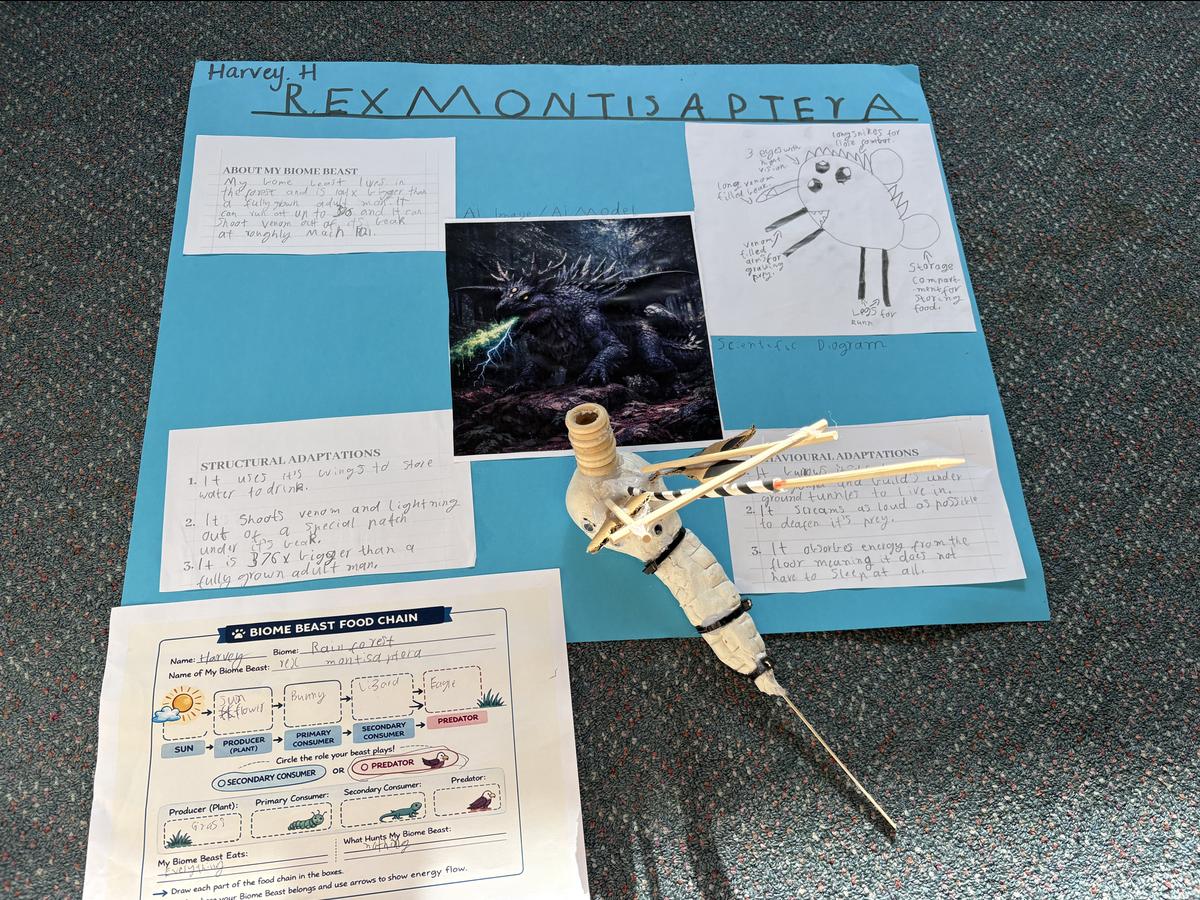
This term in STEM, our Year 5 and 6 students have also been busy exploring Biological Science, with a particular focus on the behavioural and structural adaptations that help animals survive in their environments.
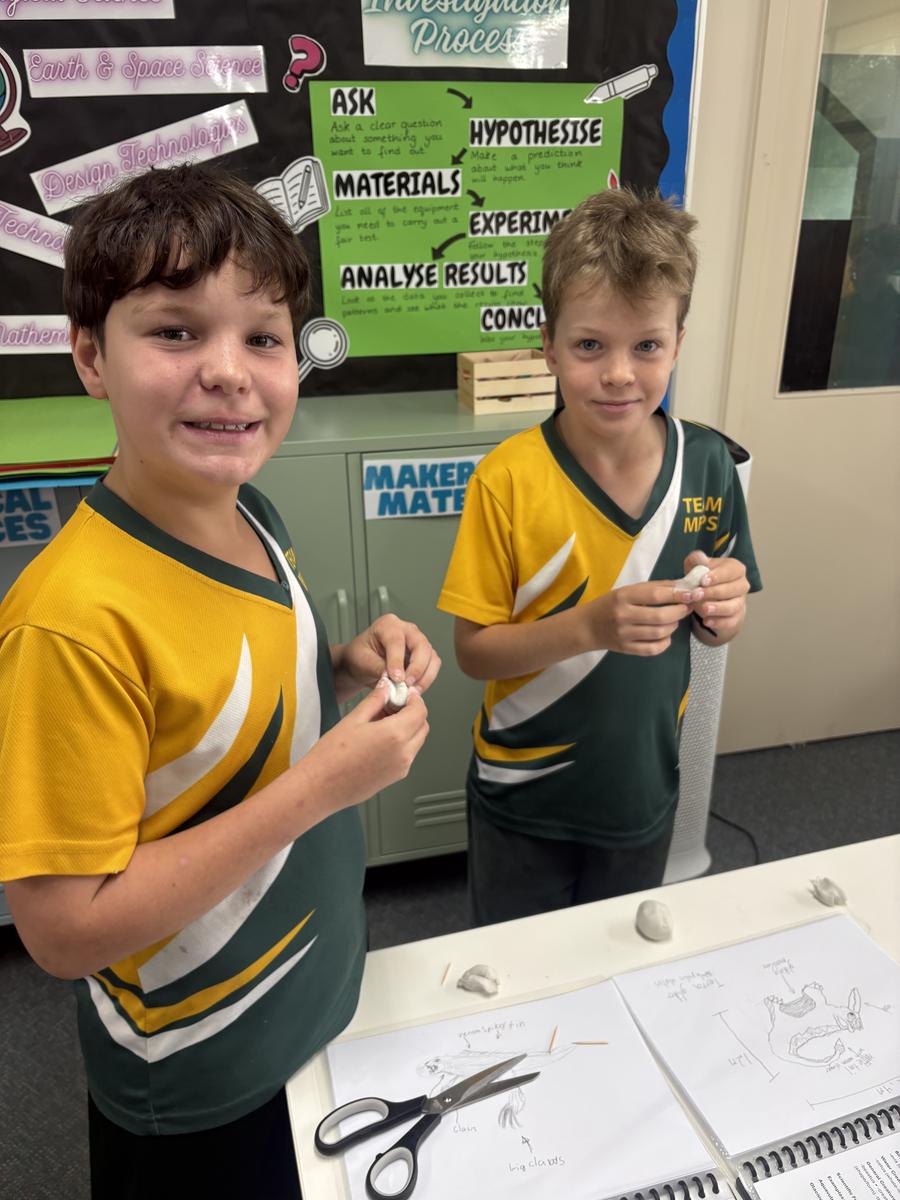
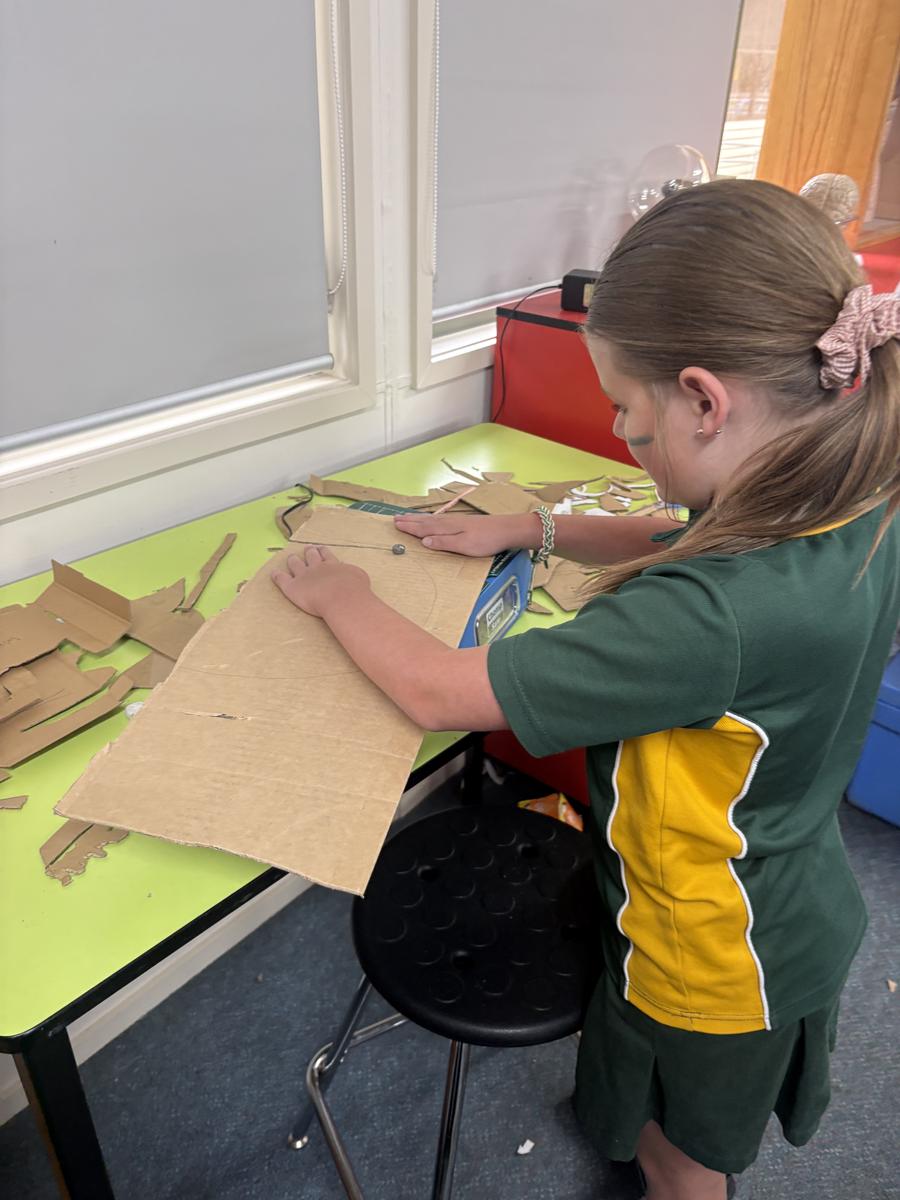
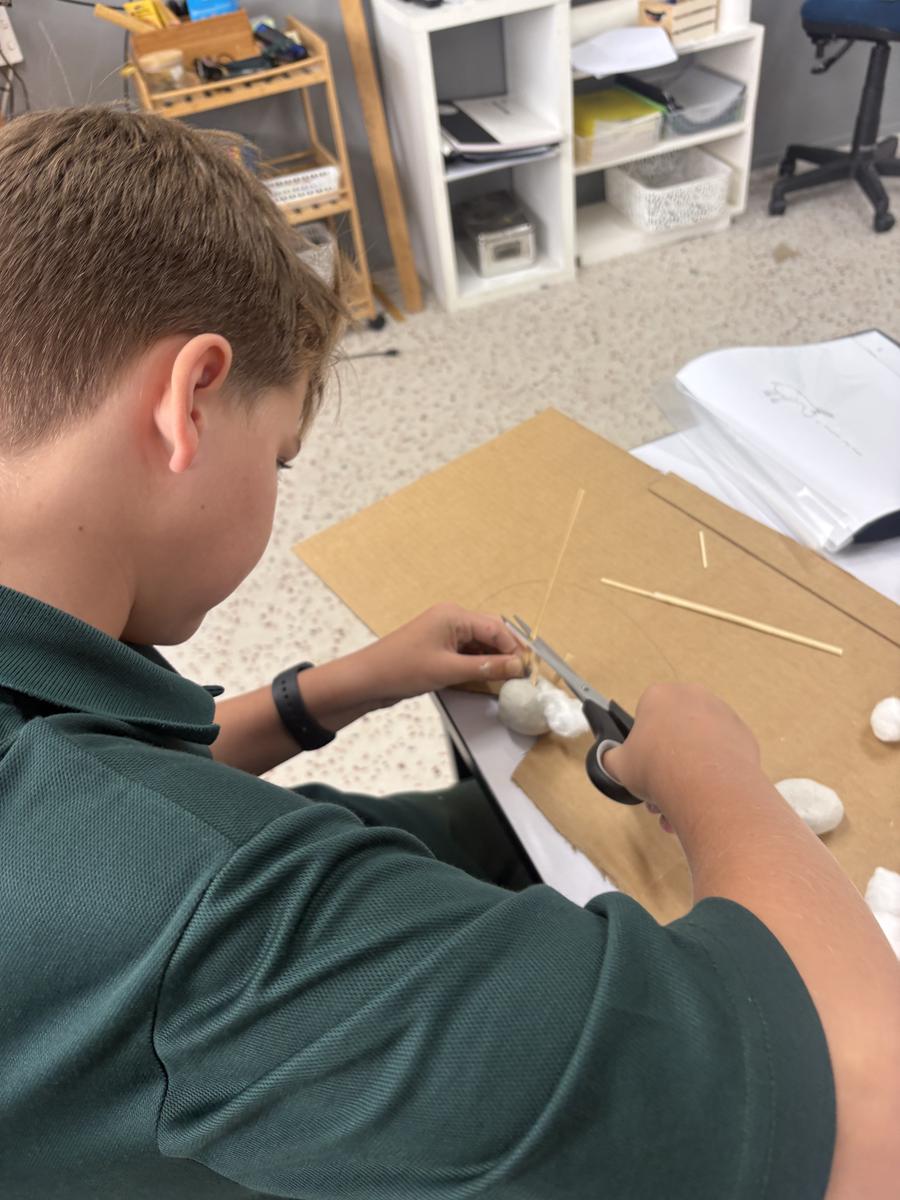
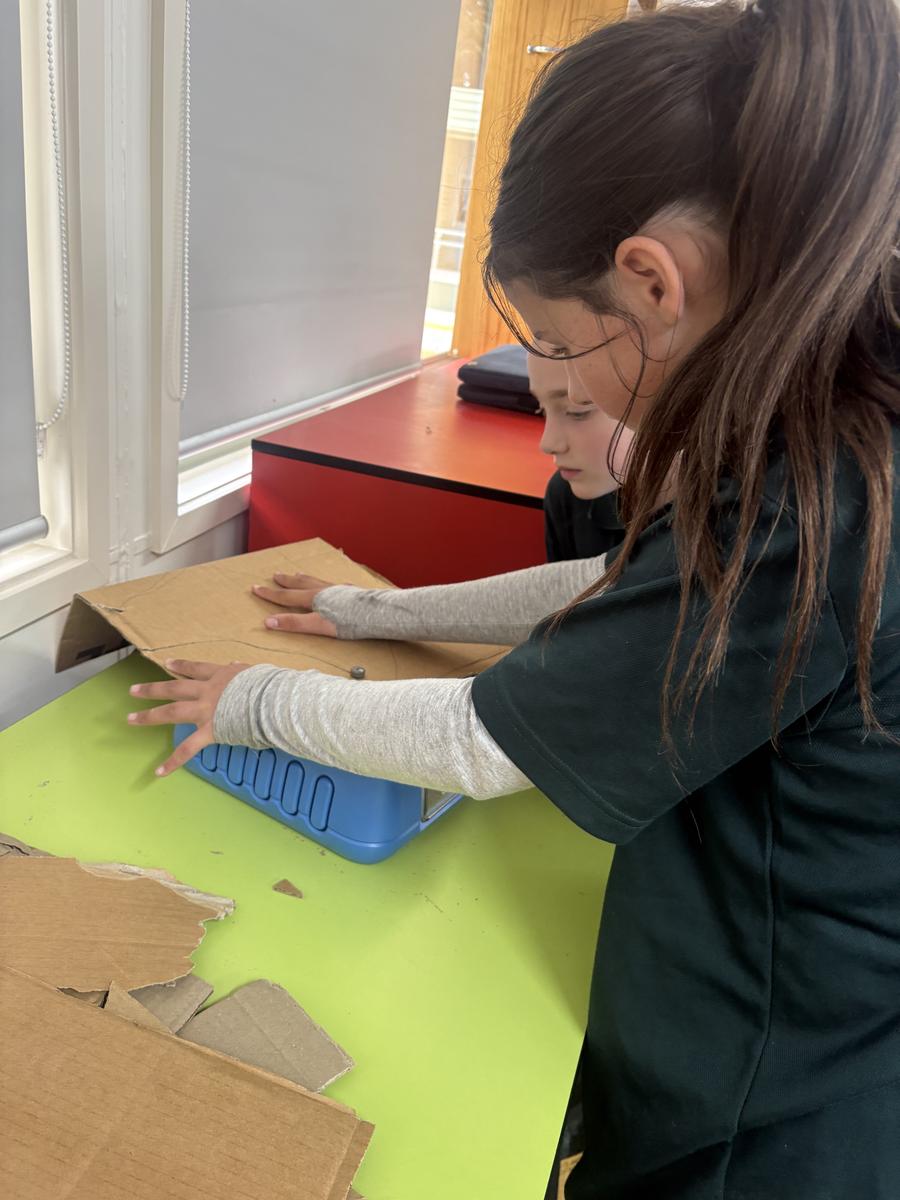
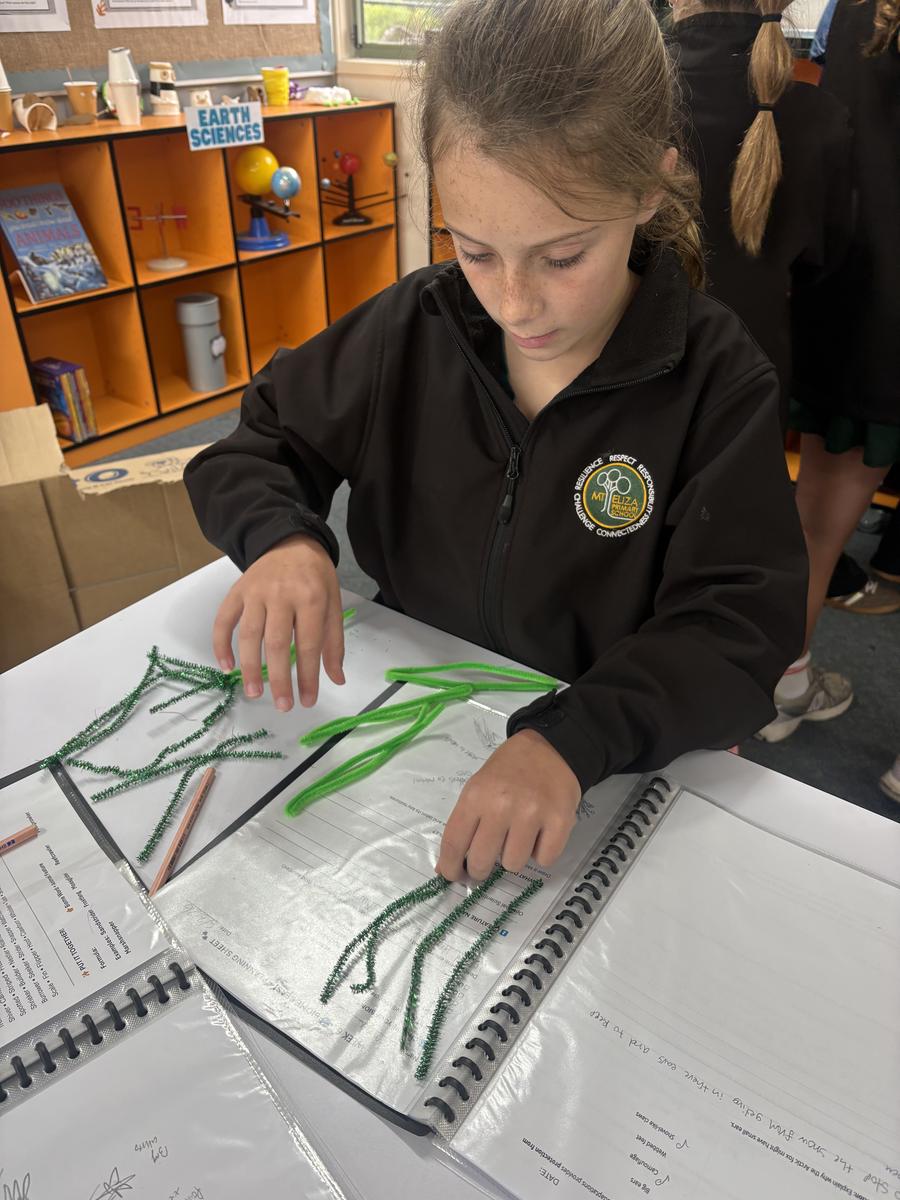
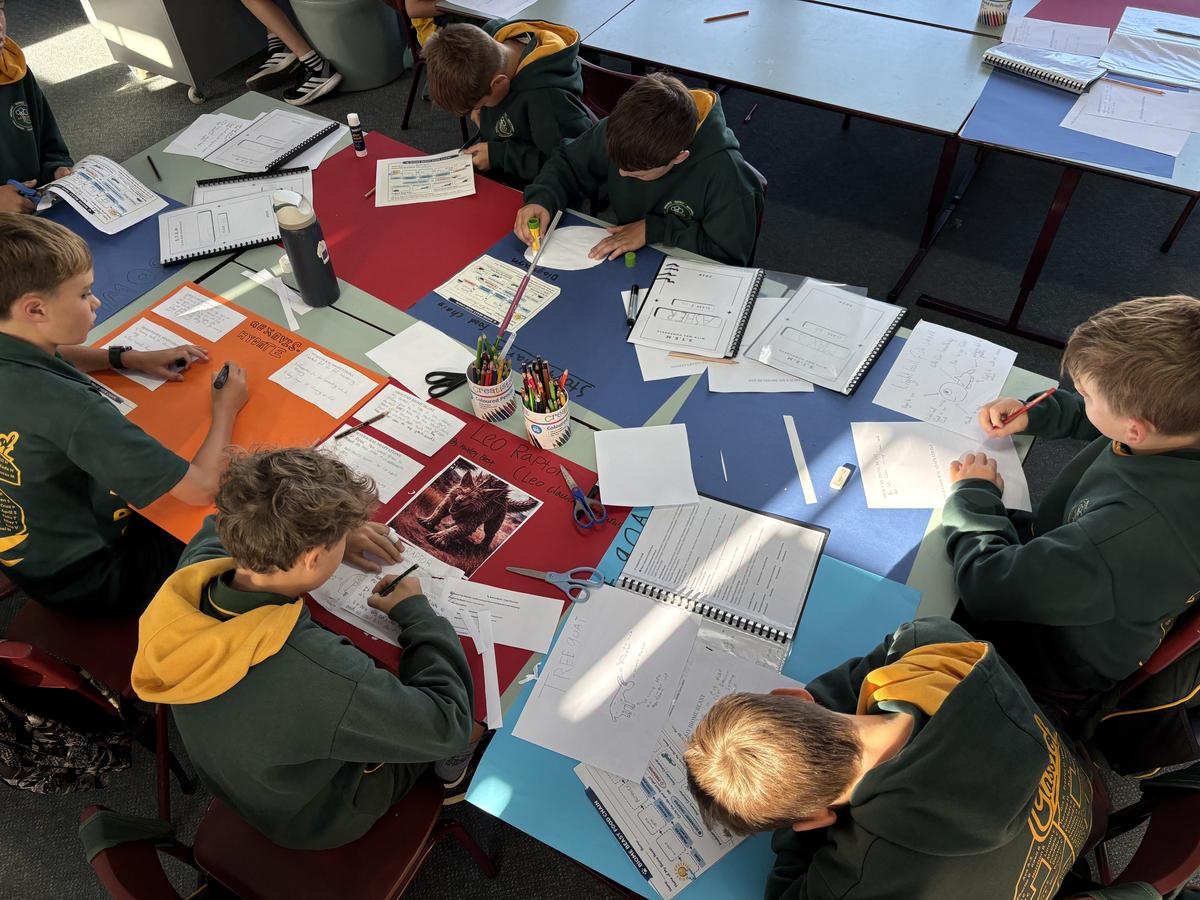
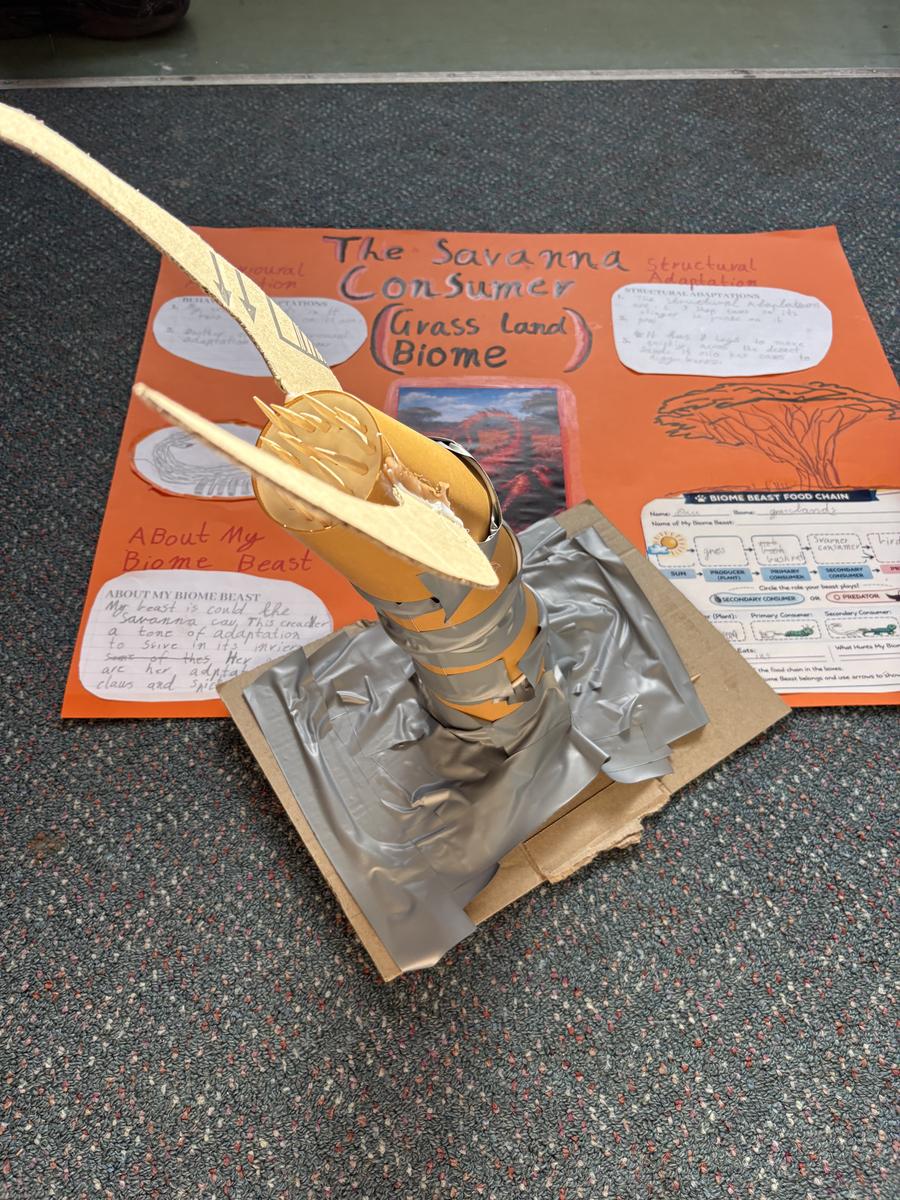
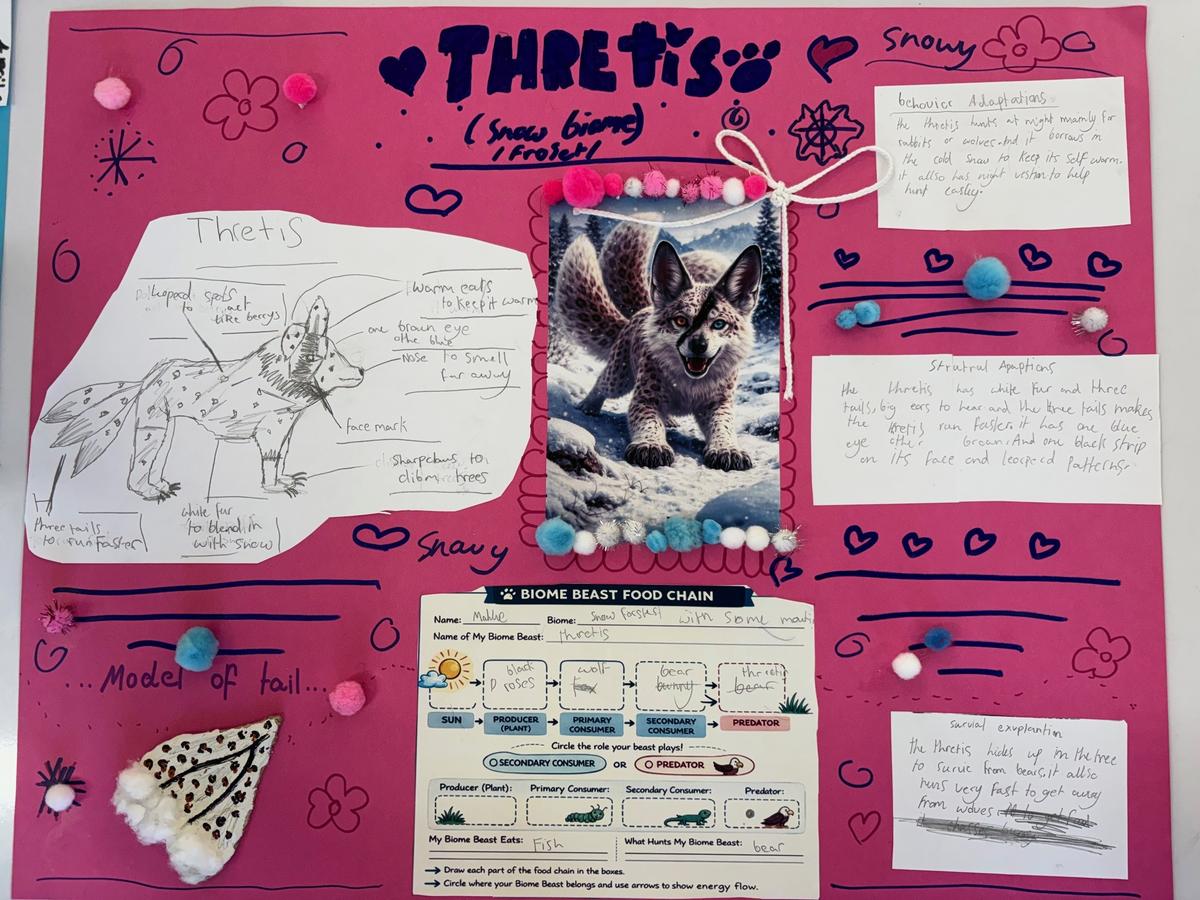
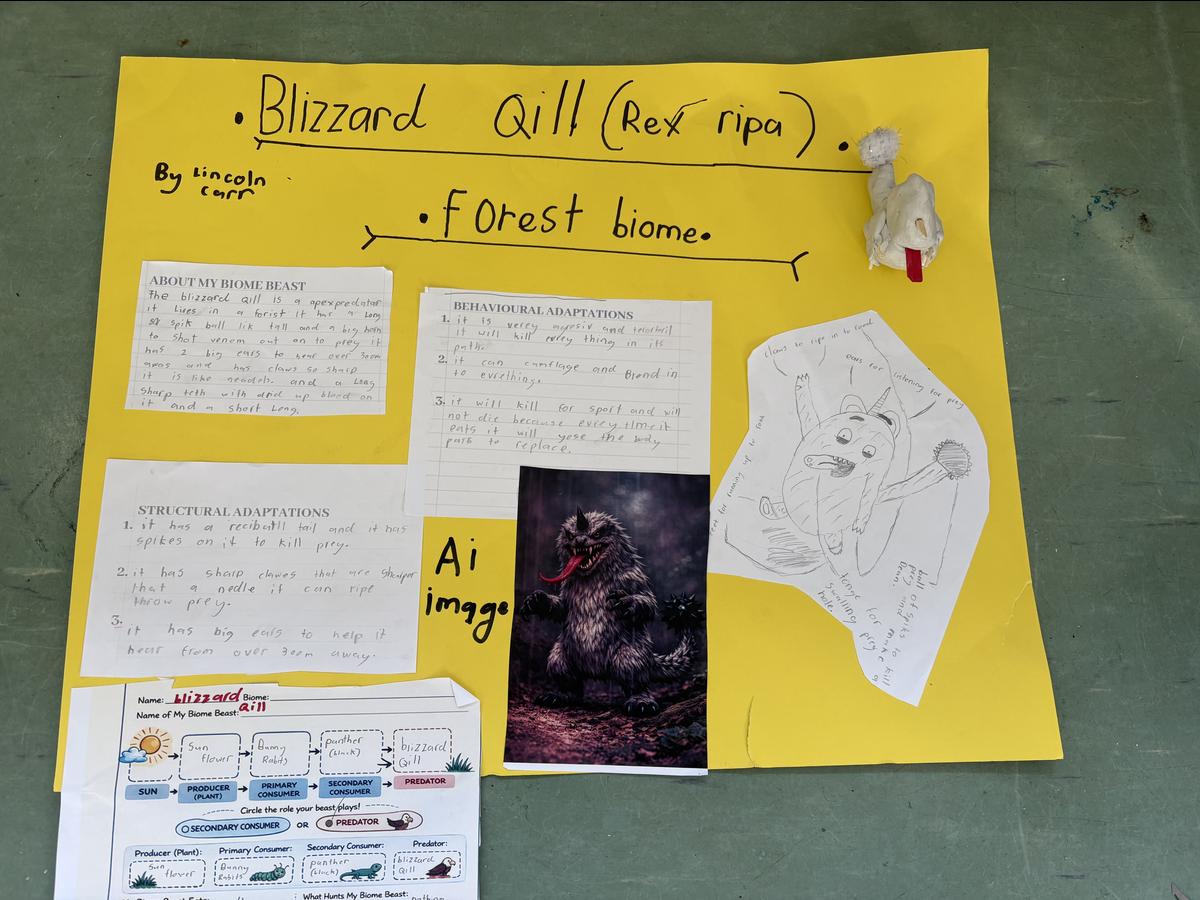
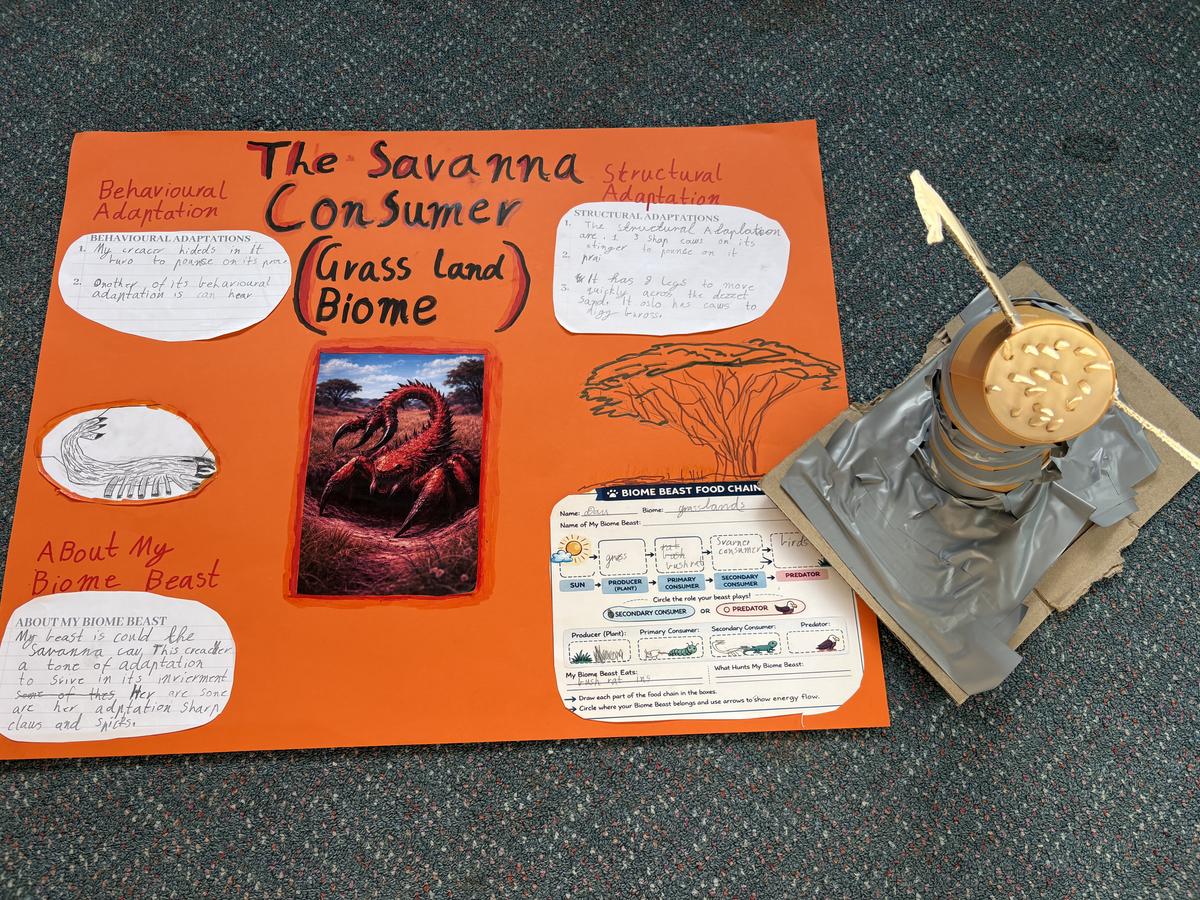
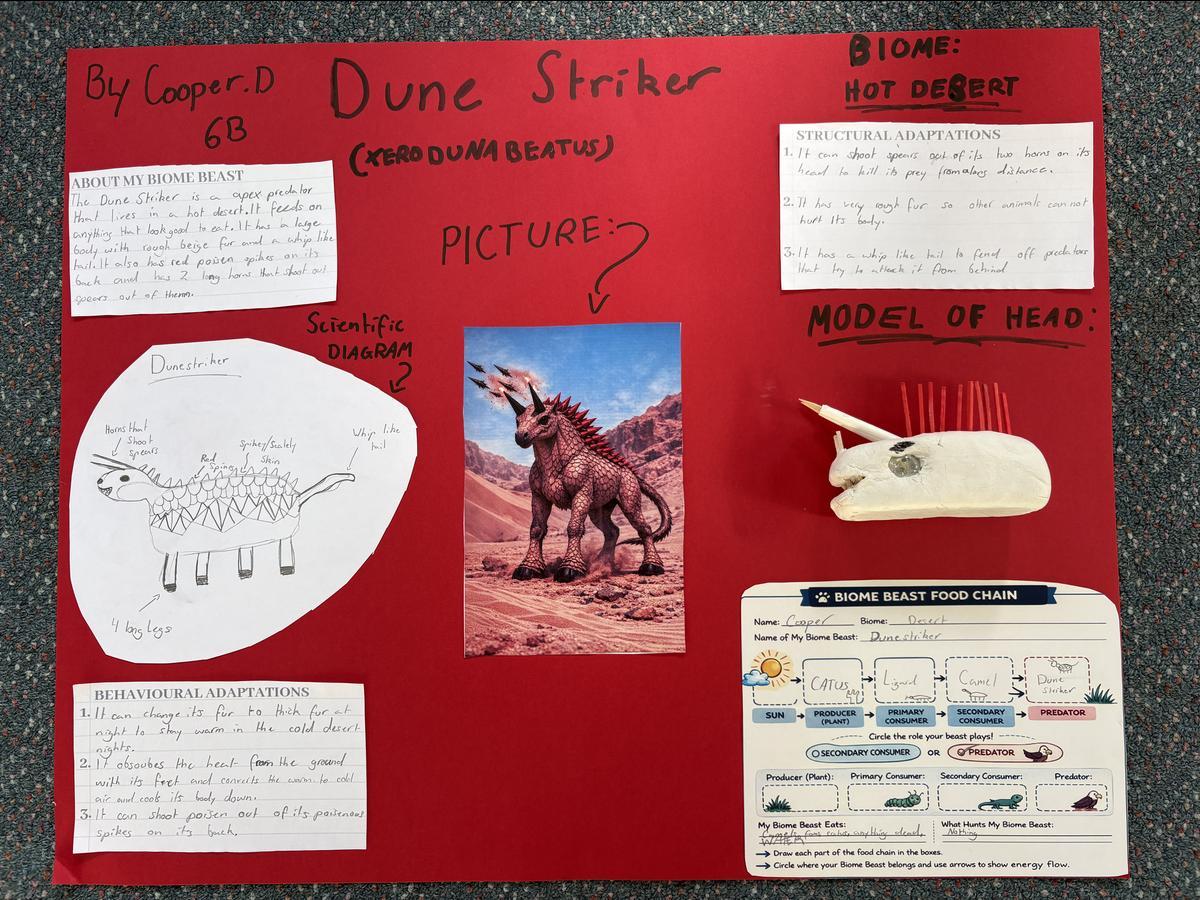
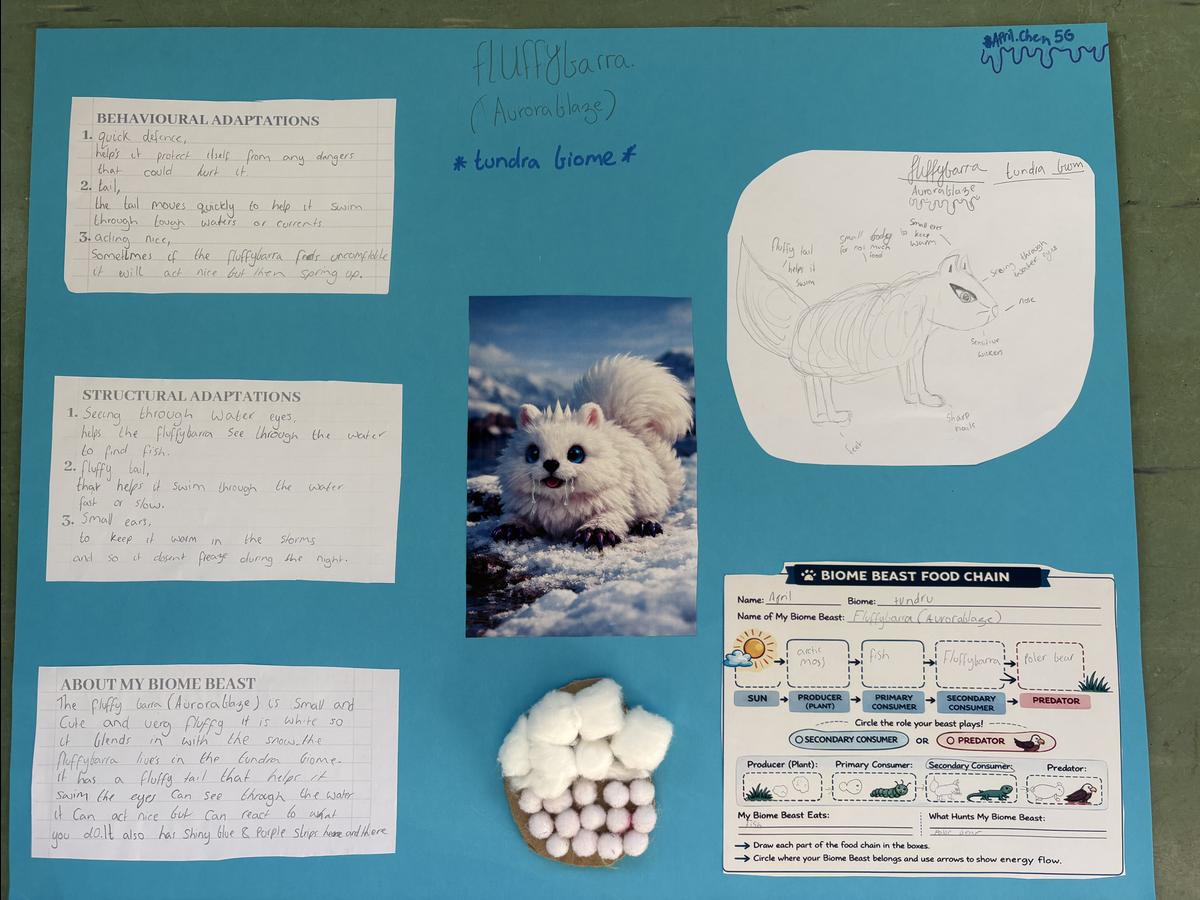
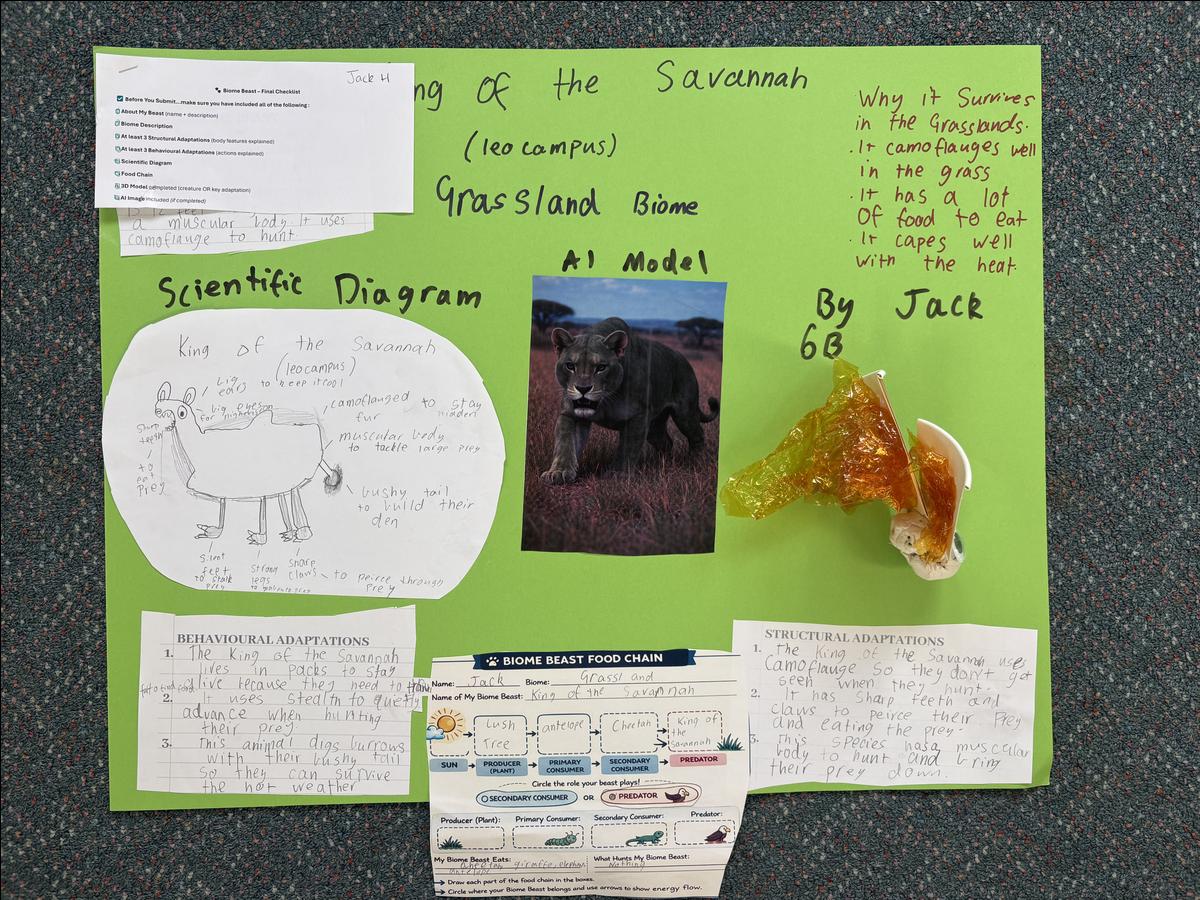
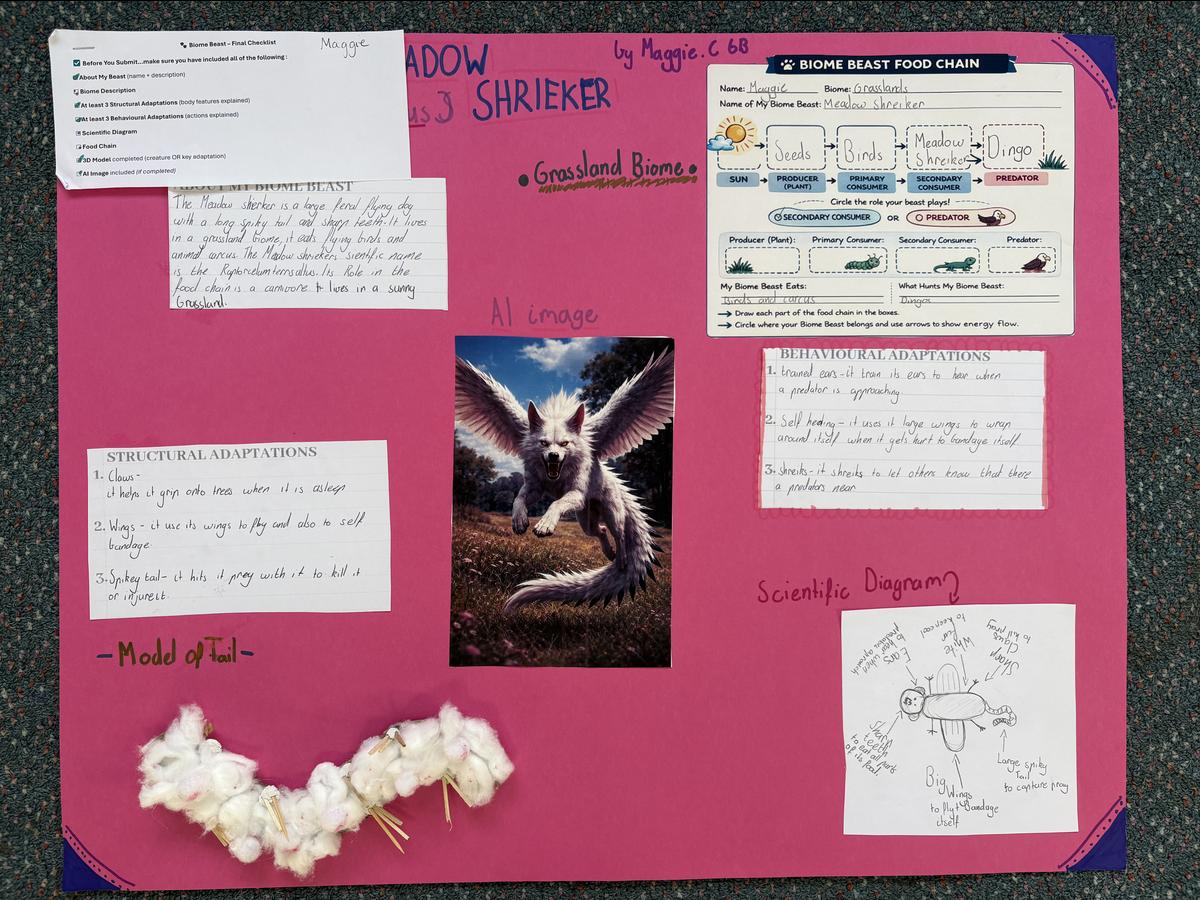
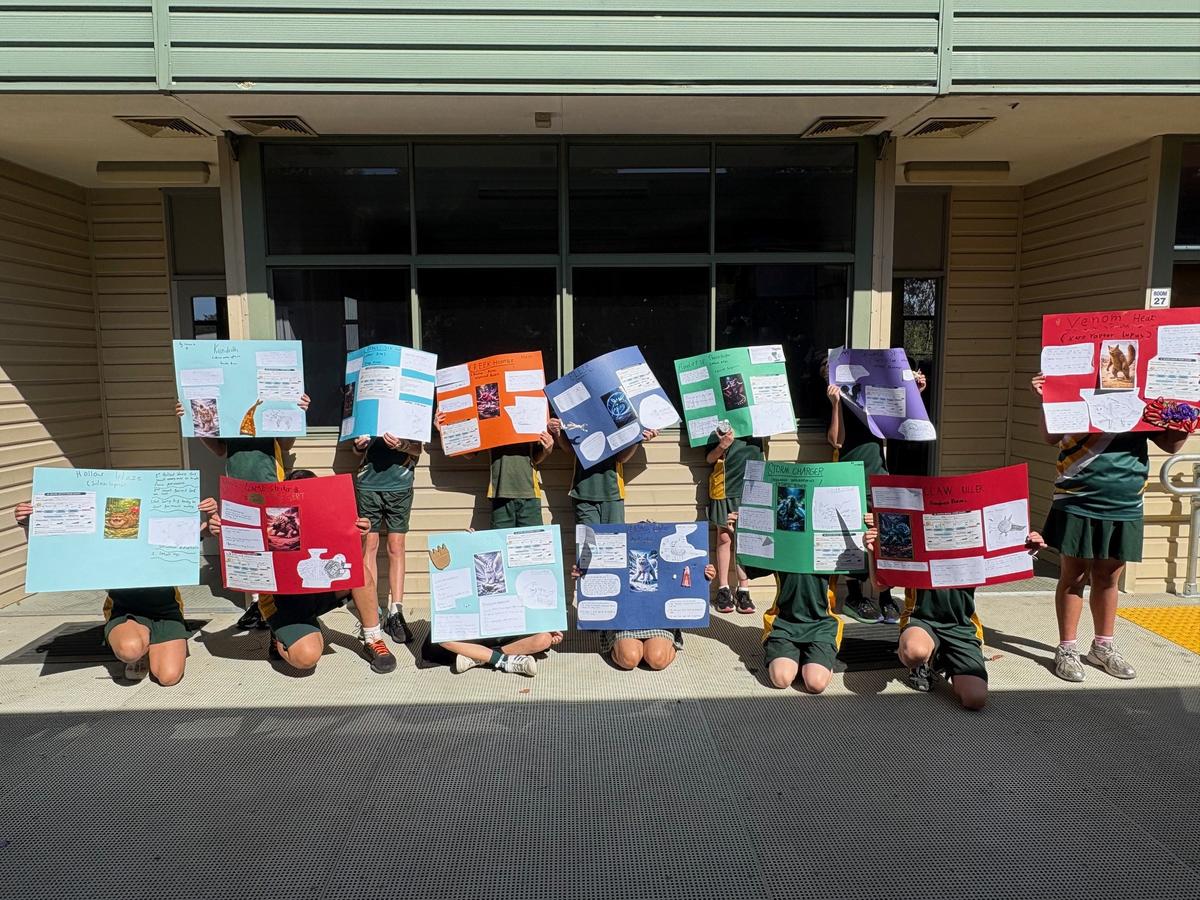
To showcase their learning, students stepped into the role of design engineers, creating their very own 'Biome Beast', an animal perfectly adapted to survive in a biome of their choice. As part of this project, students followed the engineering design process by researching, planning, creating and refining their ideas to develop a solution best suited to their chosen environment.
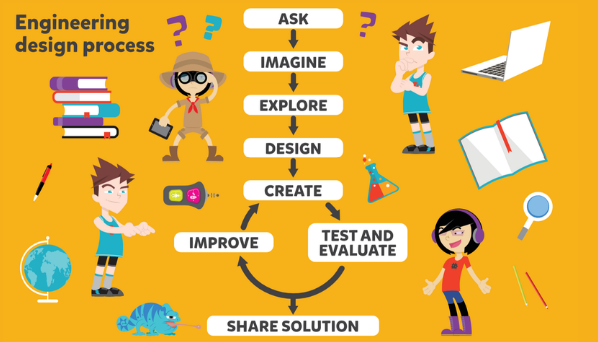
Students began by researching their chosen biome and its conditions, before identifying at least three behavioural and three structural adaptations their creature would need to thrive. They then brought their ideas to life by designing their creature’s appearance, building a physical model of one key adaptation and generating an AI image to fully visualise their beast.
It was wonderful to see the creativity on display, with such a wide variety of imaginative creatures being created and so much fun watching their designs come to life.
Throughout the process, students demonstrated enthusiasm, creativity and strong scientific understanding while following the engineering design process.
I am incredibly proud of their efforts and the innovative thinking they have shown!
Happy Easter Holidays to All!
Mrs Humphreys
Indonesian
Selamat Datang – Welcome!
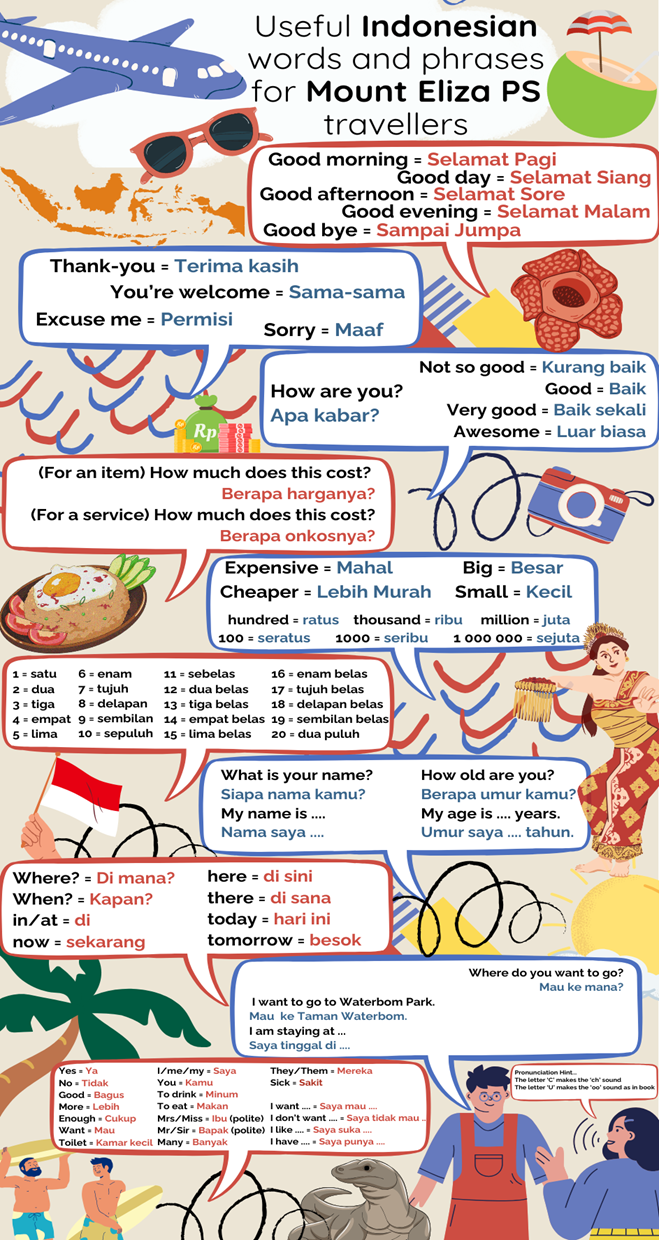
Thought this term, students from Prep to Year 4 have been exploring the vibrant and exciting world of the Indonesian language. They have been learning new words, practising simple conversations, singing songs and discovering how language connects us to different cultures and places.
To help continue this learning at home, we have provided a handy travel card filled with useful and important Indonesian phrases. You might like to keep it on your fridge or even take it along on your next adventure. It’s a great way for students to practise their Indonesian in real life situations and share what they’ve been learning with family and friends.
Terima kasih (thank you) for supporting your child’s language learning journey!
Warm regards,
Bu Taggart