Grade 3 News

Dear Year 3 Parents/Guardians,
The Year 3 students have been hard at work and are now starting to look forward to a well earned break.
Just a quick reminder that students need to bring their satchel and diary to school every day. This helps with organisation, tracking reading progress, and ensuring teachers can send home any important notes. Also, nightly reading is a big part of our routine. Regular reading at home helps build fluency and comprehension skills. To support this, students can also access extra reading practice on Little Learners.
Please continue to check Compass regularly to stay up to date with important information, including the release of CATS (Common Assessment Tasks). Both the Writing and Reading CATs have been released in the last few weeks. We encourage you to take the time to view your child’s work and leave a comment in the conversation box. This lets their teacher know you’ve seen the task and helps maintain a strong home–school connection.
Learning Focuses - Below is what we have been focusing on with our learning over the last few weeks.
Phonics
Recently, students have been learning about different ways to spell the /k/ sound. Students have been identifying these patterns in words, practising spelling them in context, and applying this knowledge to their reading and writing tasks.
The /k/ sound can be spelled as:
- /ch/ - character
- /c/ - classic
- /k/ - kitchen
- /ck/ - flick
Morphology
In our lessons, we’ve been learning how prefixes and suffixes can change the meaning or function of words, helping students build their vocabulary and understand how words work.
Most recently, we’ve been focusing on the suffix -ness and the prefix mid-:
- -ness is a suffix that means ‘having the quality of’ (e.g. illness which means ‘being sick’).
- mid- is a prefix that means ‘in the middle’ (e.g. midnight which means ‘in the middle of the night)
Students have been practising identifying these word parts in context and applying them to their reading, spelling, and writing tasks.
Grammar & Syntax
Over the past few weeks, we’ve been building up students’ writing skills by focusing on identifying and defining complex sentences and subordinating conjunctions.
Identify and define complex sentences and subordinating conjunctions. Students have been learning that a complex sentence has an independent clause with one or more dependent clauses.
- An independent clause can be a sentence on it’s own – e.g. We must brush our teeth.
- A dependent clause can not be a sentence on it’s own - e.g. Before we go to bed.
Therefore, this sentence is a ‘complex sentence’ - Before we go to bed, we must brush our teeth.
This helps the students add interest to their writing by including different types of sentences.
Writing
Recently, the students published their own warning tale to finish our first Talk for Writing unit. It’s amazing to see how well they learnt the structure of this type of narrative, as well as their use of the different tools to introduce their main characters.
We have now moved into a new Talk for Writing unit. The students are now exploring a Unicorns information report to learn the structure of informative of writing. Just like with our last unit, the students are learning one part of the report at a time and have been matching actions to each part. This helps them to remember the structure when they begin writing their own. As they learn the structure, the students have also begun investigating different tools that can help make their writing clear and at improve their writing skills. They are learning to make comparisons, explain how often a fact is true, use linking words like ‘however’ to change the direction of a fact, include an unusual fact.
We will continue to learn more about information reports over the next few weeks. In this time, the students will also have the opportunity to draft their own report on a made up animal they have created, with a focus on including the tools mentioned above.
Knowledge
In Knowledge and Literature, the students have started to explore the classic tale of The Wind In The Willows.
Before starting the story, the students learnt about the willow tree, as well as the different animals that appear. These include the mole, water rat, otter, badger and toad. By learning about these animals first, the students are able to see how the characters are influenced by the real life animals.
We have been discussing the different themes that Kenneth Grahame included. These are loyalty, responsibility and irresponsibility. The students are learning not only what a theme is and why authors include them, but also where these specific themes are seen within the story. For example, Rat shows loyalty to Mole when he decides to go in the wagon with Toad, because he could see how much Mole wanted to.
As we continue to read the story, the students will build both their literal and inferential comprehension. Literal comprehension is where you understand things that are directly stated in the story, for example, the basic events that happened in a chapter. Inferential comprehension is trickier, as this is understanding details that aren’t directly stated. For example, recognising that a character is embarrassed because their face went red.
Maths
In Maths, the students have continued to build their addition and subtraction skills. Most recently we have focused on solving word problems.
When solving word problems, we use UPAC:
- Understand - do you know what the question is asking?
- Plan - what strategy will you use to solve it?
- Answer - solve it.
- Check - make sure you go it correct.
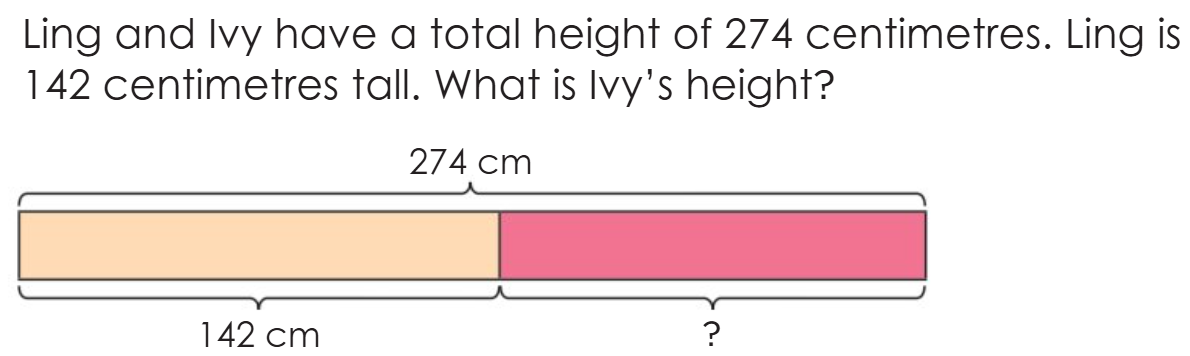
To understand the problem, the students have learnt to visualise it by using the bar model. This is where ‘bars’ are used to represent the different parts. It helps us to see whether we are adding or subtracting. This is an example of a bar model.
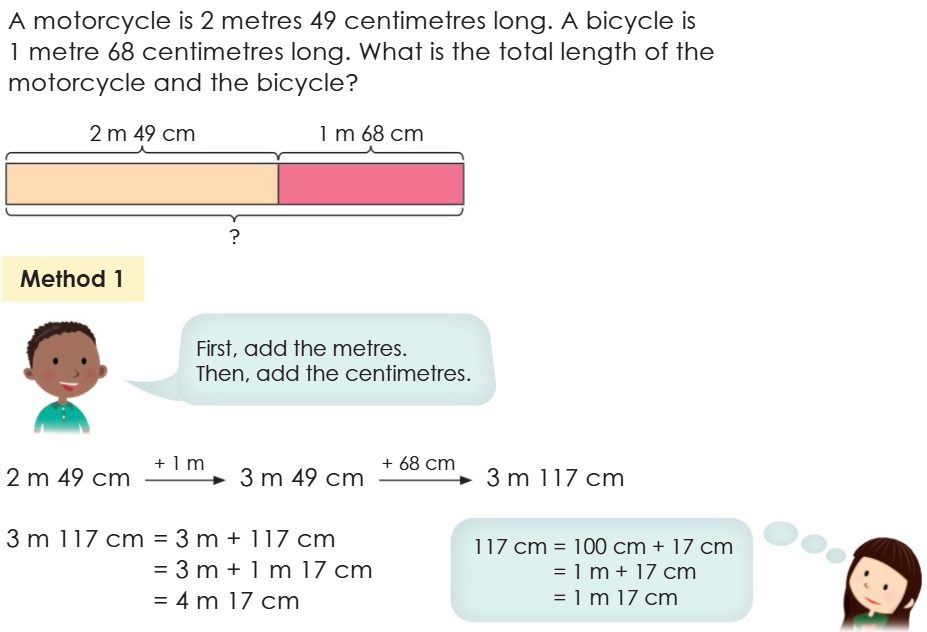
The students have also been learning about length and how to add metres and centimetres. They know to use metres when measuring larger objects, like the length of a room, but centimetres for smaller objects, like a pen. They have also learnt that there are 100 centimetres in 1 metre. This has helped them to add different measurements together by being able to convert between the two different units.
Students have also been learning about mass and how to use different units, such as kilograms and grams, to measure the weight of different objects.
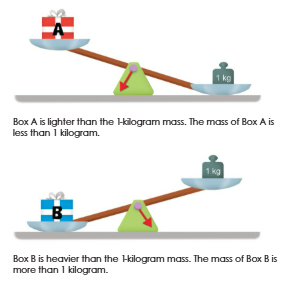
Balance Scales
Balance Scales
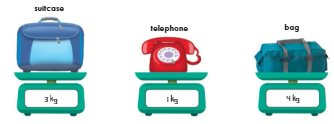
Digital scales
Digital scales
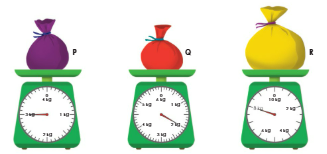
Analogue scales
Analogue scales
They have been learning to read scales including analogue, digital and balance scales.
We learnt that this can be a little tricky with the analogue scales due to the fact that the increments are not always labelled and sometimes we have to work out what the scales are counting by before being able to read the weight (much like reading the time on a clock)
They were learning to make comparisons between the weights and also identify the difference between the mass of the items.
Upcoming Events:
- Last day of school - 4th July 2025
- First day of Term 3 - 21st July 2025
Thank you for your continued support in continuing and strengthening our home and school relationship, which is so vital for students.
Have a well deserved break, ready for Term 3!
Miss Stapleton, Miss Henzell and Mr Francis