Careers Update

Year 12 Career meetings
Over the last couple of weeks, the Careers Team has been working with the Year 12 cohort conducting 1:1 face to face meetings to help plan out their 2027 pathways. It’s an exciting time for students as they work through stepping into the real world of work/study beyond secondary school. Our Year 12 students are strongly encouraged to continue working closely with the Careers Team throughout the 2026.
VCE VM – Structured Work Placement
Structured workplace learning provides students with the opportunity to integrate on-the-job experience with their secondary VET study. It is critical that all VM students find a work placement to enable them to gain:
- enhanced skill development
- practical application of industry knowledge
- assessment of units of competency
- achievement of some learning outcomes
- enhanced employment opportunities
Careers can offer support to VM students who have not yet found a work placement.
Year 10 Work Experience Program
The Year 10 Work Experience Program will commence in:
Term 3 Monday 27th July – Friday 31st July 2026
An assembly with details and information will be occurring early in Term 2. It is advisable for students to start early in securing work experience placements.
Where studying art could take you
Studying art builds way more than drawing skills. Discover the surprising careers where creative thinking gives you a real edge.
Art education builds a toolkit of skills that employers across dozens of industries are actively searching for. So, if someone tells you that studying art won’t lead anywhere, they probably haven’t looked at the job market lately.
Another benefit? Many of these skills are ones that AI struggles to replicate. From creative judgement (looking at many different ideas then making smart, informed decisions about which ones are the best to use to solve a problem), cultural awareness, the ability to communicate ideas visually - these aren’t things a machine can do well. Not yet, and arguably not ever.
It’s not just about drawing
Generally, when people think of art, they picture someone at an easel. But art as a subject covers a huge range of practices including graphic design, photography, sculpture, textiles, printmaking, digital media, film, architecture and more.
The skills you develop across all of these areas are surprisingly transferable. Studying art teaches you to observe carefully, to really look at something and understand it before you respond to it. It teaches you to solve problems when there isn’t one single correct answer, to communicate without words and to handle feedback without falling apart. These are skills that show up in boardrooms, hospitals, tech companies and courtrooms, not just galleries.
Careers where art skills really shine
If art is something you love and want to be at the core of your career, there’s a wide range of paths worth exploring.
Graphic designers
Graphic designers create the visual identity of brands, logos, layouts, packaging and advertising. Even social media posts. Think of the Nike swoosh, designed by Carolyn Davidson in 1971 that’s recognised around the world still today. Every brand you recognise started with someone making a creative decision. You could work for an agency, a company or go freelance.
UX (user experience) designer
Every time you use an app or website and it just feels easy to use, someone designed it that way deliberately. UX designers combine art, psychology and digital tech skills to turn research into shaping digital products into what the customer wants and makes them easy to use. It’s one of the fastest-growing roles in tech, ranked number 8 in the fastest growing jobs to 2030 in the World Economic Forum’s Future of Jobs Report 2025— and it’s fundamentally a creative, artistic job.
Architect
Creativity and technical skills go hand in hand in this field. Architects use spatial thinking, drawing and an understanding of materials, light and human behaviour to design buildings. Many renowned Architects have art backgrounds, including; Le Corbusier a pioneer of modern architecture; Zaha Hadid aka the “Queen of the Curve” known for her futuristic, sweeping designs with a background that includes painting and calligraphy; and sculptural architect Frank Gehry who used his skills to create incredible buildings like the Guggenheim Museum – they all relied on their art skills to bring brilliance to their work.
Art Director
Art directors lead the visual side of projects in advertising, publishing, film and fashion. They make decisions about how something looks and feels, and they guide teams of designers, photographers and illustrators. You’ll often see them being celebrated in awards for outstanding movies, music videos or even magazine publications. It’s a senior creative role that you can’t walk into right away but is a great example of how progression in art is possible.
Medical Illustrator
This is one people rarely think of. Medical illustrators produce the anatomical diagrams used in surgery training, textbooks and patient information. It requires both artistic skill and a deep understanding of science.
Leonardo da Vinci was not just an artist but also an anatomist who created detailed drawings of human muscles, bones and organs in the 1400’s. Dr. Frank H. Netter was both a surgeon and an artist who used his skills to create the Atlas of Human Anatomy which earned him the nickname as the “Michelangelo of Medicine”. Work in this field is precise and has been hugely influential and important in modern medical practice and training.
Set and Costume Designer
Film and theatre productions rely entirely on designers to build the visual world of a story. From the detailed costumes of a period drama to the alien landscapes of a sci-fi film, these roles require research, problem-solving and a lot of creativity under time pressure and tight budgets.
Art Therapist
Art therapy uses creative practice to support people’s mental health and wellbeing. Art therapists generally work in hospitals, schools and community settings, helping people process difficult experiences through making things. It combines artistic skill with a genuine care for people.
Other jobs where art opens doors
Art skills travel further than you might think. Here are some more careers worth looking into if you love art:
- Tattoo artists create permanent, bespoke artwork for clients. You could end up running your own business and building a personal brand.
- Animators bring characters and stories to life in 2D, 3D and 4D for film, TV, games and advertising.
- Industrial or product designers design the physical objects we use every day, from furniture to smartphones.
- Photographers work in a huge number of fields and industries from fashion and journalism to commercial, scientific or documentary photography.
- Gallery curators select, research and present artworks for exhibitions, connecting audiences with creative work.
- Fine art auctioneers combine their knowledge of art history with sales skills to work in the high-stakes world of art auctions.
- Environmental designers shape public spaces, wayfinding systems and exhibitions so people can navigate the world more easily.
- Textile designers design fabrics and patterns for fashion, interiors and manufacturing.
- Creative directors lead the overall creative vision for a brand, agency or production company.
- Forensic artists work with law enforcement to create facial reconstructions and crime scene illustrations.
What AI can’t do
This is worth thinking about. AI tools can generate images, remix visual styles and produce content quickly. What they can’t do is make a real creative decision grounded in human experience. They can’t meet a client, listen carefully to what’s needed and translate that into something that genuinely connects with people.
The professionals best placed to work alongside AI in creative industries are those who understand creativity from the inside. Who know when something works and why. Photographer Annie Leibovitz, director Ava DuVernay, designer Virgil Abloh – none of them succeeded because they could operate software. They succeeded because they had a point of view and the craft to express it.
JENZA & BUNAC GAP YEARS
See the world and gain real work experience along the way.
For a lot of students, a gap year means pressing pause. But with JENZA and BUNAC’s gap year options, students can gain real-world experience that builds confidence, capability and a seriously impressive CV.
Travel with purpose
JENZA and BUNAC experiences combine overseas travel with paid jobs, internships and structured work placements. Students are not just seeing the world. They are contributing to workplaces, earning money and building a track record of real responsibility. When they return, they will have gained the ability to:
Work in a new environment
Solve real-world problems
Work as part of a team
Set and achieve measurable goals with examples to show for it
That kind of experience carries weight in interviews and university applications.
Grow the skills that matter
Living abroad challenges students in the best possible way. New workplaces, new expectations and new cultures demand flexibility and confidence. Along the way, they develop the core skills employers value most:
Communication
Teamwork
Adaptability
Problem-solving
Independence
Initiative
These skills are not learned in theory. They are built day by day in real-world situations.
Where could a gap year take you?
With JENZA and BUNAC, students can choose from a range of work and travel experiences, including:
Working a ski season in Canada or Japan
Joining a summer camp team in the USA
Hospitality or tourism jobs in the UK
Combining work with travel across Europe
These experiences allow students to earn money, gain professional experience and explore new cultures at the same time.
Supported every step of the way
The best gap years have purpose. Through JENZA and BUNAC, students receive guidance with visas, job placements and arrival support. The result is a safe, organised and professionally beneficial experience, with expert support behind the scenes. A gap year with JENZA and BUNAC is more than just time away. It can be the year that shapes what comes next.
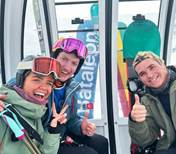
Paid Gap Year Programs | Work and Intern Abroad | JENZA
Lowanna Careers
Don’t forget to check out our career’s website which has mountains of information and resources to support students and families.
https://www.lowannacareers.com/
Careers Support
We are available as a support for students and parents with any questions or queries they may have. Please feel free to contact the Careers Team:
Kirsty Mitchell ph: 5127 9225 or kirsty.mitchell@education.vic.gov.au
Alisha Disisto ph: 5127 9264 or alisha.disisto@education.vic.gov.au .disisto@education.vic.gov.au