School News

Medication Management at Magill School
Providing Medication for School
If you need to provide medication for use at school, please note the following:
Medication for administration in the school setting (including excursions and camps) includes all prescribed, non-prescribed, over the counter and alternative therapies (vitamins, minerals, supplements, etc). It does not include sunscreen, moisturising lip balm, lubricating eye drops or moisturiser where these items are un-medicated.
Medication cannot be administered at school without a fully completed Medication Agreement or Action Plan. These cannot be overwritten or amended as they are a legal document. A first dose of a new medication cannot be administered by staff.
Asthma and/or allergy and anaphylaxis action plans must be completed by the treating health care professional. These plans generally include medications, such as salbutamol and anti-histamines, that are given as required rather than at specific times.
Medication Agreements are used when medication is to be given at a specific time on a regular basis, short term or long term. They need to be completed as follows:
For Schedule 2 to Schedule 4 medication (with the exception of those covered by asthma and allergy plans), a medication agreement can be completed by a parent/guardian. The time that the medicine is to be given must be stated. Medicines listed on a medication agreement cannot be taken on an ‘as and when’ basis, ‘as directed’, ‘as indicated on bottle’, ‘twice daily’ or ‘PRN’ etc. If the medication is for short-term use, the end date must be stated.
For Restricted Schedule 4 and Schedule 8 medication (controlled drugs), the medication agreement must be completed by a registered health professional.
For all plans and agreements, the type of medication must be stated along with the exact dosage. The medication stated must be the type that is supplied. All medication must be supplied in its original packaging and have a pharmacy label to match the agreement/plan exactly (this includes over the counter medication). Please supply a plastic box with lid for safe storage and transportation of medication for excursions etc.
Plans and Agreements should be reviewed when recommended by the treating health professional. They must be reviewed if your child’s medical condition changes.
It is the responsibility of the parent/carer to provide medication and any administration equipment as well as health care plans and agreements.
All forms are available from the front office.
If you have any queries, please contact Chrissi on 8331 9422 or email chrissi.crouch24@schools.sa.edu.au
Being SunSmart
Magill School and OSHC were awarded SunSmart Status by the Cancer Council SA in November 2024.
Ultraviolet (UV) radiation damage accumulated during childhood and adolescence is strongly associated with an increased risk of skin cancer later in life. Australia has one of the highest rates of skin cancer in the world, with two in three Australians developing some form of skin cancer in their lifetime. Skin cancer is one of the most preventable cancers.
Children are in school when daily ultraviolet (UV) radiation levels are at their peak. With the sun’s ultra violet (UV) radiation being the main cause of skin cancer, the problem is you can’t see or feel UV radiation. In fact, it can cause permanent damage to the skin long before sunburn occurs.
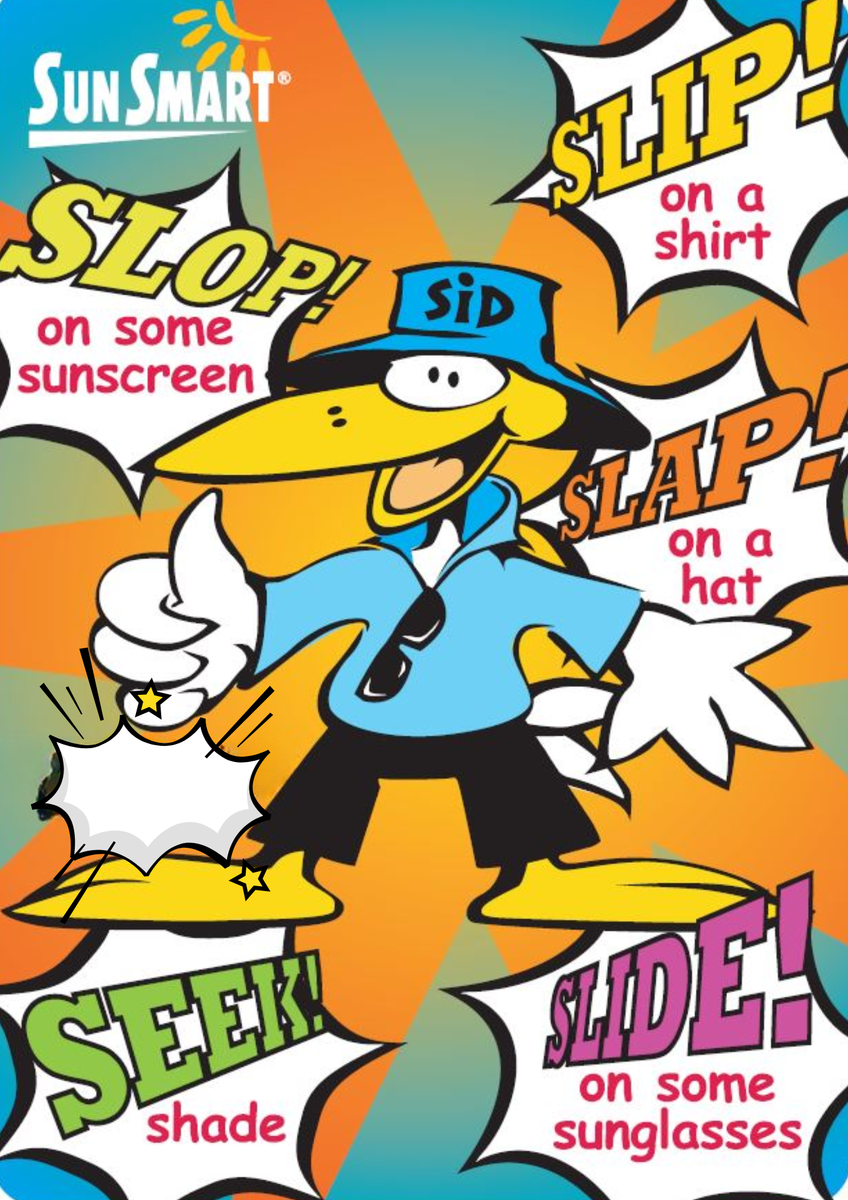
The good news is most skin cancers can be prevented by following SunSmart steps. SLIP on covering clothing. SLOP on SPF50 or SPF50+ broad-spectrum, water-resistant sunscreen ideally applied 20 minutes before going outside and reapplying every 2 hours, or more frequently if sweating or swimming. SLAP on a hat. SEEK shade. SLIDE on some sunglasses.
The school provides SPF50+ broad spectrum, water-resistant sunscreen to each classroom, and it is also available at the front office for all staff and students to use at any time. Strategies are in place to remind and encourage students to apply sunscreen before going outdoors.
We ask that our school community help us to reinforce our school’s sun protection strategy by:
Asking parents/carers to apply SPF50+ broad-spectrum, water-resistant sunscreen to students before school and vacation care and ensuring their child has a sun-protective hat and covering clothing.
Asking staff, volunteers, parents, carers and visitors to wear a sun-protective hat, covering clothing and where practical, sunglasses, and using sunscreen themselves.
Seeking shade whenever possible.
Burnside Council - Parking / Kiss and Drop
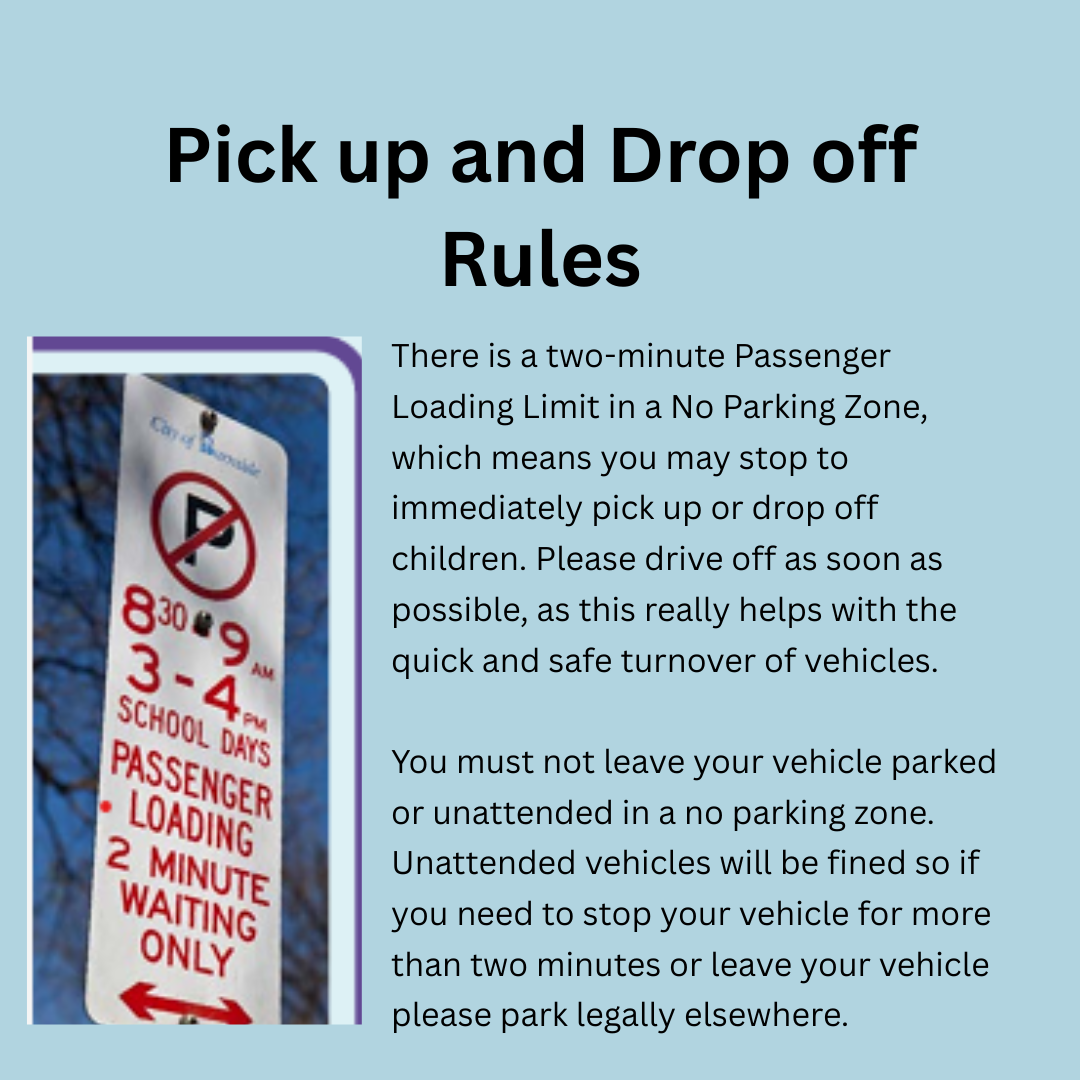
The City of Burnside thanks you for parking considerately, which helps keep our school community safe. For the safety of students, please do not park in staff carparks. Parking inspectors regularly monitor the area and may issue fines. For more information, see the link below.