Classroom News
Foundation Newsletter - Term 2 Overview
Dear Parents/ Caregivers,
We hope everyone enjoyed a restful break and are feeling refreshed and ready for an exciting Term 2! It has been wonderful to welcome our Prep students back into the classroom, and we are already seeing them settle quickly into routines and reconnect with their friends.
Term 1 was filled with so much growth, learning and joy, and it has been fantastic to see how much confidence our students have developed. They are continuing to build on their skills in reading, writing and maths, approaching new learning with enthusiasm and curiosity.
As we begin this new term, there are plenty of engaging learning experiences ahead. From hands-on activities to collaborative tasks, students will continue to develop their independence, communication and problem-solving skills.
It’s shaping up to be another busy and fun-filled term, and we are looking forward to all the learning, laughter and achievements that lie ahead!
Date | Event |
| Wednesday, 6th May | Mother’s Day Stall |
| Thursday, 7th May | Curriculum Day |
| Monday, 8th June | King’s Birthday Long Weekend |
| Friday, 12th June | Myuna Farm Excursion |
Literacy
This term, our Prep students will be exploring a fun and engaging farm-themed literacy unit, designed to build their confidence in reading, writing and oral language. Through a variety of rich texts and structured lessons, students will develop their understanding of farm life while strengthening their literacy skills.
Reading
Students will engage with a range of texts connected to life on the farm, including Old MacDonald Had a Farm, The Little Red Hen, With a Moo Moo Here, From Farm to Market and The Seasons of Farming. These texts will support students to build their vocabulary, comprehension and understanding of how farms work, including animals, crops and food production.
In addition, students will participate in Colourful Semantics lessons, using engaging picture books such as Farmer Duck, Rosie’s Walk, What the Ladybird Heard, Little Blue Truck and Hattie and the Fox. These sessions will help students understand how sentences are structured and how meaning is constructed.
Sounds Write
Throughout this term, students will continue to build their early reading and writing skills through the Sounds Write program, developing a strong understanding of how sounds work within words.
In Units 5–9, students will focus on consolidating their knowledge of previously learned sounds while applying them in increasingly complex words and sentences. They will practise segmenting (breaking words into sounds) and blending (putting sounds together to read words) with growing confidence and accuracy.
Students will work with a range of decodable words and sentences, helping them apply their phonics knowledge to both reading and writing. They will also continue to strengthen their ability to:
- Recognise and read common sounds (phonemes)
- Link sounds to their written representations (graphemes)
- Read simple sentences with increasing fluency
- Spell words by identifying and recording the sounds they hear
As the units progress, students will begin to read and write longer and more complex words, as well as simple connected sentences. They will be encouraged to listen carefully to sounds in words and apply their knowledge independently during writing tasks.
By the end of these units, students will demonstrate increased confidence in decoding (reading) and encoding (spelling), supporting their overall development as emerging readers and writers.
Writing
Students will develop their writing skills through modelled writing and dictation, using decodable sentences aligned with their Sounds Write learning.
A key focus will be the Syntax Project, where students will learn to:
- Write simple sentences using a subject (who/what) and verb (what doing)
- Expand sentences by adding extra information (where, when, who/what)
- Use adjectives to add detail
- Join ideas using conjunctions such as because and but
As the term progresses, students will move from writing simple sentences to creating more detailed and expressive sentences, building their confidence and independence.
Handwriting
In Foundation, students develop their handwriting skills by learning how to correctly form letters using clear and consistent movements. Students focus on correct letter formation, starting points and direction, as well as developing a comfortable and efficient pencil grip.
Students practise writing both lowercase and uppercase letters, with an emphasis on sizing, spacing and sitting letters on the baseline. They also begin to build stamina and confidence when writing simple words and sentences.
These foundational skills support students in becoming confident and fluent writers as they continue their learning journey.
Numeracy
This term, our Prep students will continue building their confidence in Maths through hands-on activities and engaging learning experiences.
We will begin by exploring addition and subtraction within 5, using simple story problems to help students understand how numbers can be combined and separated. Students will then develop their skills in problem solving, applying their learning to real-life situations.
Throughout the term, students will also learn about ordinal numbers, measurement (comparing size, length and height), and extend their number knowledge by counting up to 20.
Later in the term, we will explore time, including days of the week and parts of the day, as well as an introduction to telling time. Students will also investigate 2D shapes, learning to identify, sort and describe them in the world around them.
Each week, students will participate in maths games to reinforce their learning in a fun and engaging way.
We are looking forward to a fantastic term of learning and growth in Maths!
HASS: Science: Staying Alive
This term, our Prep students will be exploring the exciting world of living things through a fun, farm-themed science unit!
Students will learn about the differences between living and non-living things and explore what plants and animals need to survive, including food, water, air and shelter. They will investigate how living things live in places where their needs are met and begin to understand the environments around them.
Throughout the unit, students will explore the features of plants and animals, learning how different parts help them grow, move and survive. They will also practise grouping and sorting living things based on what they can see, such as feathers, fur or leaves.
Students will take part in a range of hands-on activities and experiments, including growing their own plants, observing changes over time, and exploring how sunlight and water help plants grow.
It’s going to be a wonderful term of curiosity, discovery and learning as students explore the living world around them!
Myuna Farm Excursion
In Week 8, on Friday 12th June, our Prep students will be heading off on their very first excursion to Myuna Farm! We are very excited for this special opportunity, which will connect beautifully with our learning about living things and farm life.
More detailed information will be shared with families shortly.
We will be looking for parent volunteers to support us on the day (approximately one per class, due to venue limits). If you are available, please keep an eye out for further information, volunteers will be allocated on a first available basis.
Please note that a valid Working With Children Check is required for all excursions and school supervision activities.
Thank you for your ongoing support, we can’t wait for this exciting experience!
Warmest regards,
Tegan Cochrane, Renee Kociski, Ashleigh Smith and Vanessa Stimar
Foundation Teachers
________________________________________________________________________________
Year 1 Newsletter - Term 2 Overview
Dear Parents/ Caregivers,
It has been wonderful to see the children again, hear all about their holidays, and see how well they have settled back into their Year 1 routines.
Below is an overview of important dates for Term 2. There will be possible updates or new dates added to Compass as the term progresses:
| Date | Event |
|---|---|
| Wednesday 6th May | Mother’s Day StallFoundation to Grade 2 Assembly |
| Thursday 7th May | Curriculum Day |
| Tuesday 19th May | Grade 1 Melbourne Zoo Excursion |
| Wednesday 22nd May | Foundation to Grade 2 Assembly (ran by 1B) |
| Wednesday 3rd June | Foundation to Grade 2 Assembly (ran by 1A) |
| Friday 5th June | Grade 6 Toysale Graduation Fundraiser |
| Wednesday 17th June | Foundation to Grade 2 Assembly |
| Wednesday 24th June | Whole School Assembly |
| Friday 26th June | Grade 6 Graduation Bake SaleLast Day of Term 2 concludes at 2:30 PM Year 1 |
Year 1 Term 2 Timetable
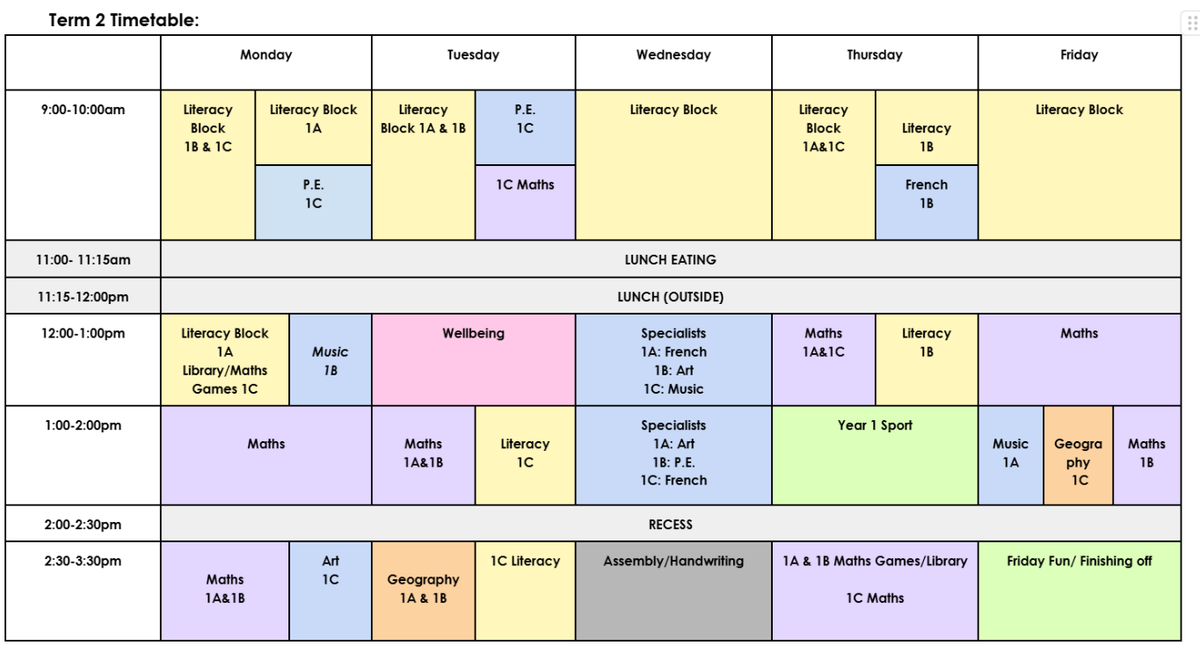
Please note, Foundation-Grade 2 Assembly will now be every second Wednesday afternoon (Odd Weeks).
Numeracy
In Numeracy, students will be learning to represent and solve simple addition and subtraction problems using strategies such as counting on, partitioning and rearranging parts. They will add and subtract numbers within 20 using physical and virtual materials and apply part-part-whole knowledge to support flexible thinking. Students will also begin working with one- and two-digit numbers, using number sentences and part-part-whole reasoning to solve problems.Students will explore location by giving and following directions, and compare and order objects using attributes such as length, mass, capacity and duration. They will measure length using informal units, understanding the need for uniform units placed end-to-end, and partition one- and two-digit numbers, including breaking numbers into tens and ones.
Literacy
In Reading, students will be exploring and developing their understanding of vocabulary within non-fiction texts, with a particular focus on identifying and using key content words to build meaning. They will continue to locate and use information from a range of texts to answer literal, inferential and evaluative questions, strengthening their comprehension skills and ability to think more deeply about what they read. Students will also engage in echo reading to support their decoding, word recognition, phrasing, intonation and overall fluency. Through repeated reading and modelling, they will build confidence in reading aloud with increasing accuracy, expression and understanding.In Writing, students will be focusing on identifying and describing the features of living things. They will write informative texts that include factual descriptions of animals’ appearance, habitats and diets. Students will use noun groups and verb groups to provide detail, expand simple sentences from sentence fragments, and create short informative texts with an introduction that introduces the topic and engages the reader.In Spelling, students will continue their structured spelling instruction using the programs Heggerty and Sounds-Write. They will develop their phonemic awareness by exploring and applying the sounds /ow/, /oo/, /ie/ and /ou/ in a range of words. Students will practise segmenting and blending sounds to support accurate spelling, as well as identifying different spellings for the same sound. Through explicit teaching, repetition and guided practice, they will strengthen their ability to transfer their sound knowledge into their reading and writing.
Wellbeing
In Wellbeing, students will be exploring positive coping strategies, problem solving, and ways to work together effectively in a range of social situations. They will develop skills in respecting themselves and others, understanding and managing their emotions, and using appropriate anger management tools. Students will also be supported to build confidence in facing fears and challenges. This learning is reinforced through the Respectful Relationships and Bounce Back programs, alongside the School-wide Positive Behaviour Support framework, helping students to build resilience and positive relationships.
Geography
In Geography, students will be learning about continents, countries and maps. They will learn about different places around the world, including the people, cultures and animals that live there. Students will develop their map skills by identifying and locating continents and countries, using simple maps and globes. They will focus on the continents of Europe, Africa and Asia, Australia and Antarctica, and North and South America, learning key features of each. Through this, students will begin to understand how places are similar and different, and how location influences how people and animals live.
Reminders:
Homework Expectations
We understand that everyone has a busy after school schedule with sporting and extra-curricular activities, so we do not aim to set mountains of extra work for the students each night. We will however, have the expectation that students complete small tasks each week to build their time management and organisational skills.
Homework will be handed out on a Monday and returned on a Friday.
Homework Tasks
Numeracy task:
Each week, students will complete a maths task that links to the mathematical concepts and skills they have been learning in the previous week.
Numbots:
Students will Numbots tasks. Their logins can be found at the front of their Homework Book.
Reading Log:
Students are to read for 20 minutes per night (including their decodable text provided each Monday). They are then to record their page number and time read into their reading log at the back of their Homework Book, and have this signed by a parent/carer.
Rewards
Students will be rewarded with a weekly token for completing all their homework and reading log.
Fluency and Sounds Write activity:
Students will complete the Seek the sound- Sounds Write activity by:
Reading aloud the passage to a parent/carer.
Listening carefully for words with the sound focus and either highlight, circle or underline the word.
Library
1C will have library on a Monday, and 1A and 1B will have library on a Thursday. Students will need to bring their library books inside their orange library bags each week on their designated library day.
Year Sport
Students will have their weekly year sport on a Thursday.
Healthy Eating/Allergies
In line with the Toorak Primary School's Healthy Eating Policy, which can be found on the school website, we will be encouraging students to bring healthy snacks for their recess and lunch breaks. At 10am everyday, students will have the opportunity to have a fruit
snack where they can have a piece of fruit or vegetables. We would greatly appreciate it if you could support us from your end. We also ask that students do not share their lunches or recess snacks. Within our cohort we have students who are anaphylactic to peanuts and sesame products, and therefore Year 1 will be a nut and
sesame free zone.
Warmest regards,
Caroline Morrison, Rosie Robinson, Grace Vaelioja and Alison Sparks
Year 1 Teachers
________________________________________________________________________________
Year 2 Newsletter - Term 2 Overview
Dear Parents/ Caregivers,
Welcome back to Toorak Primary School. It has been fantastic to see the students settle back into the classroom and take great responsibility and care in their learning so far.
We thought it would be beneficial to outline a few of the important dates for this year, and curriculum content for this term. Below is an overview of important dates for Term 1. There will be possible updates or new dates added to Compass as the term progresses:
Date | Event |
| Thursday, 7th May | Student Free Day |
| Tuesday, 12th April | Werribee Open Range Zoo Excursion |
Year 2 Timetable
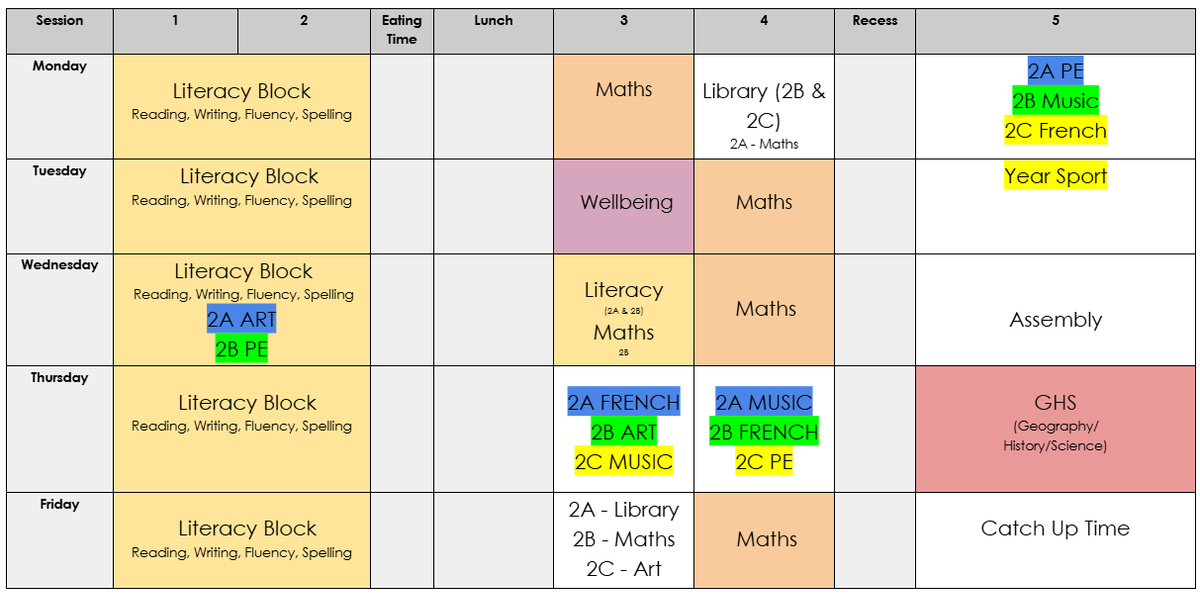
Please note, Year Prep-2 Assembly will now be every second Wednesday afternoon.
Numeracy
This term, students will develop their understanding of addition and subtraction, working with numbers both with and without regrouping. They will practise solving problems using a range of strategies, including mental computation, partitioning numbers, and using written methods. Students will be encouraged to explain their thinking, represent their ideas using models and drawings, and check the reasonableness of their answers.
Students will also explore measurement, with a focus on length and mass. They will learn to measure, compare, and order objects using both informal units (such as hands or blocks) and formal units (such as centimetres and kilograms). Students will develop their ability to select appropriate tools, use correct units, and record their measurements accurately. They will also apply these skills in real-world contexts, such as estimating, measuring, and solving practical problems.
Throughout the term, there will be an emphasis on building confidence, accuracy, and fluency, while encouraging students to communicate their mathematical thinking clearly.
Literacy
In Writing, students will focus on creating information reports about animals, developing their ability to present factual information in a clear and organised way. Using model texts, students will explore the key features of information reports, including classification, appearance, habitat, diet, and interesting facts. They will learn how to group related information into sections and write simple introductions to introduce their topic. Students will build their sentence structure by writing both simple and compound sentences, using conjunctions such as and, but, and so to connect ideas. There will be a strong focus on using commas in lists to organise information clearly, as well as incorporating adjectives to add detail and make their writing more engaging. Students will also develop their ability to edit and improve their work by checking for punctuation, sentence structure, and clarity. Throughout the term, students will practise planning, drafting, and revising their writing. They will be encouraged to consider their audience and ensure their information is accurate and easy to understand. By the end of the term, students will publish an information report on an animal, demonstrating their ability to organise ideas and present factual information clearly.
In Reading, students will be exploring a range of non-fiction texts, with a focus on building fluency and deepening comprehension. They will learn to read with increased accuracy, pace, and expression through regular fluency practice, including weekly passages aligned with the Sounds-Write focus. Students will develop their comprehension skills by identifying literal, inferential, and evaluative information within texts. There will be a strong emphasis on providing ‘expert answers’, where students justify their thinking using evidence from the text. They will practise locating key information, making connections, and explaining their ideas clearly in both discussions and written responses. Students will also build their vocabulary by exploring topic-specific words related to the texts they read and using context clues to determine meaning. Through a variety of texts and tasks, students will develop confidence in understanding and responding to non-fiction, preparing them to engage thoughtfully with factual information.
In Spelling, students will focus on the extended code in the Sounds-Write program. They will build on their understanding of phonemes and graphemes by learning more complex letter combinations and alternative spellings for sounds. Students will explore digraphs (two-letter combinations), trigraphs (three-letter combinations), and other spelling patterns, helping them to decode and spell a wider range of words. They will also practice reading and writing words with these more complex patterns through guided activities, dictation, and word-building exercises. This will strengthen their ability to read and spell words accurately and fluently.
Wellbeing
In Wellbeing, Year 2 students will participate in activities designed to help them recognise their individual strengths and appreciate the diverse qualities within their class community. They will explore how their personal and cultural backgrounds shape who they are, and how these strengths can positively contribute to both school and home life. A focus will also be placed on building positive relationships, including developing the skills needed to form and sustain friendships, show empathy, and care for others. Through the Bounce Back program, students will continue to strengthen their understanding of positive behaviours, self-awareness, and respectful interactions. They will learn practical strategies to manage their emotions, respond to challenges, and maintain a positive outlook. Lessons will also support students in recognising and responding appropriately to conflict, including understanding how to stand up to unkind behaviour in a safe and respectful way. Students will use the Zones of Regulation framework to build their self-regulation skills, learning to identify their emotions, recognise triggers, and apply strategies to manage their responses. They will engage in activities that support decision-making and problem-solving, while also reflecting on their experiences to support their overall wellbeing and personal growth.
GHS (Geography, History, Science)
In Science, students will be exploring biological science, making connections to their writing through the study of animals. They will investigate the basic needs of living things and learn how animals depend on their environment for survival. Students will explore different animal groups and begin to understand how animals can be classified based on observable features such as body covering, habitat, and diet. Students will examine how living things grow, change, and respond to their environment. They will explore the features of animals and how these help them survive, such as how they move, find food, and protect themselves. Through observations, discussions, and simple investigations, students will develop their ability to notice similarities and differences between animals.
Homework Expectations
We understand that everyone has a busy after-school schedule with sporting and extracurricular activities, so we aim to keep homework manageable and avoid overwhelming students. However, we do expect students to complete small tasks each week to help develop their time management and organisational skills. Homework will be assigned on Mondays and should be returned by Friday mornings.
Homework:
- Reading: Students are expected to read nightly for 10-20 minutes. The page numbers and time spent reading should be recorded in the student's homework book and signed by a parent or carer.
- Fluency Passage: Students will receive a fluency passage to read nightly, based on revision of our sounds covered the week prior.
- Sounds Write Activity: Students can write a list of the sounds from the fluency passage and write this in a table.
- Mental Maths: Monday through Thursday. These tasks should be completed independently. If your child is unsure how to answer a question, please encourage them to circle it and move on to the next one.
Numbots and My Numeracy- Logs in are found in the back of the homework book.
Healthy Eating and Allergies
In line with the Toorak Primary School's Healthy Eating Policy, which can be found on the school website, we will be encouraging students to bring healthy snacks for their recess and lunch breaks. At 10am every day, students will have the opportunity to have ‘brain food’, a quick snack where they can have a piece of fruit or vegetables. We would greatly appreciate your support in this matter. We also ask that students refrain from sharing their lunch or recess snacks.
Phones/Devices
As part of Toorak Primary School’s Mobile Phone Policy, students are required to hand in mobile devices or smart watches that receive messages and calls at the beginning of the school day (including those that can be turned on school mode). Teachers will lock these devices up securely and will return them at the end of the day. Students have been asked not to have their devices out on school grounds, both in the morning and in the afternoon.
Bell Times
- Start of Day: 8:55am
- End of Day: 3.30pm
At the beginning of each day, we will share information and go through the day's schedule. In order for your child to know what is going on and receive important notices, please ensure that they are at school on time.
School Uniforms
All students are required to wear a hat when participating in outdoor activities from September through to April. Students will be required to sit in the shade for the duration of lunch if they do not have a hat at school.
Students are encouraged to wear their House Shirts on a Friday. They can also wear these shirts to House Sports days. On whole-school Gala Days, we ask that their Toorak Primary School t-shirt is worn.
For students with hair below the shoulders, it will need to be tied up. Students are not permitted to wear jewellery (only small earrings and watches are allowed).
If you require any additional information or clarification, please feel free to reach out to us. We are excited to work with you and your children this year and know it will be a fantastic year of learning and fun!
Kind regards,
Daniel Lewis (leader)2A, Thilini Marasinghe and Zhuang Bian 2B, Rebeca Gomes 2C
Year 2 Teachers
________________________________________________________________________________
Year 3 Newsletter - Term 2 Overview
Dear Parents/ Caregivers,
Thank you for your ongoing support throughout Term 1. The students have truly impressed us with their persistence and resilience, consistently approaching challenges with determination and a positive attitude. It has been wonderful to see their growing confidence, willingness to take risks in their learning, and ability to bounce back when things become difficult.
We thought it would be beneficial to outline a few of the important dates and curriculum content for this term. Below is an overview of important dates for Term 2. There will be possible updates or new dates added to Compass as the term progresses:
Date | Event |
| Week 2 | Swimming: Monday-Friday
|
| Week 3 |
|
| Week 5 |
|
| Week 7 |
|
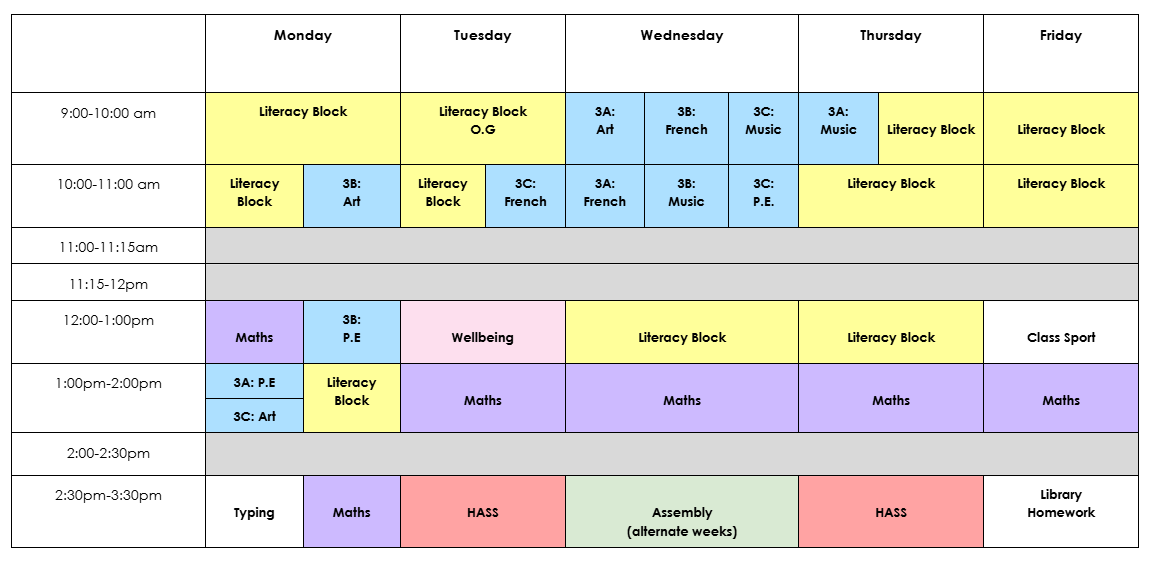
Year 3 Timetable- Please note, Year 3-6 Assembly will now be every second Wednesday afternoon.
Numeracy
In Term 2, students will explore key concepts from the Victorian Curriculum strands of Number, Measurement, and Statistics. In Number, the focus will be on developing fluency and confidence in Multiplication and Division, particularly through learning and applying the 2, 3, and 4 times tables. Students will practise using these facts to solve problems. In Measurement, students will investigate Mass. They will learn to measure and compare objects using kilograms and grams, as well as read and interpret measurements on graduated scales. Through hands-on activities, students will develop their understanding of how mass is measured and applied in everyday contexts. In Statistics, students will be collecting and presenting data and will interpret information in bar charts and column graphs.
Literacy
In Writing, students will be focusing on Information Texts, with a particular emphasis on the key elements that make an effective and well-structured piece. This term, their learning will be linked to our study of Ancient Rome, allowing students to explore engaging historical content while developing their writing skills. Students will continue to consolidate their understanding of simple, compound, and complex sentences, and will learn how to craft clear topic sentences, incorporate factual information, and engage the reader through the use of rhetorical questions. To support their learning, students will be provided with a clear model text that highlights the essential ‘tools’ of information writing. They will then innovate on this model, using it as a guide to plan and write their own informative texts.
In Reading, students will be reading one of our Core Knowledge texts, The Ancient Roman Civilisation. Students will explore new vocabulary, learn how to comprehend literal, inferential, and evaluative information. Lessons will include a range of discussion and written answers to allow the students to gain a deep understanding.
In Spelling, students will continue learning about the spelling rules that govern the English Language through Orton-Ghillingham sessions. These sessions include learning spelling rules, word reading and spelling using sound banks, syllabification and dictation. They will also be exploring the morphology of words and will have a weekly focus of morphemes that have a Greek or Latin origin.
Wellbeing
In Wellbeing, students will learn about coping strategies to deal with a range of strong emotions. We will discuss the strong emotions they may experience, and put them on scales from 1-10, and create and discuss strategies to deal with these emotions when they occur. After this we will explore “Looking on the Bright Side”, where students will have a sequence of lessons discussing the importance of looking at things from a positive lens rather than a negative one, and how this can help with different situations.
Humanities and Social Sciences (HASS)
In HASS, students will start off by exploring World Rivers. We will learn how rivers bring life to farms and cities, make people's lives easier and how they changed the way people traded around the world. After this unit we will have a deeper dive into Roman history, to go with our reading unit. Students will learn more about daily life in Rome, their marvelous inventions such as aqueducts and arches and the fall of the Roman Empire.
Homework Expectations
We understand that everyone has a busy after school schedule with sporting and extra-curricular activities, so we do not aim to set mountains of extra work for the students each night. We will however, have the expectation that students complete small tasks each week to build their time management and organisational skills. Homework will be handed out on a Friday and returned on a Friday.
Homework
Mental Maths: Monday, Tuesday, Wednesday, Thursday.
These tasks should be able to be completed independently. If your child is unsure of how to answer a question, please ask them to circle it and move on.
5 minutes of Times Table Rockstars/ Numbots to build fluency.
Reading: nightly reading for 20 minutes. The page numbers and time read needs to be
recorded in the back of the student's homework book and signed by a parent/ carer.
Laptops will be required everyday. Please assist your child to ensure that their device is coming to school fully charged each day.
Bell Times
- Start of Day: 8:55am
- End of Day: 3.30pm
At the beginning of each day, we will share information and go through the day's schedule. In order for your child to know what is going on and receive important notices, please ensure that they are at school on time.
Please do not hesitate to contact us, should you need any further information or clarification. We are really looking forward to working with you and your children this year, and think it is going to be a fantastic year.
Thank you,
Cassie Wilson, Harrison Yardney, Lauren Ely
________________________________________________________________________________
Year 4 Newsletter - Term 2 Overview
Dear Parents/ Caregivers,
Welcome back to Term 2. It has been fantastic to see the students settling back into the classroom and taking great pride and responsibility for their learning. It sounds like everyone had a great holiday break.
We thought it would be beneficial to outline a few of the important dates and the curriculum content for this term. Below is an overview of important dates for Term 2. There will be possible updates or new dates added to Compass as the term progresses:
Swimming: Week 2 Monday - Friday Week 3 Monday - Wednesday | |
Date | Event |
| Wednesday, 6th May | Mother's Day Stall |
| Thursday, 7th May | Curriculum Day (pupil free) |
| Friday, 8th May | District Cross Country (select students) |
| Friday, 15th May | Mother's Day Lunch |
| Tuesday, 19th May | Family Maths Night |
| Wednesday, 20th May | Year 3-6 Athletics Carnival |
| Monday, 25th May | Year 4 Incursion |
| Tuesday, 26th May | District Cross Country (select students) |
| Wednesday, 27th May - 3rd June | Reconciliation Week |
| Friday, 5th June | Year 6 Fundraiser (Toy Sale) |
| Wednesday, 25th June | Parent Teacher Interviews |
| Friday, 26th June | End of Term 2 |
Year 4 Timetable
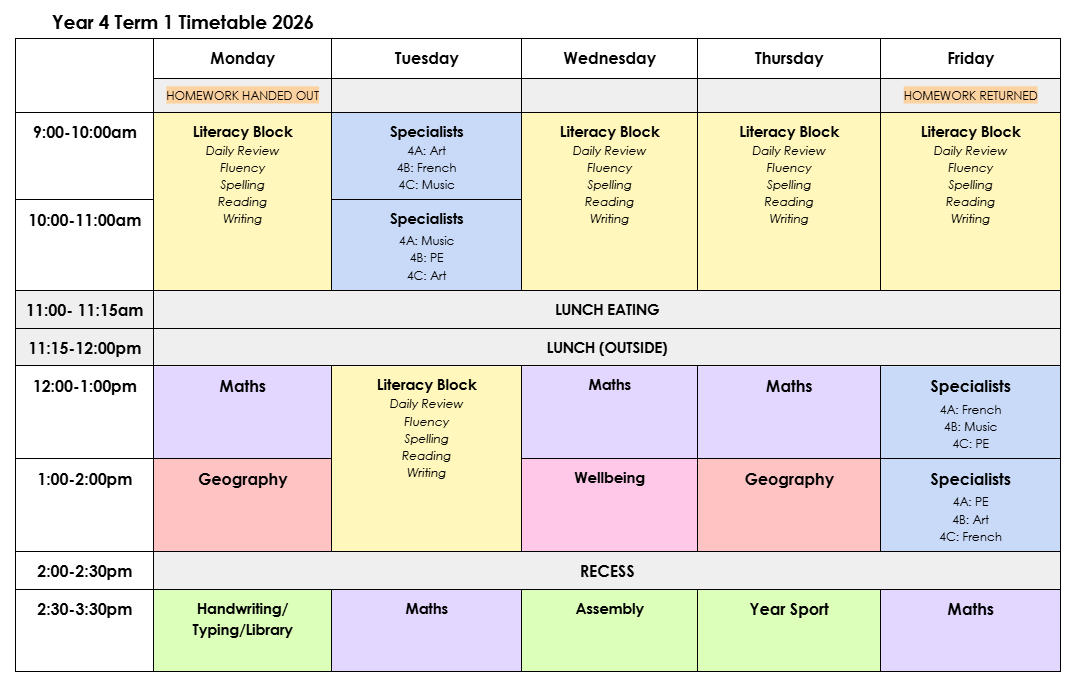
Please note, Year 3-6 Assembly will continue to be every second Wednesday afternoon.
Numeracy
This Term, In Number, students continue to improve their addition and subtraction fluency, with numbers up to 100, 000. The concepts of multiplication and division are extended to multiplying and dividing whole numbers up to 4 digits by 1-digit numbers. In Measurement, students are taught to identify perpendicular and parallel line segments. They make use of the skill of identifying a right angle that they have learnt to help them identify perpendicular line segments. In Space, students are taught how to interpret grid references and use grid references to describe and identify positions of objects and locations on a grid map. They will then learn to give and follow directions to places on a grid map, and to make grid maps of familiar places such as their classrooms and school. Students will learn how to read a legend on a map to locate specific places on it.
Literacy
This term in Reading, we will be exploring a range of themes and writing techniques through various Upper Primary aimed picture books. These books have been carefully chosen to connect with our History unit on Australian settlement, showing perspectives from both colonial settlers and Indigenous Australians. The texts will also support our narrative writing unit, helping students see how writing skills are used to create powerful and meaningful stories. Our book for the next two weeks is The Rabbits by John Marsden and Shaun Tan.
In Writing this term, students will focus on narrative text type. Our stories will be historical allegory—a fictional story that draws on real historical events to teach an important lesson or moral. Our model text is based on the European arrival and colonisation of Australia, but it is told through an imagined character. This will help students explore both historical understanding and creative writing techniques.
We will be teaching students how to use a clear story structure to build suspense and create tension in their writing. Students will also learn and apply key writing skills such as using complex sentences, possessive apostrophes, punctuating with commas and using dialogue effectively.
Over the next two weeks, we will focus on the explicit teaching of complex sentences, expanding vocabulary, and breaking down a story structure.
Wellbeing
In Wellbeing, students will be exploring the concept of help seeking through the resource 'Resilience, Rights and Respectful Relationships'. They will practise communication skills that enhance peer support and help seeking. Students will learn to identify a range of help seeking strategies to help negotiate positive outcomes to problems. Students will also look at building relationships through the program ‘Bounce Back’. This unit explores how to be a good friend, how to respond effectively to disagreements and what skills and strategies you can use to build and maintain friendships. They will explore different friendship styles, and how friends are dynamic and can change. Students will continue to identify and learn how to show expected behaviours through our School Wide Positive Behaviour Matrix.
History
In History, students will be exploring the impact of European settlement in Australia, including the experiences of convicts, settlers, and First Nations Peoples. Specifically, it will link to the big question: How did settlement impact Europeans and convicts, as well as our First Nations People?
Students will learn about key events such as the arrival of the First Fleet, early colonial life, and the hardships that were faced by our Indigenous Australians. The unit will build historical understanding by exploring timelines and varied perspectives. It will also look at the significance of cultural celebrations like ANZAC Day, NAIDOC Week, and Harmony Week. Students will learn about the importance of Country and Place to Aboriginal and Torres Strait Islander peoples and investigate the contributions of diverse individuals to Australia’s history.
Homework Expectations
We understand that everyone has a busy after school schedule with sporting and extra-curricular activities, so we do not aim to set mountains of extra work for the students each night. We will however, have the expectation that students complete small tasks each week to build their time management and organisational skills. Homework will be handed out on a Monday and returned on a Friday.
Mental Maths: Monday, Tuesday, Wednesday, Thursday.
These tasks should be able to be completed independently. If your child is unsure of how to answer a question, please ask them to circle it and move on.
Reading: Nightly reading for 20 minutes. The page numbers and time read needs to be
recorded in the back of the student's homework book and signed by a parent/ carer.
Healthy Eating/Allergies
In line with the Toorak Primary School's Healthy Eating Policy, which can be found on the school website, we will be encouraging students to bring healthy snacks for their recess and lunch breaks. At 10am everyday, students will have the opportunity to have a fruit snack where they can have a piece of fruit or vegetables. We would greatly appreciate it if you could support us from your end. We also ask that students do not share their lunches or recess snacks.
Within our cohort we have a student who is anaphylactic to nuts, and therefore Year 4 will be a nut free zone.
Phones/Devices
As part of Toorak Primary School’s Mobile Phone Policy, students are required to hand in mobile devices or smart watches that receive messages and calls at the beginning of the school day (including those that can be turned on school mode). Teachers will lock these devices up securely and will return them at the end of the day. Students have been asked not to have their devices out on school grounds, both in the morning and in the afternoon.
Laptops will be required everyday. Please assist your child to ensure that their device is coming to school fully charged each day.
Bell Times
- Start of Day: 8:55am
- End of Day: 3.30pm
At the beginning of each day, we will share information and go through the day's schedule. In order for your child to know what is going on and receive important notices, please ensure that they are at school on time. Year 4s will have Specialists on a Thursday morning, and therefore being punctual to these sessions will be important.
School Uniforms
All students are required to wear a hat when participating in outdoor activities in Term 1 and 4. Students will be required to sit in the shade for the duration of lunch if they do not have a hat at school.
Students are encouraged to wear their House Shirts on a Friday. They can also wear these shirts to House Sports days. On whole-school Gala Days, we ask that their Toorak Primary School t-shirt is worn.
For students with hair below the shoulders, it will need to be tied up. Students are not permitted to wear jewellery (only small earrings and watches are allowed).
Please do not hesitate to contact us, should you need any further information or clarification. We are really looking forward to working with you and your children this year, and think it is going to be a fantastic year.
Warmest regards,
Jessica De Angelis, Sam Pallas, Katie Smith and Tim Maclachlan
Year 4 Teachers
________________________________________________________________________________
Year 5 Newsletter - Term 2 Overview
Dear Parents and Caregivers,
Welcome back to Toorak Primary School for the beginning of Term 2! It has been a pleasure to see students return so positively, settling into their classrooms with enthusiasm and showing great responsibility and care in their learning.
As the term gets underway, we would like to share some important information with you, including key dates and an overview of the learning focus for the weeks ahead.
Below is a snapshot of important Term 2 dates. Please note that additional events and updates may be added to Compass throughout the term, so we encourage you to check regularly to stay informed.
Key Dates | |
| Week 3 | |
| |
| Week 4 | |
| |
| Week 5 | |
| |
| Week 6 | |
| |
| Week 7 | |
| |
| Week 8 | |
| |
| Week 9 | |
| Week 10 | |
|
Important Days to Remember:
| Monday | 5A: French and Art 5B: French and Music |
| Tuesday | Library |
| Wednesday | 5A: Music 5B: PE Assembly 2:55pm |
| Thursday | 5A: PE 5B: Art |
| Friday | Grade 5 Sport |
Reading
In Reading, students have begun reading the novel The Last Bear by Hannah Gold. Students will participate in a novel study where they will explore and use new vocabulary, answer comprehension questions, and discuss author choices such as literary devices, character development, and language features.
Students will also practise asking and answering questions, and will use sentence stems to support the development of more detailed responses about key events in the story.
Deeper themes in the text will focus on climate change and global warming, which will be further explored through a range of non-fiction texts throughout the term.
Writing
In Writing, students will be exploring persuasive text types. We will begin the term by writing a persuasive text and later move into speech writing. Students will be exposed to strong model texts to support their understanding of what effective persuasive writing looks like.
They will focus on language features, text structure, and persuasive devices such as rhetorical questions, the rule of three, and the use of high modality language.
Over the next two weeks, students will examine the structure of persuasive texts and identify the key “tools” needed to create their own effective writing.
Maths
In Maths, students will be developing their understanding of the connection between multiplication and division. They will work towards solving problems involving 4-digit by 2-digit multiplication as well as division.
Students will also learn to estimate answers in both multiplication and division to check the reasonableness of their solutions and to understand the impact of rounding on calculations.
Wellbeing
In Wellbeing, students will be exploring positive coping strategies. They will investigate the meaning of positive self-talk and develop their vocabulary to help them reframe negative self-talk into more positive and supportive thinking.
Students will also continue to develop their understanding of the different aspects of bullying. They will learn how to respond if they experience bullying, as well as what to do if they feel pressured by others.
Throughout the unit, students will continue to build their toolkit of strategies for responding to unsafe, unkind, and unfair behaviour.
Science
Our Science unit for Term 2 will focus on matter. Students will be introduced to real-world examples and fundamental concepts of matter. They will learn about the different states of matter and how matter can undergo physical or chemical changes, some of which are reversible and others irreversible.
Students will also explore how engineers use their understanding of matter to design solutions to problems and create items that are useful to people.
Homework Expectations
We appreciate that after school time is often busy with sport and other extracurricular commitments, so we aim to keep homework manageable and purposeful. Rather than large workloads, students will be expected to complete small, consistent tasks each week to support the development of organisation, independence, and time management skills that will be important throughout schooling and beyond.
Mental Maths: Monday–Thursday These short tasks are designed for regular practice and should be completed independently. They are intended to consolidate learning rather than introduce new concepts.
Reading: Nightly (20 minutes) Students are expected to read each night for approximately 20 minutes. The title of the book should be recorded in their homework book and signed by a parent/carer.
Lord Somers Camp
Our Year 5 camp will take place in Term 4, from 20th–22nd October at Lord Somers Camp. Further details will be shared closer to the date.
Healthy Eating/Allergies
In line with Toorak Primary School’s Healthy Eating Policy (available on the school website), we encourage students to bring healthy options for recess and lunch. Each day at 10am, students will have a designated fruit break where they may eat fruit or vegetables. We appreciate your support in encouraging healthy choices from home.
We also ask that students do not share food with others during recess or lunch.
Within our cohort, we have a student with a severe nut allergy (anaphylaxis), so Year 5 is strictly a nut-free zone in 2026. We ask for your careful attention in ensuring no nut products are brought to school.
Phones/Devices
In accordance with Toorak Primary School’s Mobile Phone Policy, any mobile phones or smart watches capable of sending/receiving messages or calls must be handed in at the start of the school day. These devices will be securely stored by teachers and returned at the end of the day. Students are not permitted to use these devices on school grounds before or after school hours.
Bell Times
Start of Day: 8:55am End of Day: 3:30pm
At the beginning of each day, important information and daily schedules will be shared with students. To ensure your child does not miss key instructions, please ensure they arrive at school on time. Year 5 specialist classes will take place on Monday, Wednesday, and Thursday.
School Uniform
All students are required to wear a hat when participating in outdoor activities during Term 1 and Term 4. Students without a hat will be required to remain in shaded areas during break times. Students are encouraged to wear their House Shirts on Fridays and for House Sports events. On whole-school Gala Days, students should wear their Toorak Primary School t-shirt.
Some amazing ANZAC art:
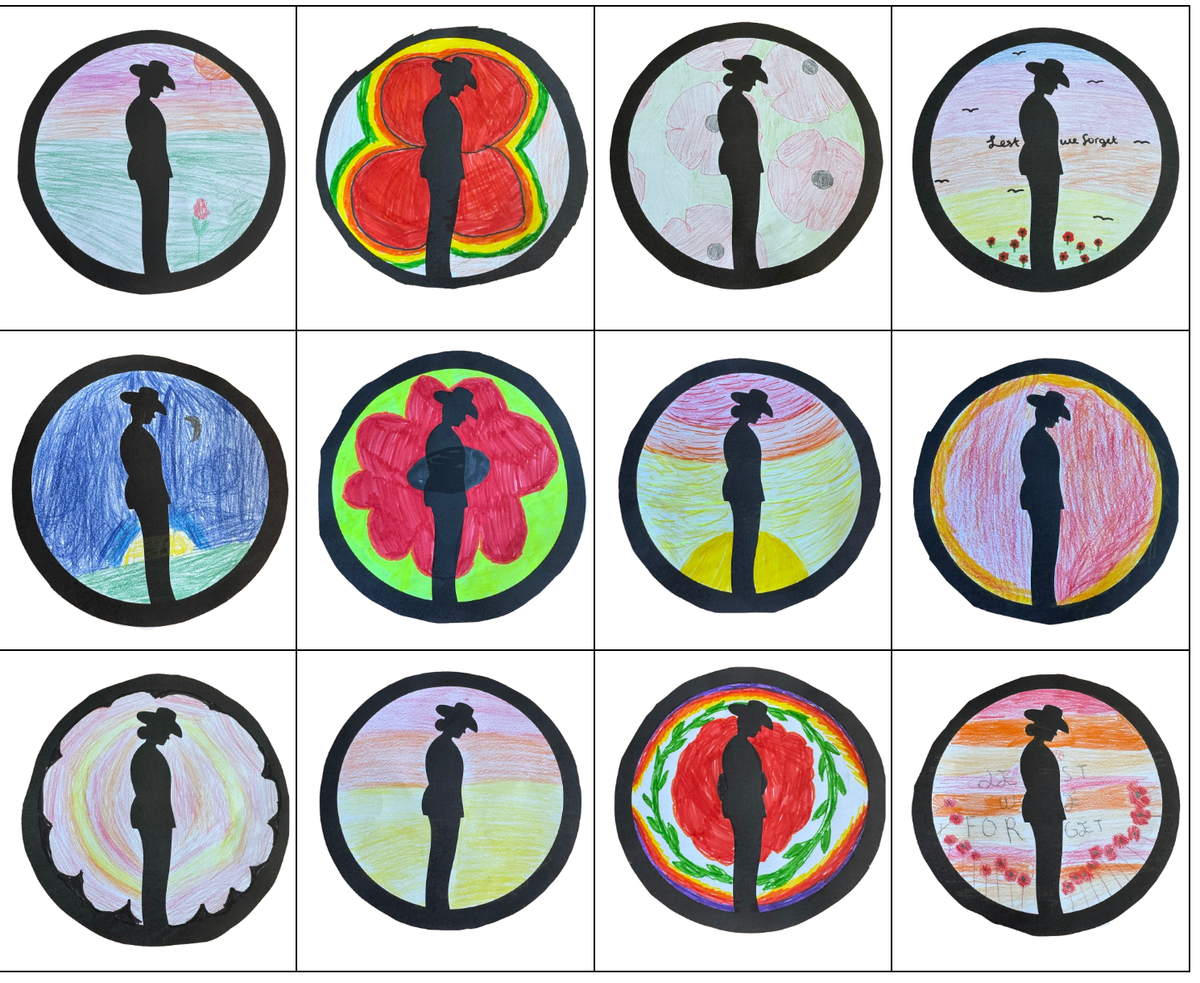
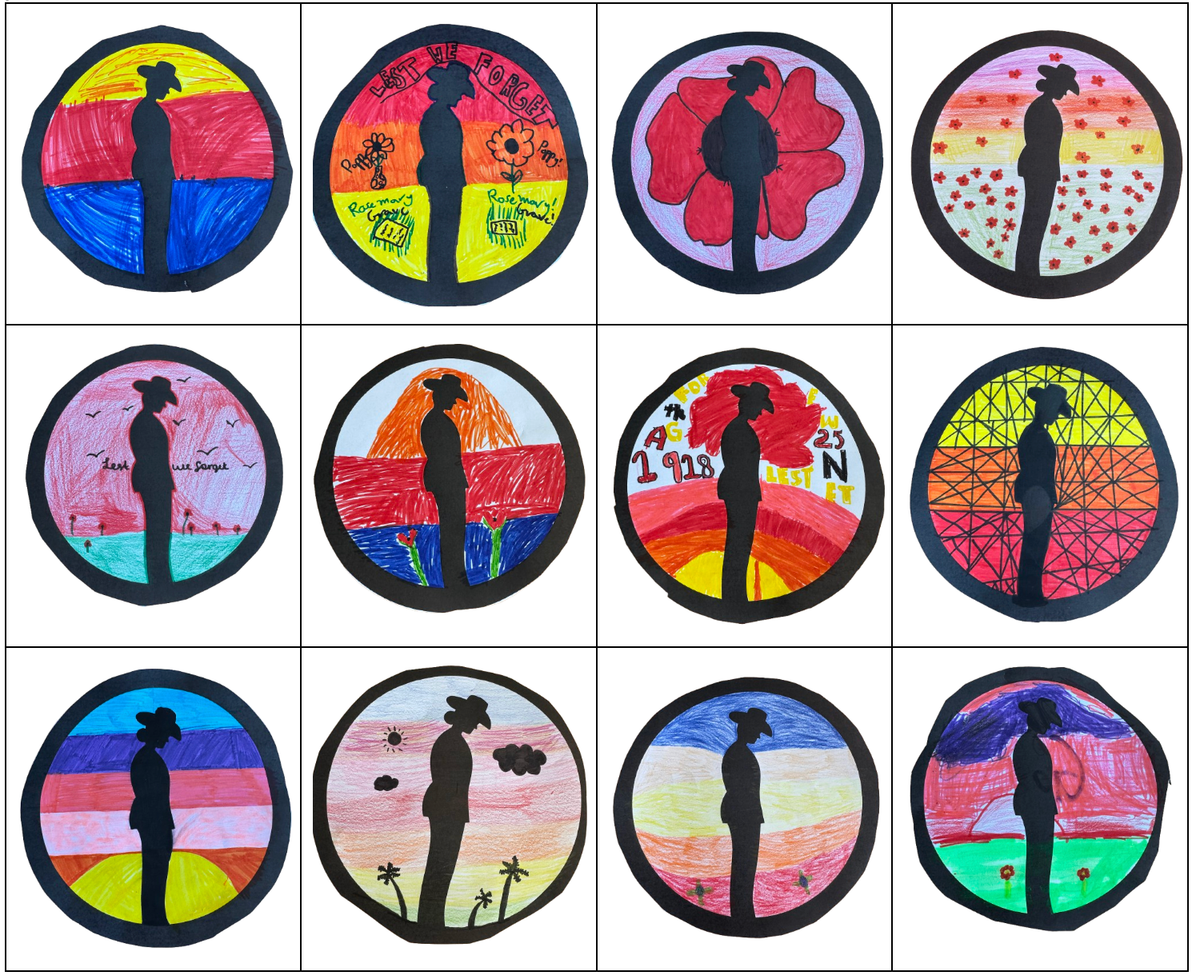
Please don’t hesitate to contact us if you have any questions or require further clarification. We are looking forward to a fantastic term of learning and growth with your children.
Vanessa Burke and Josh Bretherton,
Year 5 Teachers
________________________________________________________________________________
Year 6 Newsletter - Term 2 Overview
Dear Year 6 Parents and Caregivers,
Below is a snapshot of recent activities, alongside important dates.
| Week | Date | Reminder |
3
| Monday 4th May | Project Rockit 12 - 1:15 pm |
| Wednesday 6th May | Mother's Day Stall | |
| Thursday 7th May | Curriculum Day | |
| Friday 8th May | Transition Application Form Government Due Date for Year 7 Placement 2026 to primary schools District Cross Country | |
4 | Monday 11th May | Battle of the Bands 9:15 - outside. |
5 | Monday 18th May | Education Week |
| Wednesday 20th May | 3-6 Athletics Carnival | |
6 | Friday 29th May | AFL Gala Day |
7 | Friday 5th June | Year 6 Fundraiser (toy sale) |
10 | Friday 26th June | Term 2 concludes at 2:30pm |
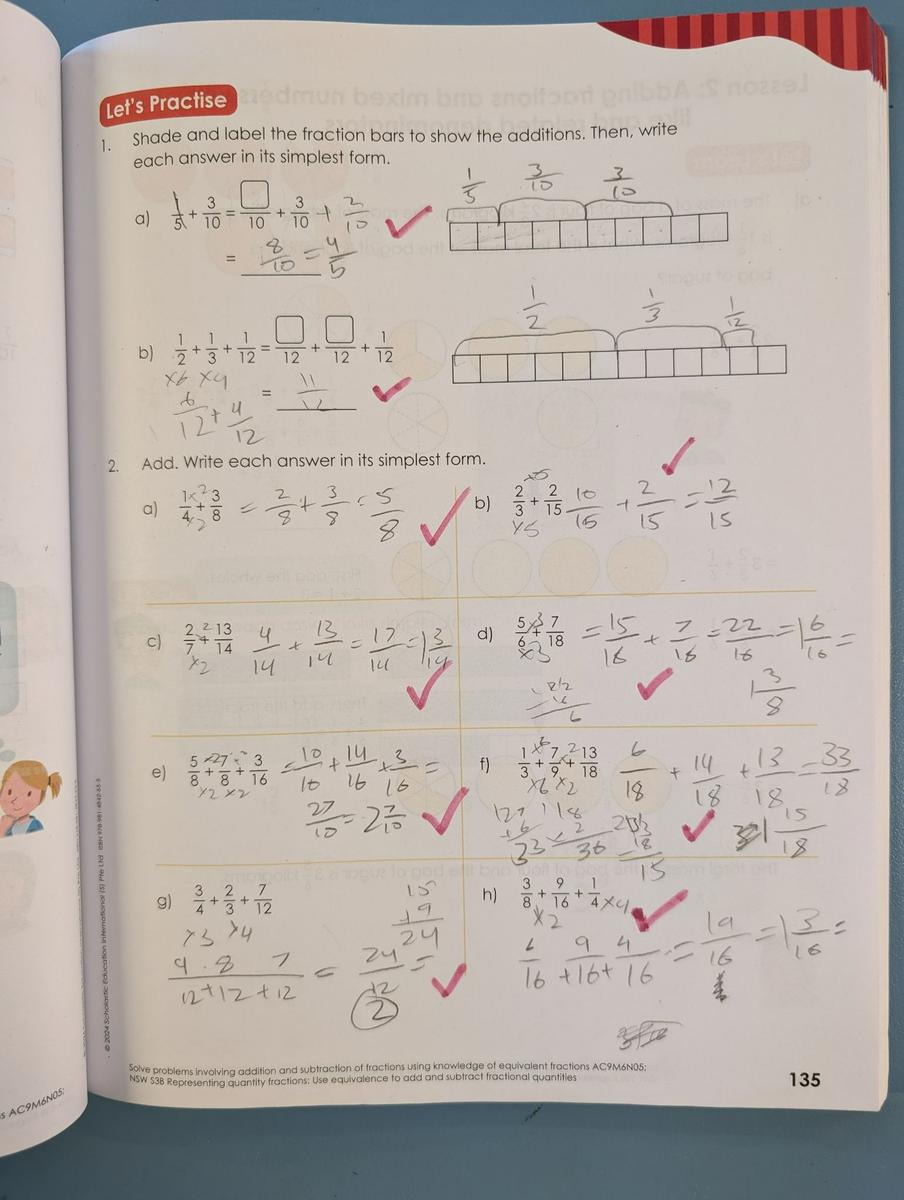
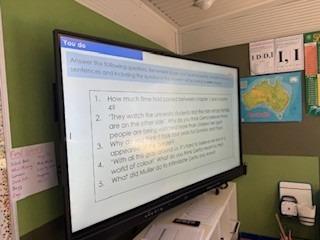
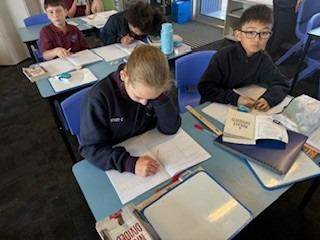
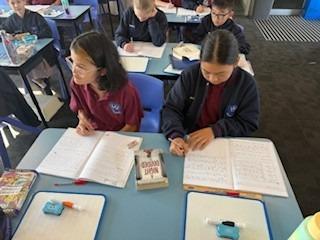
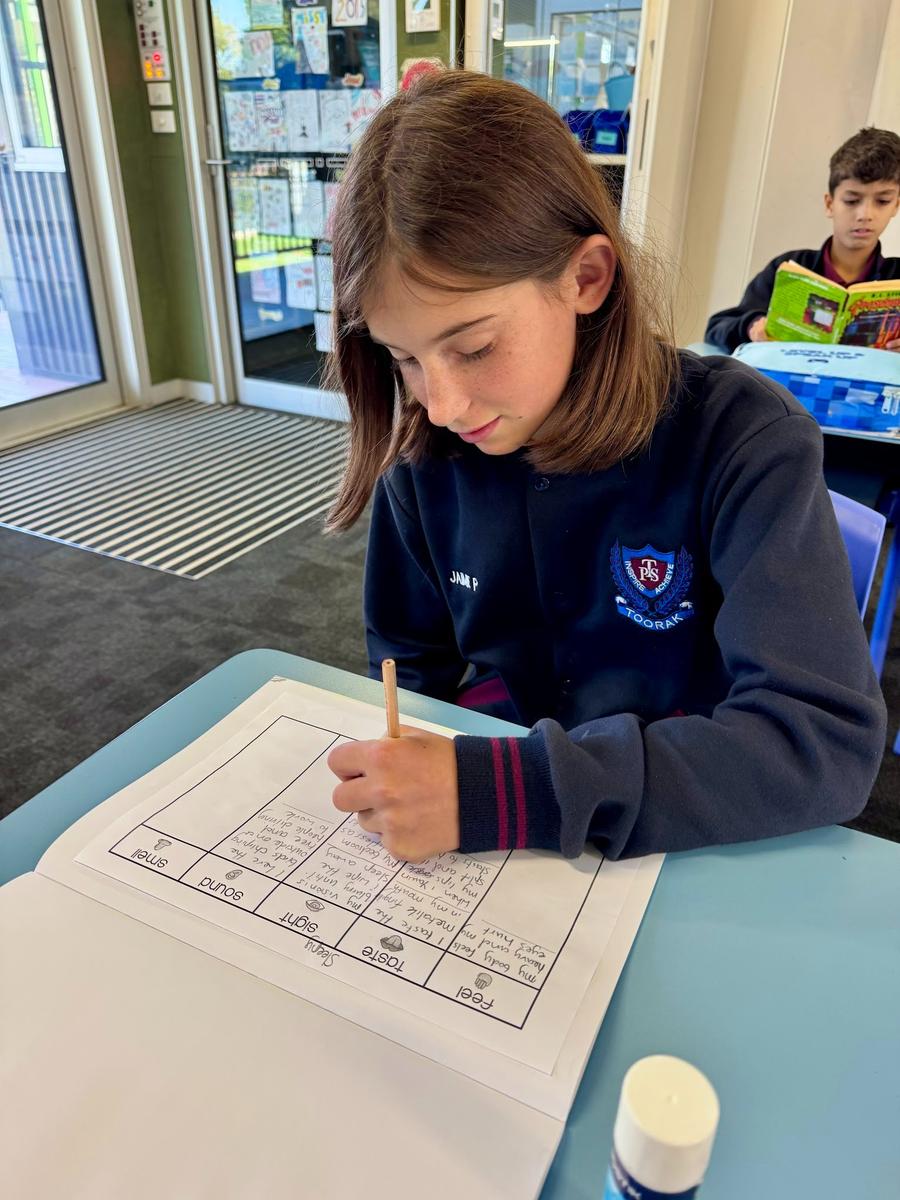
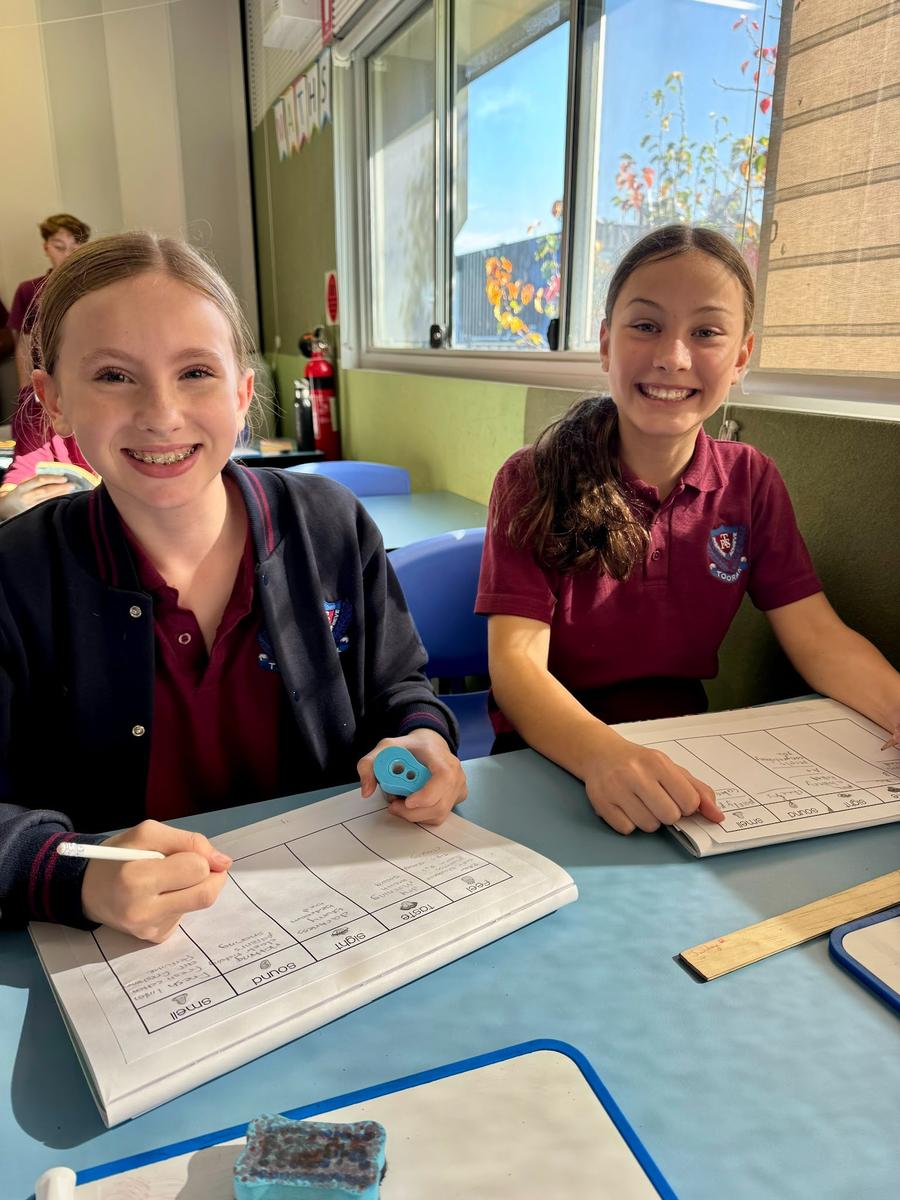
Maths: Fractions In Mathematics, students continued their learning in Fractions, focusing on adding and subtracting fractions. They practised adding and subtracting fractions and mixed numbers with both like and related denominators, before moving on to more challenging tasks involving unlike denominators. Students also explored number patterns involving fractions and applied their knowledge to solve one-step word problems.
|
Reading: A Night Divided Novel In Reading, students will continue to explore the timeline of WWII and the Cold War, and themes that arise during these events. They will continue to read their class novel, ‘A Night Divided’, focusing on characters emotions, themes and imagery within the text. They will show their understanding of a text through a range of activities, including comprehension questions, kernel sentences, and sentence stems.
Writing: Narratives In Writing, students will begin their narrative writing unit. Students will use a model text to identify high quality vocabulary and structure of a narrative. They will use a toolkit to identify key narrative and sentence structure elements within a text. Students will use the model text to innovate and create settings and characters for their own narrative. They will use a boxing up template to box up the model text into a plan to further embed their understanding of narrative structure.
|
Physical Science In Physical Science, students will explore the concept of electromagnetic radiation, and how light wave properties change depending on the type of electromagnetic radiation being emitted. Students will investigate the range of light sources found in our natural world, and how light can be absorb, reflected and transmitted. They will also learn about the production of energy and electricity, and how we use electricity in everyday life. |
Kind Regards,
Year 6 Team
James Thomas, Natasha Williams and Emma Heron
________________________________________________________________________________