SECONDARY NEWS
From the Assistant Principal
Miss Kim Bailey
kbailey@arm.catholic.edu.au
SECONDARY NEWS
From the Assistant Principal
Miss Kim Bailey
kbailey@arm.catholic.edu.au
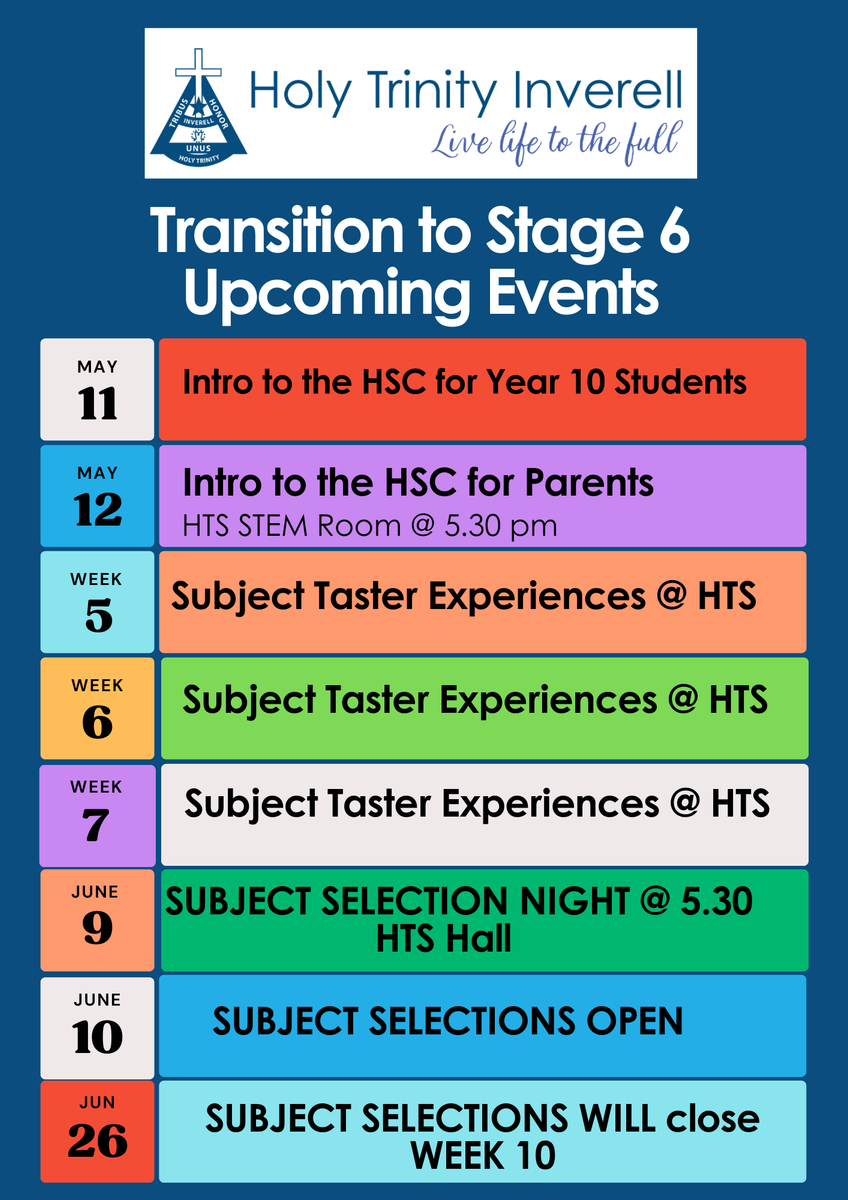
An Introduction to the HSC Information Session will be presented to Year 10 on Monday 11 May.
A parent session will be held at 5.30 pm on Tuesday 12 May in the STEM Room.
This term, there will be no formal semester exam week. Assessments will be ongoing during the term, and a number of formal in-class tasks will be undertaken. Students are in the process of completing assessment tasks, which may be in the form of tests, assignments, practical or group tasks, to name a few. It is essential that they prepare adequately and complete tasks by the due date.
Students will be provided with the necessary information and revision guides. For students to achieve their best possible results, it is essential that they adequately prepare for these assessments.
As mentioned, it is a busy term ahead. Students need to ensure that they are well prepared for all assessments. Regular application to homework and revision will assist students in all subject areas.
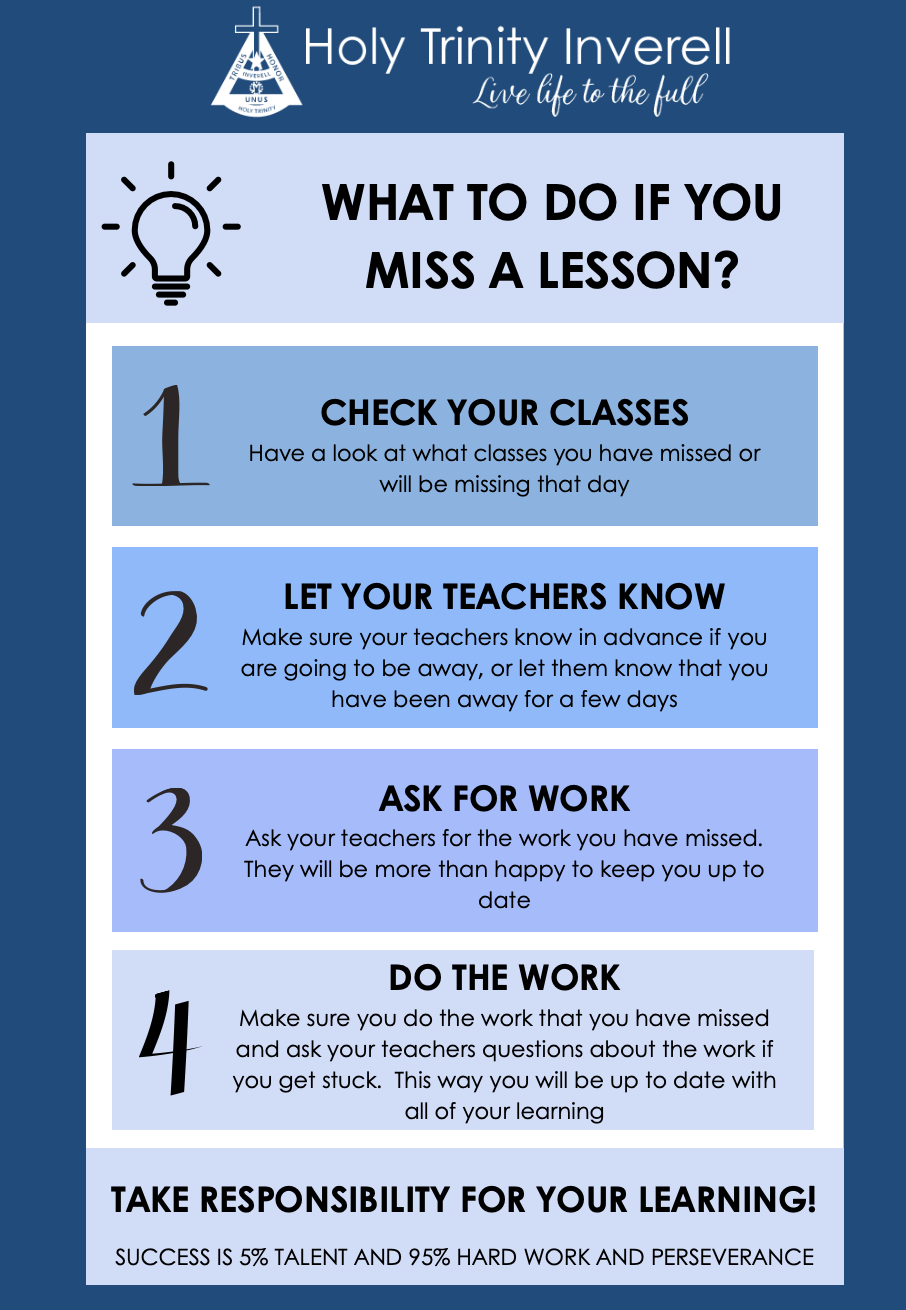
Students will be reminded this term of their responsibilities if they miss a lesson. We ask that you also have this conversation with your children if they are absent from school for any reason, including school events.
On Tuesday, our secondary campus was buzzing with scientific curiosity as we welcomed the UNE Voyager Discovery team. This visiting program from the University of New England provided an immersive, hands-on experience for all students across Years 7 through 10.
Throughout the day, students stepped out of their regular routines and into the world of high-level exploration. Led by expert UNE staff, the sessions were designed to spark interest in various fields of science and technology through interactive demonstrations and collaborative problem-solving.
It was fantastic to see our students engaging so enthusiastically with the visiting team, asking insightful questions and representing the school with genuine curiosity. A big thank you to the UNE staff for bringing their expertise and equipment to our classrooms!
Thanks to Miss Goldman for coordinating the visit.
This Thursday, the Australian Defence Force Careers team will visit to speak with Year 10 and interested Year 11 students regarding potential career pathways within the ADF.
A Clinical Educator from the Pelvic Pain Foundation of Australia, came to HTS on Thursday 7 May to deliver a PPEP Talk to male and female students in Year 9 and Year 10 and Year 7 and 8 girls. These sessions have been very valuable in the past and provided the students with expert information.
PPEP Talk® is the largest pain education program for students in Australia. It plays a critical role in informing and educating students with medically accurate and age-appropriate information. The session incorporates modern neuroscience of pain, benefiting all students, to recognise and identify whether their pain is normal, how the different symptoms fit together, simple ways to reduce their pain, and how to seek further help if pain is severe.
For more information, use the following links.
Pre PPEP Talk® Video:
Please see the link to our Pre PPEP Talk® Video (https://www.pelvicpain.org.au/preppep-talk-nsw/). This is an optional 13-minute video for students, parents, or teachers who want a bit of a refresher on information about periods and pelvic anatomy before the PPEP Talk® session.
PPEP Talk® Next Steps:
As part of your booking, we also offer a FREE follow-up session called PPEP Talk® Next Steps. PPEP Talk® Next Steps is a FREE online session for any student who identifies a complex pain concern or would like their caregiver to know more. Students attend with a caregiver and have the opportunity to ask questions to our Gynecologist and Pain Specialist, Associate Professor Susan Evans. Students can register for upcoming sessions here (https://www.pelvicpain.org.au/ppep-talk-schools-program/ppep-talk-next-steps/). The PPEP Talk® Next Steps flyer has more information.
ACS Netball Trials
Congratulations to Callie Stirling, Grace Doyle, Miley Taber and Pippa Butcher, who were selected for the U15s ACS team. Also, congratulations to Kailie Dyer-Cleal, who was selected in the U18s team.
Basketball
A huge well done to our basketball teams for their recent performances. Our teams played well and, more importantly, represented the school with pride and outstanding sportsmanship. Congratulations to all involved.
Holy Trinity Show Team
Congratulations to the Holy Trinity Show Team for their hard work and dedication at the Wariald Show last Friday and Saturday. Your commitment to excellence and the way you conducted yourselves was a credit to the school. Well done on a successful outing!
Soccer: Bill Turner Cup & Trophy
It has been a big week on the pitch! Both teams played with heart and showed great technical skill. We are very proud of their efforts!
The Bill Turner Cup boys team soundly defeated Glen Innes High School 8-1 and will play Armidale Secondary College in the next round.
Unfortunately, the Bill Turner Trophy girls team lost against Tenterfield High School, but they played well and were excellent representatives of the school
We have a busy schedule ahead and want to wish the best of luck to the following students:
ACS Soccer
Good luck to all our teams competing this week at the Complex.
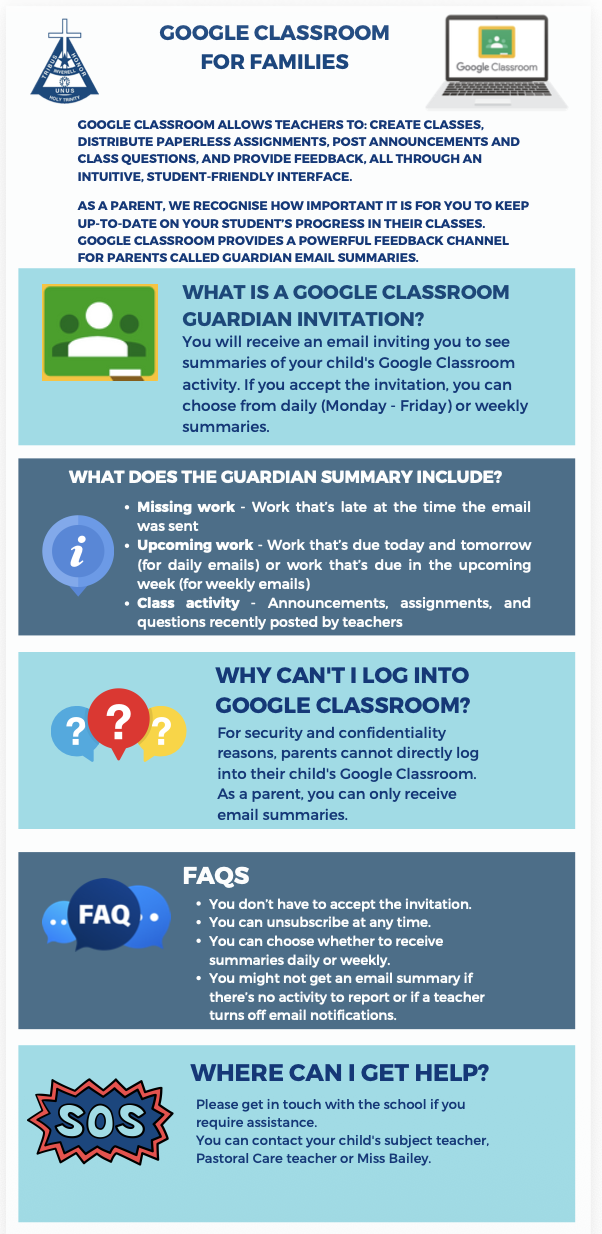
Google Classroom allows teachers to create classes, distribute paperless assignments, post announcements and class questions, and provide feedback, all through an intuitive, student-friendly interface.
PLEASE NOTE THAT GOOGLE CLASSROOM IS ONLY ONE METHOD OF LESSON DELIVERY.
STUDENTS ALSO USE OTHER PLATFORMS, TEXTS AND WORKBOOKS TO COMPLETE LEARNING TASKS, AND THE CONTENT DELIVERY METHOD VARIES BETWEEN SUBJECTS.
The flyer and link below provide you with more information about Guardian Summaries. Please contact Miss Bailey if you have any further questions or issues.
When helping students with assignments, the focus is often just on the research process. These tips will focus on getting started with the writing.
CHECK REQUIREMENTS
So you have done all of your research, collected the information you will need and are ready to start writing your assignment. Before you begin, revisit the requirements, format and criteria for the task. Be very clear on what the assignment is asking you to do and any guidelines you have been given for the assignment. If you are unsure at all, check with your teacher. It can be good to have the assignment questions written on an index card that you keep next to you while working so you stay focused on answering the question and meeting the requirements.
PLAN A STRUCTURE
Your approach will vary depending on the style of your assignment (eg. essay, speech, presentation or report) but regardless of this, unless it is explicitly given to you, you need to decide the structure of your assignment. Have you determined the main points, the headings and sub headings? Have you made sure you have gathered information about all parts of the question? Have you found any diagrams, images, photos, quotes needed to reinforce any points? Before you begin the writing, create a structure for your work listing all of the headings and sub-headings you will write about. Keep checking back with the criteria or requirements to ensure you are answering the assignment questions.
JUST START WRITING
The best thing to do if you have no idea how to begin your writing, is to just start writing. Now this may sound a little strange, but many students do not start writing because they want what they write to be perfect or ‘right’ the first time. Don’t worry whether your writing is up to standard at this stage. Instead concentrate on getting your ideas down onto paper or screen. Choose a section and start putting down ideas on the sorts of things you could include in that section. The hardest part of any writing is starting. Once you start putting down ideas this generates other ideas and before you know it you have some text to work with. So even if you have no idea where to start just write or type ‘I don’t know what to include here’ and even writing this will get your subconscious thinking about what could be included.
USE YOUR NOTES
Once you have started, you can use your notes from the research you did to build your ideas and arguments for your assignment. This mean that you integrate your own thoughts and ideas with the research you have done using this to help support your ideas. Make sure that you reference correctly, this means that when you use materials you have researched, particularly quotes, you make it clear where this material has been sourced from. You may find holes in your research as you progress and have to then do additional research about those areas.
BE CREATIVE
Unlike an essay, you generally have a bit more scope in how you present an assignment. Think about how you can bring the material to life for the reader. Photos (appropriately referenced) are a good start and sometimes diagrams, tables, examples, statistics or flowcharts may be appropriate. You might use lists, bullet points or colour to make the material more user-friendly. Your teacher will be reviewing many assignments on the same topic, so what can you do to make yours stand out or have a unique angle.
REVIEW AND REVIEW AGAIN
Have you ever had that experience where you write something, leave it, come back the next day and read it again and find a whole heap of errors you didn’t see the first time? This is why it is important to space out your work on your assignment over a number of weeks and days. You need time to edit your work and you need space between edits. When you come back with a fresh eye, you will be able to look at your work from a different perspective and get ideas on what you could do to improve your work. As you review your work, look for spelling and grammar errors, possible repetition or unclear areas. Reading your work out loud is surprisingly a great way of locating errors or things that don’t make sense.
We all know that sleep is important for general health, for growth and development and for emotional wellbeing. You may also know that important memory processes take place while you are sleeping, ensuring you retain what you are learning and studying.
Perhaps you have heard that teenagers need between nine to ten hours of sleep per night. But where does this come from and how valid is this claim? In 1980, Mary Carskadon of Stanford sequestered a group of adolescents in the university’s sleep laboratory for several days, letting them sleep for as long as they wanted, up to 10 hours. She found that the teenagers slept just over nine hours, with very little variation. This single “naturalistic” study is the primary basis for the adolescent sleep recommendation. However some researchers argue that just because teenagers slept nine hours when left alone does not mean that this is the best thing for them, just like letting people eat whatever they want is not necessarily the best thing for their health. So there is no definitive answer at this point in time.
The amount of sleep needed by teenagers is most likely very individual, just like it is for adults. It is probably safe to assume that adolescents need more sleep than adults and that the average for most people is at least 8 hours of sleep per night. Pay attention to the signs and have students listen to their body. If they lie down in bed and fall asleep instantly, this is a sign they are not getting enough sleep for their body. It should take at least 15 minutes to fall asleep. If they wake up in the morning and are feeling exhausted, then check all lifestyle factors: are they getting enough sleep, eating healthily and getting enough exercise?
If teenagers are sleeping in for many hours on a weekend, unfortunately this does not mean they are “catching up” on their sleep. According to University of Texas Southwestern sleep specialist Dr. Gregory Carter, when we think we’re catching up on sleep, what we’re really doing is messing with our circadian cycle — the body’s internal clock which dictates sleep patterns. Excessive sleeping in is in fact a signal that during the week students need to go to bed earlier. The aim is to work out the optimum bedtime so that the need to catch up on large amounts of sleep on the weekend is eliminated.
There is nothing wrong with having a power-nap in the afternoon when students get home from school, as long as the nap is no longer than 40 minutes. A short nap can help students regain their energy levels and allow them to focus on the work they have to do that evening. However, a longer nap will also disrupt sleeping patterns for that night.
Please note this also applies to Year 9 Elective Subjects.
https://sites.google.com/arm.catholic.edu.au/htsstudentcurriculumhandbook/home
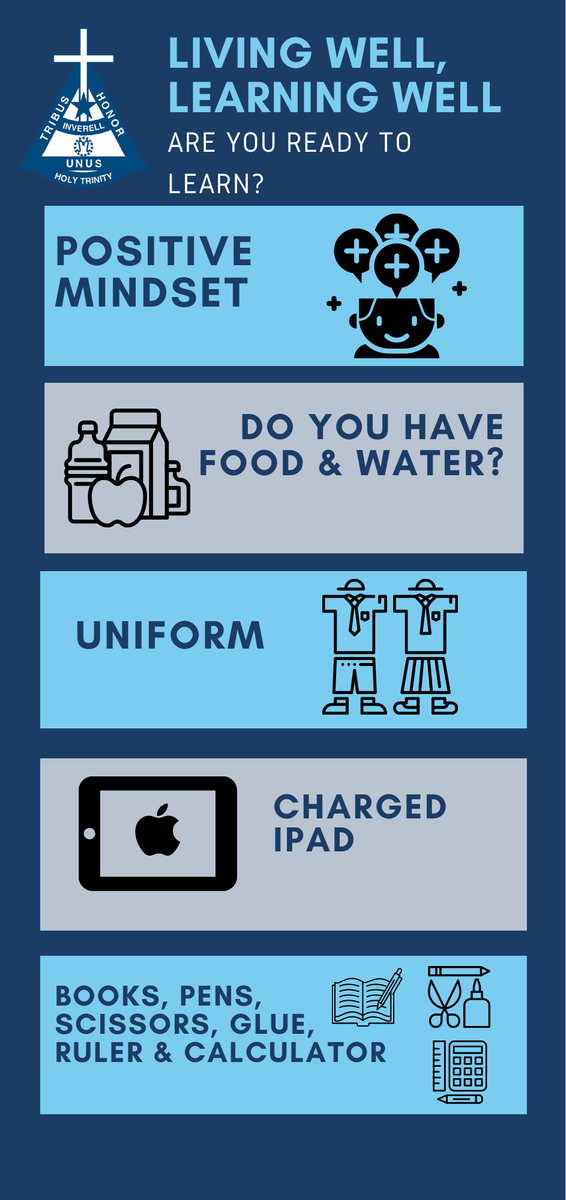
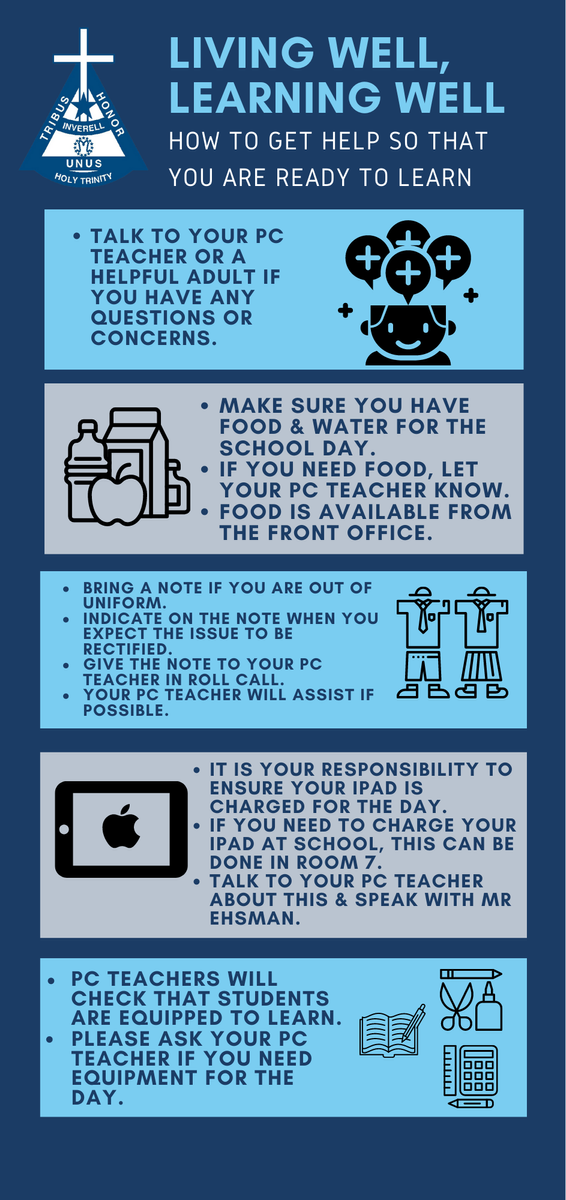
Pastoral Care teachers will be checking in with the students in their class each morning to ensure that they are Ready2Learn. All students have received the information below and were encouraged to show their families and discuss how to be Ready2Learn each day. Pastoral Care teachers will be able to help students start the day in a positive way. Please ask your child about this and support them to be Ready2Learn.
Students are being asked to ensure that they understand these elements and have all their equipment and uniforms by the start of Week 6. The infographic also outlines what to do if there is a problem with doing this and who you can go to for assistance.
Year 7:
7J – Mr Jack Jeffery
7M – Mrs Veronica McCormick
7R – Mrs Katrina Richardson
7W – Miss Lisa Wilson
Year 8:
8K - Miss Kristina Majetic
8M – Mr Ricky Muggleton
8T- Mrs Jane Taylor
8W – Mr Sam White
Year 9:
9C – Mrs Claudia Marshall
9E – Mr Jeremy East
9G – Miss Lauren Green
9M – Mrs Christine McLachlan
Year 10:
10E – Mr Peter Ehsman
10G – Mrs Hannah Graham/Mrs Nicole Simpson
10S – Mrs Kristen Smith
10U – Mr Blake Uebergang.
Students and parents are encouraged to approach the relevant Pastoral Care teacher for assistance.
We ask that all correspondence with staff is via the Compass portal.
Student Wellbeing
Check In Tuesday with the Pulse Wellbeing App
Pulse is a tool for measuring the week-to-week wellbeing and engagement of all our students. It tracks the wellbeing of an individual so that the school can respond if needed. It also tracks engagement with the school so we can make intervene if necessary.