
Wellbeing
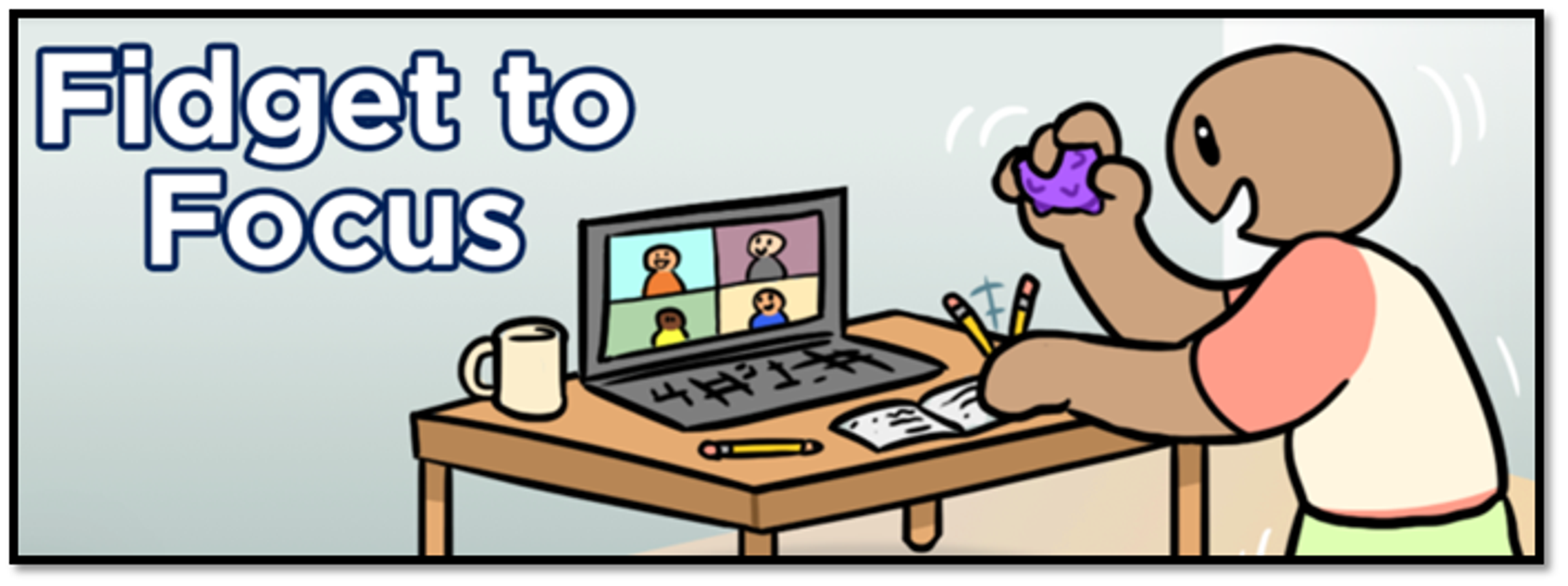
Using Fidgets to Support Attention and On Task Behaviour
Studies have shown that using fidgets and stress balls can increase focus and attention and also work as a stress management tool. (1,2,3,) However, despite this teacher have introduced fidgets with mixed results.
When it comes to increasing attention and on task behaviour not all fidgets are created equal. For example, a systematic review of fidget spinners found that, “fidget spinners negatively influence young children with ADHD's attentional functioning.” (4)
This makes sense since part of the attraction of fidget spinners is watching it spin and waiting as it slows down so that you can spin it again. Fidgets that demand visual attention or those with a game component that requires matching, unlocking, or solving something are poor choices for boosting on task behaviour.
How Can Fidgets Help Educators?
For a fidget to become a tool instead of a toy we need to understand how they work and which students they help. Studies that have looked at a variety of movement interventions have found that providing exercise and movement opportunities positively impact learning and behaviour.
Movement as small as squeezing a ball to robust physical exercise can increase on task behaviour and attention. Movement as an intervention can work with many students but works especially well with those who have significant attention and on task behaviour challenges. (5,6,7,8,9)
Although frequent movement breaks are helpful, it is not always possible for teachers to fit them into the school day. In these situations, a fidget becomes a good intervention tool.
Fidgets that Help Focus and Attention in the Classroom
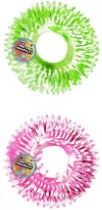
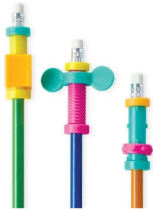
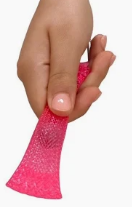
There is no official definition of a "fidget toy." (10), a fidget is a small item you can manipulate with your hands. Good classroom fidgets are quiet, discreet, have an interesting texture, and allow for lots of finger and hand movement
It’s important to note that fidgeting can take many forms- it doesn’t have to be a specific “fidget toy.” An effective fidget can be anything that provides discreet movement opportunities for your student without distracting those around them. (8,11) Other examples of positive classroom fidgeting include:
Allowing a student to stand at their desk and work.
Using alternative seating that allows for movement such as a wiggle seat.
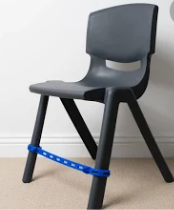
Using a kick band on a student's chair.
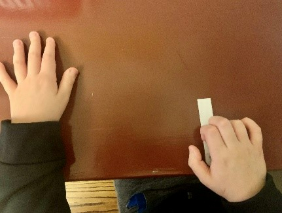
Sticking a strip of Velcro on the desk for a student to touch or manipulate.
Tips to Introduce Fidgets Successfully Into the Classroom
Introducing a fidget properly can help the intervention strategy. For many students’ fidgets are toys and toys are meant to be played with. Make sure that your students understand that in the classroom fidgets are tools to help learning. They provide a movement break for your body so that you can learn.
One way to introduce fidgets to the classroom is through a discussion on strengths and weaknesses. Some of you are good at math, PE, or art. But for some of you math, art, or PE is hard. For some of you paying attention is hard and a fidget can help. Not all of you will need a fidget, and some of you will only need a fidget once in a while. Make sure that you use a fidget when you need help learning.
Teachers may create some simple fidget rules for students to follow. Some samples of fidget rules are:
I use fidgets to help me pay attention so that I can learn.
I keep fidgets on my desk or in my hands.
I don't show other students my fidget because I want them to learn.
I always put away my fidget when I am done.
References:
Beaudoin, Colleen R., and Pattie Johnston. "The Impact of Purposeful Movement in Algebra Instruction." Education 132.1 (2011).
Spiegel, Ellen J. "Managing stress for at-risk students." Phi Delta Kappan 98.6 (2017): 42-46.
Stalvey, Sheryl, and Heather Brasell. "Using Stress Balls to Focus the Attention of Sixth-Grade Learners." Journal of At-Risk Issues 12.2 (2006): 7-16.
Graziano, Paulo A., Alexis M. Garcia, and Taylor D. Landis. "To fidget or not to fidget, that is the question: A systematic classroom evaluation of fidget spinners among young children with ADHD." Journal of attention disorders 24.1 (2020): 163-171.
Gapin, Jennifer, and Jennifer L. Etnier. "The relationship between physical activity and executive function performance in children with attention-deficit hyperactivity disorder." Journal of Sport and Exercise Psychology 32.6 (2010): 753-763.
Howie, Erin K., and Russell R. Pate. "Physical activity and academic achievement in children: A historical perspective." Journal of sport and health science 1.3 (2012): 160-169.
Sarver, Dustin E., et al. "Hyperactivity in attention-deficit/hyperactivity disorder (ADHD): Impairing deficit or compensatory behavior?." Journal of abnormal child psychology 43.7 (2015): 1219-1232.
Swartz, Ann M., et al. "Attentiveness and Fidgeting While Using a Stand-Biased Desk in Elementary School Children." International Journal of Environmental Research and Public Health 17.11 (2020): 3976.
Wells, Stefanie L. "Moving through the curriculum: The effect of movement on student learning, behavior, and attitude." Rising Tide 5 (2012): 1-17.
Rohrberger, Amanda. "The Efficacy of Fidget Toys in a School Setting for Children with Attention Difficulties and Hyperactivity." (2011).
Rollo, Scott, et al. "The effects of classroom-based dynamic seating interventions on academic outcomes in youth: A systematic review." Learning Environments Research 22.2 (2019): 153-171