
Teens & Screens
Digital Habits - tips for parents/carers
Teens & Screens
Digital Habits - tips for parents/carers
What it is and what parents and carers need to know
This feature includes excerpts from the eSafety Comissioner’s advisory, published following the recent release of the Netflix documentary by Louis Theroux, ‘Inside the Manosphere’. The documentary has brought renewed attention to a part of the internet shaping how some boys and young men think about masculinity, relationships and power.

What is the ‘Manosphere’?
‘Manosphere’ is an umbrella term for a mix of online spaces that talk about men, masculinity and gender relations. Such spaces frequently advocate narrow and rigid ideas about what it means to be a ‘real man’. This includes reinforcing the stereotype that material wealth, physical appearance, and dominance – especially over women – are markers of male worth.
Another common (but false) narrative is that feminism and gender equality have come at the expense of men’s rights.
These ideas are seeping into mainstream online culture through a mix of content tactics, influencers and platform designs. It is not just a fringe online subculture. Its harmful messages are filtering into online humour, memes, self-improvement content and recommender feeds through algorithms. The content might seem harmless at first. Then the tone shifts.
It's a toxic cycle: outrage drives engagement, which fuels amplification, which attracts new audiences, and algorithms keep pushing it because more eyeballs mean more ad dollars.
While young men might start out searching for relatable topics – like fitness or self-improvement – they can be propelled by these combined forces, step by step, into blame, resentment and hate, often aimed at women and the LGBTIQ+ community.
Why the manosphere can be appealing to boys and young men
Most boys and young men are navigating the online world in constructive ways. They are empathetic, resilient and curious, and use digital spaces to learn, build skills and find community.
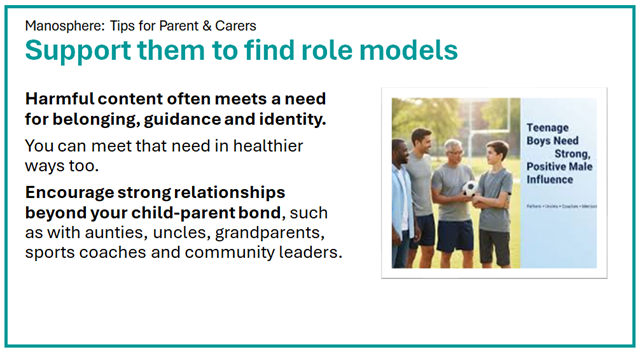
However, harmful creators and communities can also appeal by meeting ‘unmet’ needs: validation, guidance, belonging and edginess (content that feels raw, unfiltered or anti-establishment).
Uncertainty and loneliness can add pressure and drive interest. When someone is looking for connection, they may be more likely to trust people too quickly or join communities without understanding the risk.
How recommender systems can ratchet up harm
eSafety research shows almost half of children aged 10 to 17 years have seen or heard offensive, sexist or hurtful things online about girls or women. And more than 1 in 10 have seen violent sexual images or videos.
Recommender systems sit behind ‘For You’ feeds, home pages, autoplay and suggestions for the following video. They track what a user does – what they click, how long they watch and what they like, share, save, comment on or search for. Then they keep suggesting and serving up content intended to keep you hooked to your screen, including content that sparks controversy, disgust and outrage. After all, more eyeballs on a platform equates to more ad dollars.
This can make users feel like certain ideas are everywhere, simply because they keep seeing them in different formats and from different accounts. Such echo chambers reinforce and spread certain beliefs.
The links between the manosphere and gender-based violence
In the manosphere, women and girls are portrayed as manipulative, irrational or less deserving of respect. A common belief is they choose partners only for looks or financial status. These narratives undermine women’s autonomy and make it easier to dismiss their boundaries and the need for consent.
Some manosphere creators frame old stereotypes as biological or evolutionary explanations to make them seem more convincing. Degrading labels and dehumanising jokes can also shift what feels acceptable and normalise harassment and coercive attitudes.
Signs your child may be moving towards harmful beliefs
A single meme or phrase does not tell you everything. Instead, look for patterns of behaviour.
Some signs to watch for in your children include:
fixation on needing to look a certain way, with importance given to jawline, eyes and build (also known as looksmaxxing)
desire to increase their testosterone levels, either naturally (e.g. through diet) or by taking synthetic hormones (also known as t-maxxing)
replacing a healthy and varied diet with fibre-dense foods, supplements or powder (also known as fibre-maxxing)
using degrading or sexist language
making jokes about rape or violence towards women
picking up new slang that is extreme or dehumanising, such as ‘red-pilled’ or calling people NPCs – a demeaning label that means ‘non-player characters’ (an unimportant or background character).
If you notice signs, start a gentle conversation, not a confrontation.
What parents and carers can do
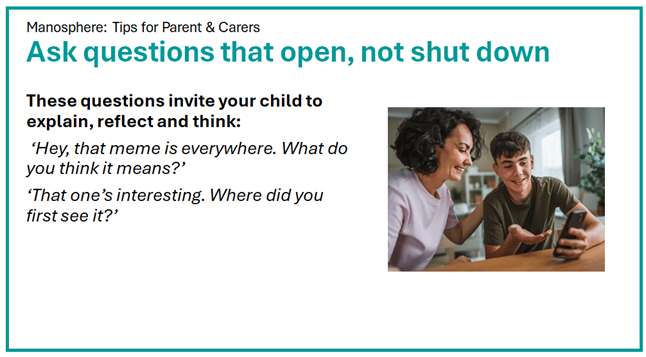
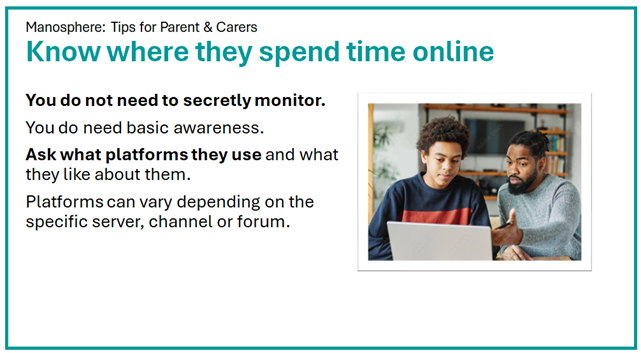
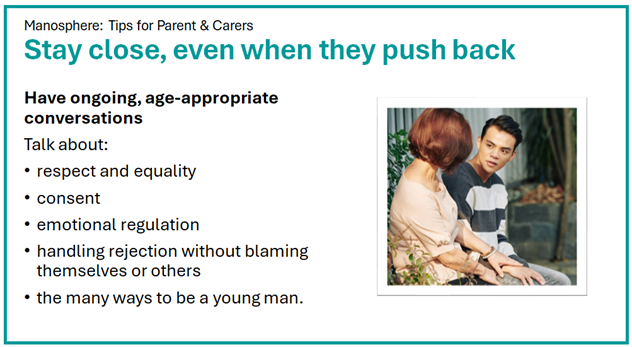
What matters most is connection, conversations and ongoing support.
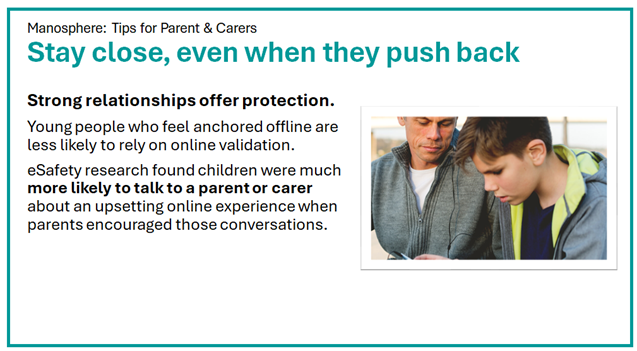
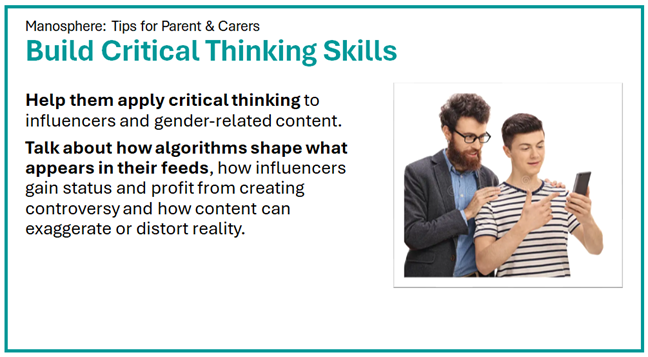
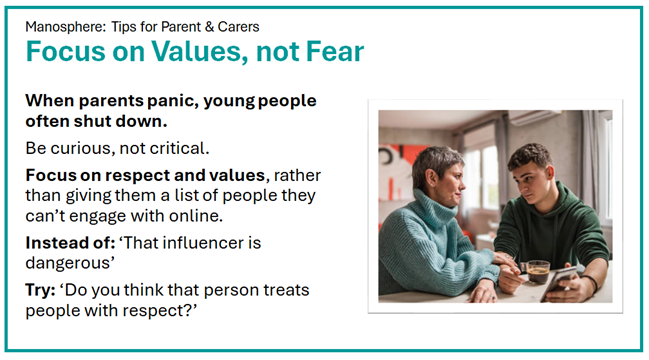
If you want more support, eSafety can help you:
understand online harms and how they show up for young peopleExternal link
find youth-friendly information about respectful relationships and online culture
use reporting pathways for serious online abuse
sign-up for parent and carer webinars on boys and young men, online communities and ideologies, and algorithms.
The trusted adults and reasonable voices in the lives of our teenage boys need to join forces to outpace the reach of online influencers who are monetising their own worldviews to our boys, at a time in their lives when boys are most vulnerable to external influences.
Tanya Moran
Leader of Professional Practice
Main Source: