Kinder/Year 1

In Early Stage One (the NSW syllabus stage for Kindergarten), students begin building the foundations for reading and writing by learning their letters. Your child should now be able to tell you the three things they need to do to be successful:
- Say the letter name
- Say the letter phoneme (sound)
Write the letter correctly
We are very excited to share that we now have only three letters left to introduce before our students have been exposed to every letter of the alphabet!
Our kindergarten students are doing an amazing job with lower-case letter formation. This is very important because good habits formed early help support fluent writing in the years ahead.
At the moment, students are generally stronger with sounds than letter names, so when practising sound books at home, please ensure your child always says the letter name first. For example:‘Bee’ for banana /b/ /b/ /b/.
So why are we learning all of this? So we can read and write! And that is exactly what our kindergarten students have been doing. In class, we have been stretching the sounds in words down our arms, building words with our emoji magnets, writing the letters underneath, and then reading the words back.
Kinders are well on track for reading and writing success!
ENE-PHOKW-01: uses single-letter grapheme-phoneme correspondences and common digraphs to decode and encode words when reading and creating texts
ENE-HANDW-01: produces all lower-case and upper-case letters to create texts
In Stage 1, our young writers have been exploring the power of words and the importance of point of view.
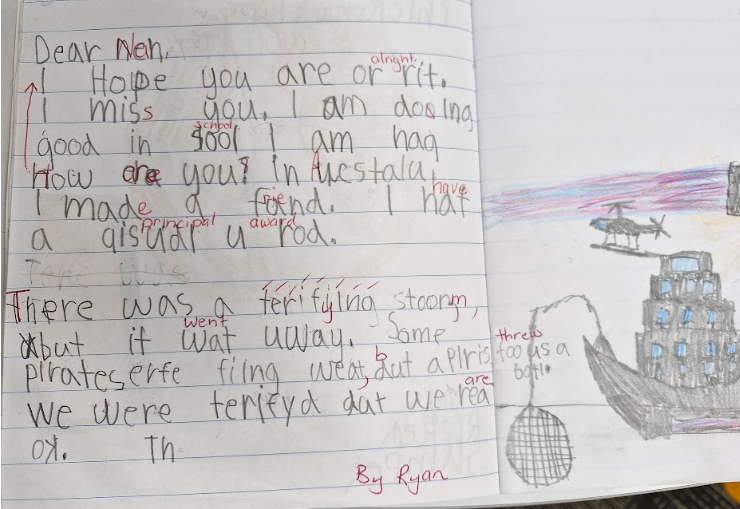
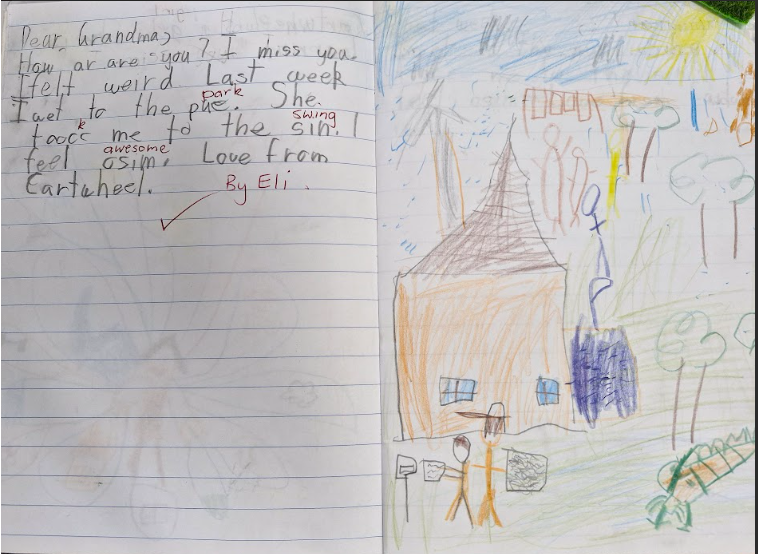
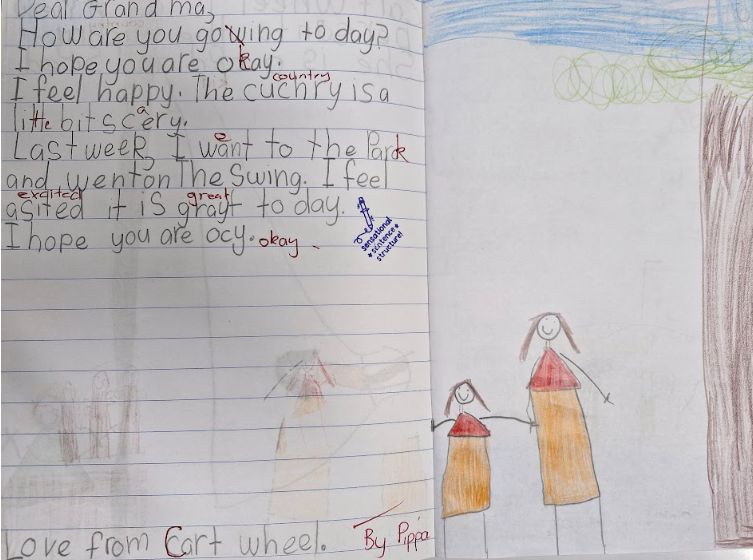
We have been learning how to see the world through someone else’s eyes. By reading moving picture books about the refugee experience, including The Little Refugee by Anh Do, students have been practising writing personal letters from different perspectives.
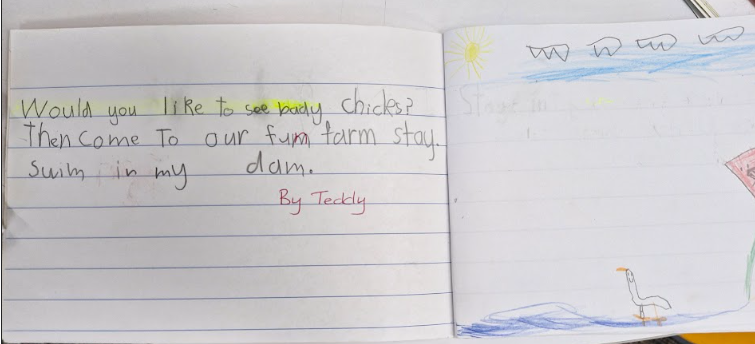
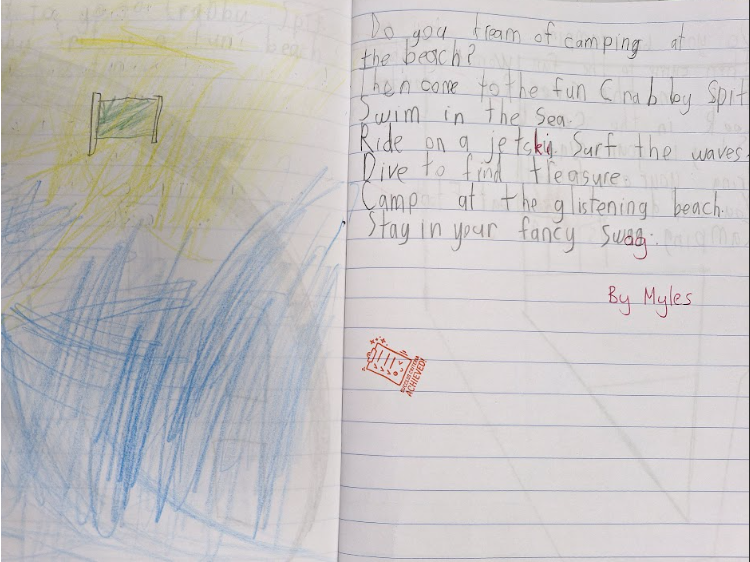
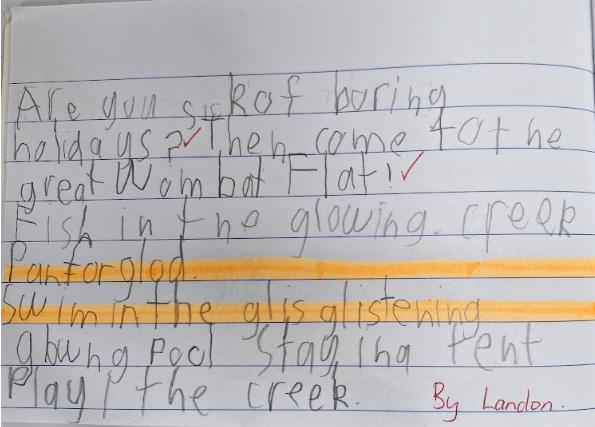
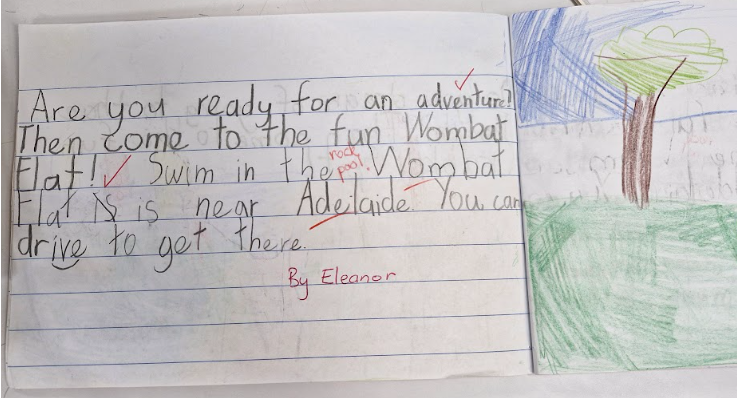
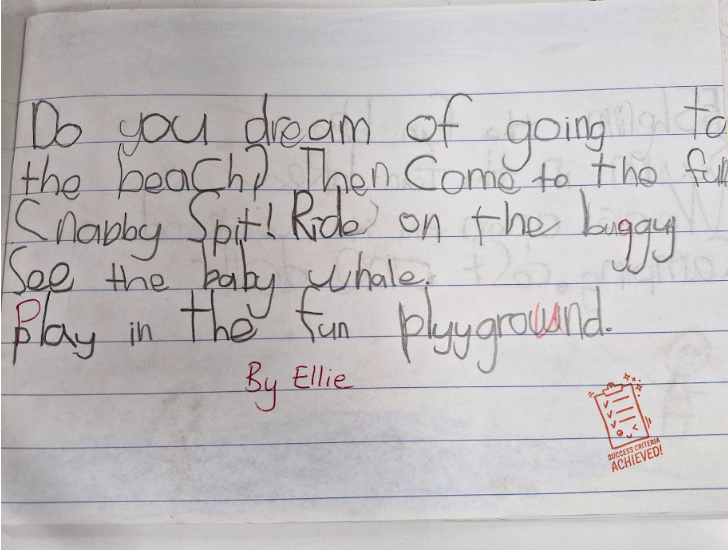
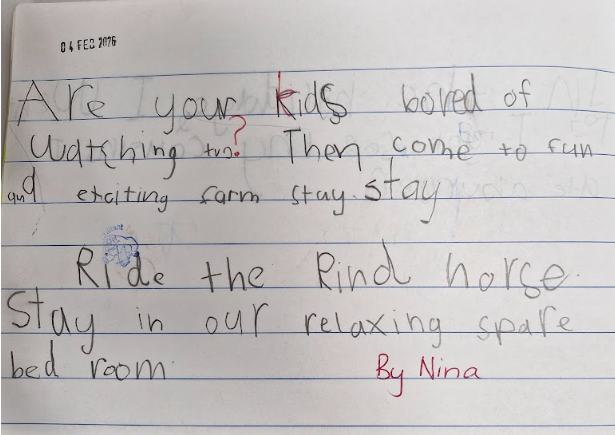
Earlier this term, students tapped into their creative side by writing persuasive advertisements for exciting travel destinations across Australia.
Our writing process follows a "Talk, Then Write" approach. You can see the final drafted results of this in the featured images! Before picking up a pencil, students:
- Discuss the topic as a group.
- Orally rehearse their ideas with a partner.
- Draft their final sentences.
Each text type we practise uses a variety of sentence types - statements, questions, exclamations, and commands - to ensure our writing is effective and fit for purpose.
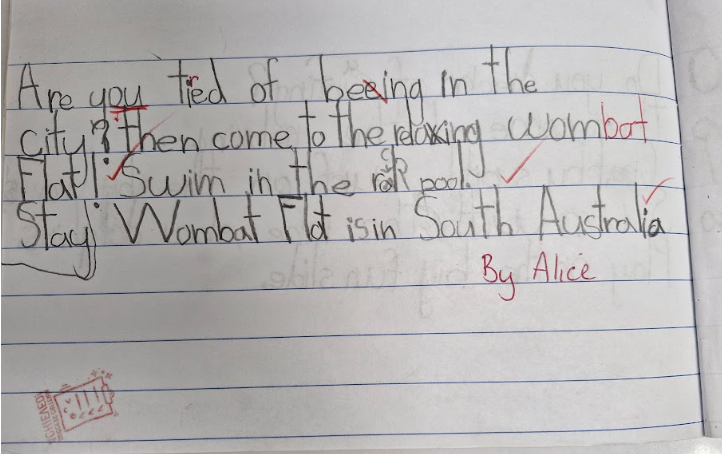
EN1-CWT-01 A student plans, creates and revises texts written for different purposes, including paragraphs, using knowledge of vocabulary, text features and sentence structure.