Science

Grade 1
Students have been considering what happens in our part of the world as seasons change – what are the similarities and differences between the seasons and identifying predictable changes in the sky and landscape over the course of the year. In our discussions we have touched on age-appropriate information including seasons are caused by three phenomena: the revolution of the Earth around the Sun once per year, the tilt of the Earth’s axis of 23.5 degrees relative to the perpendicular to the plane of the orbit around the Sun, and the location on Earth.
Countries on or close to the Equator experience very little seasonal temperature variation because the Sun’s rays are very direct all year round, the tilt of the axis having little effect at the centre of the globe. The poles experience the most extreme seasons, with approximately six months of sunlight and six months of darkness and the greatest differences in angle of the Sun’s rays.
In Australia, the tilt of the Earth’s axis and our position on Earth have an effect on the angle of the Sun’s rays as Earth revolves around it. Different places and cultures in Australia observe different seasons. Being such a large country, with locations close to the equator in the north and closer to Antarctica in the south, many locations in Australia experience the seasons differently.
Students have each made a poster depicting a season as we experience it here in Victoria.
Grade 2
Students in Grade 2 have been exploring the water cycle, and in particular where rainwater goes after it has fallen, and observing what happens to rain falling on different surfaces. There have been healthy and interesting discussions about the water table and how water is retrieved from under the ground.
We have identified rivers, dams, and reservoirs as places where rainwater collects.
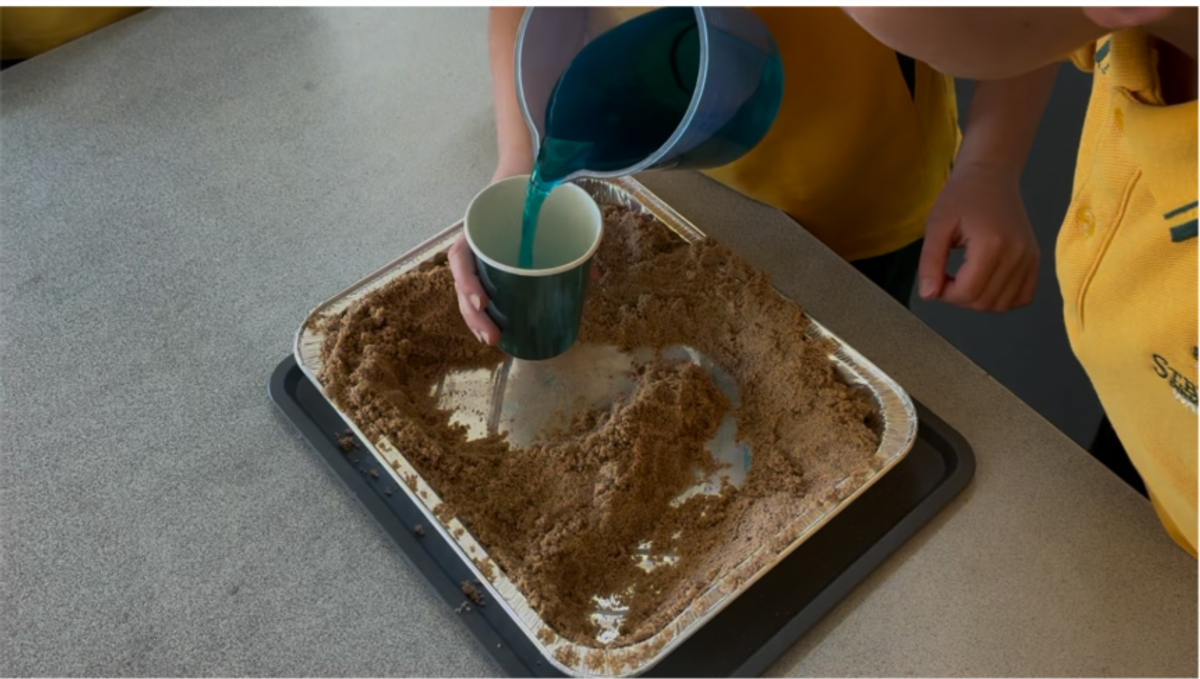
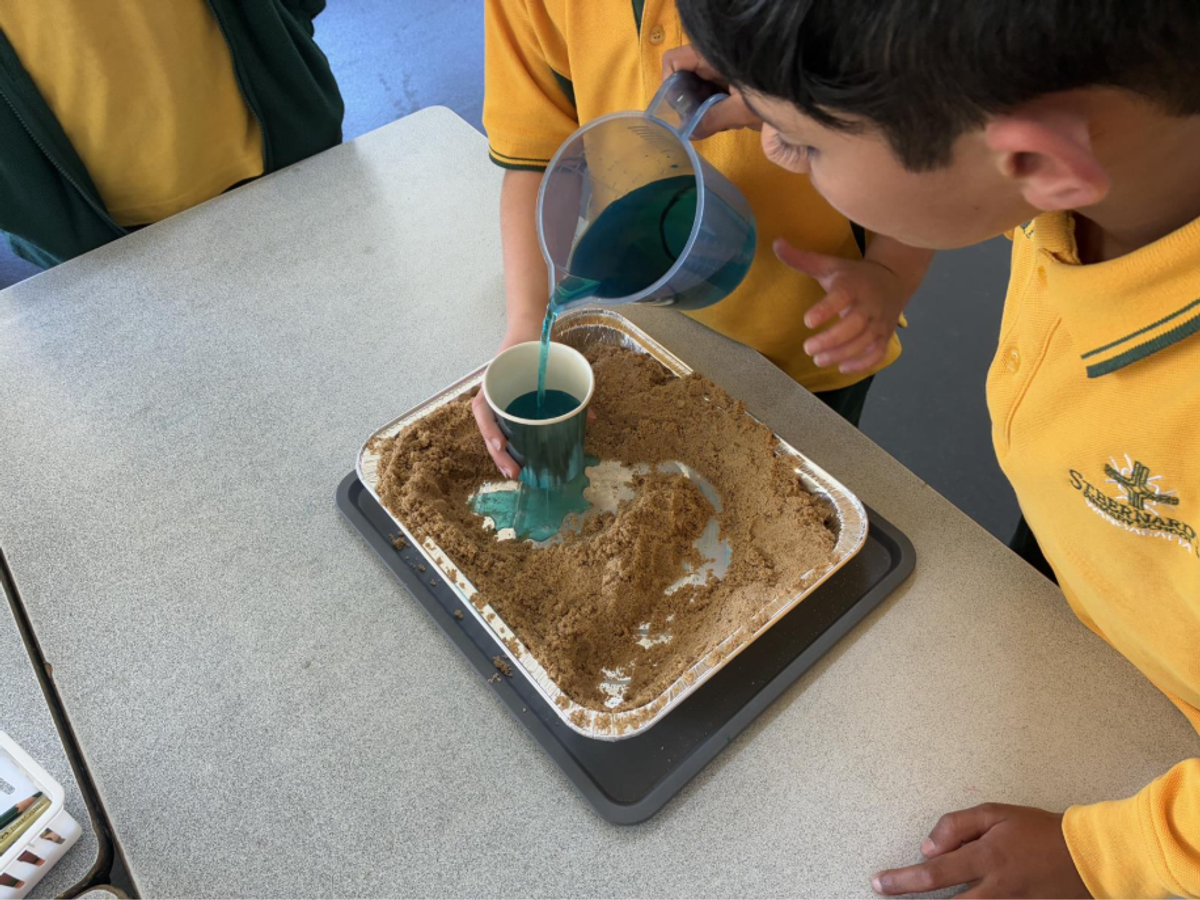
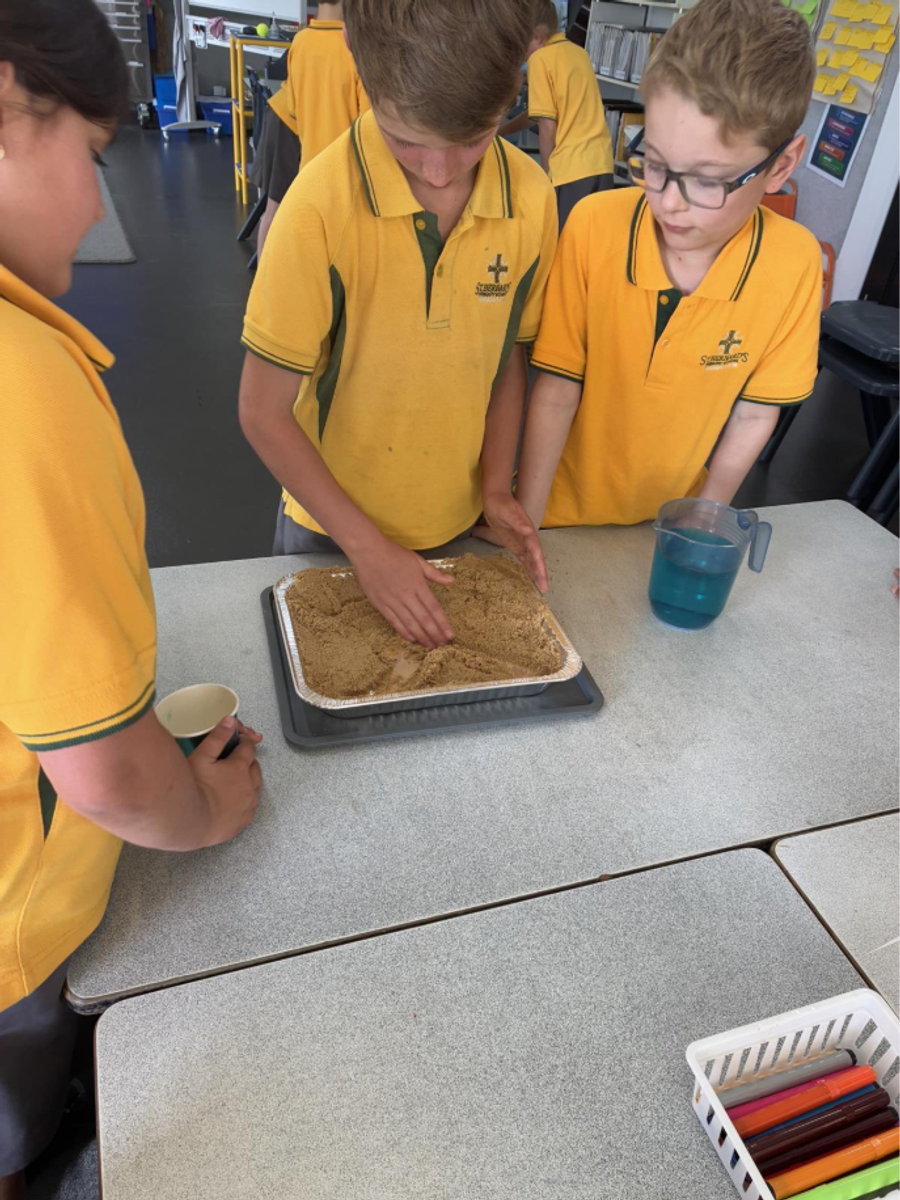
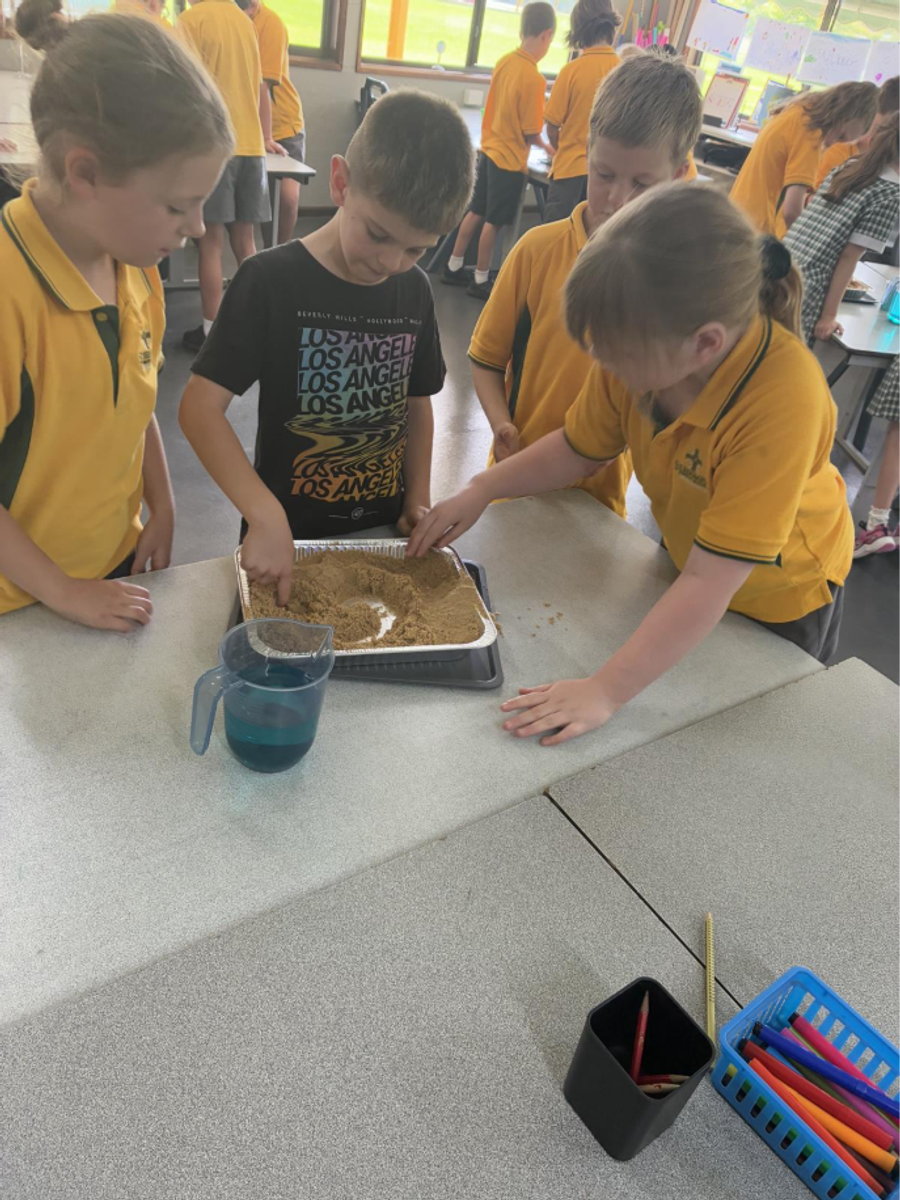
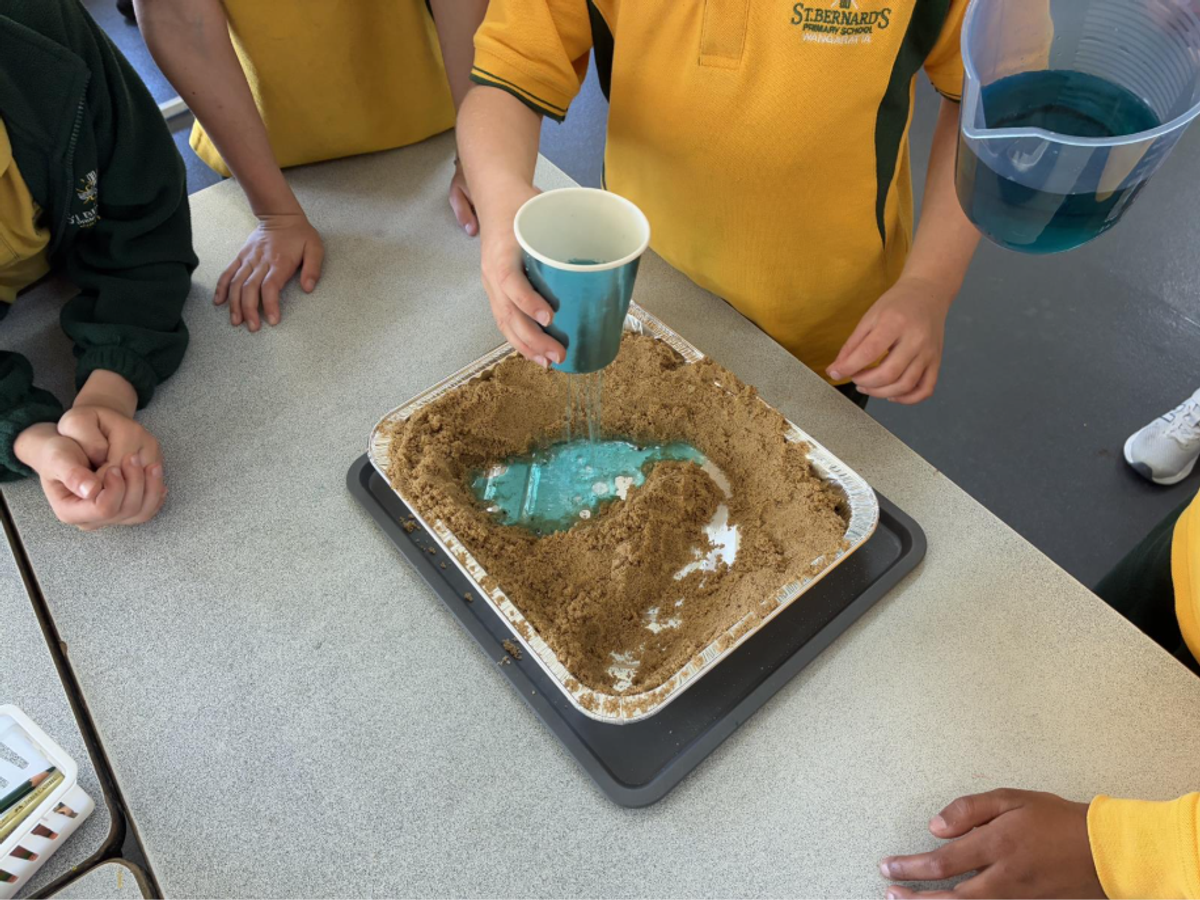
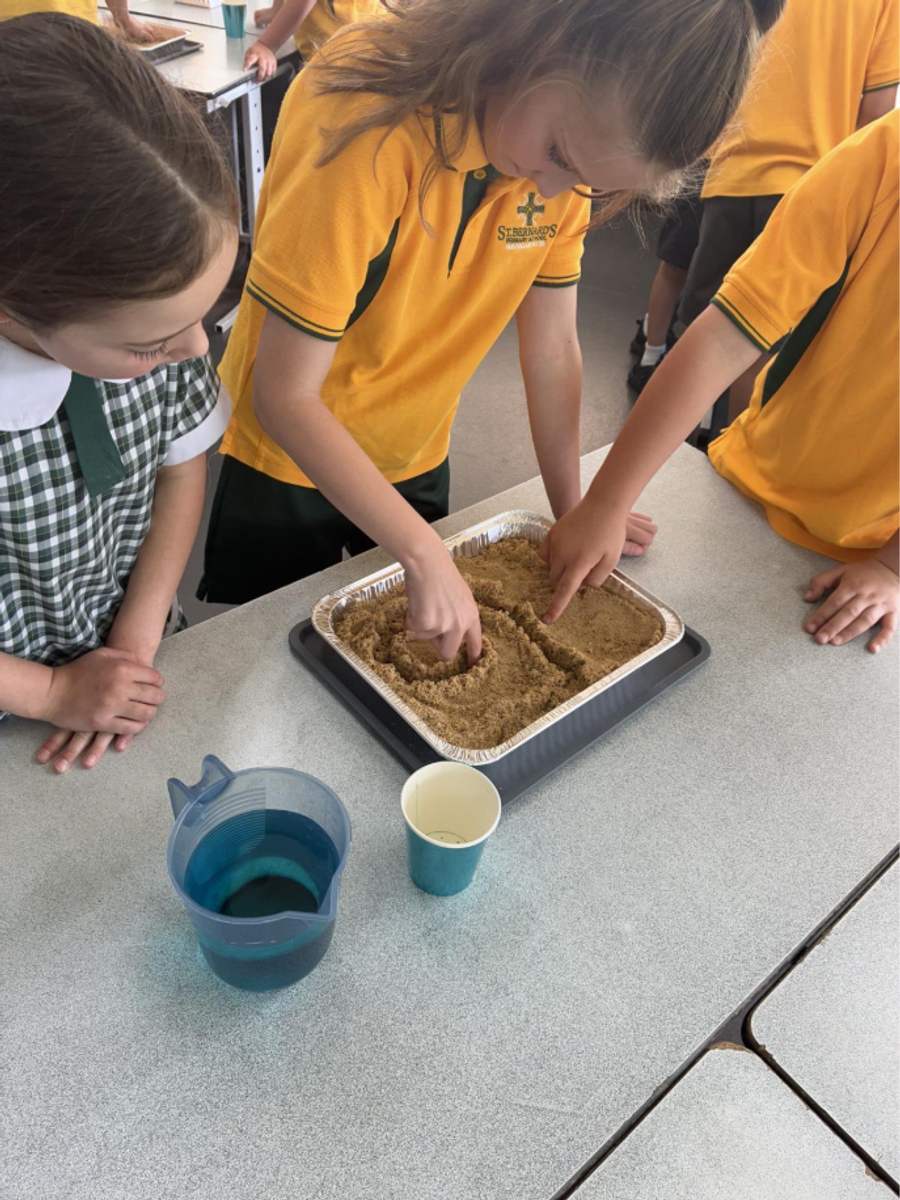
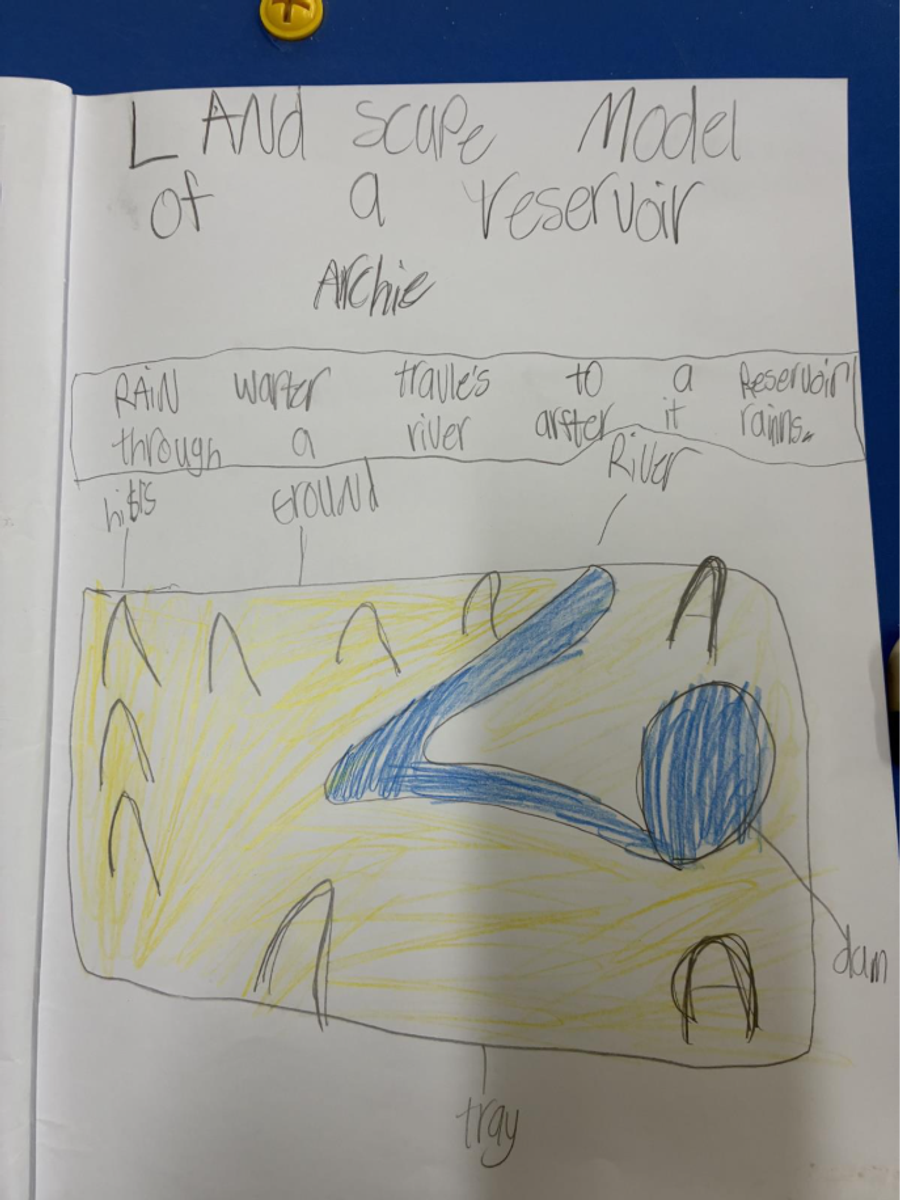
Students have made a model of a landscape using sand which included hills, a river and a reservoir, and observed where the water flowed to as it ‘rained’. Once completed, they drew a diagram of their model and wrote a sentence of what they had created.
Grade 3
Students have continued investigating their understanding of how Earth’s rotation on its axis causes night and day and describing changes in size and direction of shadows during a day due to the apparent movement of the Sun across the sky from East to West each day.
They have described how shadows are made and observed light and shaded sides of objects in sunlight to demonstrate how shadow on the earth contributes to night and day.
Grade 4
In their unit ‘Our Place in Space’ students have been investigating the formation of the Solar System, and what ‘the big bang’ actually means.
They have investigated the formation of the solar system, including the solar system, which began as a cloud of dust and gas in space (nebula). The nebula began to spin, the middle of the cloud became denser, and it began to spin faster.
A flat disc formed with a heavy central area. The sun ignited and planets eventually formed in the disc of materials surrounding it; 'Conservation of angular momentum’ - the process whereby something that spins and then contracts will spin faster and eventually collapse on itself.
The solar system was formed by conservation of angular momentum, and this is what we will investigate today and complete a comprehension task on the formation of the Earth.
Over the next couple of lessons, students will research individual planets and share their investigations with the class.
Grade 5
Students have investigated the difference between weathering and erosion, and how it causes changes to the earth’s surface. We have used several models to recreate the impact of physical or mechanical weathering. These models have included using sugar cubes and sandpaper as rocks that rub together and cause abrasion, and then sugar cubes and salt shaken in a jar to represent how weathering of rocks can cause then to change shape and become smoother as river rocks do in real life.
Students were quite interested and somewhat surprised by the results of these investigations. We will continue with investigations into chemical and freeze–thaw weathering, and look at how these impact the earth’s landscape.
Grade 6
Students have spent the last couple of weeks researching a volcano of their choice. It was explained to students that this would contribute to their assessment, and they were given a success criteria to consider while researching. Once research was complete, and all criteria were addressed, students submitted their research as a poster to be displayed in the science room.
Overall, students did a great job researching and presenting their work. Their results will be handed out this week.
Over the next couple of weeks, students will investigate how the viscosity of lava affects the shape of volcanoes. We will also continue to plot where volcanoes are active in the world today.