
Assistant Principal Report
Strengthening number sense at home: Partitioning (part-part-whole)
What is partitioning?
Partitioning is breaking a whole number, for example 7, into different parts, for example 3 and 4. Breaking this ‘whole’ number into 2 ‘parts’ is called part-part-whole. Another example would be taking the ‘whole’ number 9 and breaking into 2 ‘parts’ of 6 and 3. In this example the number 9 could also be broken into ‘parts’ of 4 and 5, or 2 and 7 or 1 and 8.
Practising this skill at home will help your child understand that any number can be broken into different parts, which supports later learning in addition and subtraction.
Tips
At home
Toy sort
- Count a collection of your child’s favourite toys, such as construction blocks. This total is the whole. Ask your child to rearrange them into 2 groups (parts) and tell you how many are in each part. Bring both parts back into one group and then separate into 2 parts in a different way. Ask them, ‘how many ways can the toys be grouped into 2 parts?’
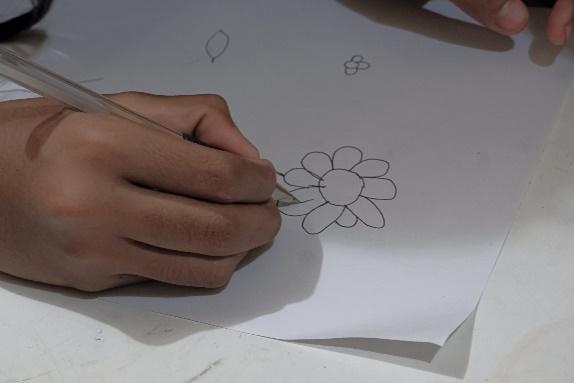
Petal parts
- Draw a flower with 9 petals. Have your child count the petals (the whole). Ask your child to colour in the petals of the flower using 2 different colours; for example, 4 red petals and 5 blue petals. Draw a second flower with 9 petals. Ask your child to show you another way to colour the petals using the same 2 colours. If you like, you can draw more flowers with 9 petals and see how many other ways your child can break 9 into 2 parts using the 2 colours. You can also do this activity with flowers that have a different number of petals. counting. Ask them, ‘how many eggs are left’ or how many have been used?’
At the supermarket
Oranges and apples
Pick 7 pieces of your child’s 2 favourite fruits (for example, apples and oranges). Have your child tell you the total number of fruit (the whole), as well as how many of each type of fruit (the parts) there are; for example, 3 oranges and 4 apples. Talk about what other combinations of the 2 fruit types would make 7.
Two packets
Select 2 packets of bread rolls and ask your child to count the number of rolls (the whole). How many are in each packet (the parts)?
At the park
Chalk and talk
- Use chalk to draw a number (the whole) on the pavement. Have your child draw that number of a favourite shape below the number. Ask them to circle a number smaller than the whole to make 2 parts; for example, draw 6 shapes and circle 4 shapes, leaving
2 shapes as the second part.
Nature numbers
- Collect a small group of sticks, leaves, or stones from the park. Count the whole with your child and then ask them to sort into 2 parts. Count and then bring back together to separate a different way.
Further information To access other videos and tip sheets in this series as well as further tips, information and links for parents and carers, see: Mathematics and numeracy at home
For further information on supporting your child’s education, see: Supporting your child's education | vic.gov.au
Dani Bird
Assistant Principle
