First Aid Reminders
Term 2
First Aid Reminders
Term 2
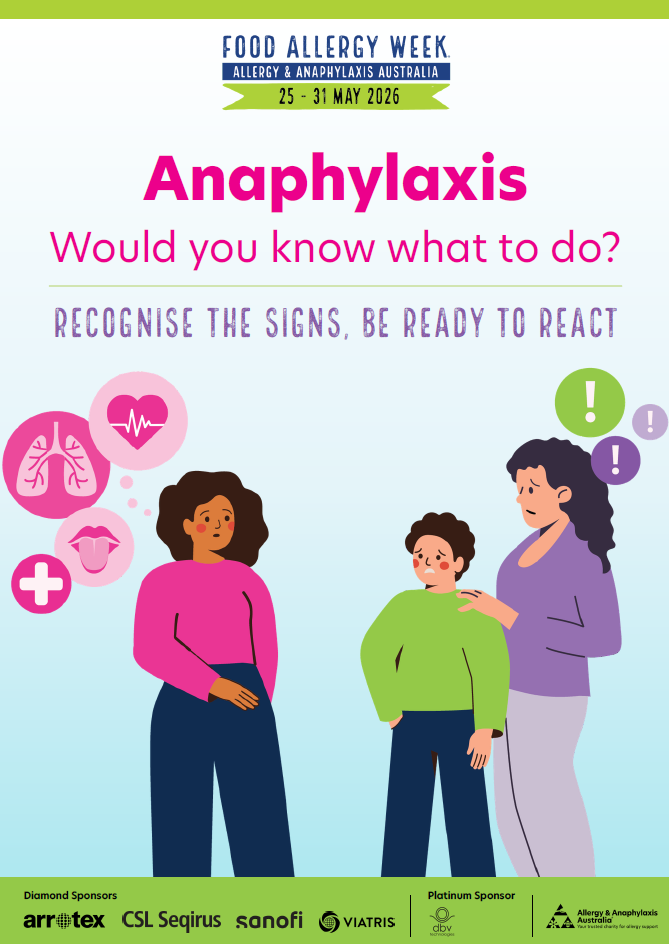
Food Allergy Week was created by Allergy & Anaphylaxis Australia to raise awareness of food allergy in Australia.
Australia has one of the highest rates of food allergies in the world, with almost 2 million Australians living with a food allergy. We also have one of the highest rates of hospital anaphylaxis admissions in the world. There has been a 51% increase in anaphylaxis presentations to emergency departments in a 5-year period, growing to more than 11,500 per year.
During Food Allergy Week 2026, Allergy & Anaphylaxis Australia calls on all Australians to unite to help increase awareness and share information on what we can all do to improve safety for people who live with food allergies. Awareness and education help reduce the risk of allergic reactions, and effectively treat potentially life-threatening emergencies when they happen.
In 2026 the theme for Food Allergy Week is focused on anaphylaxis and knowing what to do in an emergency – and our message is: Recognise the signs, be ready to react.
For further information please click on the link below.
Food Allergy Week - Allergy & Anaphylaxis Australia
Influenza (flu) can be serious, especially for children.
Choose to protect yourself and your loved ones with an annual flu vaccine. The earlier you and your family get vaccinated, the better your protection heading into winter.
Keeping our school community well
We encourage parents and carers and students to:
stay up to date with your flu vaccinations.
Flu vaccinations
Flu vaccination is recommended for everyone aged 6 months and older.
Some people are more at risk of severe illness from flu, especially babies and toddlers. They can get a free vaccination as part of the National Immunisation Program.
You can book a flu vaccine through your GP or pharmacy, or find a flu vaccine near you.
RSV vaccinations for mothers and babies
RSV (respiratory syncytial virus) is a common virus that causes colds and ear infections. In babies, it can cause severe illness like bronchiolitis.
The RSV vaccine is available for pregnant women as part of the National Immunisation Program. In Victoria, eligible babies can also get the RSV vaccine until Wednesday 30 September 2026.
You can speak with your GP or midwife about the vaccine.
Find out more
For more information about staying well this winter, refer to: