School Wide Positive Behaviour Supports
Supporting Positive Behaviour at School:
How We Guide Students When They Make Mistakes
We believe that learning isn’t just about academic skills, it’s also about learning how to work and play positively with others. Social and behavioural skills take time, practice and guidance, when students make a behaviour mistake, we see it as an opportunity to teach, support and help them grow.
To do this, we use a clear, consistent school-wide approach that focuses on discouraging inappropriate behaviour in calm, respectful and constructive ways.
Why we approach behaviour this way
Students need to know what went wrong and what to do next time. Clear, specific guidance helps them understand expectations and practise positive choices. Research tells us that corrective teaching, not reprimands, is what leads to lasting behaviour change.
How teachers respond to behaviour errors
Our staff use a continuum of strategies, starting with the least intrusive. These strategies are designed to keep learning on track while supporting students to reset.
1. Indirect strategies (quiet, quick and unobtrusive):
- Standing near a student as a gentle reminder
- Using eye contact or a small hand signal
Praising a nearby student who is doing the right thing
2. Direct strategies (explicit teaching and clarification):
- Giving a quick reminder of the expected behaviour
- Re-teaching an expectation if a student needs more support
- Offering choices so students can take responsibility
Using a short conversation to problem-solve if behaviour is persistent
3. Logical and fair consequences:
- When appropriate, we pair teaching with a consequence that helps reinforce the learning, for example, re-practising a routine or repairing harm caused.
Supporting more serious behaviours
For behaviours that are more serious or continue after reminders, teachers focus first on de-escalation, helping the student calm and regain control. A follow-up conversation or consequence may occur with a member of the leadership team. These steps are taken respectfully and safely, with the goal of helping each student reconnect, reflect and return to learning.
Considering what students might need
Sometimes behaviour is connected to the environment or to how a student is feeling. Staff look at possible triggers and adjust things like seating, routines or task difficulty to support success. We also use a trauma-informed lens to ensure responses remain calm, predictable and relationship-focused.
Our commitment
We know that strong behaviour skills lead to strong learning. By approaching behaviour errors as teachable moments, we help students develop independence, resilience and confidence, skills that will support them not only at school, but throughout life.
If you have any questions about how we support positive behaviour, please reach out.
SWPBS Matrix of Expectations:
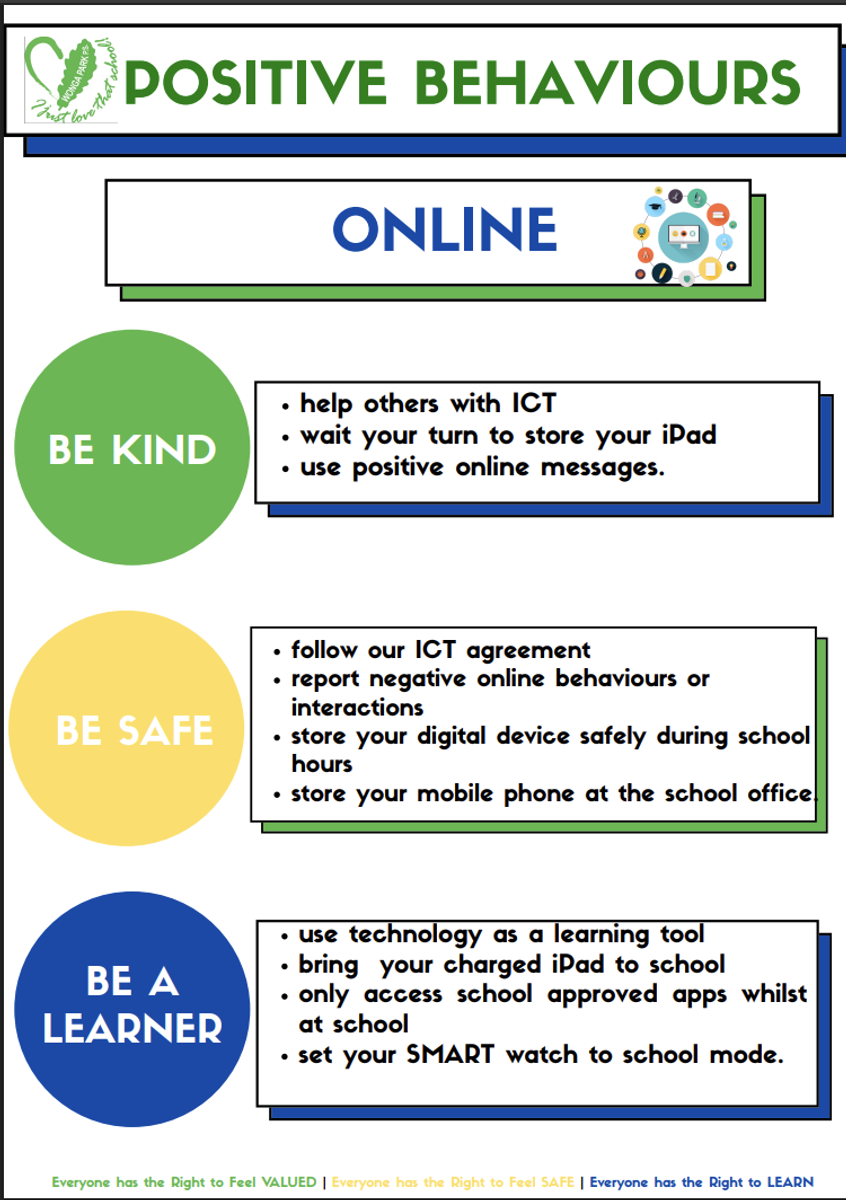
We encourage families to spend a few minutes looking through our Online Expectations poster with their children. It’s a great way to start conversations about safe, respectful and responsible behaviour when using technology at home and at school.
Have a great week,
SWPBS Team