What to expect this term
Foundation news – what lies ahead!
This newsletter will provide you with information about the learning that will be covered in term one in Literacy and Numeracy. This should give you a clear understanding about what lies ahead for the first term for our Foundation students.
Welcome to FPS
Foundation teachers & transitions
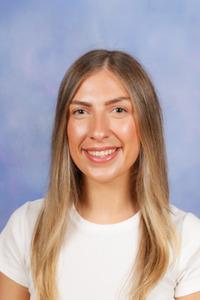
FA - Lucy
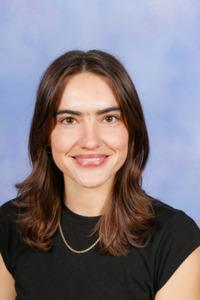
FB - Jayde
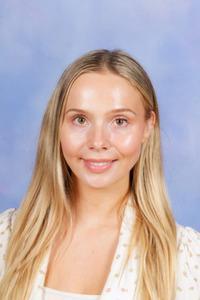
FC - Katie
FA - Lucy
FB - Jayde
FC - Katie
Some of you may already be a part of our school community with older siblings, so thank you for continuing to trust us with supporting your children's education. To any new families, we thank you for choosing Fairfield Primary School to begin your child’s learning journey and we look forward to working with you!
We know that transitioning from kindergarten to school is huge for your child, and they have already shown us how keen and ready they are to get stuck into their learning. We look forward to helping them learn to read, write and recognise numbers, as well as make new friends, and learn the routines and structure of schooling life.
Daily learning schedule
In Foundation, each day begins the same. We mark the roll, do the Acknowledgement of Country and go through our timetable for the day. Over the next few weeks, the start of term will begin with Exploration. Exploration is a great way for students to foster their creativity, improve fine motor skills, enhance language through discovery/play, and build emotional regulation and resilience.
Once the students are more comfortable and settled at school, we will begin each day with our Literacy block, followed by Numeracy, and any other activities including School-wide Positive Behaviour Support (SWPBS), Resilience, Rights and Respectful Relationships (RRRR) and specialists. Exploration will mostly take place in the afternoons.
Once our one-on-one interviews have been finalised, we begin our Perceptual Motor Program (PMP) on Wednesday mornings across term one. PMP is a structured, weekly program for early primary school children which helps them improve their eye/hand and eye/foot coordination, fitness, balance, and gross motor skills. We require volunteers to help this run effectively so we look forward to working with you to support this! More information about dates, times and volunteer sign up will be sent out via Compass closer to the date.
Literacy block
In Foundation, our Literacy block comprises:
- Oral language development
- Phonological awareness
- Phonics
- Vocabulary
- Comprehension
- Fluency
- Writing, including handwriting
These components are taught in a structured and explicit way. Together they make for a rich and comprehensive literacy experience.
Our literacy block aims to build the students' knowledge about a given topic. Our topic this term is about Personal Histories and Community. Over the term the students will be answering the question, “How are other communities similar/different to mine and how have they changed over time?” Through this topic the students will develop a rich vocabulary as well as engage in meaningful discussions to support their oral language skills, which helps to develop equally strong foundations for comprehension and writing.
Phonics & phonological awareness
At the beginning of Foundation, our primary focus within our reading instruction is to ensure that students are proficient in phonological awareness and phonics.
- Phonological awareness is the ability to hear and manipulate sounds, syllables and rhymes in spoken language.
- Phonics links the sounds to letters. Together they are foundational for decoding, reading and spelling.
As mentioned in our other communication, we use the Little Learners Love Literacy program (LLLL) and other resources to teach your children these skills. Look out for our weekly letters to learn the new sounds and characters!
Take home readers & fluency
Once we finish teaching the stage one sounds, we will start to send home decodable books. Most books are from the LLLL program, although you will find other decodable readers which might be slightly different but follow the same principles. Lots of the books practise the sounds and letters that we have taught, so most children will be able to read the books themselves by sounding out and blending. Like always, this might be a bit tricky for some children at first, and that’s okay. Do your best to help them sound out and blend (no guessing!).
To build your child’s fluency and confidence, we encourage you to read their book with them every night. They will then read this book in class with a partner the next day and change it for that night. With the readers, a LLLL home reading journal will be sent home. It is a simple journal where they log what book they read. It provides you with lots of tips and tricks to support your child’s reading at home.
To support this learning at home:
- Listen to your child read each day, making sure the experience is without too many distractions, and when your child is not too tired.
- Read rhyming books! Together you can identify the words that rhyme.
- Rhyming 'I Spy': For this game, give I Spy rhyming clues. Examples: I spy something that rhymes with dig (pig). I spy something that rhymes with bat (cat). I spy something that rhymes with fun (sun). I spy something that rhymes with bug (rug). You may also let students come up with the clues for an added challenge.
- Syllables 'I Spy': The focus of this game is syllable counting using a collection of items. Collections could include toy animals in a basket, a picture in a book or food in the fridge. Examples: “I spy a one-syllable animal,” “I spy an animal with four syllables.” You could also add in beginning sounds. For example, "I spy an animal with one syllable that begins with a /b/ sound". Answer: Bird.
- Initial sound 'I Spy': Clues using initial sounds. Remember to say SOUNDS, and NOT the NAMES of letters. Example: "I spy something that begins with /s/" (sun).
- Initial phoneme deletion (onset-rime): Give clues that require students to remove the initial sound from a word and say what’s left. Examples: “I spy a chart without the /ch/” (art), “pants without the /p/” (ants).
- Initial phoneme blending: Students listen to two parts of a word you say (pausing a few seconds in between the initial phoneme and the rest of the word) before blending them together. Examples: "I spy a c-lock" (clock), s-wing (swing) , s-ki (ski).
- Syllable hunt: Write the numbers 1,2,3 on individual pieces of paper and put them on the floor. Children can then go around the house and find objects and put them next to the correct number of syllables they have.
- Identify beginning, middle, and ending sounds of simple CVC words- what sound do you hear at the beginning of this word e.g. cat, red, dig, hen? (repeating the sound, not the name of the letter)
- Pronunciation – Mirror Sounds: when reading a sound, have your student watch how your mouth makes the sound and then they can practise making the sound while looking in the mirror.
- Heart words (orthographic mapping): if your child is ready to begin identifying heart words, you can map the words by their corresponding sounds. For example, write the word ‘with’ but place a box around the ‘th’ and a heart above it, to demonstrate that ‘th’ is the irregular sound in this word, and makes one sound.
Ultimately the goal for every child is that they have a love of reading!
Writing
In Foundation students have been focussing on drawing pictures in response to texts they have read as a class or shared experiences. Writing/drawing and responding to texts is a great way for them to consolidate any new knowledge they have learnt and to demonstrate their understandings or own experiences about a given topic. Drawing is a key component of learning to write and is itself a valued mode of communication, as well as a way of getting ideas ready for the process of writing and early experimentation with letters and sounds.
Stages of writing
Once students have begun expressing their experiences as drawings they are encouraged to begin labelling their drawings. Initial labels can appear quite simple as students label using the initial sounds that they know. As students progress and learn new sounds and sound combinations, these new sounds appear in their labels. When students are still developing their phonemic awareness, being able to label the beginning sound for something in their drawing can bring a sense of accomplishment.
When writing becomes exciting, and students are developing complicated sentences or ideas that they are not sure how to put into written words, we encourage them to use a magic squiggle. This is where they can record the beginning sound(s) in the word they want to write, followed by a squiggly line. The line represents the rest of the word and highlights to us that they are aware there are more sounds than just the onset of the word. The magic squiggle supports students who sometimes get frustrated when they cannot write a full word or sentence.
As they start to recognise more letters and sounds, they may write one word to label their drawing. They are encouraged to stretch out all of the sounds that they hear. We might say that they are putting the word in ‘slow motion’ – ‘park’ may be represented as ‘prc’. Rather than always correcting their writing, we celebrate their accomplishments of recording the sounds that they know!
For children who are ready to begin writing a sentence, they start by counting the amount of words in their idea and drawing a line to represent each word, i.e.: “I played with blocks” needs four lines. They then stretch out the sounds they hear in each word. This may look like: I plad wif boks. They may record some of the heart words that they know. Finishing the sentence with a full stop, exclamation or question mark.
Modelled writing
As well as having time to write their own words and sentences, the practice of encoding is modelled and explicitly taught. Encoding is the process of converting spoken language into written form by breaking words down into individual sounds and mapping them to letters or letter combinations. It is essentially the act of spelling. It involves using their phonics knowledge to segment sounds and translate them onto paper. For example, this starts with writing simple CVC words like ‘cat, mat, bat,’ and will eventually build into writing simple sentences such as ‘My cat ran.’
To support this learning at home:
- Encourage your child to draw and write as often as possible. Giving children a ‘real’ use for their written expression (writing in a card, helping with a shopping list) helps them to understand the purpose of writing and the benefits of being able to read back what has been recorded.
- Promote lots of exposure to a range of writing surfaces and mediums, such as blackboards and whiteboards. Playing with play dough, threading and cutting activities are all beneficial to your child’s development in their fine motor skills and writing fluency.
- Use a whiteboard to encourage children who worry about making mistakes (they can rub it out and have another go).
- Label photos of their favourite things. This could be labelling whole words, beginning sounds, or writing a sentence.
- Practice letter formation, as this helps reduce cognitive load when writing down their ideas.
Mathematics
Children will be learning to read and write the numbers zero to ten. As well as counting forward and backward, sequencing numerals and correctly, counting collections of items.
Counting is taught explicitly and children are provided with opportunities to explore counting and challenge themselves, sharing their understanding with their peers. We will soon explore the counting strategies we already know and learn new ones. The aim is for each child to choose an appropriate strategy to count a collection of objects, using one-to-one correspondence and for them to address why their strategy helps them.
Students will also develop their understanding of numbers through subitising, which is the ability to recognise how many objects are in a small group without counting one by one. This will help students build strong number sense and understanding numbers to 10. In the classroom, we practise subitising through fun, hands-on activities such as dot cards, dice games, ten frames, quick image flashes and daily counting routines.
We also explore shapes and patterns to develop their early mathematical thinking and problem-solving skills. Students learn to recognise, describe and create patterns, and identify common 2D shapes in their environment. In the classroom, this learning is supported through hands-on activities such as sorting and building with shapes, creating repeating patterns, exploring shapes in everyday objects, and using play-based experiences to deepen understanding.
To support this learning at home:
- Counting in real life! Counting the steps to the car, counting the rocks you throw in the creek, counting the trees at the park, counting the letter boxes you pass on the way to school, counting the red cars you pass on a car trip, counting the apples you buy at the shops.
- Practise writing the numerals from 0 – 10, focusing on formation and starting point.
- When counting, ask your child ‘more or less’ questions: ‘Are there more red or blue cars in the street?’ and so on.
- Playing Snap, War! or Memory with a deck of cards. Cards are a great resource as they represent both a numeral and value, so if your child can’t recognise the numeral, they can count the diamonds on the card.
- Look out for the ‘verbal pathways’ sheet that will soon be sent home in your child’s reading folder. These rhymes assist children to remember the correct numeral formation assuring that they can clearly communicate the numbers.
Resilience, Rights and Respectful Relationships (RRRR)
As part of the Resilience, Rights and Respectful Relationships (RRRR) program, Foundation students are developing emotional literacy by learning to recognise, name and express their feelings. This supports students to build positive relationships and manage their emotions in safe and respectful ways. In the classroom, we use stories, discussions, role-play and visual supports to help students identify emotions, practise calming strategies and develop empathy for others.
Specialist subjects
French
Foundation students sing their first songs in French and practice greetings. They will also learn to ask and give their names. Students will be warmly supported in their attempt to guess the meaning of new vocabulary. The new French words will be reused in language games, dance, songs, and shared reading of albums with simple and repetitive lines.
Performing Arts
Foundation students will embark on their Performing Arts journey by incorporating Music, Acting and Dance (M.A.D) in each session. In addition to learning to identify and define the three different artforms, we will also be using these mediums to reiterate expectations outlined in our School Wide Positive Behaviour System (SWPBS).
Physical Education
Foundation will focus on following instructions and basic rules used in minor games. They will begin to familiarise themselves with the PE spaces and the routine of a PE lesson. Students explore locomotor and balance skills by moving in different ways while playing simple games.
Science
This term, the students will be focusing on chemical sciences. They will explore how objects can be made of one or more different materials and that these materials have observable properties.
Visual Arts
Indigenous landscape artist Albert Namatjira and his great grandson Vincent Namatjira, a contemporary portrait artist will be the spotlight for study this year.
Initially, students will be decorating their art folios and Visual Art journal. They will then be focussing on the art element colour, expressing it through paint. They will be exploring the primary colours and experimenting with them to create secondary colours.
Kind regards,
Lucy, Jayde, Katie & the Specialist teachers