
Term 2 Learning Summary
English
Reading
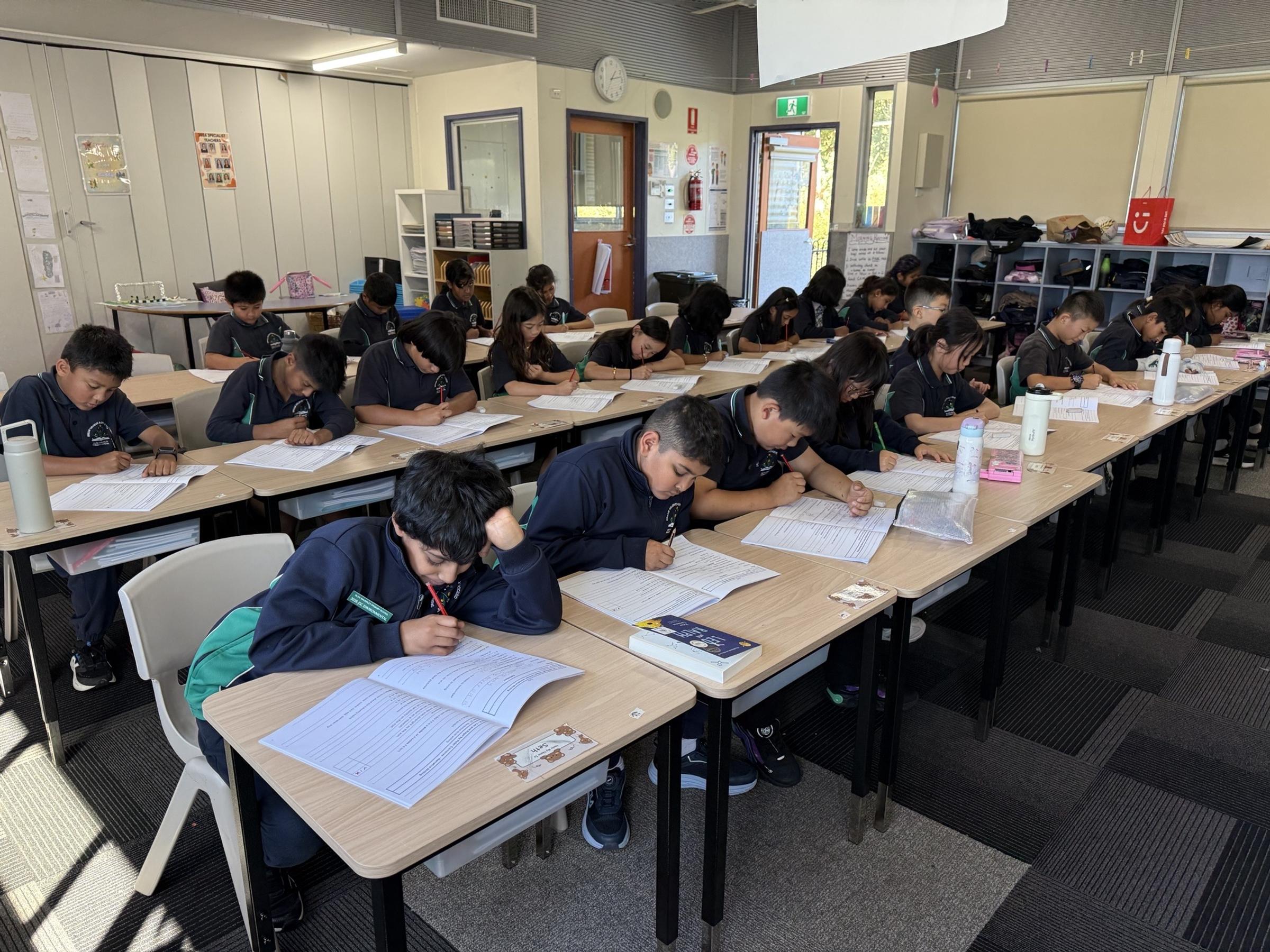
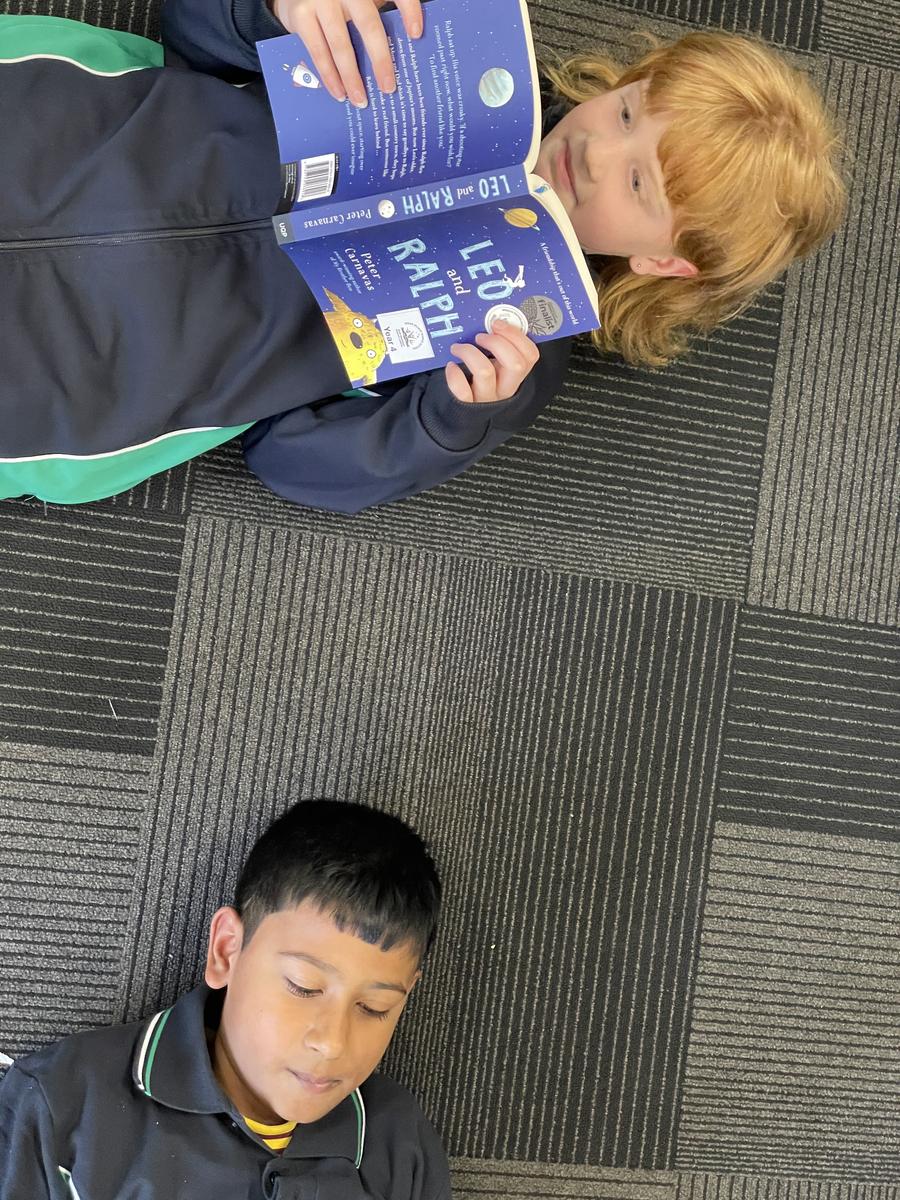
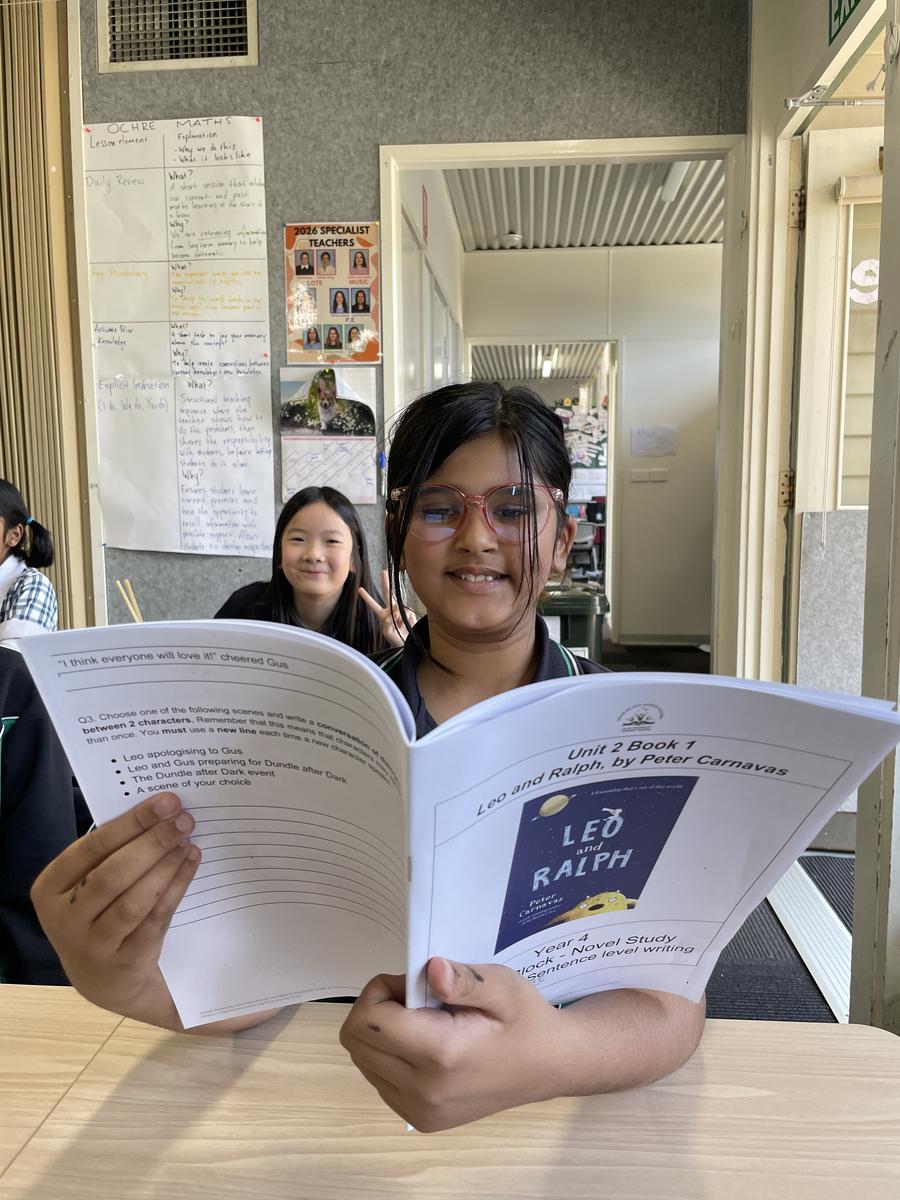
Across Term Two, Reading lessons will centre on the novels Leo and Ralph by Peter Carnavas and Uncle Xbox by Jared Thomas. Students will strengthen their comprehension by exploring plot development, characters, settings and underlying themes. Students will learn how authors use structure and language to communicate their ideas through inferred messages, which encourages deeper interpretation and critical thinking. Teaching will explicitly address purpose, audience, and narrative language features with students given regular opportunities to practise and consolidate these skills through discussion and retrieval activities.
Writing
Influenced by the mentor texts, students will make links from their reading to their own writing. They will use their deepening understandings to develop rich narratives, which incorporate development of characters, settings, plots and underlying themes, and factual recounts based around historical events. Students will continue to develop an ever-growing vocabulary taken by analysing words taken from their mentor texts and supplementary reading. Identification and use of specific word types, such as nouns, adjectives and adverbs, will aid in improving the depth of student writing. Additionally, there will be a focus on improving penmanship in order to achieve the ultimate goal of earning their pen licenses. This will require students to produce a consistently high standard of handwriting across all areas of learning, including in Home Learning books.
Speaking and Listening
In Speaking and Listening, students will engage in shared reading of mentor texts across a range of settings, including pairs, small groups and whole class. These experiences build students confidence in expressing ideas, strengthen active listening, and develop oral language through purposeful conversation. Shared reading supports students to deepen their understanding, clarify meaning, and consider different perspectives. It also promotes strong comprehension while fostering respectful communication and thoughtful participation in both learning and social interactions.
Key Vocabulary:
- Narrative
- Character
- Setting
- Orientation
- Theme
- Recount
- Grammar
- Phoneme
- Grapheme
- Morpheme
- Suffix
- Prefix
Base
How can you support your child’s English learning at home?
Read with your child
Set aside time to listen to your child read at home and support them by analysing new or interesting vocabulary. Ask them questions about the text to assist them to understand on a deeper level.
Talk about the words authors use
When reading together, chat about how things are described in the book. Ask questions like, “What do you picture when you read that?” or “Why do you think the author used that word?”
Practice using the five senses
Help your child describe places or objects using their senses — what they see, hear, smell, feel, and taste. For example, describing a beach might include “the salty smell in the air” or “the warm sand underfoot.”
Discuss past experiences
Encourage your child to think about events that have occurred in the past as a family and discuss your shared recollection of them. Support them to write a rich recount of the event, including details about who, when, where and what happened.
Mathematics
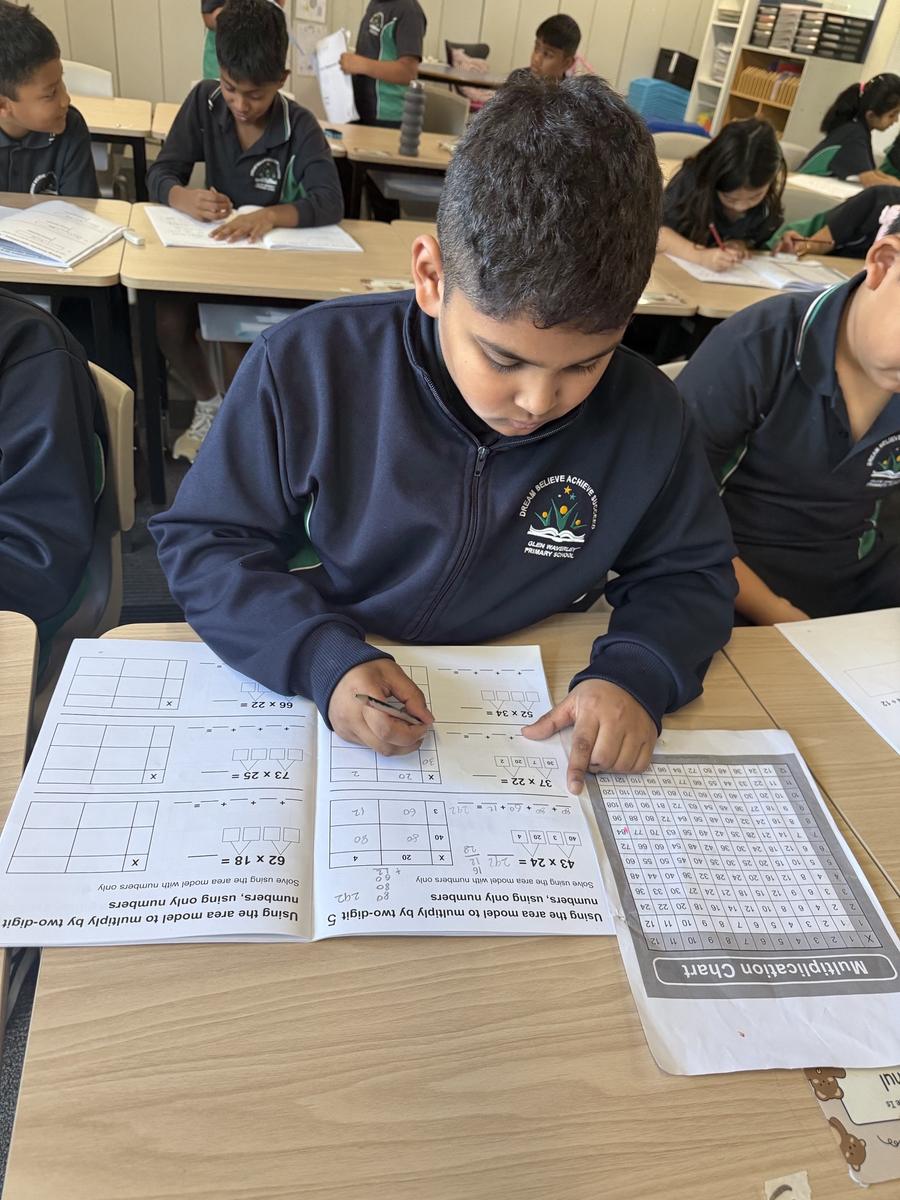
In Term 2 we will be covering a wide variety of mathematical topics that will involve hands on tasks and real-world applications. All learning continues to follow the Gradual Release of Responsibility and regular retrieval approach that aligns with research around the Science of Learning. Through the use of Daily Reviews, students will regularly recall and practise concepts taught throughout Term One and Two, ensuring more reliable storage in long-term memory.
The curriculum will cover:
- Perimeter and Area: Calculating the perimeter and area of regular and irregular shapes and solving worded problems.
- Fractions: Comparing and ordering fractions with the same and related denominators and placing them on a number line.
- 3D Objects: Identifying, drawing and designing the nets of 3D objects.
- Decimals: Writing, comparing and order decimals up to thousandths.
- Probability: Conducting chance experiments and comparing the expected and actual outcomes.
- 2D Shapes: Rotating, translating and reflecting shapes
Time: Interpreting and creating timetables and schedules using 12- and 24-hour time.
Key Vocabulary:
Perimeter and Area | Fractions | 3D Objects | Decimals |
length width height square units formula | denominator numerator improper fraction mixed numeral
| net face edge vertex/ vertices surface prism
| tenths hundredths thousandths decimal point place value |
Probability | 2D Shapes | Time | |
chance experiment equally likely fair possible outcomes probability unfair | anti-clockwise clockwise half turn horizontal quarter turn reflect rotate symmetrical transform translate vertical | 12-hour time 24-hour time am pm schedule timetable
| |
How can you support your child’s Mathematics learning at home?
Perimeter and Area: Use building blocks or LEGO to create shapes and calculate their perimeter and area.
Fractions: Follow a recipe, taking note of the different measure cups and spoons that are needed.
3D Shapes: Identify different examples of 3D objects you can find around your home.
Decimals: Identify examples around home and at the shops where decimals are used (e.g. temperature, prices, distances.
Probability: experiment with different examples of probability such as, flipping a coin or rolling a dice
2D Shapes: Identify different examples of 2D shapes you can find around your home.
Time: Practice reading the time on different analogue and digital clocks.
Inquiry
Question: How do chemicals impact life on Earth?
Global theme: Environmental Sustainability
Connected Global Goal: Responsible consumption and production
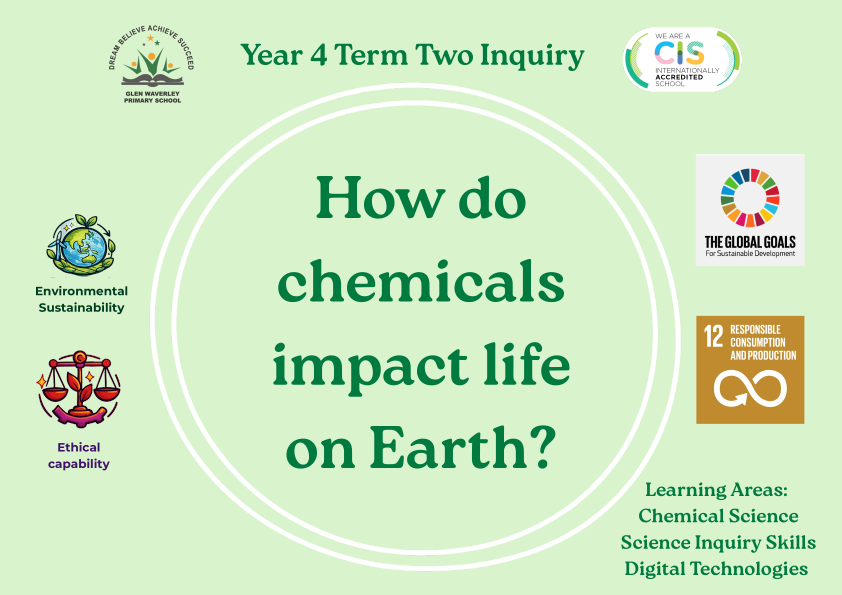
In Inquiry, we will be exploring Chemical Sciences, where students will investigate the Inquiry question: "How do Chemicals Impact Life on Earth?" Through hands-on experiments, an exciting incursion and practical learning about the world around them, students’ curiosity will be sparked, encouraging them to develop deeper understanding. Across Term Two, students will examine the distinctions between natural and manufactured materials, including an exploration of the chemicals present within everyday products. They will consider how these chemicals affect the environment and evaluate how alternative products may achieve similar outcomes. Through practical investigations and participation in the Mini Lab incursion, students will engage with the Scientific Method, strengthening their ability to observe carefully and develop informed hypotheses. As their understanding grows, students will identify a personal action they can implement at home to promote more mindful chemical use. They will also collaborate to propose a whole-school initiative aimed at increasing awareness of the effects chemicals can have on living things, while exploring environmentally responsible packaging options derived from chemical alternatives.
Key Vocabulary: Matter, Solid, Liquid, Gas, Chemicals, Absorbency, Flexibility, Conductivity, Alternative packaging, Hypothesis, Processed and Natural Materials.
How can you support your child’s Inquiry learning at home?
- Talk About Everyday MaterialsEncourage your child to explore materials around the house. Ask questions like, “Do you think this is natural or processed?” or “What do you think this is made from?” This builds awareness of how materials are used in real life.
- Explore Packaging TogetherLook at food and product packaging during grocery shopping or recycling. Discuss why certain materials are used and if there are better alternatives for the environment. This supports critical thinking and links to sustainable practices.
- Encourage Curiosity with Simple ExperimentsTry easy science activities at home, like mixing baking soda and vinegar or testing which materials float or sink. These hands-on experiences spark curiosity and help children understand chemical reactions and material properties in fun ways.
Wellbeing
The Cyber Safety Project
In Term 2, students will continue learning The Resilience Project, a program designed to build emotional intelligence and foster resilience through practical strategies. The focus for this term is to build student capacity for empathy, problem solving and self-regulation. Beginning by prioritising creating connections through empathy, students will then move to recognising the value of personal challenges and how they can be viewed as learning opportunities. After building their capacity to work with others, the focus will shift to understanding their own emotions, how all feelings are valid and how to safely express them. Lessons have been specifically chosen to target areas of possible student growth that will be most beneficial.
Students will engage in activities that promote growth in these areas throughout the term. These activities will be incorporated into classroom routines and discussions, providing students with the tools to enhance their emotional wellbeing. Each Home Learning will include GEM chat prompts for you and the rest of your family to discuss and, hopefully, become part of your regular routines. You can explore The Resilience Project at Home Hub here.
Cyber Safety Project
In Term 2, our Level 4 students will also continue the journey through The Cyber Safety Project, with an emphasis on the theme of Integrity. Lessons will focus on the perspectives of others in online spaces, the validity and credibility of digital information, investigating what AI is and exploring the ‘digital door’ concept to keep safe online. These lessons are vital for children increasingly using the internet more independently as a powerful tool for their learning and social world, where the presence of others always needs to be considered.
In addition to the core lessons from The Resilience Project and Cyber Safety Project, extra wellbeing sessions will be planned based on the specific needs of the cohort and what the teachers may observe throughout the term. These sessions will allow for targeted support in areas where students may require additional guidance or practice.
Key Vocabulary:
Here is some key vocabulary terms related to the wellbeing focus and technology safety for Term 2:
Resilience: The ability to recover quickly from difficulties and adapt to challenges with a positive mindset.
Gratitude: The practice of being thankful and appreciating the good things in life.
Empathy: The ability to understand and share the feelings of others, showing kindness and consideration.
Mindfulness: The practice of staying present and fully engaging in the current moment, often used to reduce stress and improve focus.
Emotional Literacy: The ability to recognize, understand, express, and manage one's own emotions, as well as empathize with the emotions of others.
Connections: The dynamic, living interactions between individuals that involve mutual awareness and social engagement, contributing to emotional well-being.
Emotional Intelligence: The ability to recognise, understand, and manage one's emotions, and the emotions of others.
Digital Citizenship: The responsible and ethical use of technology and the internet, including respecting others online.
Privacy: The right to control personal information and ensure it is kept secure from others.
Cyber Safety: The practice of protecting oneself and others from risks when using the internet and digital devices.
Digital Footprint: The trail of data and information a person leaves behind when using the internet.
Self-regulation: The ability to manage one's emotions, behaviour, and reactions in different situations, especially under stress.
Wellbeing: The state of being comfortable, healthy, and happy, both physically and mentally.
These terms will help students understand the core concepts of resilience, emotional wellbeing, and safe technology use, enhancing their learning and discussions both in and out of the classroom.
How can you support your child’s Wellbeing learning at home?
Here are some ways you can support your child’s wellbeing learning at home:
Encourage Daily Gratitude Practices
You can help your child build a habit of gratitude by encouraging them to reflect on one thing they are grateful for each day. This could be shared during family meals or written down in a gratitude journal. This simple practice will help your child focus on the positive aspects of their day and build a more optimistic mindset.
2. Model Empathy and Active Listening
You play an important role in helping your child develop empathy. By modelling how to listen actively and respond thoughtfully to others, you can show them the value of considering other people’s feelings. Discuss real-life situations where empathy makes a difference and even try role-playing different scenarios to help them practise these skills at home.
3. Promote Mindfulness and Calmness
You can guide your child through simple mindfulness activities like deep breathing exercises or moments of calm during their daily routine. Helping them practice staying calm, focused, and present will be especially beneficial when they’re feeling stressed or overwhelmed.
4. Discuss Digital Safety Practices
As your child begins using their iPad and digital tools in class, it’s important to reinforce the importance of digital safety at home. Discuss responsible online behaviour, the importance of respecting others, and keeping their personal information private. Setting clear guidelines for screen time and encouraging safe online choices will help them use technology in a responsible and secure way.
Our families have access to the Resilience Project Home - TRP@HOME portal along with the Cyber Safety Project home Resources - Cyber Safety Project.
By supporting these practices at home, you’ll help your child strengthen their emotional resilience and develop the skills they need to thrive both at school and in everyday life.