
Principal, Ms Natalie Charles
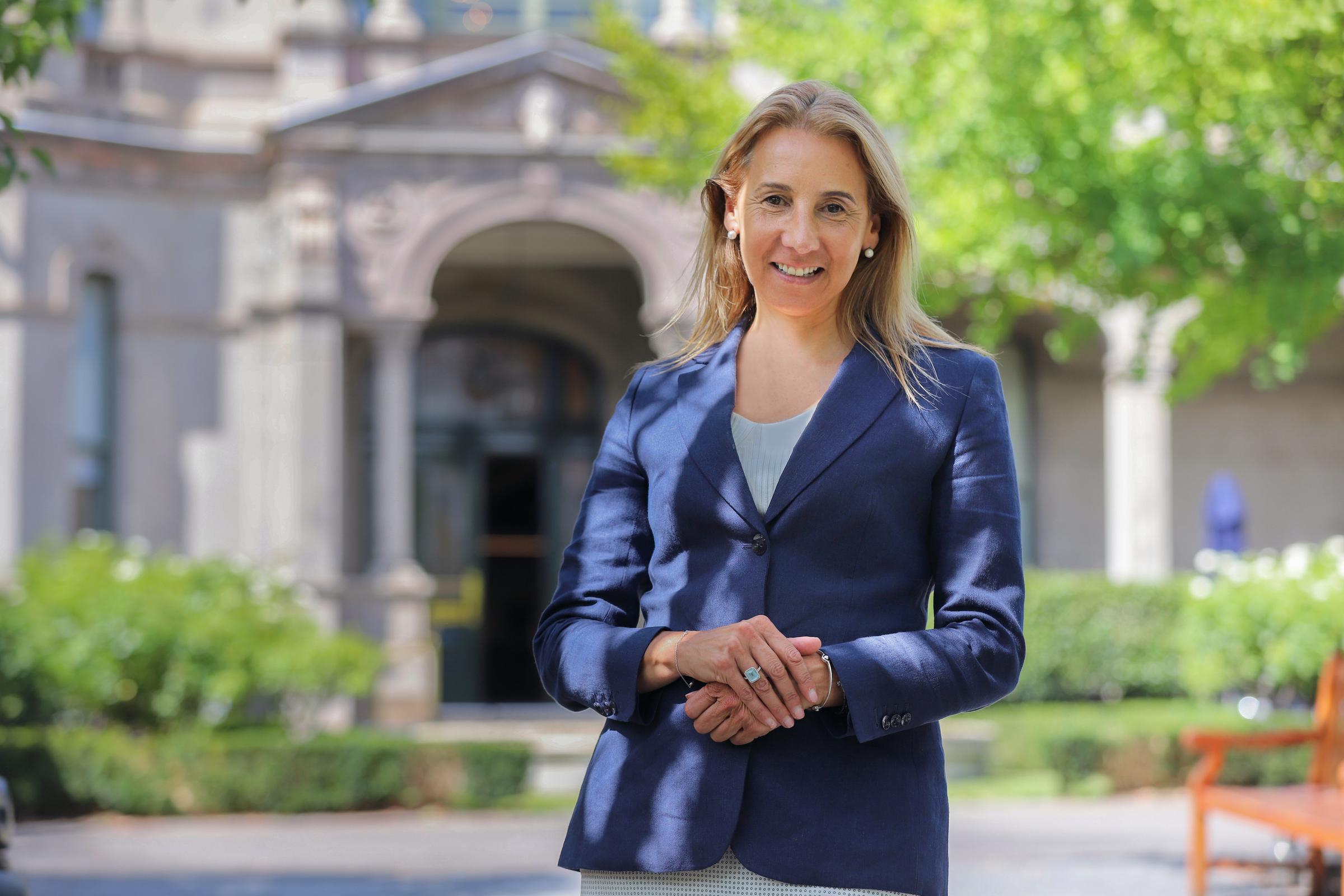
I rarely get nervous these days, having learned over the years to quieten my often-overactive amygdala in the face of perceived, actual, or — my personal favourite — imagined threats. But all that muscle memory went out the window last Friday in the lead-up to the spectacular Ruth Langley Luncheon and an unforgettable conversation with The Honourable Linda Dessau AC CVO.
In a wide-ranging, generous, and candid exchange, she spoke about a range of issues, including her mother’s passing when she was just 17. Describing it as her first real wake-up call, she shared how this profound loss — which precipitated “an early, very unwanted lesson in resilience and self-reliance” — was one that had nevertheless stood her in good stead ever since.
As the youngest Law graduate at the University of Melbourne, she reflected on feeling “out of her depth” at times but when asked what she would say to young women today who feel similarly overwhelmed, responded without hesitation that:
“It’s not the right next move if you don’t feel overwhelmed.”
And it’s no exaggeration to say that you could have heard a pin drop as 300 guests committed that message to memory to take home to their daughters.
The entire afternoon was one that I will never forget, not least because of the love that went into the styling and curation of the room; the sense of pride and belonging that it engendered; and the generosity and gravitas of a lone woman in an armchair who held the floor for 40 minutes with her wisdom, honesty and intellect.
Which naturally brings me to Pope Leo’s “Magnifica Humanitas” (Magnificent Humanity), which I am slowly working through out of respect for scholarship and as a rejection of the sound bites that consume public discourse. In his 42,000-word encyclical, (apparently the "sweet spot" for engagement on X are tweets that contain between 71 and 100 characters!) he addresses one of the principal challenges of the contemporary age, that of Artificial Intelligence.
Cautioning us to avoid the misconception of equating algorithmic activity for the intelligence of human beings, he reminds us that these systems merely “imitate certain functions of human intelligence” and in doing so, often surpass human capability in speed and computational capacity, but that this power remains entirely tied to data processing.
He goes on to write:
“So called artificial intelligence do not undergo experiences, do not possess a body, do not feel joy or pain, do not mature through relationships and do not know from within what love, work, friendship or responsibilities mean”.
And if we agree that schools are the last great experience of social universality for our children, then nurturing their humanity must be at the core of what we do by focusing on all that comes from within via the formation of the self. From the stunning sports win in the annual Huntingtower-Heyington Cup on the Main Oval at Scotch College — and the sheer elation it brought to an entire community of chanting, happy girls — to the Year 9s on retreat with the Cranlana Faculty of Ethical Leadership, spending their evenings reading, puzzling, talking, and knitting. In all of this, I see minds quietened, spirits nurtured, relationships strengthened, and a community deeply committed to fostering the very resilience, self-reliance, and courage needed to walk tall into a future where humanity, “in all its grandeur and woundedness”, must never be replaced or surpassed.
Ms Natalie Charles
Principal