From the Acting Deputy Principal
Mrs Lisa Herd
From the Acting Deputy Principal
Mrs Lisa Herd
Personal growth through learning experiences
As the whole College moves into a busy period of exams, learning conferences and reporting, it’s timely to pause and reframe how we think about assessments. It’s important we don’t view assessments as high‑stakes, hinging on final results. Assessment processes in themselves are important learning experiences, not final judgements. They help students grow in ways that reach far beyond a grade.
Assessment opportunities for students to practise skills that will benefit them throughout life. When we shift the focus from “What mark will I get?” to “What am I learning about myself?”, students begin to see assessments as stepping stones rather than stumbling blocks.
Preparing for exams teaches students how to plan, prioritise and organise their study. They learn to break tasks into manageable pieces and manage their time – skills that support success in every area of life. Some nerves are normal and are, in fact, very helpful! Mild stress activates the brain, sharpens focus and boosts performance. Students learn to recognise this feeling and use it positively, building confidence in managing pressure and busy times.
Assessments encourage students to persevere through challenges. They experience the satisfaction of sticking with something, revisiting concepts and improving over time. Preparing for assessments pushes students beyond memorising facts. They engage in deeper learning, make connections between their learning and the real-world, and explain ideas in their own words. Students learn to take what they know and use it creatively to problem solve and think critically.
Assessments help students reflect on how they learn. They begin to notice which strategies work best for them, where they get stuck and how they can improve. This self‑awareness is essential for becoming independent learners. Whether an assessment goes brilliantly or not as hoped, students learn something valuable about themselves. They discover that setbacks are temporary, improvement is possible and effort leads to growth. Exams and learning conferences prompt students to set goals, both academic and personal. They learn to monitor their progress, adjust their strategies and celebrate growth along the way.
Learning conferences and reports provide meaningful feedback that guides students forward. Feedback becomes a roadmap, not a judgement, helping students understand their strengths and identify their next steps. As we enter this assessment period, it’s important to remember that exams, learning conferences and reports are not the end point; they are part of the learning journey. They help students build confidence, character and capability. When we focus on growth rather than grades, students begin to see assessments as opportunities to learn more about themselves and their potential.
As stated by Nano Nagle, “Education is the key to unlocking human potential.” Nano Nagle recognised that education wasn’t simply about acquiring knowledge, but about individual empowerment, so individuals can reach their full potential, lead fulfilling lives and contribute to society. As always, we are here to work in partnership with families to create a calm and supportive learning environment, offer rich personal and educational learning opportunities, and support our young people to develop important life skills.
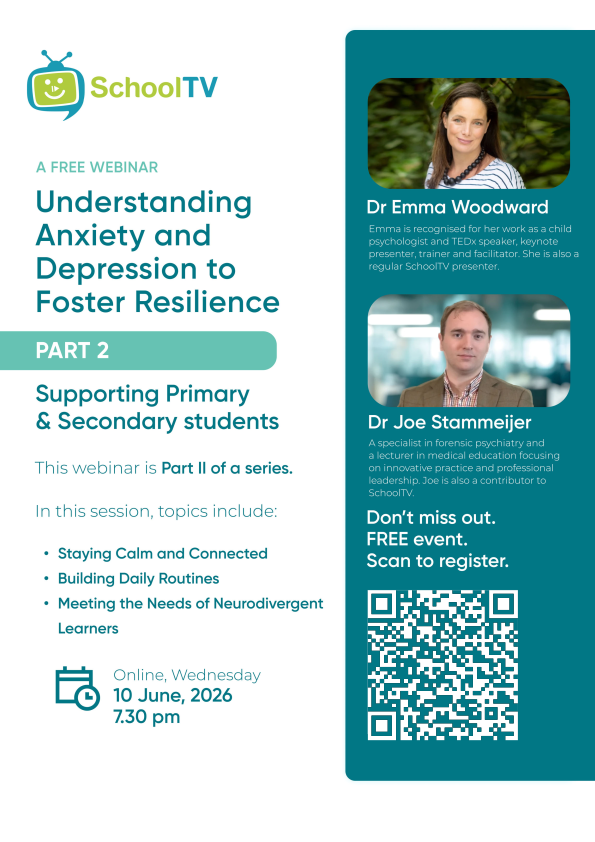
SchoolTV | Free webinar: Understanding Anxiety and Depression to Foster Resilience (Part II) | TONIGHT
Join international experts Dr Emma Woodward and Dr Joe Stammeijer as they share valuable insights into recognising early signs of concern and practical approaches to supporting the wellbeing of young people.
Date: Wednesday 10 June 2026
Time: 7.30pm
Register online here.
This webinar is suitable for parents, carers, grandparents, school leaders and staff, offering practical insights and guidance to help support the wellbeing of both primary and secondary students.