Year 11 & 12 Psychology
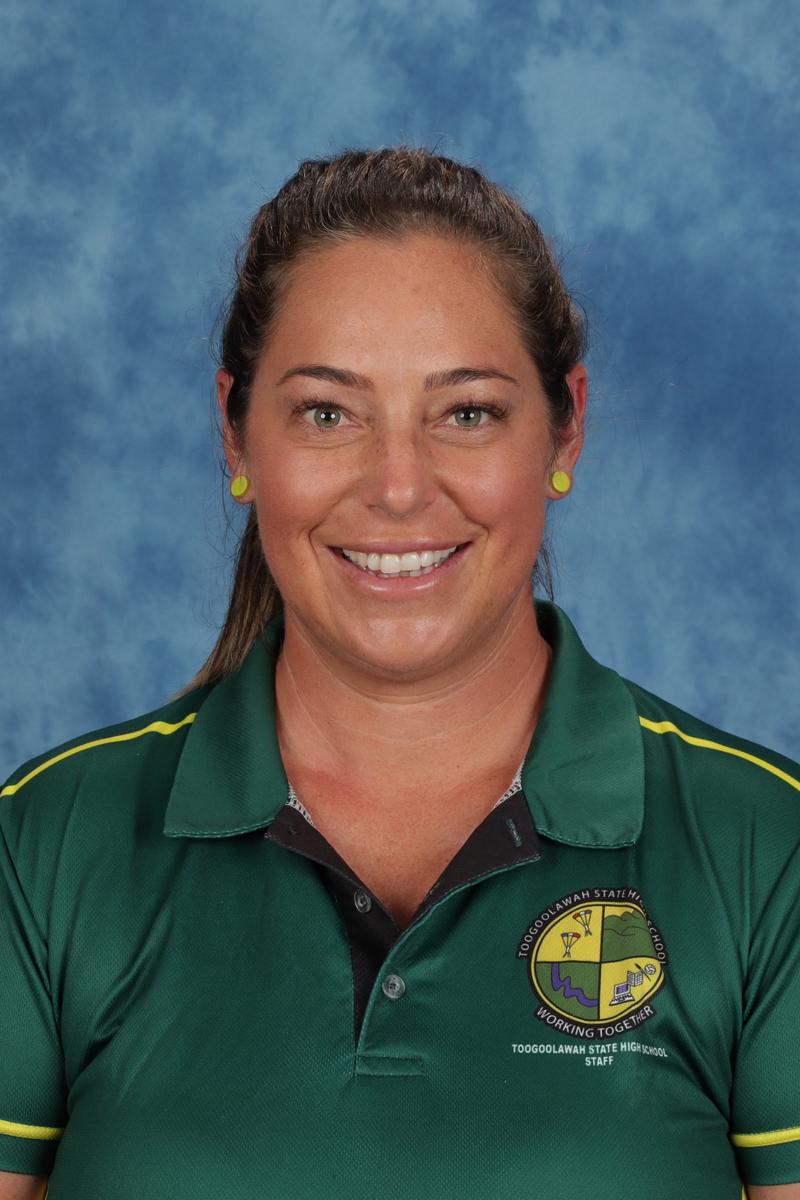
Ms Carla Cerchi
Year 11 & 12 Psychology
Ms Carla Cerchi
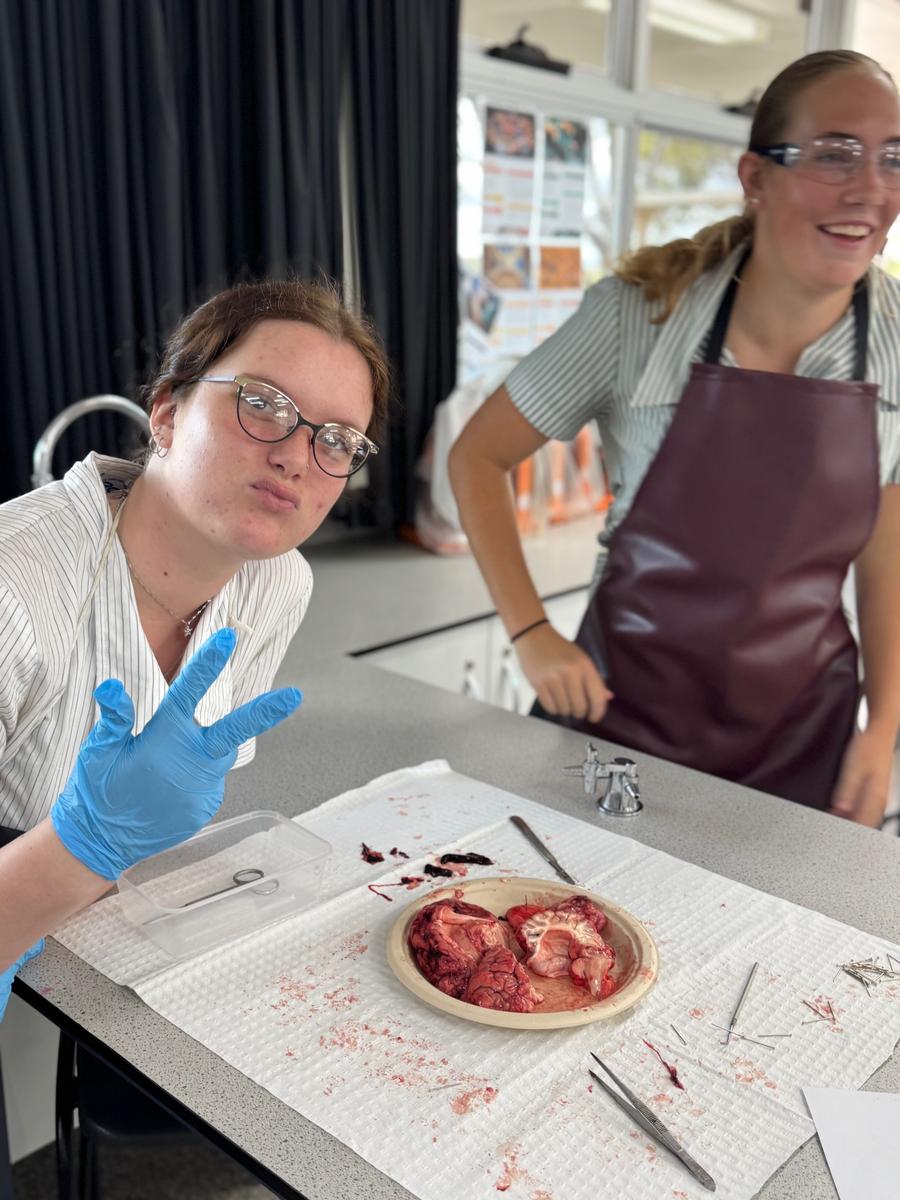
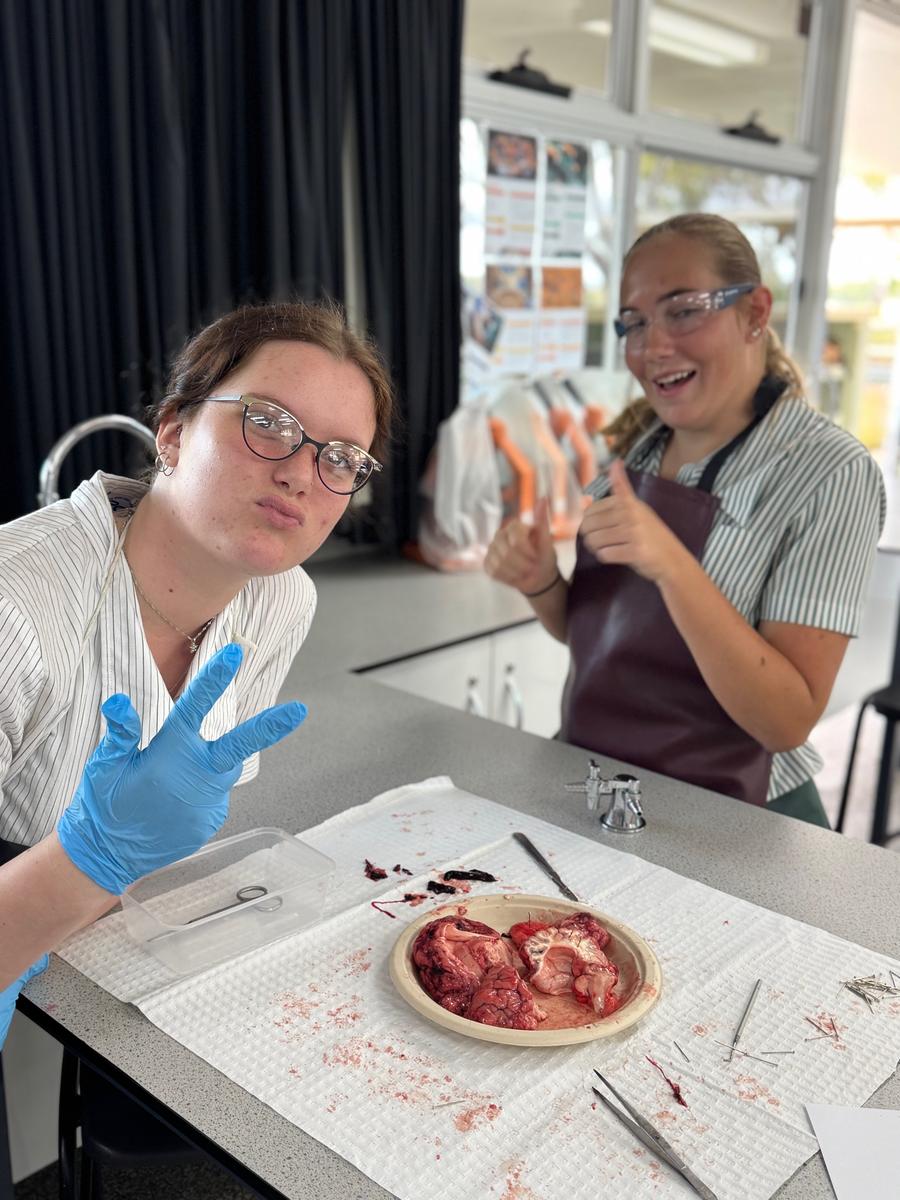
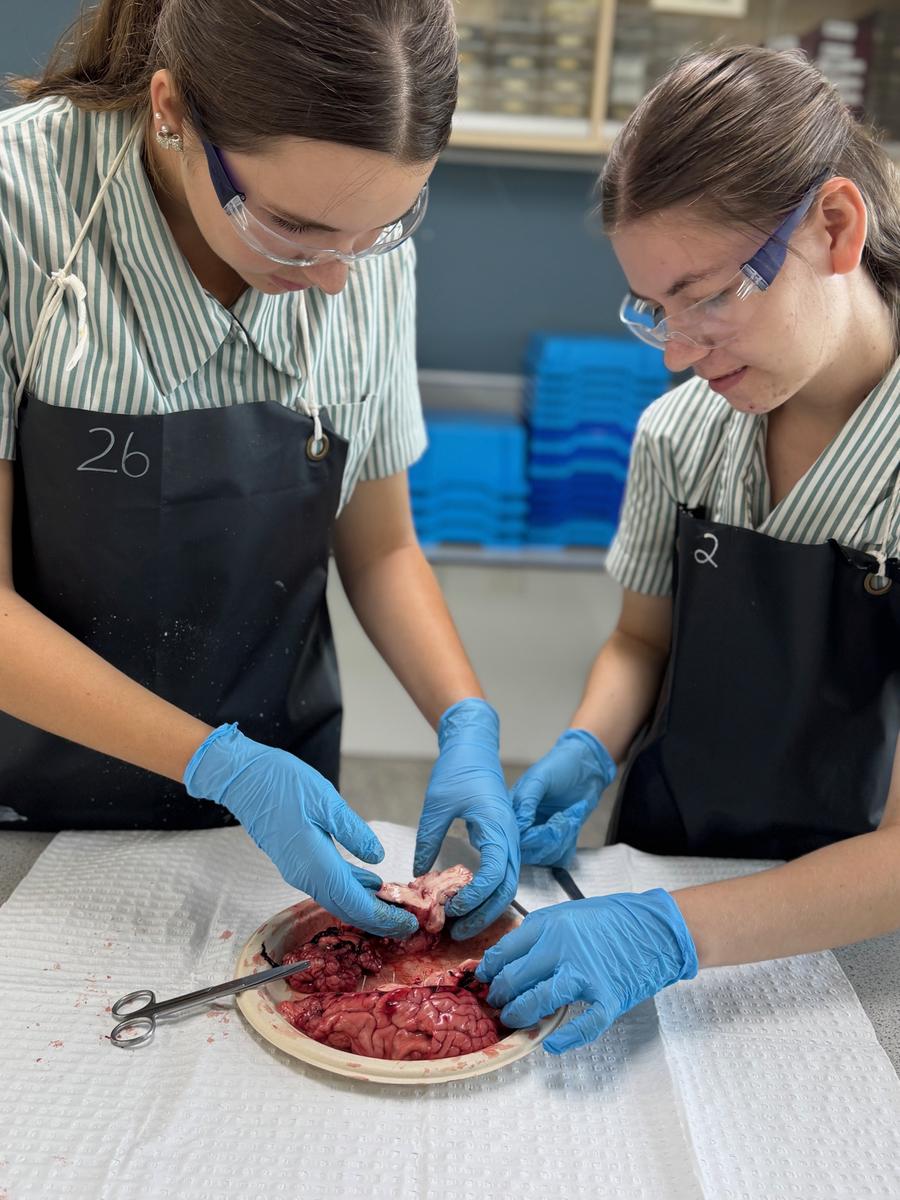
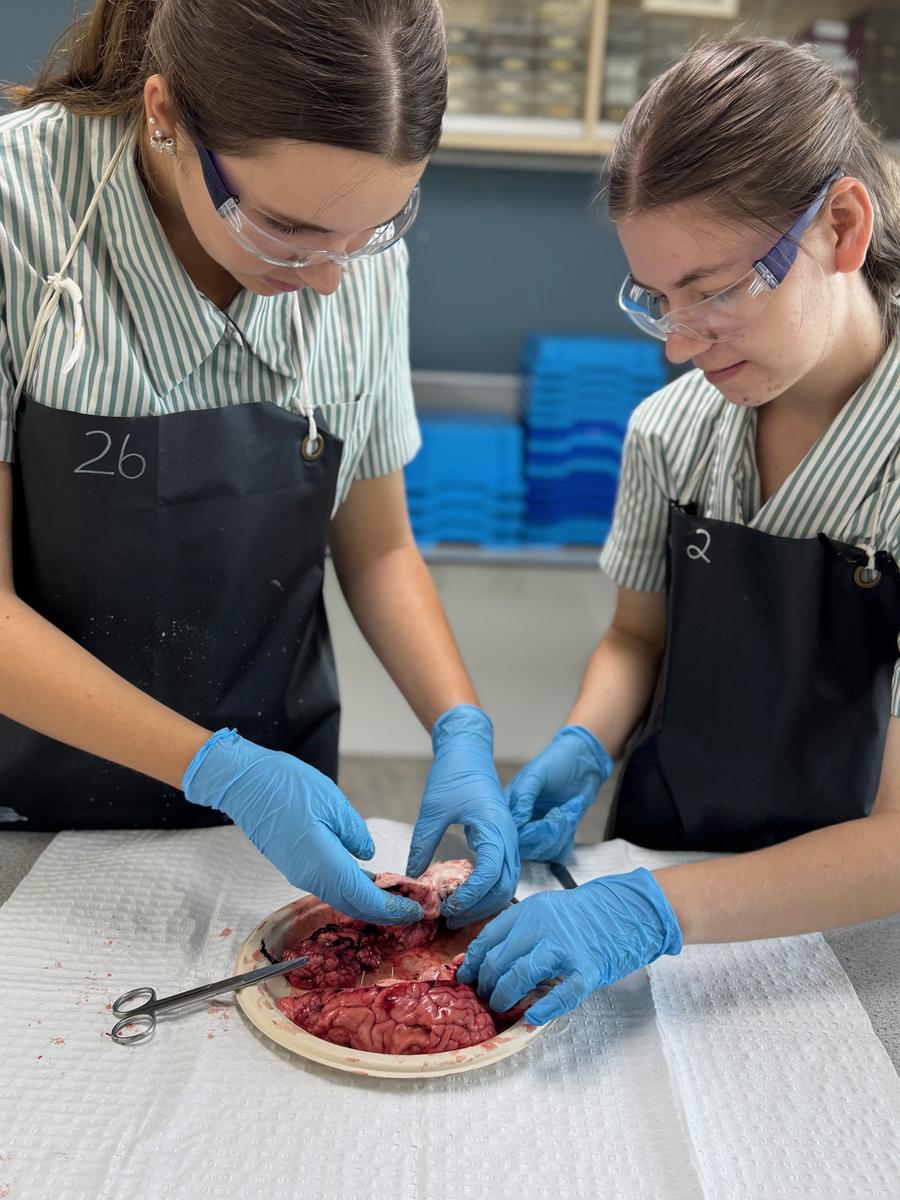
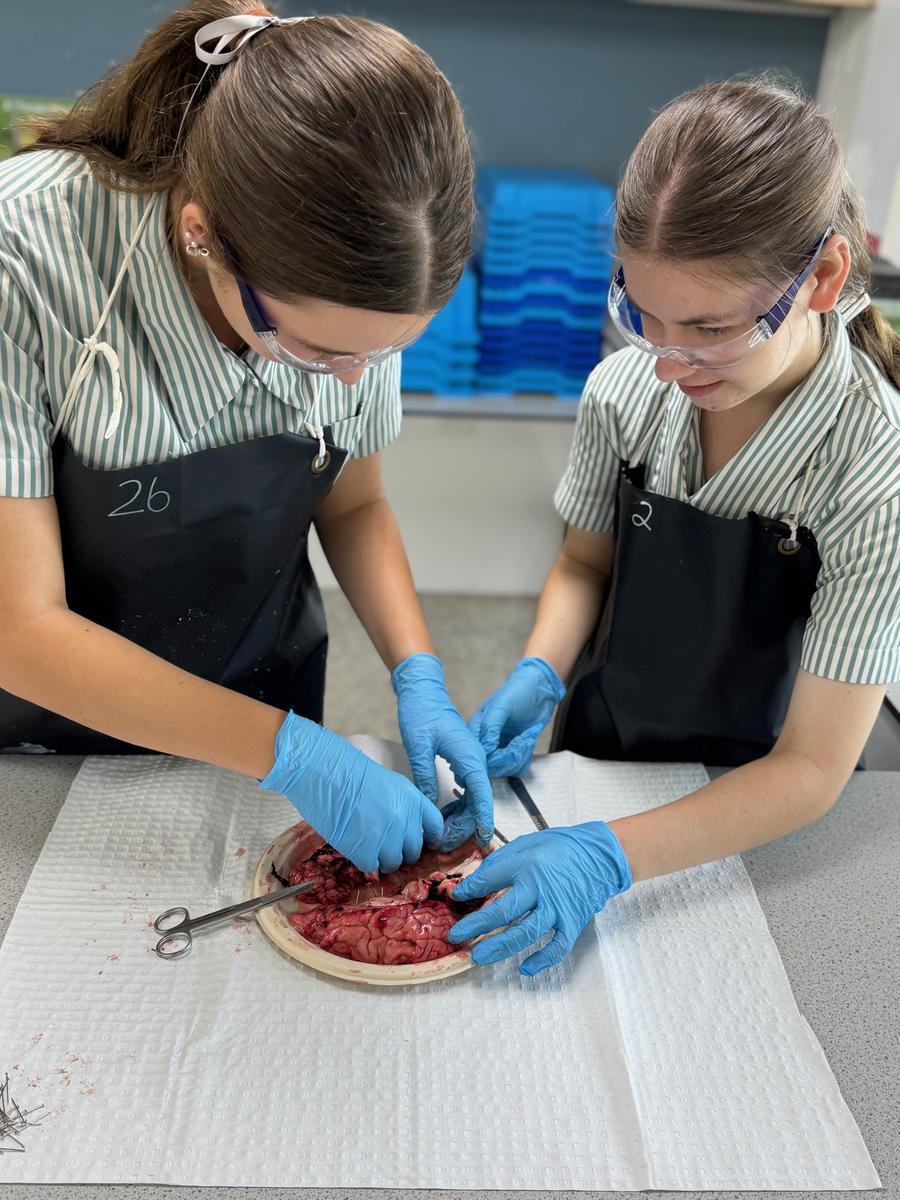
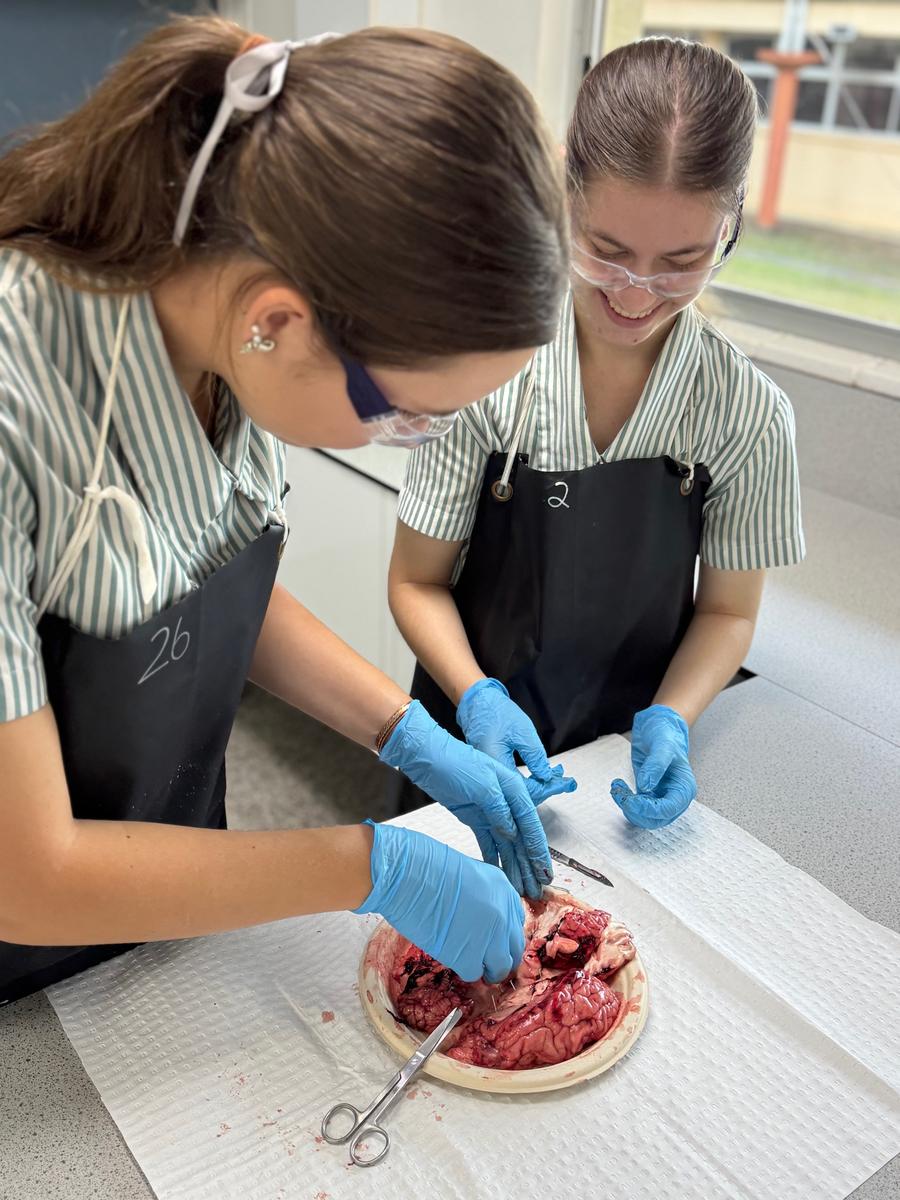
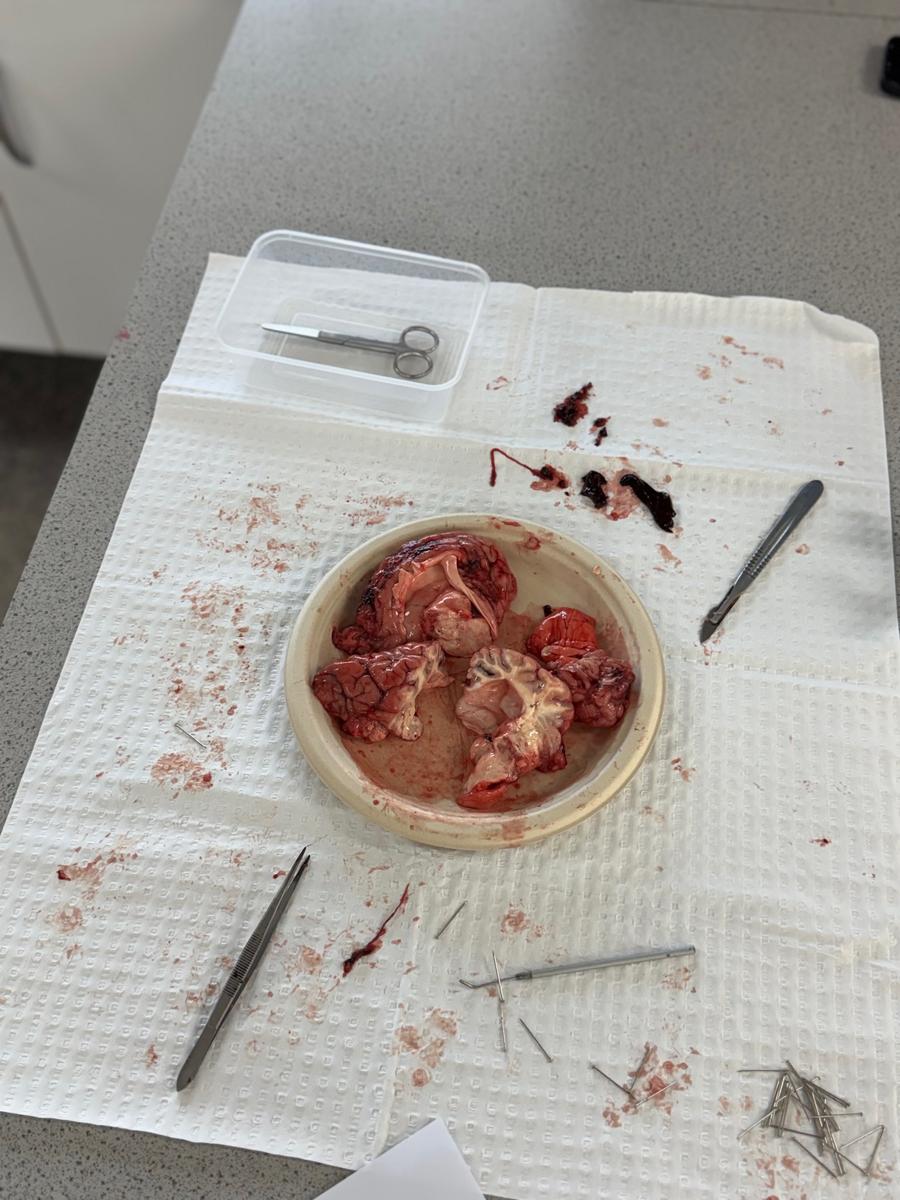
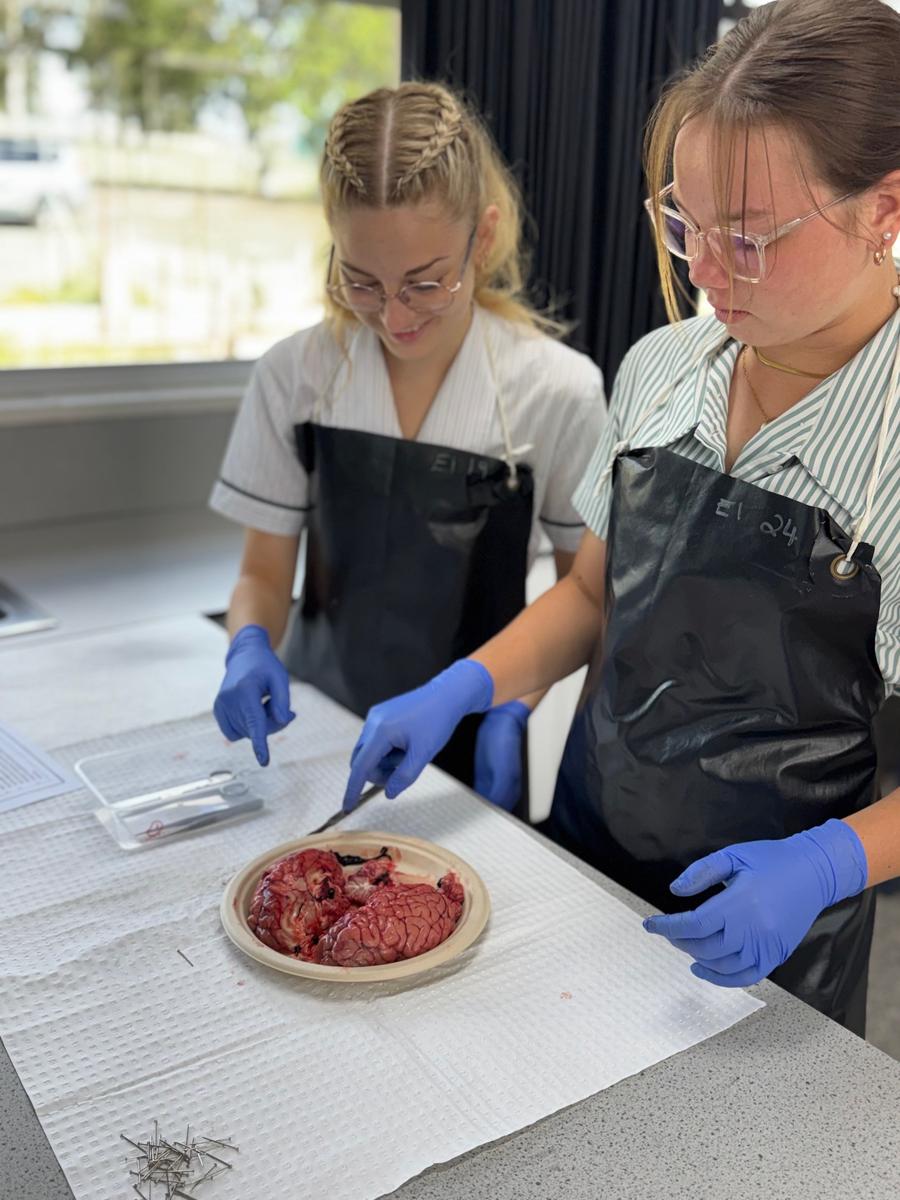
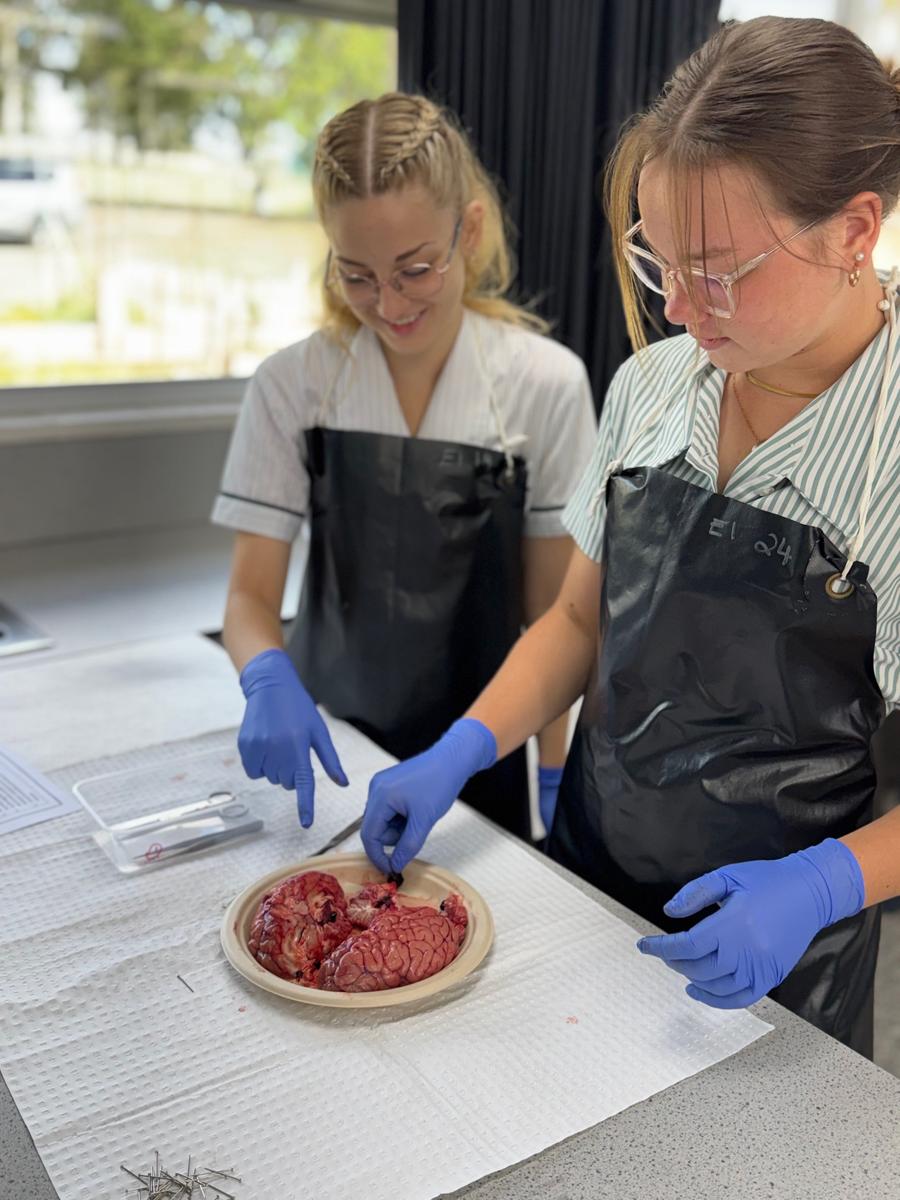
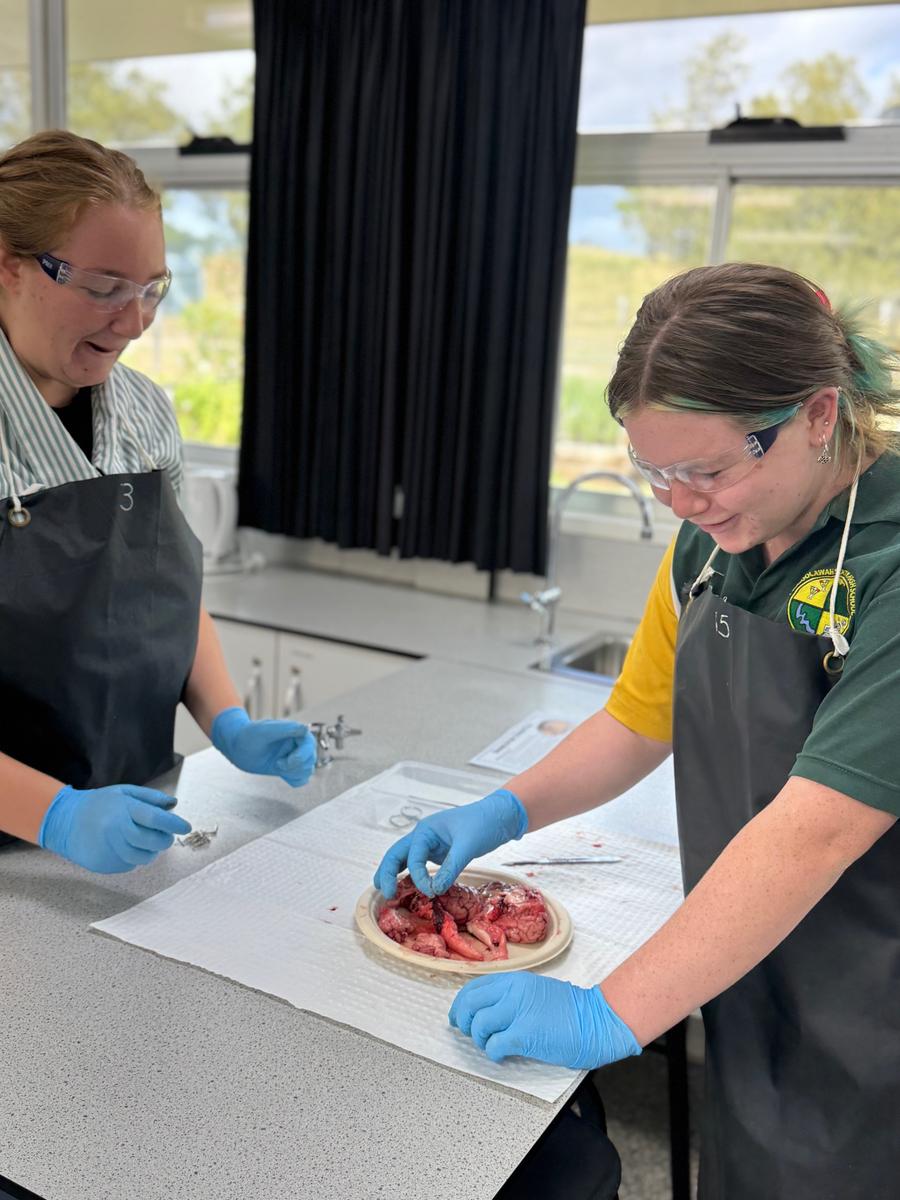
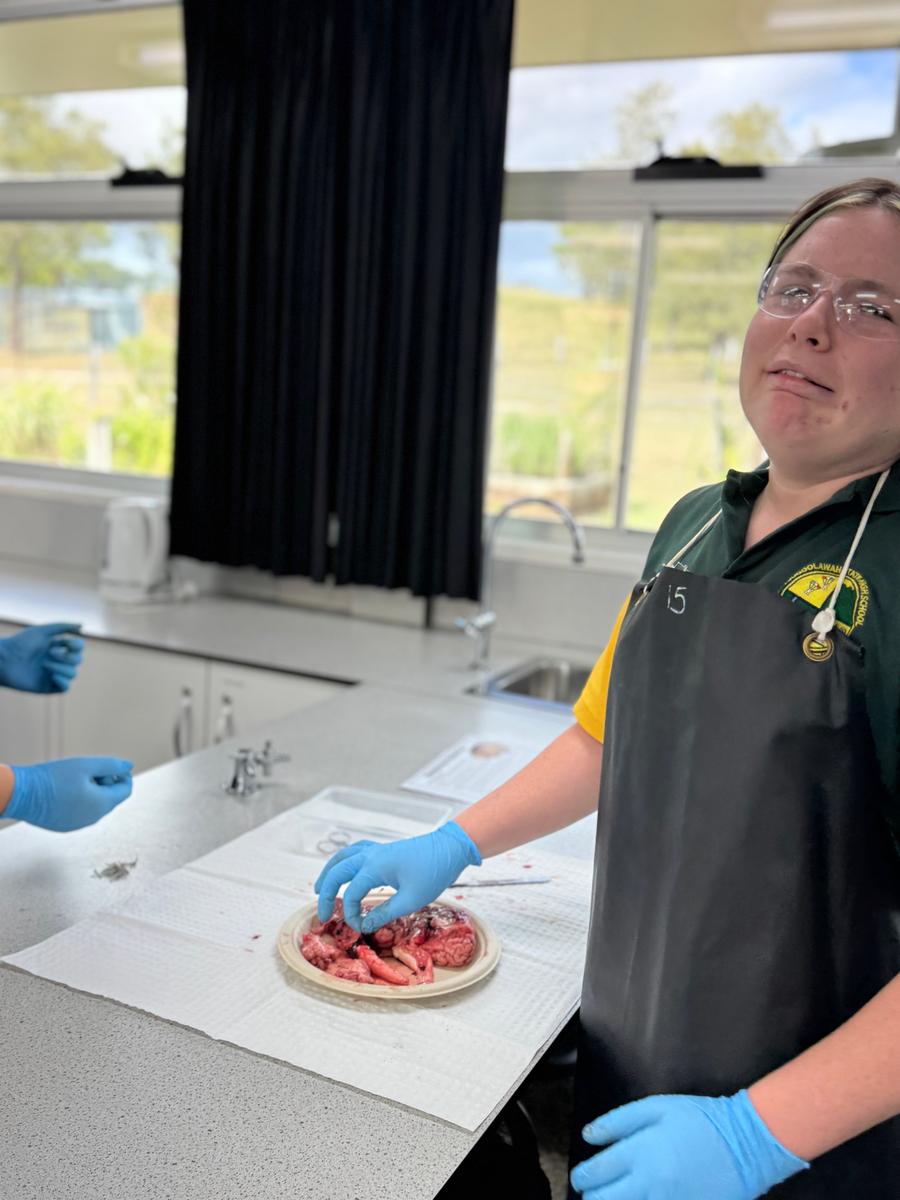
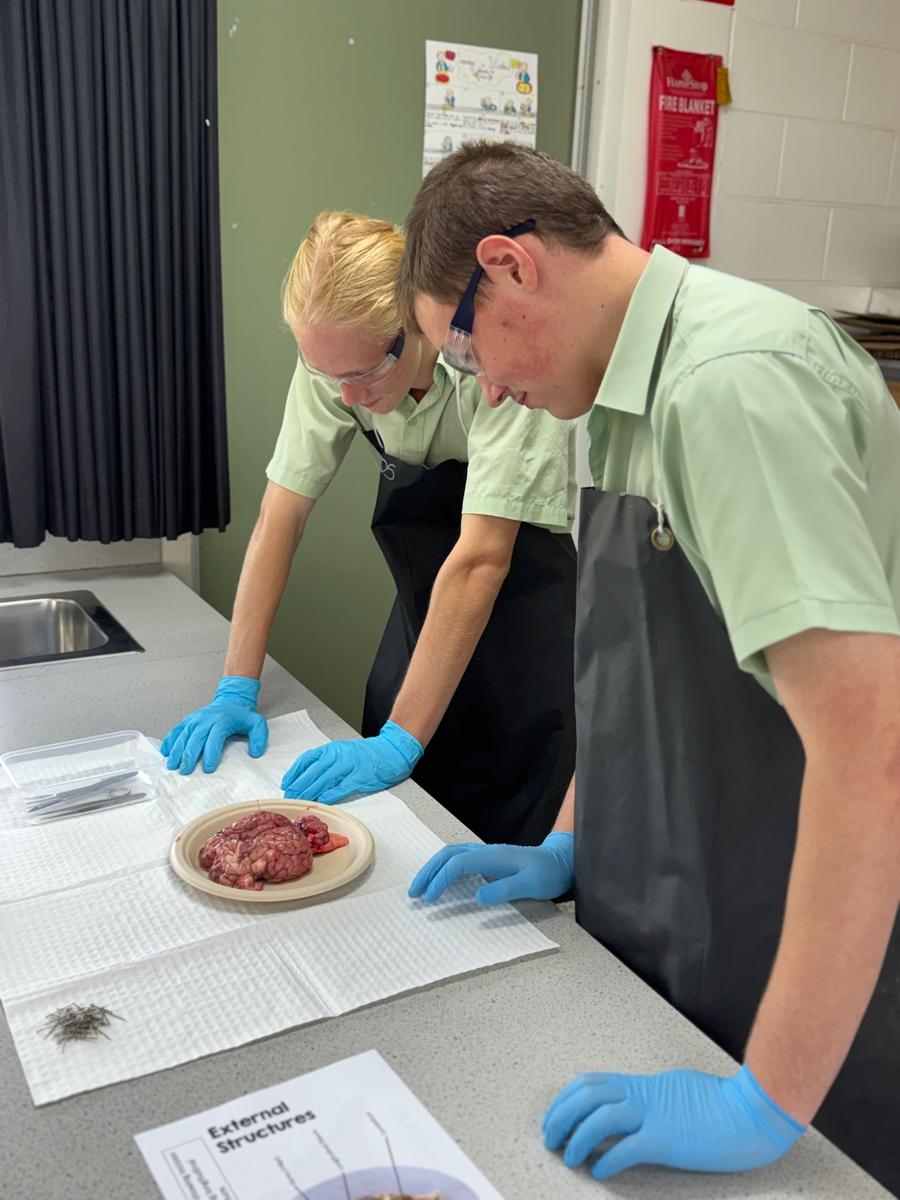
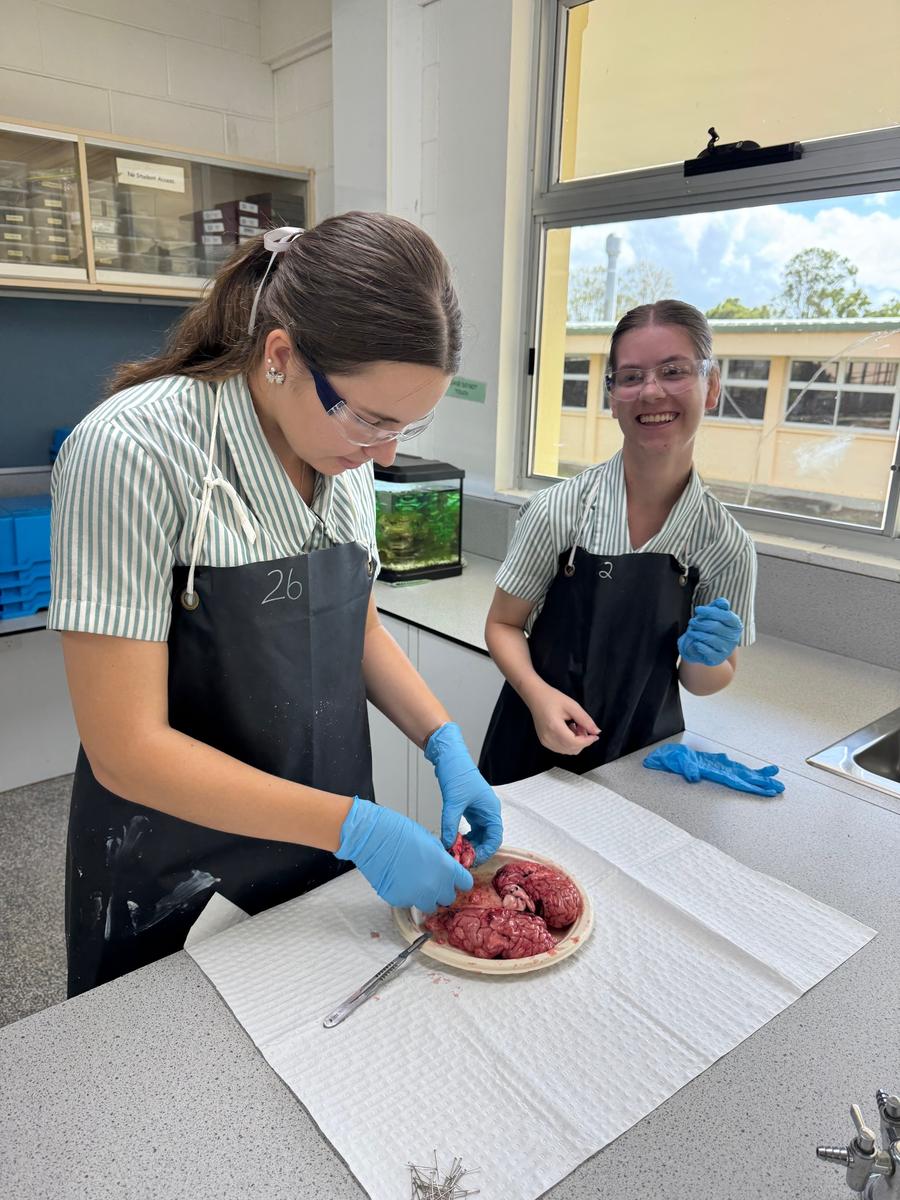
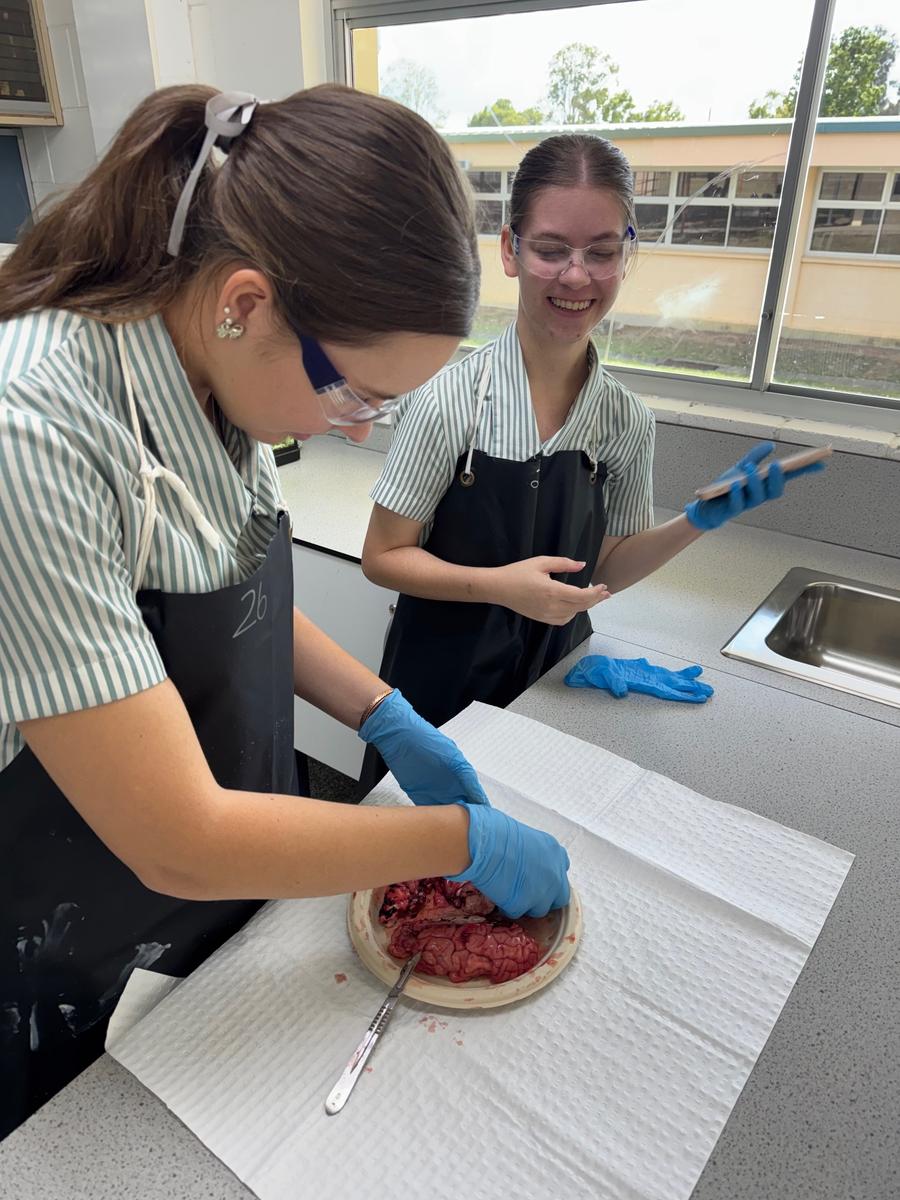
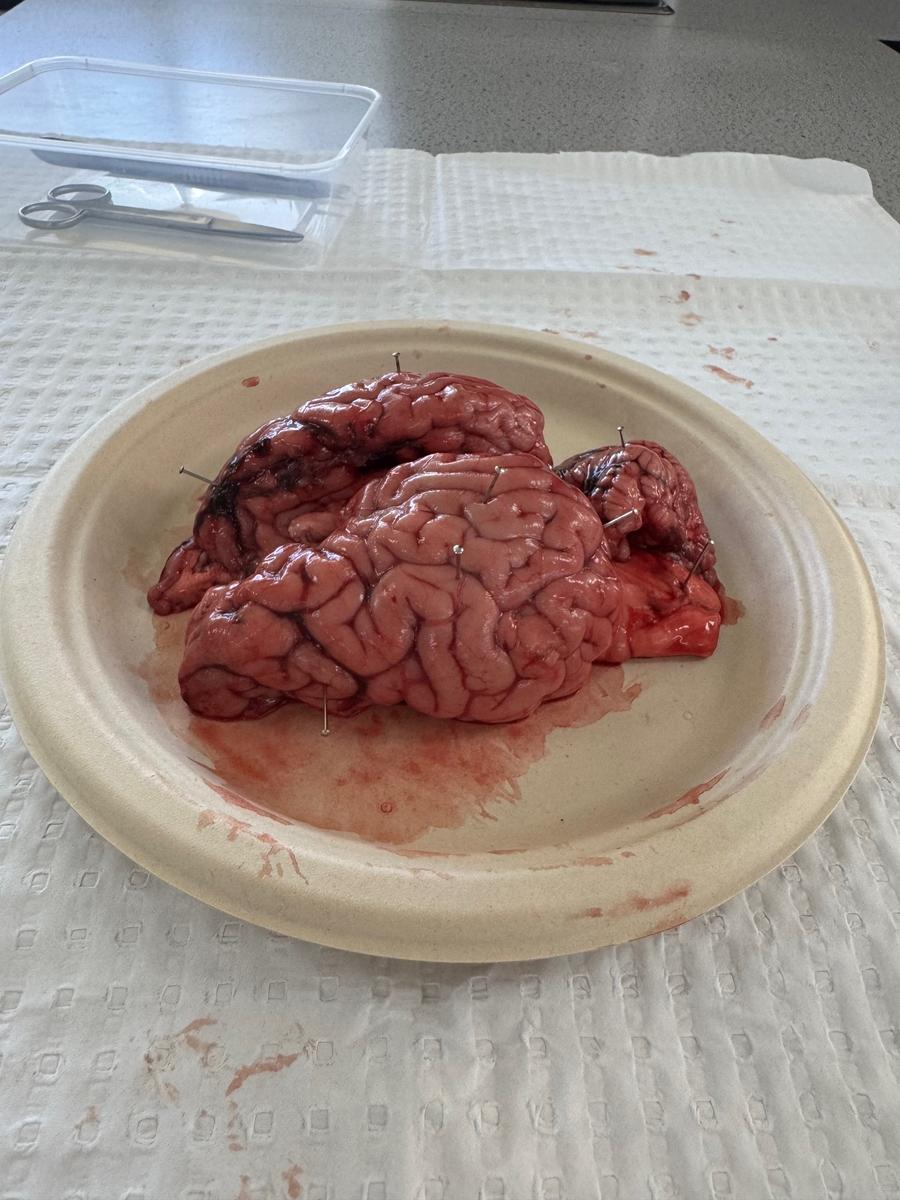
On the 2nd March, our Year 11 Psychology students took their learning beyond the classroom and into the lab with a hands-on bovine brain dissection.
After studying the structure and function of the brain, students were able to identify key brain regions in a real specimen, including the cerebrum, cerebellum, corpus callosum and brainstem.
Students demonstrated impressive maturity and curiosity throughout the practical session, asking thoughtful questions and making strong connections between theory and biology. It was particularly valuable to see them consolidating their understanding of localisation of function by observing the distinct separation between hemispheres and exploring internal structures through sagittal sectioning.
Practical experiences like this are indispensable in Psychology, allowing students to bridge biological science with human behaviour in a tangible and memorable way.
A fantastic effort from the entire class for conducting themselves so well, and again a huge thank you to Ms Dargusch for sourcing us fresh (not frozen!) brains to study. A memorable experience for all of us.
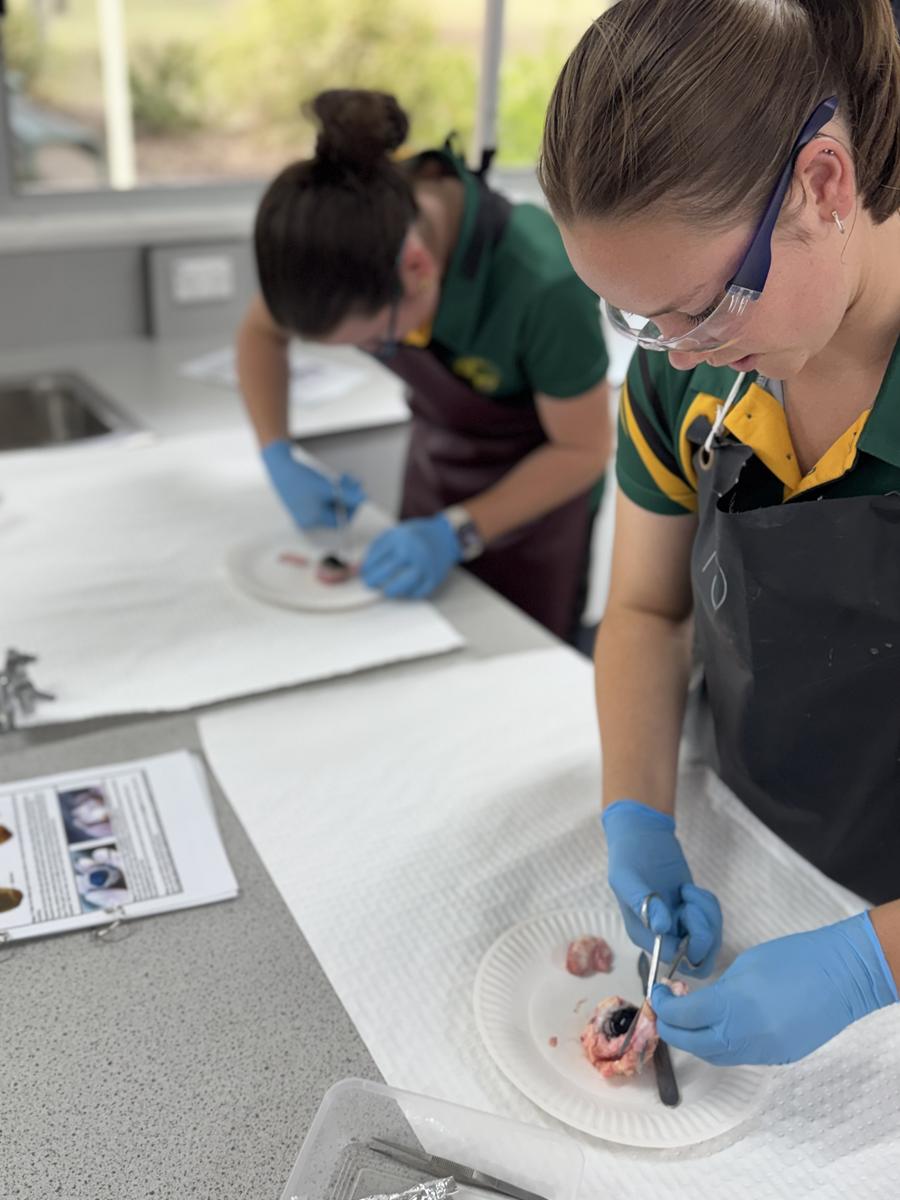
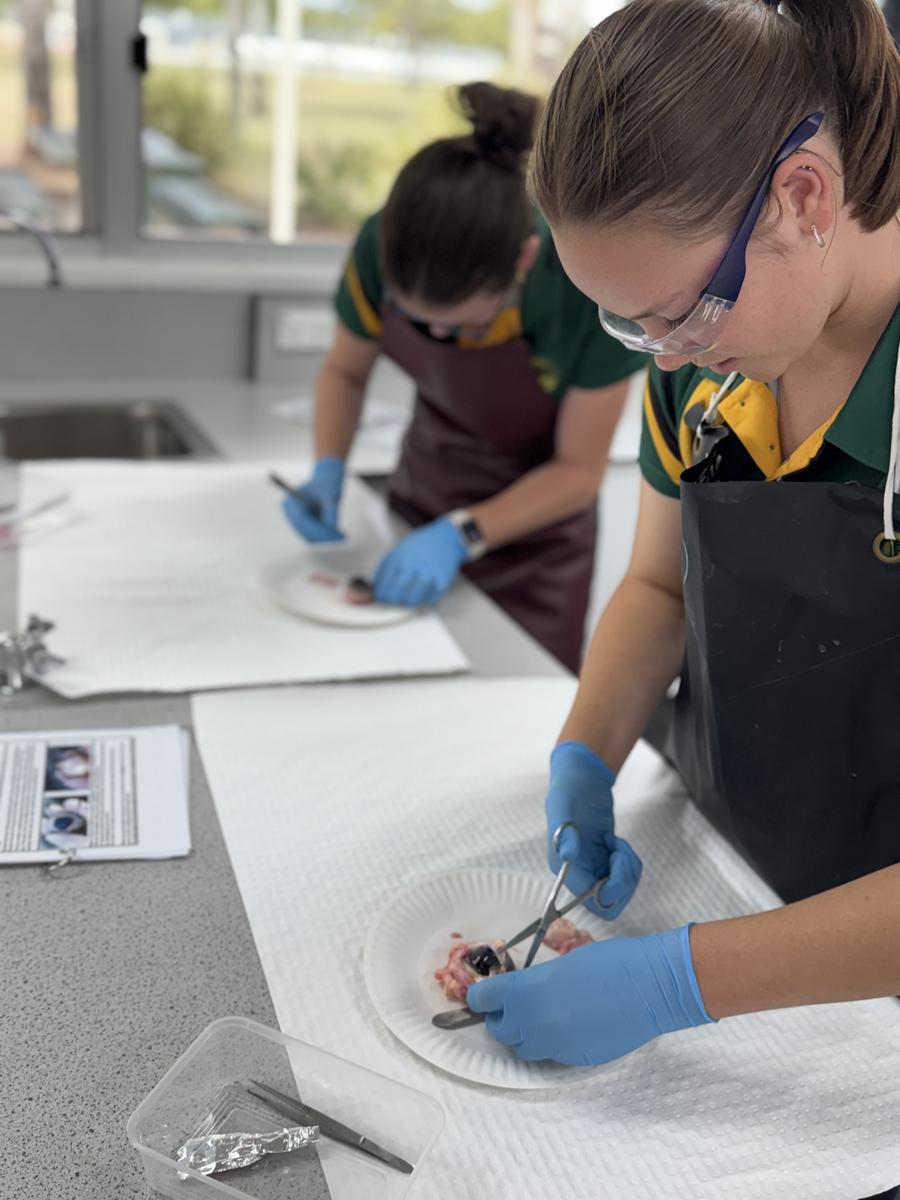
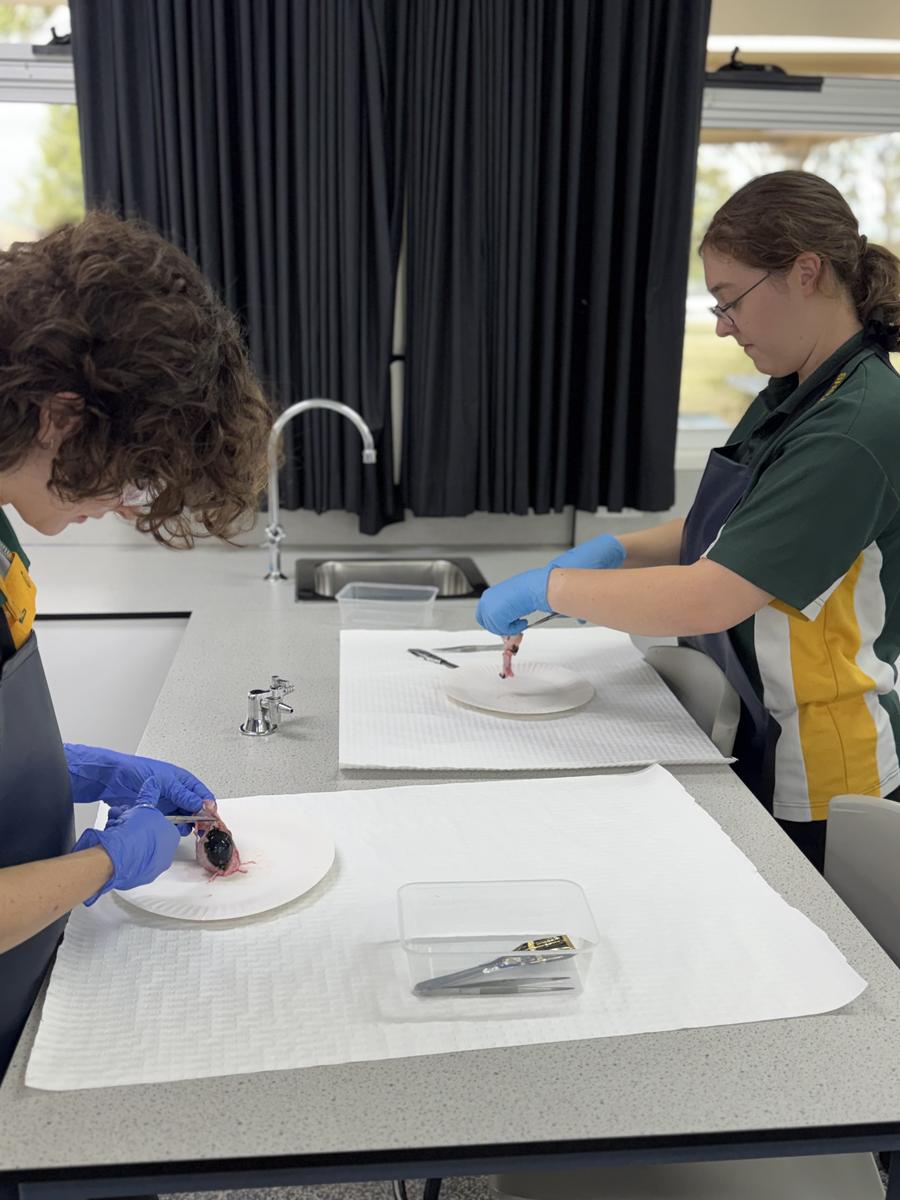
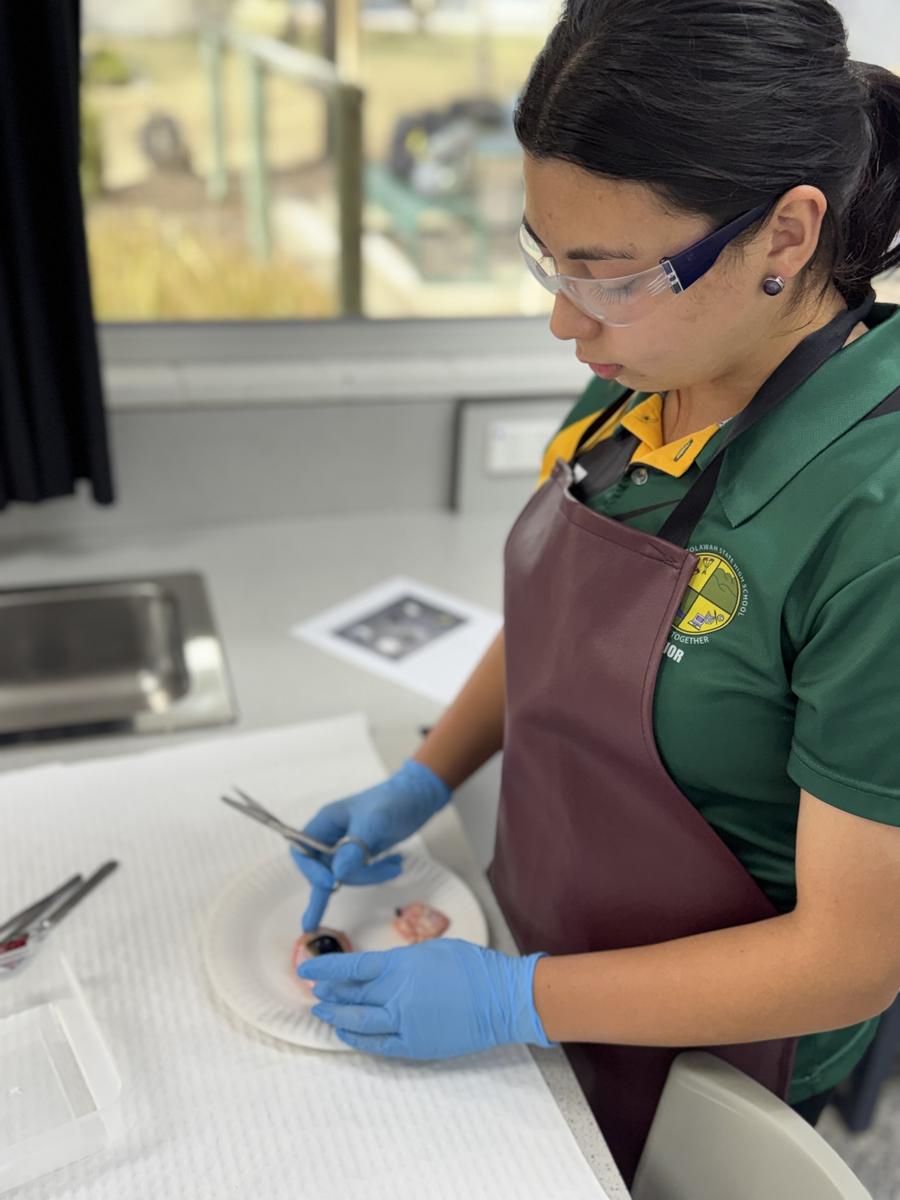
Yesterday our Year 12 Psychology students completed their eye dissection practical as part of Unit 3, exploring visual perception and the biological basis of behaviour in line with the QCAA syllabus.
Students examined bovine eyes to identify key structures of the visual system, including the cornea, lens, retina and optic nerve, giving us a precursor to linking each structure to its role in reception, transduction and transmission of visual information.
This practical reinforced the understanding that vision begins as a biological process — but perception itself extends far beyond the eye.
What made this lesson particularly powerful was the discussion that followed. Students critically considered whether we “see” out of our eyes, or whether the brain constructs what we experience as sight. This philosophical reflection directly connects to the syllabus focus on interpretation, leading to top-down processing, and the fallibility of perception — highlighting that what we perceive is not a perfect replica of reality, but a meaningful construction shaped by neural processing!
The class demonstrated exceptional maturity, curiosity and scientific thinking throughout the practical. Their engagement and thoughtful questioning reflected the high-level analytical skills expected at this stage of senior Psychology.
A fantastic example of theory meeting practice — and students rising to the challenge.
A huge thanks to Ms Dargusch for organising excellent specimens for us to use for the dissection.