
RE News

Class Masses
Please see the roster for Class Masses starting next term below.
Week | Date | Class | Chosen theme |
Term 2 2026 | |||
1 | 24 April | NO MASS | |
2 | 1 May |
5/6 M | We Are One |
3 | 8 May | 5/6 N | Mother’s Day |
4 | 15 May | 5/6 O | International Day of Families |
5 | 22 May | 3/4 W | Pentecost – Gift of the Holy Spirit |
6 | 29 May | 3/4 B | National Reconciliation Week |
7 | 5 June | 5/6 K | Friendship |
8 | 12 June | 5/6 G | Sacred Heart of Jesus |
9 | 19 June | 3/4 L | Mission of the Apostles |
|
| ||
Term 3 2026 | |||
1 | 17 July | 3/4 T | Open your heart |
2 | 24 July | 1/2 C | Grandparents Day |
3 | 31 July | 1/2 B | Be the Light |
4 | 7 August | 1/2 D | St John Vianney Feast Day |
5 | 14 August | 1/2 S | Assumption of Mary |
6 | 21 August | 1/2 M | Peace In God’s Family |
7 | 28 August | 0 W | God Loves me |
8 | 4 September | 0 C | Father’s Day |
9 | 11 September | 0 L | God’s Creation |
10 | 18 September | 3/4 AL | Jesus the Good Shepherd |
Holy Week Liturgies
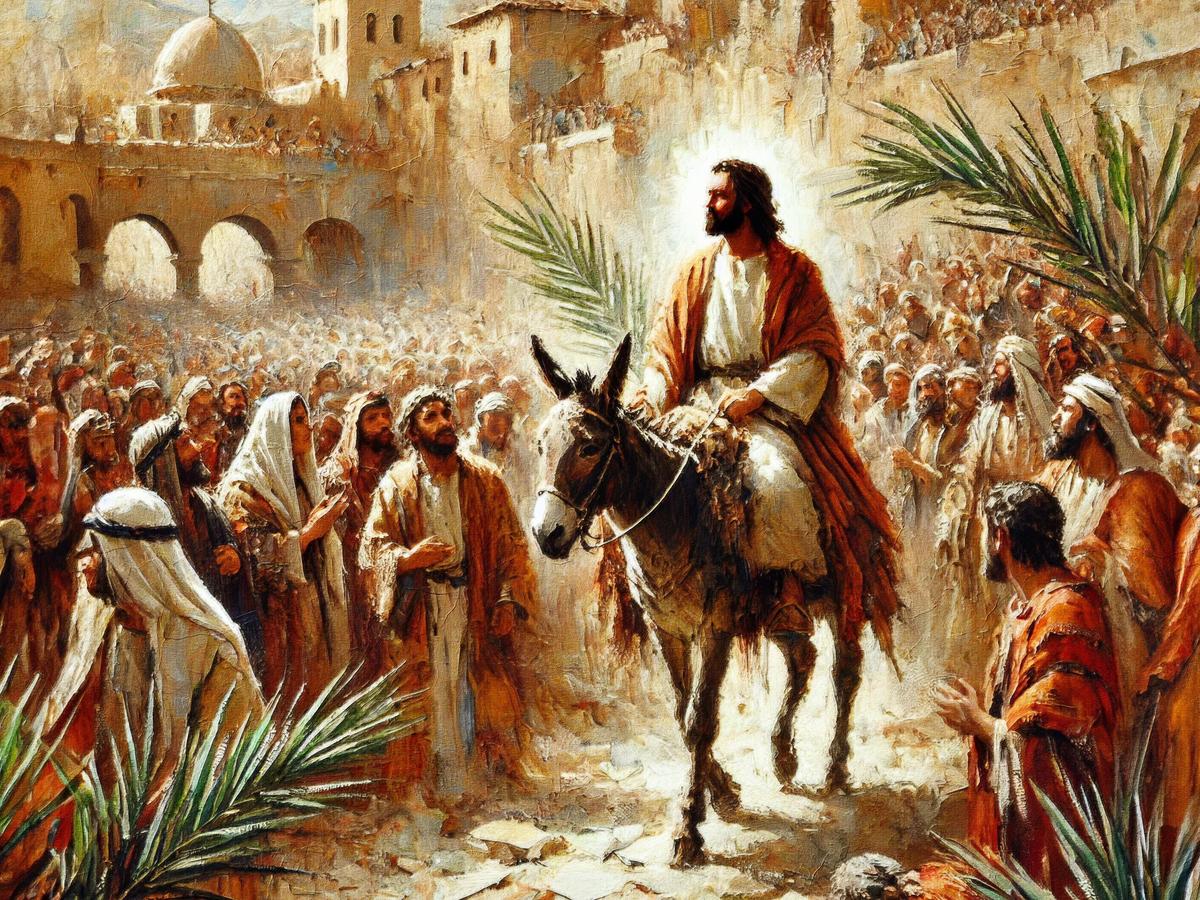
Next week, we will be celebrating Holy Week, the pinnacle of the Catholic calendar, as we commemorate the passion and death of Jesus Christ.

At school, each class will engage in meaningful reflections and responses:
- The Foundation and Year 1/2 students will share their reflections at school assemblies, focusing on Palm Sunday and Easter.
- The Year 3/4 students lead a "Prayer of the Air" liturgy around the Last Support
Finally, our Year 5/6 students will lead the Stations of the Cross, reenacting the Passion of Jesus through the stations.
We warmly invite all families to join us for this special Stations of the Cross service on Thursday April 2nd, at 11.30 AM in the Church
We look forward to coming together as a school community to journey through Holy Week in prayer and reflection.
Catholic Education Week
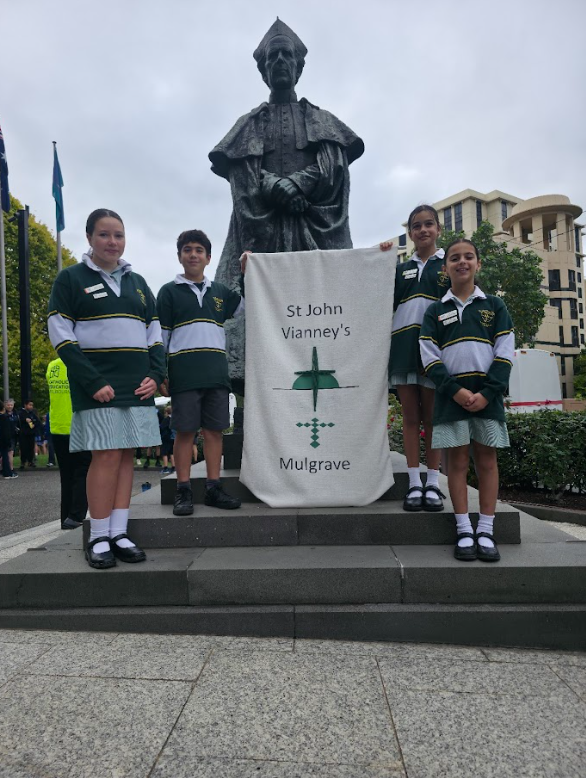
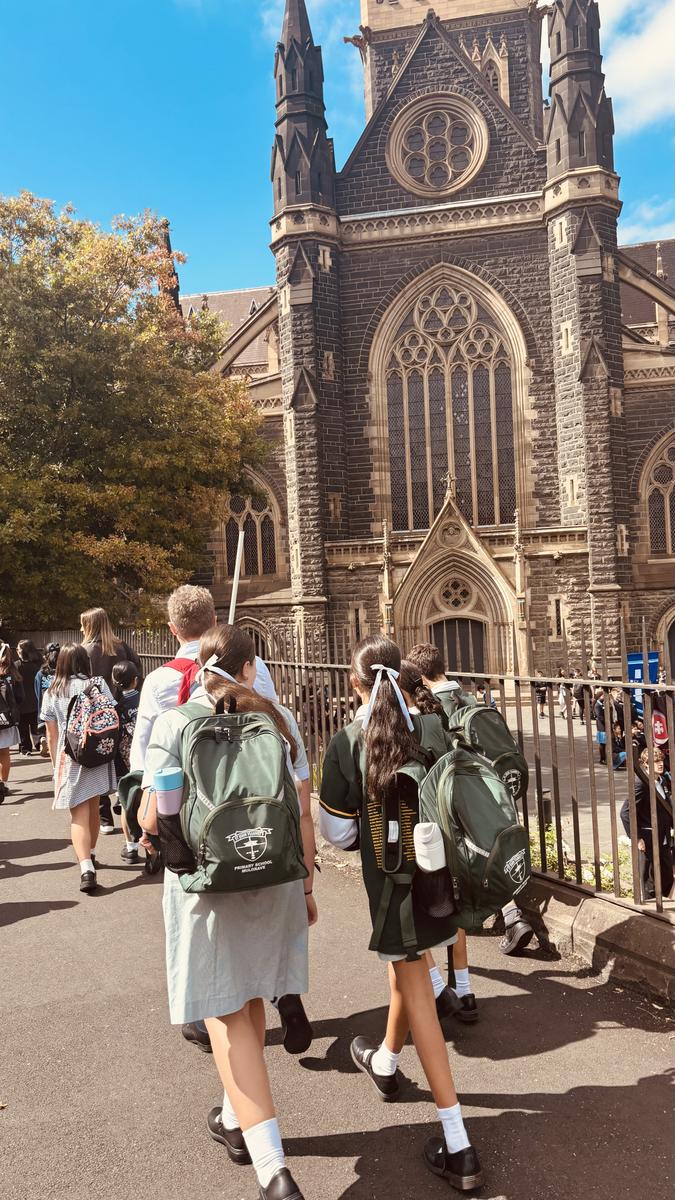
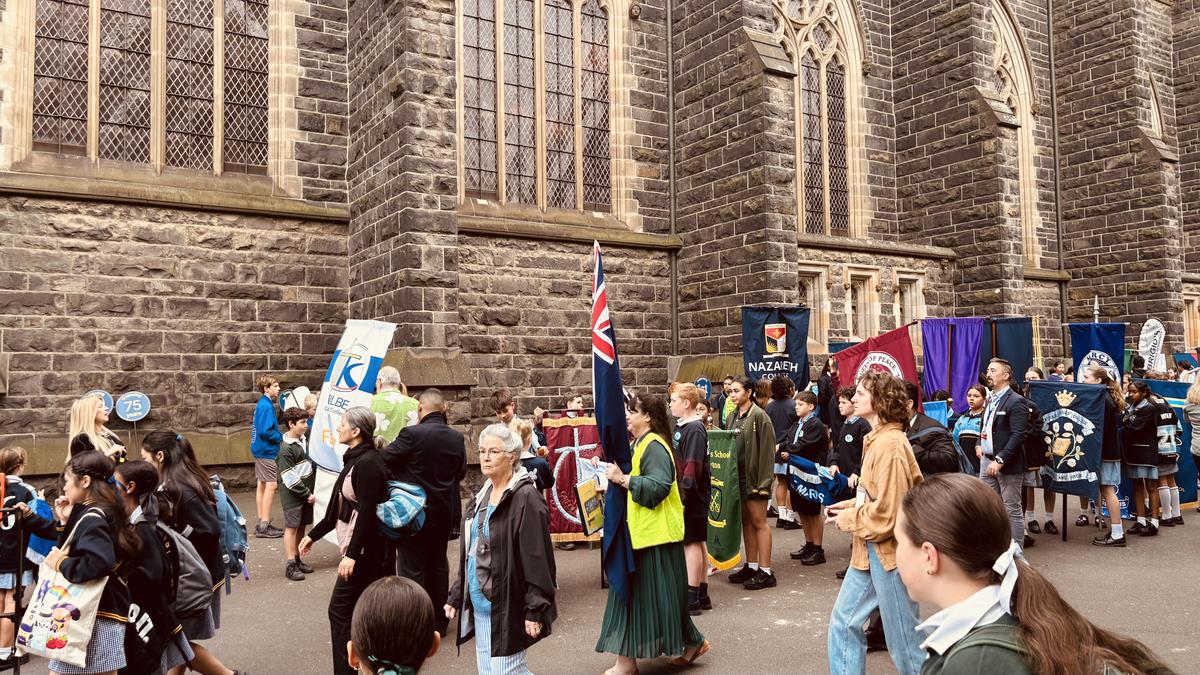
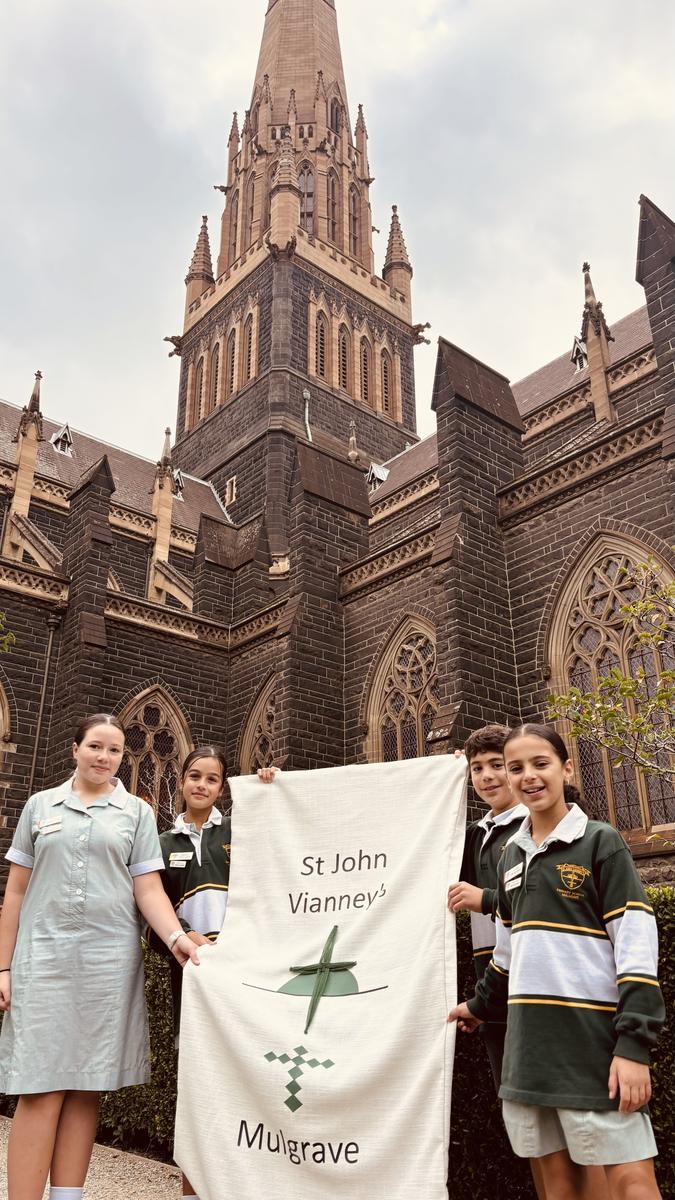
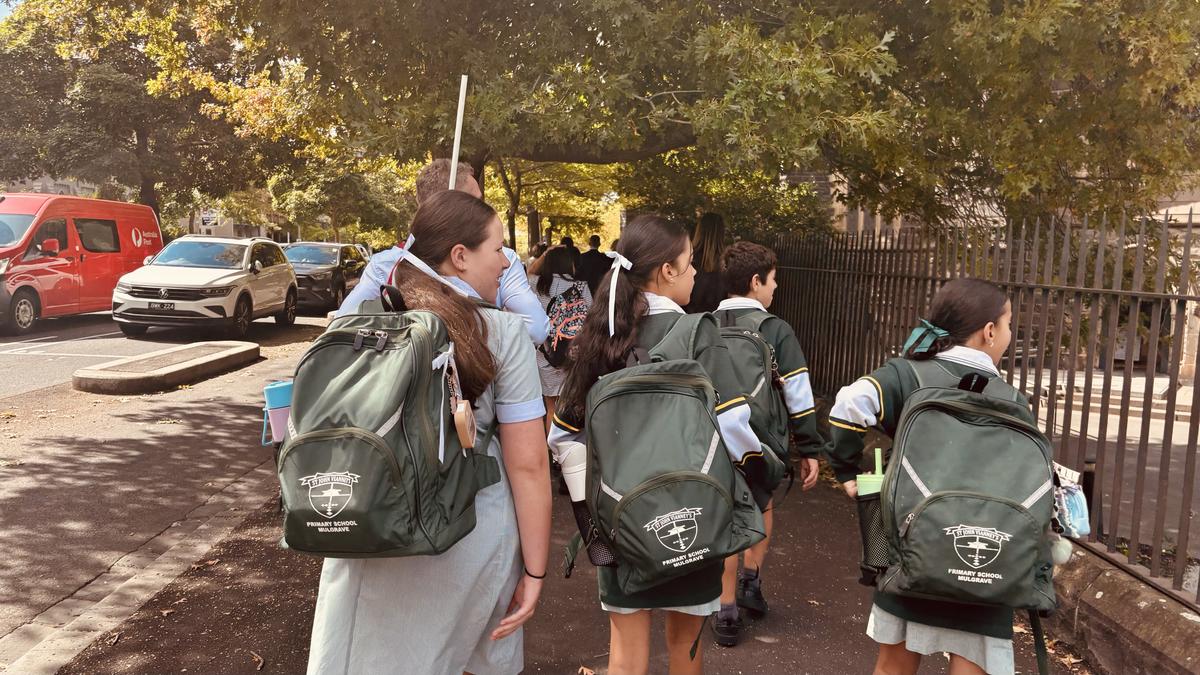
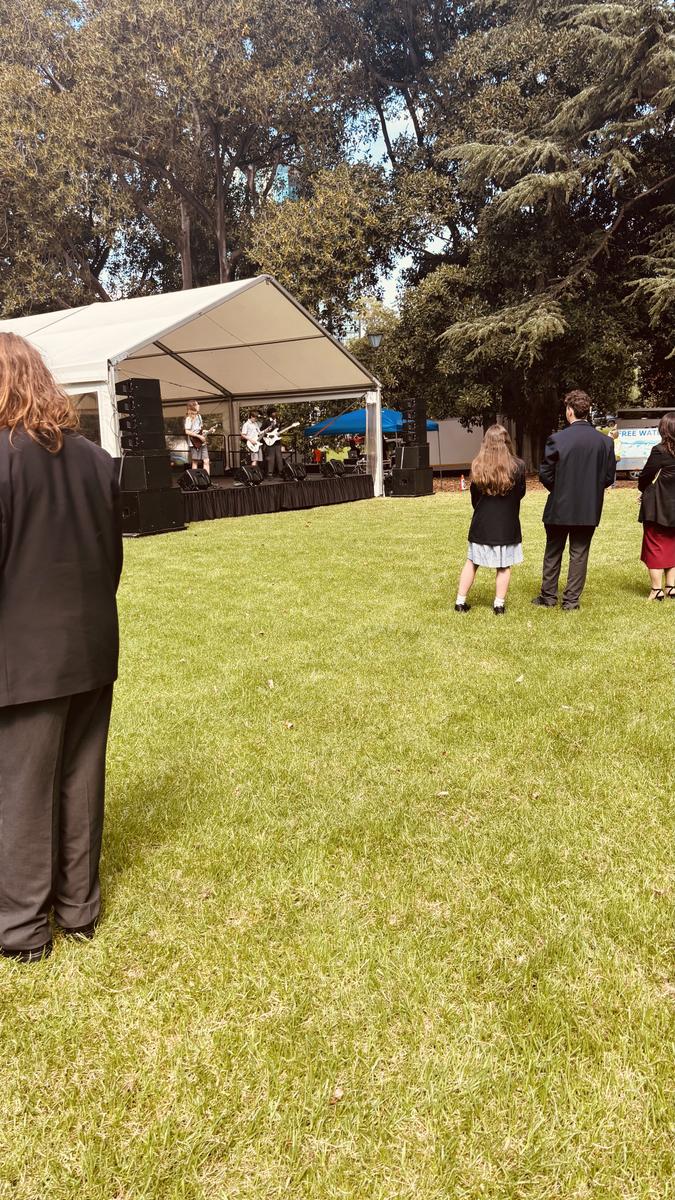
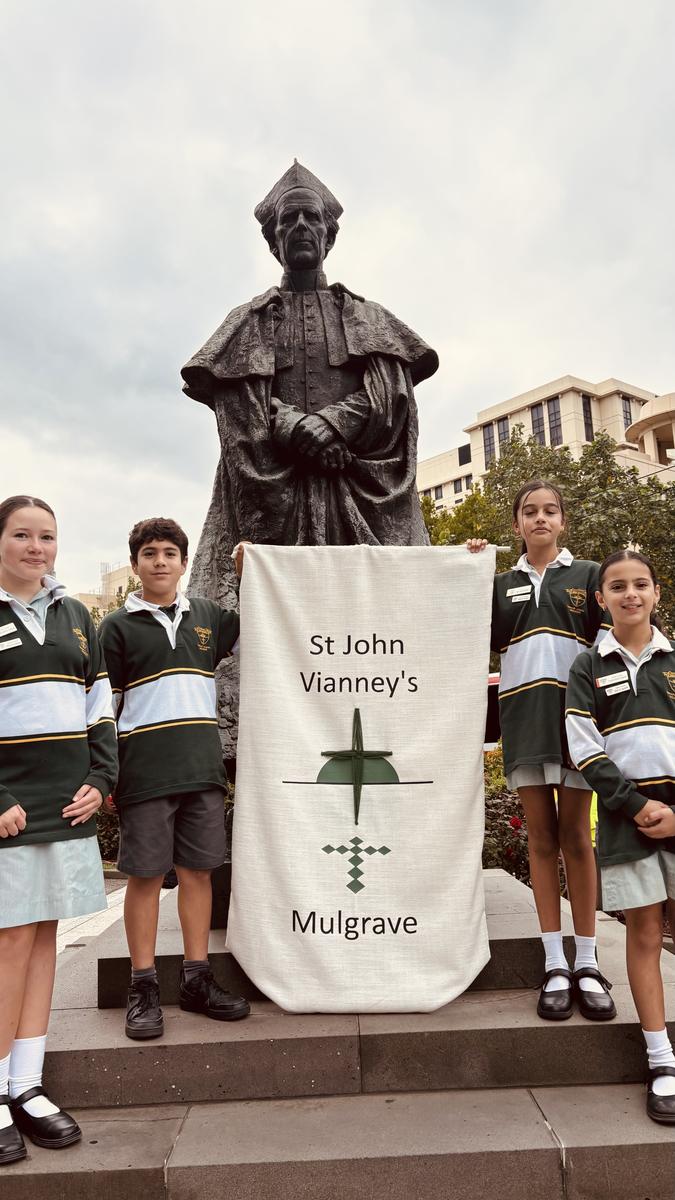
Last Friday, our School Captains and Social Justice Captains proudly represented our school at the Cathedral Mass in the city, held in recognition of Catholic Education Week. Following the service, the students attended a concert in the Treasury Gardens organized by Melbourne Archdiocese Catholic Schools (MACS).
The event was a great opportunity to see schools from all across Melbourne come together in joyful celebration of our shared Catholic heritage and common faith.
Inspired by our patron, St. Patrick, the day served as a reminder of our united mission to serve others and work together to make our communities a better place.
Scripture Reflection
The Passion and death of Jesus.
Gospel Reflection
The Passion narrative, as described in the gospel of Matthew, is keen to drive home two particular points. Firstly, throughout this gospel, the gospel writer is at pains to demonstrate Jesus as fulfilling the prophecy of scripture. At the time of the arrest and the use of the thirty pieces of silver, we are reminded that these things took place to fulfil scripture. Secondly, this particular gospel emphasises the innocence of Jesus throughout the passion narrative: he is ‘sold out’ by one of his followers; his trial before the Sanhedrin is a farce; his most loyal follower denies association with him; Pilate declares himself innocent of Jesus’ blood and the crowd accepts the consequences of their actions.
At no point is any hint of guilt cast over Jesus. He is an innocent whose fate has been manipulated by others. In this gospel there is no

conversation between Jesus and the criminals between whom he is crucified. There is no suggestion that Jesus too is a criminal who is deserving of his fate. His innocence is manifest.
These two themes merge together in this gospel. The manner of Jesus’ arrest, trial and death are all in accordance with the prophecy of scripture (i.e. in accordance with God’s will), and yet it is emphasised throughout that Jesus is innocent.
There can be no accusation that Jesus is in any way deserving of his treatment and yet what befalls him is in keeping with God’s plan. It emphasises the sacrificial act made by Jesus: a proven innocent giving his life for the good of others. The actions of those who plot against Jesus to seek his downfall actually serve to bring about his purpose. No other outcome was possible. The writer assures the audience that the death of Jesus was no accident; it was intended from the very beginning.
Scriptural context – Passion narratives
Towards the end of the 19th Century, the German scholar, Martin Kähler, described the gospels as ‘passion narratives with lengthy introductions’. Over time, this description was more commonly applied to the gospel of Mark, but it is quite true of all four gospels. The passion elements are the climax of each gospel narrative and were probably written first to establish the unique interpretation of each of the gospel communities. The remainder of the gospel was written to ‘set the scene’ for the culmination of the message in the passion. Reading the four accounts of the passion reveal the unique styles and themes of the different gospel writers.
Different View – The Blame Game
This Passion narrative has been used in the past as justification for persecution of Jews. The
text has the people of Jerusalem calling out, ‘his blood be on us and on our children!’ This has been interpreted (poorly) as reason to condemn all subsequent generations of Jews for the death of Jesus. However, this gospel was written in the aftermath of the fall of Jerusalem and
destruction of the Temple in 70 CE. The gospel writer sought some explanation for this disaster in the story of Jesus’ life and death: it is the children of the crowd at Jesus’ death who suffered in the fall of Jerusalem.
By Greg Sunter