
College Chaplain
Reverend Peter Landry
College Chaplain
Reverend Peter Landry
Article by Reverend Peter Landry, College Chaplain
Chapel – Community in Difference
Recently in Chapel, I shared a slightly ridiculous, but hopefully thought-provoking, scenario with the students.
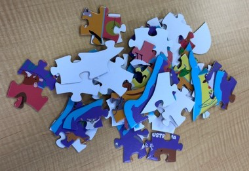
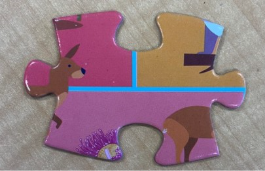
I began by showing them a pile of jigsaw puzzle pieces and explained that I absolutely love puzzling, but I was struggling with my current puzzle and wondered if they could help. Once they enthusiastically agreed, I explained that I had started the puzzle the way everyone does: by choosing the best piece, my favourite piece, and then building the entire puzzle around it.
Unfortunately, it looked something like this:

Cue giggles from the younger students and predictable eyerolls from some of the older year levels.
I then told them that I realised my mistake and rebuilt the puzzle properly using all the pieces. But after a while, I decided I really didn’t like the colour orange, so I removed all the orange pieces and threw them away. I asked the students whether the puzzle was now complete.
Immediately, they responded: “No, pieces are missing.”
So, I agreed with them, retrieved the orange pieces from the bin, and completed the puzzle again. But then I remembered that I’m terrified of birds and frilled lizards, so I carefully cut all the “scary” parts out of the puzzle instead. Once again, I asked whether it was complete.
Again: “No!”
Some of the younger students were even visibly frustrated by my increasingly ridiculous decision-making.
Eventually, we restored all the missing pieces and revealed the complete picture.
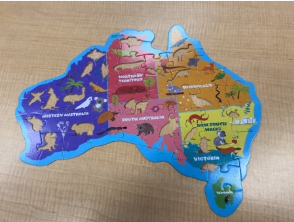
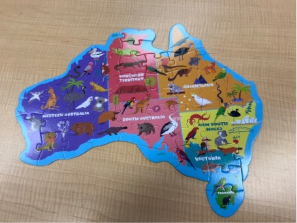
As absurd as the exercise was, it opened a meaningful conversation about community, belonging, and difference. The analogy connects closely with the words of St Paul in 1 Corinthians 12:12–27, where he describes a healthy community as being like a body made up of many different parts. Each part is distinct, yet every part is important. The picture is incomplete when pieces are ignored, excluded, or forced to become something they were never designed to be.
One of the ideas we’ve been exploring throughout Chapel this term is that diversity is not simply something to tolerate; it is something that helps reveal the fullness of a community. When we take the time to help people discover where they belong, rather than forcing everyone to fit the same mould, we begin to see a richer picture of God’s goodness and love reflected in one another.
This conversation has naturally led into another important theme: the many different communities our students navigate every week.
Our Students’ Communities
Every student moves between several different communities, family, friendship groups, sporting teams, classrooms, online spaces, cultural groups, faith communities, music ensembles, gaming communities, and social media networks. Each of these spaces shapes the way they see themselves and others. Some communities help students flourish. Others can quietly create pressure, uncertainty, or comparison. Most are a mixture of both.
One of the key ideas that we’ve been reflecting on is that students are constantly learning from the communities that they inhabit, often far more than they realise.
Communities teach us:
what is celebrated,
what and who is considered acceptable,
how people are treated when they succeed or fail,
whether disagreement is safe,
and whether belonging must be earned or is offered with grace.
Young people are remarkably perceptive. They notice:
who gets included,
who gets overlooked,
what kinds of people are admired,
what opinions feel safe to express,
and whether difference is genuinely welcomed or merely tolerated.
As we discussed in Chapel, not every student experiences community in the same way. Some walk into new spaces and immediately feel at home. Others feel cautious, uncertain, or like they are constantly trying to work out the “rules” of belonging. Personality, culture, family background, neurodiversity, confidence, past experiences, and friendship dynamics all shape how students experience community.
One of the dangers for young people is beginning to believe that they must become a different version of themselves to belong somewhere. Healthy communities do not demand sameness, they make space for difference. Like the puzzle, the goal is not for every piece to look identical, but for each piece to contribute to something larger than itself.
This has led to some rich conversations with students about the kind of communities they want to help create.
Not simply asking:
“What do I get from this group?”
But also:
“What do others experience when they are around me?”
That shift, from simply consuming culture to helping create it, is a deeply important part of character formation.
Creating Culture
Students are not only shaped by community; they also shape it. Every interaction contributes to the culture around them. A student who notices someone sitting alone, includes a quieter classmate, shows respect to someone different from themselves, chooses kindness over social status, or takes the time to listen to another perspective is helping create a community where belonging becomes more possible for others.
As parents and carers, you play an incredibly important role in helping students process these experiences. One of the most valuable things we can do is create space for reflection, not just reaction. Often, the most meaningful conversations come not from immediately solving problems, but from helping students think more deeply about what their different communities are teaching them.
Questions like:
“Where do you feel most comfortable being yourself?”
“What makes that group feel safe or welcoming?”
“Have you ever felt pressure to act differently to fit in?”
“What kind of community do you want to help build for others?”
These kinds of conversations help students develop self-awareness, empathy, and discernment, qualities that will serve them long after school.
A Final Thought
In many ways, this is part of the deeper purpose of education and formation. We are not only helping young people succeed academically but also helping them learn how to live well with others in a diverse and interconnected world. Healthy belonging does not erase difference; it teaches us how to hold difference with respect, humility, curiosity, and compassion.
Our hope throughout this term is that students come to recognise three important truths: 1. that they are seen and loved by God, 2. that they are shaped by the communities around them, 3. and that they also have the power to shape those communities for the better.
A simple question to carry into this week:
“What kind of community is helping shape my child, and what kind of community is my child helping create?”
A Prayer for Your Student
If you are someone who prays, here is a simple prayer you can carry for your child this term:
Loving God,
Thank you for my Child.
That they are known and loved by you.
Where the feel unseen, please remind them that you see them fully.
Where they feel on the outside, my they find a place of genuine welcome.
Please give them the courage to be themselves, the grace to include others, and the wisdom to know that they are needed, not just present.
Help them find their place not by fitting in, but by becoming more fully who you made them to be.
And may our home be a safe place where they are always known, always valued, and always welcome.
Amen.