Numeracy Update

Teaching addition and subtraction may look quite different from when you were at school. Today, we focus on helping students develop a deep understanding of mathematics rather than simply following a set process.
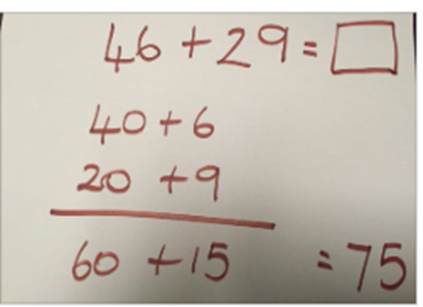
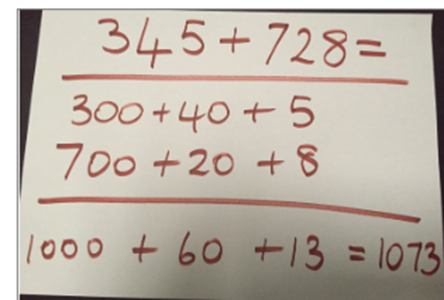
When working with your child, ask them to explain what they are doing to solve the problem. You may see them partition numbers using place value to solve smaller parts before putting them back together, or use a number line to keep track of their jumps.
These are all effective strategies that help students represent their thinking, build number sense, and develop efficient ways to solve problems.
It is critical that students develop trusted, efficient and flexible methods for adding and subtracting whole numbers and decimals. Students’ ability to solve addition and subtraction problems confidently and efficiently will often rely on their use of a mental strategy. Students need to develop fluency with mental strategies, prior to the introduction of formal written methods. Students are at risk of developing misconceptions in computation when formal written methods are introduced before they are confident in solving problems mentally. The focus of computation lessons in the early Years (at least P-2) is on developing mental strategies for adding and subtracting. A feature of mental computation is that a problem can often be worked out in several different ways. The most appropriate strategy will depend on the numbers involved, the context of the problem, the age of the user and the range of methods that they are confident with. Students with a deep and flexible understanding of the relationship between addition and subtraction, whole number place value, partitioning and basic facts are well-equipped to develop efficient personal strategies. There are numerous mental strategies for addition and subtraction. However, in different systems world-wide, there is general agreement on three methods. Curriculum into the Classroom will refer to these strategies as:
• Jump
• Split
• Compensate.
The number line is an effective tool because it records the jumps children make when adding or subtracting. It helps them visualise their thinking, keep track of each step in the process, and develop a stronger understanding of how numbers work together. As students become more confident, the number line supports them in choosing efficient strategies and solving problems accurately.
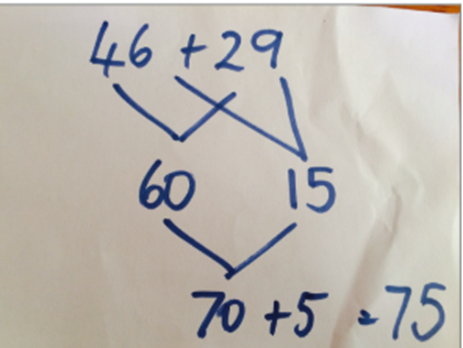
The split strategy is a method where children use their understanding of place value to break numbers into smaller parts, making them easier to work with. They solve each part separately and then combine the answers to find the total. This strategy helps students develop a strong understanding of place value and number relationships while building confidence and flexibility when solving addition and subtraction problems.
Number Line Strategy
Adding and subtracting with the JUMP strategy The Jump strategy requires the user to:
• keep one number unchanged
• partition (break up) the other number
• add or subtract the parts.
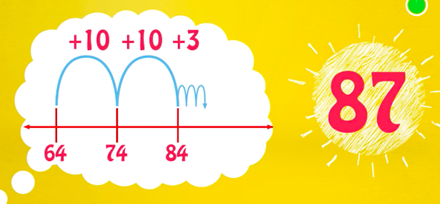
Addition Example: 64 + 23 = 87
Start at 64 on the number line.
- Jump 20 → 84
- Jump 3 → 87
Answer: 87
Subtraction Example: 729-314 = 415
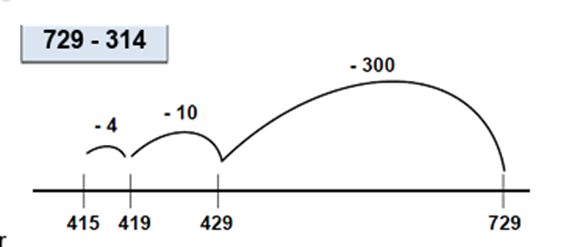
Start at 729 on the number line.
- Jump back 300 → 429
- Jump back 10 → 419
- Jump back 4- 415
Answer: 415
The number line helps children keep track of their thinking and clearly shows the jumps they make when adding or subtracting.
Split Strategy
Addition Example: 729 – 314
Split the numbers into tens and ones:
729 = 700 + 20 + 9 314 = 300 + 10 +7
Subtract the hundreds 700 - 300 = 400
Subtract the tens 20-10= 10
Subtract the ones 9-4= 5
Combine: 400 + 10 + 5= 415
Answer: 415
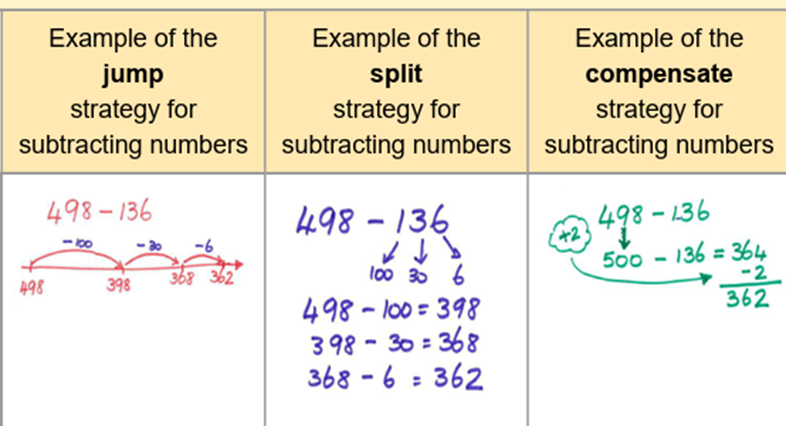
The split strategy helps children use their knowledge of place value to break numbers into manageable parts, making calculations easier and building a deeper understanding of how numbers work.
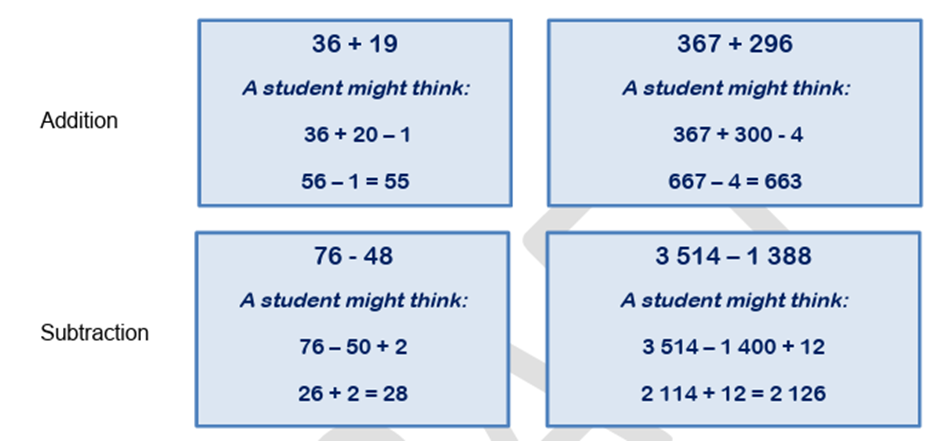
Adding and subtracting with the COMPENSATE strategy The Compensate strategy requires the user to:
• adjust one number (building up or building down)
• add or subtract the parts
• adjust the sum (or difference). It is most common to adjust one number to a benchmark number, e.g. multiples of 10, 100 or 1000. However, as students become more fluent with the strategy, they might adjust to other compatible numbers, e.g. 25, 75.
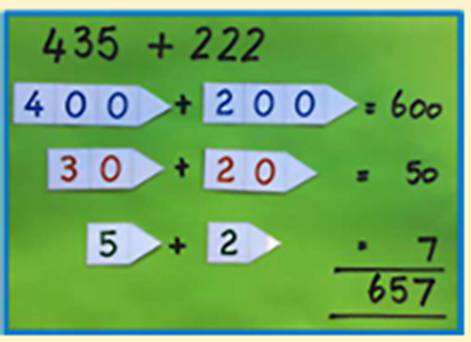
Expanded method