
Grade 2
Maths Mastering Three-Digit Numbers!
Our Grade 2 students have been busy becoming place value pros! Over the past few weeks, we’ve been learning all about three-digit numbers and what each digit really means.
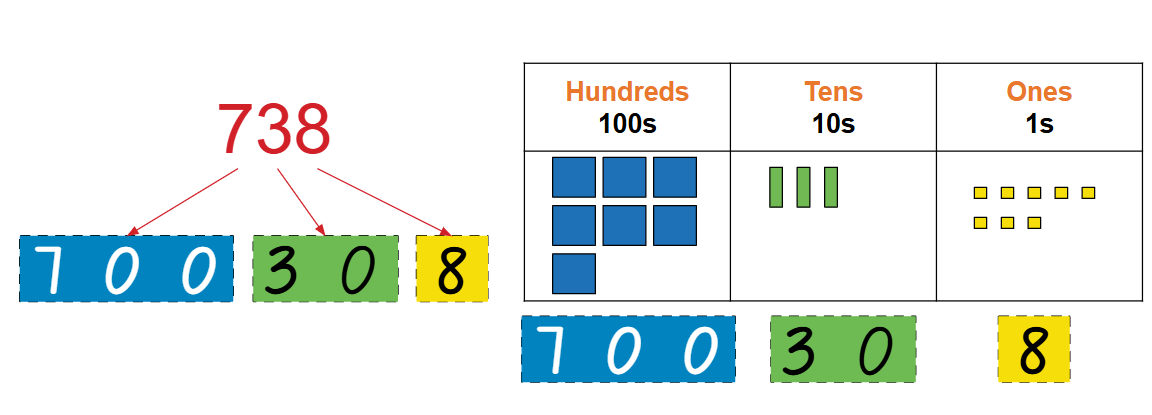
Students explored how every number is made up of hundreds, tens, and ones. For example, in the number 738, we now know that:
- 7 means 7 hundreds (700)
- 3 means 3 tens (30)
8 means 8 ones (8)
We also practised expanding numbers to show their actual value, so 738 becomes 700 + 30 + 8. This helps students see that numbers are not just digits on a page, but are built from smaller parts that work together.
Through hands-on activities, number games, and problem-solving tasks, students have shown great enthusiasm and growing confidence in explaining how numbers are made. It’s been wonderful to see them using maths language like hundreds, tens, ones, and expanded form in their learning.
Literacy
This week in our literacy program, students have been enthusiastically exploring imaginative texts to support the development of both comprehension and reading fluency. They engaged with a range of creative stories and narratives, learning to identify and describe the key features of imaginative writing. Through guided reading and collaborative discussions, students investigated important elements such as setting, character, plot and descriptive language, gaining insight into how authors craft engaging and meaningful texts.
In spelling, students focused on words containing two digraphs, reinforcing their ability to recognise and apply common letter combinations accurately in their own writing. We have also placed a strong emphasis on mastering tricky words, with targeted activities designed to support retention and encourage correct usage in context.
In our grammar sessions, students have shown great enthusiasm and growing confidence as they focused on identifying and describing nouns. They actively explored how to distinguish nouns within sentences and clearly articulate the role each plays. To reinforce their understanding, students also practised writing their own sentences that incorporate nouns effectively. It has been a joy to see their skills develop and their confidence in language grow.
In Writing, students have been busy building strong foundations for their writing. We focused on creating super sentences by remembering to use a capital letter and full stop, making sure each sentence tells us about someone or something and makes sense. Students practised using conjunctions such as because, but and so to extend their ideas and add more detail to their writing. We also explored different types of sentences, including statements, questions, exclamations and commands, and how to use them correctly. To bring it all together, students began writing short narratives using the correct structure, identifying characters, setting, problem, emotions, actions, solution and ending.