Learning Area News

Learning Area News - Weeks 4 & 5
Welcome to Foundation
In Literacy, we have been learning about rhyming words and syllables. Students have been using movement—such as clapping and jumping—to help count the number of syllables in a word. We have also been identifying rhyming words by listening to familiar nursery rhymes.
In Writing, students have been learning about the difference between pictures and words, as well as practising writing their names.
In Numeracy, we have been learning about patterns. The students have been developing their sense of repeating patterns, learning to identify the unit of repeat of a repeating pattern, and continuing two- and three-part patterns.
In Religion, our topic is, ‘We Can Pray to God’. Students have been learning about all the different ways that we can Pray and experiencing different types of formal and informal prayer.
In Inquiry we have been learning about our school rules:
1. Be on time & ready to learn
2. Wear the school uniform correctly (hats in Terms 1 & 4)
3. Behave safely & respectfully
4. Follow instructions
5. No smart devices
At home you could reinforce learning by:
- Read a story with someone at home.
- Practise writing your name with a capital letter at the start, followed by lower case letters (we may need an adult to assist/model this)
- Syllable I Spy – Have someone at home choose an item around the room and break it into syllables. Guess the word by putting the syllables together.
- Create your own three- movement pattern and show it to someone at home.
Welcome to Year One
In Literacy, we have been learning about phonemes, digraphs and consonants. Some of our focus digraphs are ch (chick), ck (duck), sh (shell) and wh (whale). We have been practicing spelling our tricky words put, were and have. When reading texts, we have been focusing on sentence parts and characters.
In Numeracy, students have been learning how to collect and represent data. They used tally marks to record responses from a class survey. Tally marks help us count quickly and accurately by grouping numbers in fives (four vertical lines and a diagonal line for the fifth). After collecting the data, students transferred their results into a picture graph.
In Religion our topic is ‘We grow in God’s love’. The students have been identifying ways that Christian’s love and care for others as God asks. Students have been exploring ways in which they share their gifts with others.
In Inquiry we have been learning about our school rules:
1. Be on time & ready to learn
2. Wear the school uniform correctly (hats in Terms 1 & 4)
3. Behave safely & respectfully
4. Follow instructions
5. No smart devices
At home you could reinforce learning by:
Literacy
- Practice reading and spelling our tricky words put, were and have.
- Listening to your child read each night.
- Practice writing a sentence using a capital letter and a full stop.
Numeracy
- Practice using tally marks to group numbers in fives.
- Practice counting to 100 and backwards from 100.
- Skip count by 2s, 5s and 10s.
Welcome to Year Two
In Literacy, we have been revising the sounds ai (rain), ay (play), ee (tree), ea (leaf), igh (light), y (cry), ue (glue), ew (grew). The students have been orally sounding out and spelling words with these sounds.
In Numeracy, we have been learning about place value. The students have been using MAB blocks to create 3-digit numbers. We have ordered numbers from lowest to highest and partitioned and expanded numbers.
In Religion our topic is ‘We grow in God’s love’. The students have been identifying ways that Christian’s love and care for others as God asks. Students have been exploring ways in which they share their gifts with others.
In Inquiry we have been learning about our school rules:
1. Be on time & ready to learn
2. Wear the school uniform correctly (hats in Terms 1 & 4)
3. Behave safely & respectfully
4. Follow instructions
5. No smart devices
At home you could reinforce learning by:
Literacy
- Practice reading and spelling our tricky words (until, was, here, February, were, friend).
- Write a list of words with the spelling sound ‘ee’ (tree) and ‘ea’ (teach).
- Listening to your child read their reader each night.
Numeracy
1. What numbers can you make that are below 100 and have 6 in the tens place?
2. What numbers can you make use 6, 5 and 8? For example: 856, 58, 8
Welcome to Year 3
In Literacy, we have been reading our class novel Matilda by Roald Dahl. Students have been developing their comprehension skills by discussing characters, identifying key events, and exploring vocabulary from the text. During grammar lessons, we have been focusing on conjunctions; so, but, and because, and how they help us combine ideas to create more detailed sentences.
In writing, students have begun creating their own narrative pieces. There has been a strong focus on crafting engaging introductions that hook the reader and developing action paragraphs that build excitement and movement within the story.
In Maths, we have been focusing on place value, ensuring students understand the value of digits in hundreds, tens and ones. We have also started addition and subtraction, with a focus on strengthening number facts and exploring fact families to understand the relationship between addition and subtraction. Students are working on extending their addition and subtraction facts to improve accuracy and fluency.
In Religion, we have begun our unit “Followers of Jesus.” Students are exploring how Jesus invited people to think about the way they were living and how we can be followers of Jesus in our own lives. We have been reflecting on the choices Jesus made in stories and miracles, and how we are guided by the Holy Spirit to make wise and loving choices. We are now beginning our assessment for this unit.
In Inquiry, we have started our new topic, “Contributions to Community.” Students have explored the question “What is a community?” and identified local communities they belong to, along with the symbols that represent them. We have also begun learning about diverse national communities and the symbols that are significant to them.
At home you can reinforce learning by:
- Reading independently for 20 minutes each night
- Practising addition and subtraction facts within 20
- Creating sentences using the conjunctions so, but, and because
Breaking apart 3-digit numbers into hundreds, tens and ones
At home some worksheets and questions to explore are:
1. Conjunction Practice Combine the sentences using so, but, or because. a) I was tired. I finished my homework. → __________________________ b) It was raining. We went outside. → __________________________
2. Narrative Writing Write a short introduction for a story. Include:
- A character
- A setting
- A small problem
3. Place Value Write the expanded form: a) 356 → __________________________ b) 482 → __________________________
4. Fact Families Use the numbers 5, 7 and 12 to write four related number sentences.
5. Addition & Subtraction Facts Solve: a) 14 + 6 = ______ b) 18 – 9 = ______
Welcome to Year 4
A Fantastic Start to the Year! All of our Year 4 students have settled in extremely well and have made a wonderful start to the year.
It has been fantastic to see their enthusiasm for learning, their positive attitudes, and the way they have embraced new routines and expectations. We are so proud of how confidently they have begun the year and how supportive they have been of one another in the classroom.
Below is what we have been learning in English and Mathematics, along with a few short activities you can try at home to reinforce these skills.
English
This term, we have been reading Kensuke’s Kingdom and using the novel to strengthen our reading comprehension and writing skills. Students have engaged in thoughtful discussions about characters, themes, and key events in the story.
At the sentence level, we have been focusing on:
- Concrete and abstract nouns
- Sentence types (statements, questions, commands, exclamations)
- Independent and dependent clauses
Persuasive writing
Students have been learning how to structure persuasive texts by clearly stating their opinion, providing strong reasons, and supporting their ideas with examples.
English Activities at Home
1. Noun Hunt (10 minutes)
Ask your child to write down 5 concrete nouns (things you can see or touch) and 5 abstract nouns (feelings or ideas). Then, challenge them to use at least two of each in a short paragraph.
2. Sentence Type Challenge
Give your child a simple topic (e.g., “school lunch” or “weekend sport”). Ask them to write:
- 1 statement
- 1 question
- 1 command
1 exclamation
3. Persuasive Quick Write
Ask your child to write a short persuasive paragraph answering a fun question such as:
- “Should homework be banned?”
- “Should pets be allowed at school?”Encourage them to include a clear opinion and at least two reasons.
Mathematics
In Mathematics, we have been strengthening our skills in:
- Addition and subtraction
- Solving worded problems
- Understanding what a question is asking before solving
- Using vertical algorithms to show clear working
Beginning our unit on fractions
A major focus has been carefully reading word problems, identifying key information, and deciding which operation to use. Students are becoming more confident in setting out their working clearly using the vertical method.
We have also just begun exploring fractions, learning about parts of a whole and how to represent them visually.
Maths Activities at Home
1. Word Problem Creator
Ask your child to create a real-life addition or subtraction word problem (e.g., shopping, sport scores). Then swap roles — you solve their problem and they check your working!
2. Vertical Algorithm Practice
Give your child 3–4 addition or subtraction sums (including 3–4 digit numbers). Encourage them to:
- Line up place values correctly
- Show neat working
Check their answer
3. Fractions Around the House
Ask your child to identify fractions in everyday life:
- What fraction of the pizza is left?
- What fraction of the laundry basket is full?
- Shade 3/4 or 2/5 of a drawn shape.
Welcome to Year 5
We have had an amazing start to the year. The children have settled in well and have been eager to learn and grow in our learning space.
Each day we remind our children to be organised and ready for learning. They need to have had a good breakfast ready to get their day off to a good start. Lunch boxes need to be packed with a variety of healthy food to eat. Two pieces of fruit, in their natural wrapping, a sandwich or something substantial for lunch, and some snack like a biscuit, shapes or a homemade cake. The less waste the better. We have seen some outstanding lunch boxes that contain NO waste. Thank you.
Religious Education
In Religious Education we have be learning about who Jesus was in the Gospels. We have explored all four gospels, Matthew, Mark Luke and John and learnt that all were written for a particular audience with different needs. We explore the Feeding of the 5000 and compared all four gospels noting similarities and differences.
We will launch into our next topic, ‘How can Lent Transform our lives? We will be leading assembly prayer on March 13 with a focus on the 180 years of the Mercy sisters. Please check your PAM account on SiMON for any upcoming events.
English
In weeks 1-3, students have been exploring War Horse by Michael Morpurgo, focusing on character development, perspective and the impact of war on both people and animals. They have analysed figurative language and expanded their vocabulary while strengthening sentence structure through appositives, clauses and sentence expansion.
Students also researched how horses were used in World War I to build historical understanding. In writing, they began crafting their own imaginative narratives, developing engaging introductions, action and problem paragraphs.
Mathematics
In weeks 1-3, students have been learning to interpret and analyse different types of data displays, including tables, column graphs and line graphs. They have practised asking and answering questions about data, identifying trends and comparing results.
Students have explored how data can be collected fairly and represented clearly for different purposes. They have also begun creating their own graphs, using appropriate scales, labels and titles to communicate information accurately.
Science
In Lessons 1–4 of our Animal Survival unit (Biological Sciences), students have explored how habitats provide food, shelter and conditions for survival. They identified biotic (living) and abiotic (non-living) factors and examined structural and behavioural adaptations of animals.
Students analysed how specific adaptations give advantages in particular environments, using examples such as polar bears and crocodiles. They also investigated predators and prey, including how camouflage and other adaptations support survival within different habitats.
Humanities
Our Humanities study has focused on Australia in the 1800’s. Did you know how long Queen Victoria ruled for? Why did she wear black for 40 years? Hopefully your child will know the answer – if not do some research with them.
Home Learning
Each night we expect our children to read for 20 minutes at a minimum. They can read alone. They can read to you. You can read together. How about you to them. The reading should be something that interest them and should be easy and not require tedious amounts of effort to decode and make sense.
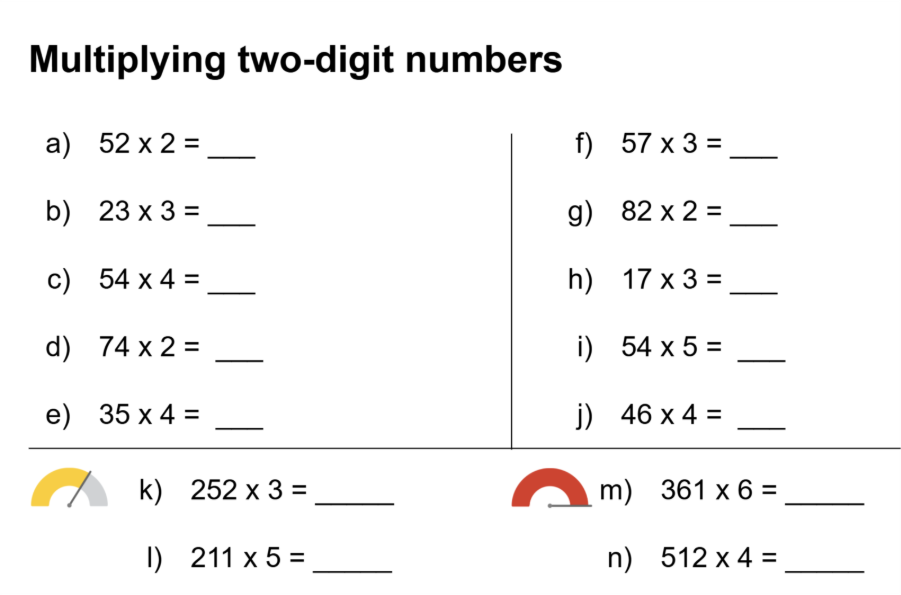
Have fun. Enjoy the time together. Turn the TV off. All devices on silent and get the whole family involved. We also ask that they practice their multiplication facts for 10 minutes each night.
You could play ‘buzz’ with them or popcorn counting, skip counting – anything that will get an automatic response.
These are crucial to building mathematical muscle and becoming competent capable mathematicians.
Welcome to Year 6
In Literacy, we have been learning about expanding our sentences to become better writers. Students have been developing their skills to use subordinating conjunctions and juxtapositions to become better writers. The focus of our writing has been on persuading readers about the importance of understanding our family history which has been inspired by our class novel "A ghost in my suitcase".
In numeracy, we have been learning about representing data. Students have been creating data displays, developing their ability to interpret them, as well as identifying and creating misleading data representations.
In Religion, our topic is, "Who is Jesus in the Gospels?". Students have been reflecting on how they are perceived by others and using this to understand and compare how Jesus is portrayed differently between the Gospels.
In Science, we have been learning about reversible and irreversible changes. Students have conducted two experiments looking at the water cycle in a bag and the reversing of homogenous solutions through evaporation.
At home you could reinforce learning by:
1. Independent/Guided Reading
It is the expectation in Grade 6 that your child practices reading independently or to a family member for 20 minutes a night minimum. This will help developed good routines for secondary school and reinforce reading fluency. Students are also welcome in the library at 8:30am every day to read to themselves or a staff member.
2. Practicing multiplication tables and division facts
Multiplication and division facts underpin a lot of important concepts that will be taught and revisited this year. You can use flashcards, practice skip counting or complete the following task: