
Teaching, Learning and Wellbeing

The Forgetting Curve
On Tuesday's Curriculum Day, RGLPS staff participated in a full day of professional learning. A significant portion of the day was devoted to learning about the importance of regular review to practise new skills and recall knowledge.
More than 100 years ago, psychologist Hermann Ebbinghaus studied how people remember and forget information. His research led to what is called The Forgetting Curve, which shows that people quickly forget new learning if they do not review it. See further information in the visual below:
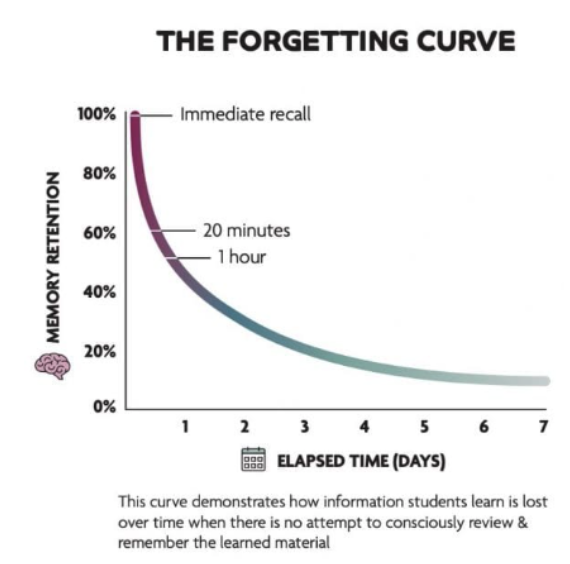
The Forgetting Curve shows that shortly after we learn something new, our memory of it starts to fade. However, each time we review or practise that new learning, our memory becomes stronger and lasts longer. The image below illustrates the difference that regular review makes to learning retention:
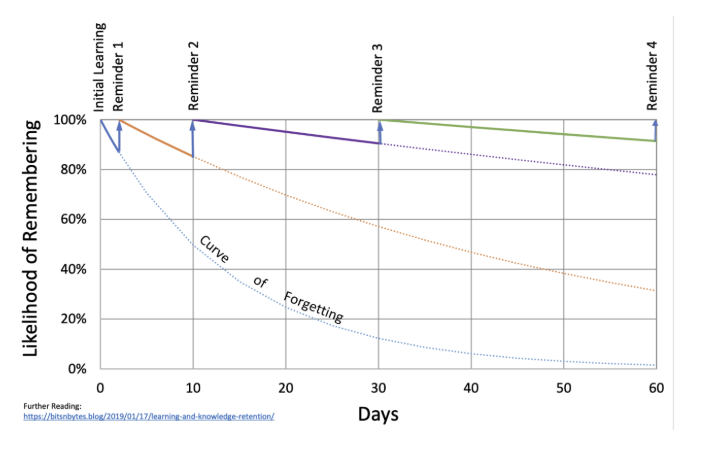
As you can see, spaced retrieval can ensure that around 90% of new learning is retained long term, whilst less than 20% is retained when concepts are only taught once.
Regular review helps combat The Forgetting Curve and has a significant impact on long-term retention. Review also reduces students’ Cognitive Load—the amount of mental effort the brain is using at one time when learning something new. When important knowledge is regularly revisited, students no longer need to use as much mental energy recalling previously taught concepts. This frees up valuable thinking space, allowing learners to focus on solving problems, understanding new ideas, thinking flexibly and completing more complex tasks.
In contrast, when students must spend a lot of mental effort simply remembering key knowledge or processes, they have less “bandwidth” available for deeper thinking and more challenging learning tasks.
Given this, RGLPS teachers are planning regular, scheduled opportunities to revisit important concepts taught in class. Students might review key vocabulary, practise maths facts, or recall ideas from previous lessons. These brief review activities are designed to help move learning from short-term memory into long-term memory.
Parents can support this at home by asking children about what they learned, encouraging them to explain ideas in their own words, or practising key skills together.
To sum , learning something once is rarely enough. By revisiting knowledge and skills over time, we help ensure that learning truly sticks!
Have a great week everyone!
Kerron Worsdell
Learning Specialist