
Wellbeing
WHAT WE DO IN WELLBEING
BREAKFAST CLUB
Served daily in the Wellbeing space from 8.00am every morning and offered to all students
WELLBEING LUNCH
Available to all students, lunch items are served each day from our purpose-built
servery window outside the Wellbeing space between 1.25 - 1.50pm
ONE-ON-ONE COUNSELLING
Facilitated through a Hub referral process
DOCTORS APPOINTMENTS
In partnership with Gippsland Lakes Complete Health, the College runs the Doctors in Secondary Schools (DiSS) Program. Once a week, we have a qualified doctor and nurse onsite conducting appointments in a dedicated clinic. This service is available to all students at no charge and parents/carers are able to also attend appointments.
SCHOOL NURSE
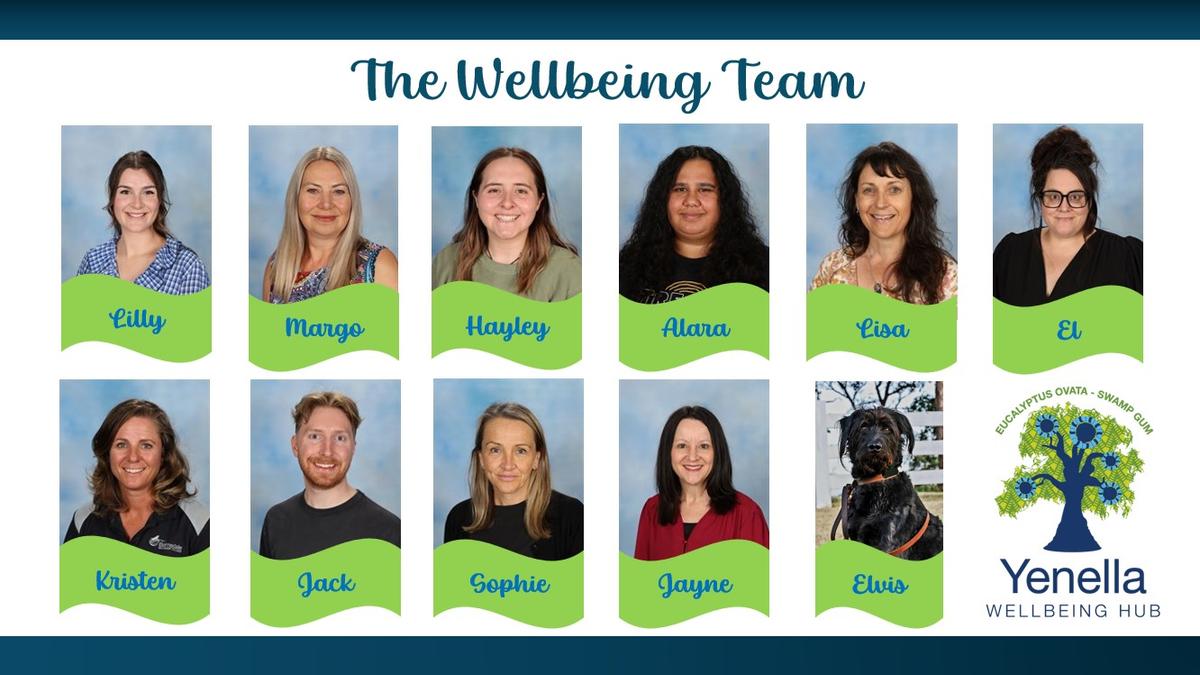
Working in close collaboration with the Wellbeing team, School Nurse, Sophie Brown attends the College two days a week. Sophie’s role is imperative in helping to promote health and raise awareness of the importance of healthy lifestyle choices for all students. She is available to speak with students one-on-one or in a group setting.
AOD (Alcohol & Other Drug) SUPPORT
AOD Youth Outreach run through Gippsland Lakes Complete Health supports young people between the ages of 12-25, and here at the College, we have an AOD worker onsite fortnightly to provide support for alcohol and/or drug use – including vaping. Supports offered include counselling, assistance with withdrawal/reduction of alcohol/other drug use; support if you become involved in the legal system because of alcohol/drug use; information, education and other resources.
SEASONS FOR GROWTH PROGRAM
Seasons for Growth is a small group education program that supports young people to develop the knowledge, skills and attitudes to understand and respond well to experiences of change, loss and grief.
ELVIS - SCHOOL THERAPY DOG
Elvis, a Keldoodle (Kelpie X Poodle) is one of the school therapy dogs here at BSC.
His calm, gentle manner helps to reduce anxiety and stress in students,
as well as enhancing social-emotional skills.
He NEVER refuses a pat so swing by Wellbeing to say hello!!
FOR ANY MORE INFORMATION REGARDING ANY OF OUR SERVICES PLEASE CONTACT THE WELLBEING TEAM via wellbeing@bairnsdalesc.vic.edu.au
-------------------------------------------------------------------------------------------------------------------------------------

SAFE SOCIALS
Tips and resources for secondary parents, carers and families
to support young people to be safe online.
Parents play an important role in supporting their young people to be safe online and on social media sites. You can help your children safely navigate their digital world and educate them to avoid harmful online experiences. You can explore websites, games, apps and social media together and set some rules and boundaries. Your support and guidance can give your children the knowledge to make sound decisions online and confidence to ask for help when they need it. It is also important to stay informed about online safety. You can read more about online safety basics on the eSafety Commissioner’s website. You can also learn about the range of social media, games, apps and sites in the eSafety Guide, including what all the apps are, their minimum age requirements, how to protect personal information and how to report content within the apps themselves.
Supporting positive and safe online experiences for your child
There are a range of resources available to support you support your child. The eSafety Commissioner’s website provides:
- parents website including information on how to have hard conversations about tricky topics like cyberbullying or pornography.
- webinars to give parents/carers the knowledge, skills and tools to support safe online experiences including an introduction to online safety and emerging technologies.
- family friendly videos and advice sheets in multiple languages to support your family stay safe online, getting started with social media, safer online gaming and getting help when your child is bullied online.
- advice to support parents to deal with online issues like sending nudes and sexting, pornography and cyberbullying.
- advice to directly support young people including how to deal with social media pressures.
- Bully Stoppers provides dedicated resources on cybersafety and cyberbullying for secondary school aged students and a dedicated resource page for parents. You can also access cyberbullying advice sheets for concerned adults through Bully Stoppers.
- Alannah and Madeline Foundation provides DigiTalk, an online safety hub for parents covering topics including equipping teens for digital success, supporting teenagers in a connected world, empowering your teen to game safely and overcoming teen bullying.
- Raising Children Network provides resources for parents of teens on topics including screen time, cyberbullying, sexting and gaming.
Orygen’s ScrollSafe for parents guide helps parents talk with their teenage child about social media, online life and mental health.
Signs a child or young person might need support
A young person’s online activity might have a negative impact on them if they don’t also have a healthy balance of offline activities. Sometimes, a young person might be showing signs that they are having negative online interactions or that they are being bullied. They may not tell you if an online ‘friendship’ or situation has become compromising or difficult because they are embarrassed or ashamed, or afraid it might make things worse. Be alert to changes in your child's behaviour or mood. Watch for signs of withdrawal, anxiety, sadness or changed interactions with family or friends. Concerning signs can include:
- less interest in social activities like meeting friends or playing sport
- not doing so well at school
- tiredness, sleep disturbance, headaches, eye strain
- changes in eating patterns
- reduced personal hygiene
- obsession with particular websites or games
- extreme anger when being asked to take a break from online activity
- appearing anxious or irritable when away from the computer
becoming withdrawn from friends and family
You can learn more about warning signs of bullying on Bully Stoppers, warning signs of grooming and information about sextortion on the eSafety Commissioner’s website.
What to do if your child experiences something unsafe online
There are many ways that parents can raise a concern or get help if there is an incident.
- You can talk to your child’s school with any concerns you might have or if something has happened. Schools have policies and processes in place that can help and to make sure that your child gets extra support if they need it. Contact your child’s teacher or the school wellbeing team to start. Read more about talking to your school on Bully Stoppers.
- If your child has been involved in an online incident, it is important that you work together with your school to provide your child with the support they need. Learn how to help your child after an online incident on the eSafety Commissioner’s website.
- You can also contact the eSafety commissioner for advice and to report abuse. The eSafety reporting system helps parents of children who experience serious cyberbullying and image-based abuse by working with platforms to have the content removed.
- If someone is contacting your child and this contact is unwanted or makes them feel uncomfortable, there are things you can do to help. Read more about child grooming and unwanted contact and what to do on the eSafety Commissioner’s website.
The Alannah and Madeline Foundation also provide advice on what to do in instances of image-based abuse online and through Artificial Intelligence (AI).
Where to reach out to for more support for your child
- Contact 000 for urgent assistance
- Talk to your child’s school
- Contact the eSafety Commissioner. for advice or to report online abuse
- headspace Counselling: Victorian Government secondary school students can access counselling services from headspace. Call: 1800 650 890 or visit headspace.org.au/eheadspace
- Visit your local GP if you want to talk about mental health support
- Kids Helpline: 1800 551 800 kidshelpline.com.au
- Lifeline: 13 11 14 lifeline.org.au
Beyond Blue: 1300 224 636 beyondblue.org.au
Article credit # Safe Socials – For parents and carers (Secondary) | vic.gov.au
-------------------------------------------------------------------------------------------------------------------------------------

SEXTING and IMAGE-BASED ABUSE (Information for families)
Sexting is when people share texts or sexual images of themselves on their phone, online or through apps. This is commonly done using text messaging. In addition to text messages, there are a number of apps people use like Tinder, Bumble and Grindr, as well as private messaging apps such as Snapchat and WhatsApp. These apps are sometimes, but not always, used to sext. Lots of young people sext, with most finding it fun. But there are times when intimate relationships go wrong, and sexts can be shared without someone’s knowledge or consent. This is called image-based abuse. It’s important to know that if images are shared without someone’s consent, it’s not their fault. The person who shared it is in the wrong. See below for more information on what could happen and how you can support a young person to avoid, and deal with, having their private messages and images exposed online
Sexting and the law
Did you know that asking for, taking, having or sharing a sexual photo or video of someone under 18 can actually be child pornography in Australia? Even if someone only takes a sexually explicit picture of themselves or their partner, it can be illegal. It may also have serious legal consequences, which can end up affecting lots of other parts of a person’s life. Sometimes images can end up in the wrong hands. Unfortunately, stories of ‘image-based abuse,’ are becoming a lot more common. This can also be a crime. There are different laws about image-based abuse in different states. Find out more about sexting and the law.
What is image-based abuse?
Image-based abuse is when intimate or sexual photos or videos of someone are shared online or via mobile phone without their permission. Sometimes the person isn’t even aware that the images were taken. Sometimes the person has given permission for the photo or video to be taken, but then it is shared without their consent. People may also receive unwanted sexual images – this is a type of harassment. The images are often shared directly with others via text messages or social media, or on occasions on websites intentionally set up to humiliate people. There are a range of motivations for sharing these images – some people may do so as a prank or a joke, in an attempt to seek revenge, to force another person to perform an unwanted sexual act or to prevent them from leaving a relationship. Threatening to share images – even if the images are never actually shared – is also a type of image-based abuse. This is called ‘sextortion’ and it can be even more distressing than having the images shared.
How common is image-based abuse?
A survey found one in five Australians have experienced image-based abuse, with females and males equally likely to experience image-based abuse. Young people aged between 16 and 29 are one of the most at-risk groups. Aboriginal and Torres Strait Islander peoples, people living with a disability and people who identify as LGBTIQA+ are also particularly vulnerable.
How can I protect my young person from image-based abuse?
It’s only natural that you want to protect a young person from experiencing any kind of harm, including image-based abuse. There are things that you can do to help your young person stay safe in their online relationships.
Keep communication open
Try to understand the young person’s experience of online relationships. You can do this by asking questions about who they talk to online and what sites they visit. Maintaining regular communication helps to build trust and may encourage the young person to seek your support if something harmful happens.
Set limits around access
This will mean different things for different families and for people of different ages. A common (and safe) rule is limiting technology use to common areas, not bedrooms, and also limiting access after a certain time at night. This can help you be aware of their behaviour online.
Support good decision-making
Talk about the consequences of impulsive decisions and encourage your young person to think about what they post online. For example, Snapchat can influence hasty decisions because the app allows images to be sent and then automatically deleted after a certain amount of time. This does not prevent a screenshot being taken and shared. It’s important that young people practise slowing down and thinking through their decisions.
Foster self-respect and respect for others
By modelling respectful behaviours and attitudes, you can help a young person identify what’s OK and what’s not OK.
Encourage the young person to challenge image-based abuse
It’s important that young people feel empowered to be ‘upstanders’ rather than ‘bystanders’ and say something about negative online behaviour (in an assertive but not an aggressive way). Remind them to think carefully about their safety, and if they don’t think they can take action safely, encourage them to report the behaviour to a trusted adult.
What if my young person has experienced image-based abuse?
Don’t panic
If you become aware that a young person has had an intimate photo or video shared, try to remain calm. Staying calm can help keep communication open and help you to problem solve the situation together. Losing control can distress your young person even more.
Reassure
Try to be supportive and reassuring. Reserve any judgements you may have, despite personal opinions or beliefs. Remember that the world of online relationships may be very different from your experiences growing up. The young person needs your care and support to get through this.
Support them to take action against the abuse
When a person’s image is shared without their permission, their control is taken away from them. Help your young person to take back some control. Assist them to take practical steps to address the abuse. You might also want to speak with the young person about contacting their school or workplace. This will ensure they have support around them and can help to identify any concerning behaviours, such as shaming or bullying.
Encourage connection
Help the young person to stay connected to supportive friends and family, both offline and online. Being involved in meaningful and enjoyable friendships may help the young person to maintain their sense of self-worth and esteem.
Learn more
Understanding the experience of people who have encountered image-based abuse may help you to both empathise with their experience and provide more meaningful support. More information about common reactions to image-based abuse can be found at Secasa.
For more information, visit eheadspace for online and telephone support or find your nearest headspace centre.
Useful resources
- eSafety Commissioner- This is the Australian eSafety regulatory body. The website has lots of great resources on sexting and image-based abuse. They can help with image-based abuse, cyberbullying, complaints about explicit or illegal content online and other safety issues online
- ThinkUKnow - ThinkUKnow provides information and resources on a range of topics, including sexting, cyberbullying and online privacy, for young people and families.
Understanding bullying – for family and friends
Article credit # Understanding sexting and image-based abuse in young people | headspace
-------------------------------------------------------------------------------------------------------------------------------------
SUPPORTS FOR STUDENTS AND FAMILIES OVER THE HOLIDAYS
It is incredibly common for young people to feel stressed or lonely when the structure and social connection of the school term disappear over the holidays. If you or a young person you know needs support during the school holidays, see below for information, contacts and links for various support services.
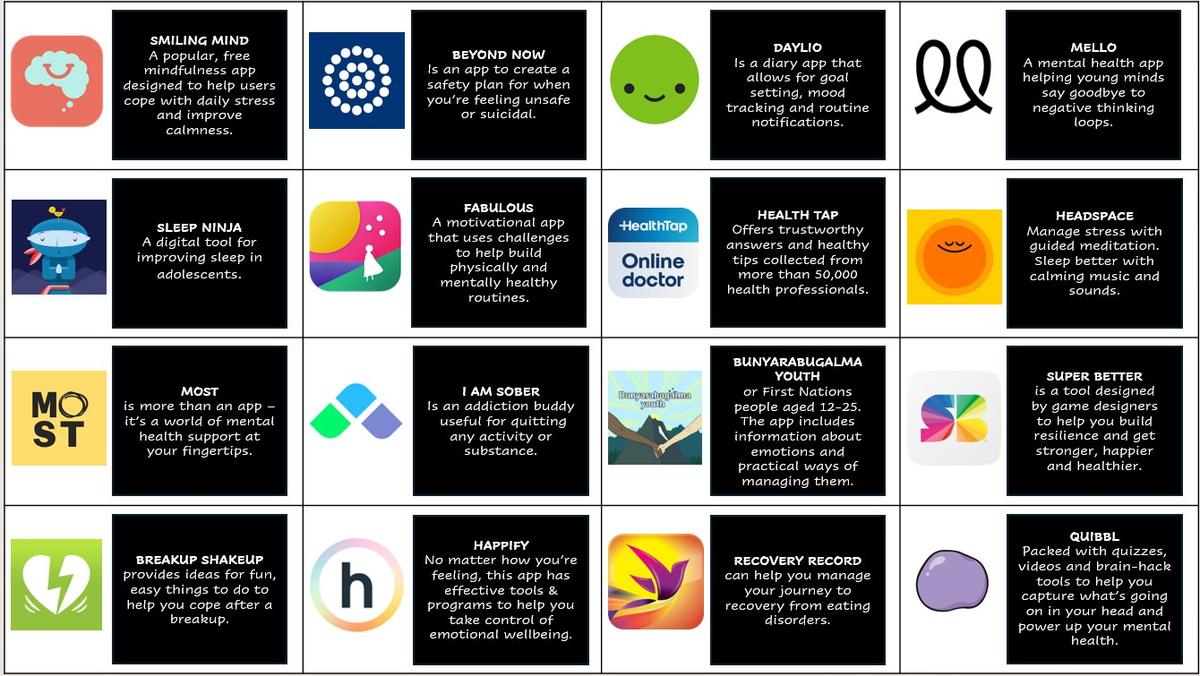
DIGITAL HEALTH APPS
-------------------------------------------------------------------------------------------------------------------------------------

ParentZone Eastern provides resources for parents, carers, and professionals in the Eastern Region. We offer a range of in-person and online parent education programs.
Our programs are not one-size-fits-all, many are co-designed with parents to reflect their needs, challenges, and strengths. Because every child is unique and responds to different parenting approaches, each program is tailored to support families effectively.
All our programs are free of charge. Find out more on our website.
TALKING TEENS (An online program for parents/carers of 12–18-year-olds)
Would you like tips and strategies to:
- Better communicate with your child?
- Help your child learn to manage their emotions and deal with conflict?
- Manage challenging behaviours?
- Parent anxious children?
WHEN: Tuesdays (6 evening sessions)
TIME: 7.00 – 9.00pm
VENUE: Online via Zoom
ENQUIRIES: Julia 9721 3629 or 0400 866 495 or Julia.russell@anglicarevic.gov.au
CLICK TO BOOK: Talking Teens T3 2026 Participant Registration and Pre-Questionnaire
STRENGTHENING PARENTS SUPPORT PROGRAM
For parents/carers of children with a disability, developmental delay
or neurodivergence (including ASD, ADHD or AuDHD)
Are you a parent or carer of a child with a disability or developmental delay and/or Neurodivergence (with or without a formal diagnosis)? Could you use a bit of support and connection with others who understand? Come along and join other parents and carers at one of our monthly peer support groups. Share stories and strategies, and have a cuppa, a chat and some laughs with other supportive parents and carers in a casual and comfortable environment. You can come to one or as many groups as you like!
Bookings required. Contact Michelle on 0438 646 744 or StrengtheningParentSupport@anglicarevic.org.au
ONLINE GROUP
WHEN: Fortnightly on Monday mornings during school term
TIME: 10.30am – 11.30am
LOCATION: Online via Zoom
NEURO AFFIRMING SUPPORT GROUP
WHEN: Fortnightly on Tuesday mornings during school term
TIME: 10.30am – 11.30am
LOCATION: Online via Zoom
INDIVIDUAL PARENTING SESSIONS
ParentZone offer individual parenting sessions, which aim to provide brief and early support for families who are experiencing parenting challenges. The aim of the session is to:
- Focus on a specific parenting goal
- Build confidence, skills, and problem-solving strategies
- Support you to find clear, flexible solutions to a parenting situation
It is ideal for parents who:
✔ Have limited time
✔ Want to focus on tackling one specific parenting challenge
✔ Are ready to seek support for their family
To book a session please email parentzone.eastern@anglicarevic.org.au or call us on 9721 3646
Podcasts for parents, carers and those who support others with their parenting. The ParentZone Teams are delighted to bring you TWELVE ParentZone Pods for you and the families you support. Each Pod identifies and explores common issues parents bring to our parenting groups and offers strategies to try in these situations.
PODCAST SERIES 1
Episode 1: Family Meetings
Episode 2: Dealing with Anxiety
Episode 3: Sibling Rivalry
Episode 4: Getting Children to Listen
Episode 5: How to Respond to Kids’ Behaviour
Episode 6: How to Stop Yelling at your Kids
PODCAST SERIES 2
Episode 1: Positive Discipline
Episode 2: School Refusal
Episode 3: Parenting our Teenagers
Episode 4: Meltdowns vs Tantrums
Episode 5: Couples Parenting Together
Episode 6: Dads Parenting Today
ParentZone Pods can be found on our website (ParentZone Pods - Anglicare Victoria) or via Apple and Spotify