
Music
The joy of joining in

Music
The joy of joining in
There is something special about being part of a music ensemble. Whether it’s rock band, concert band, jazz ensemble or choir, music brings people together and offers benefits that go far beyond the rehearsal room. Here are just a few reasons why being involved in music could be one of the best decisions you make this year:

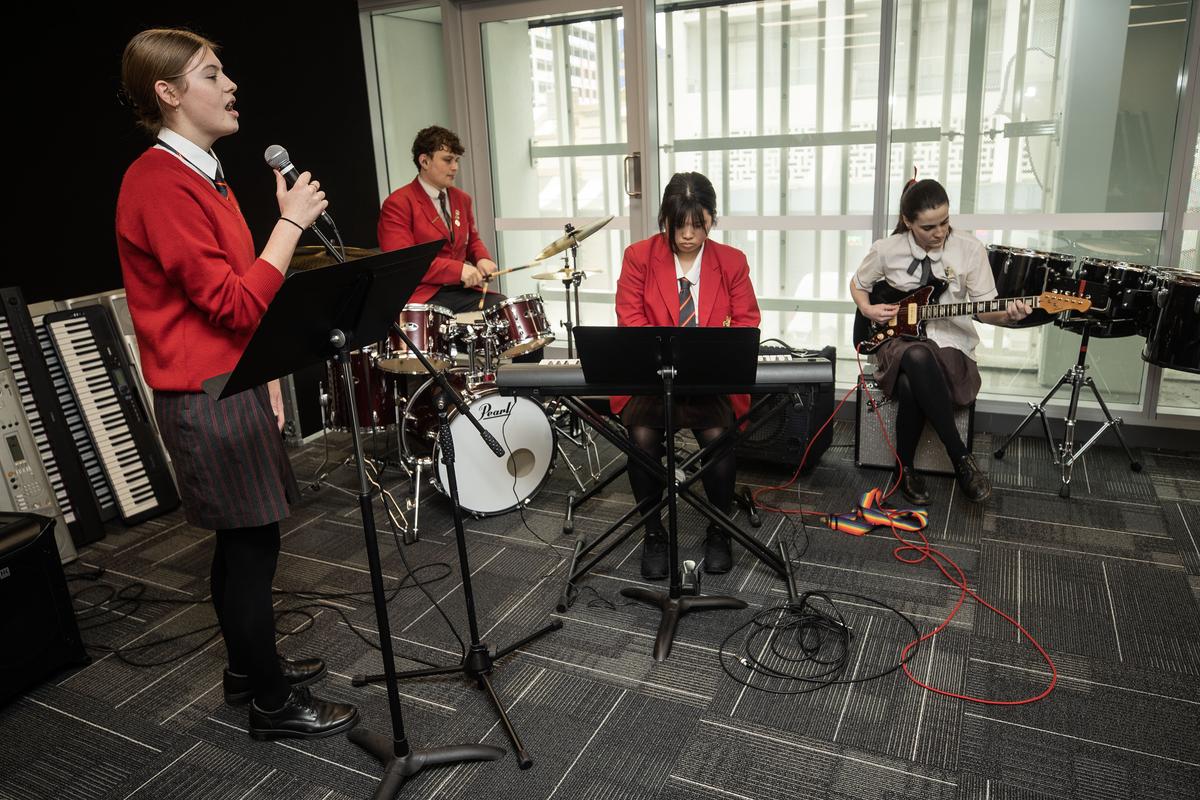

1. Make new friends
We have all experienced that first rehearsal feeling — walking in and not knowing anyone. But it doesn’t take long before shared music stands, forgotten pencils, section jokes and even the conductor’s dramatic facial expressions bring everyone together. Some of the strongest friendships at school are formed in rehearsal rooms.
2. Music enhances your memory
Research suggests that students who engage in music often develop stronger working memory skills. Regular practice and listening can improve alertness and focus — helpful skills not only in music, but across all academic subjects.
3. You can express yourself
Music gives every student a voice. Whether it’s performing a lyrical solo, locking into a groove in the rhythm section, or contributing to the rich blend of a large ensemble, music allows you to communicate emotion and personality in a powerful and creative way.
4. Music is good for your heart
Studies from institutions such as Harvard Medical School have shown that listening to music can lower blood pressure and heart rate and reduce signs of stress. Music doesn’t just sound good — it’s good for you.
5. Feel more relaxed
Listening to and making music has been shown to lower cortisol levels — the hormone linked to stress. Rehearsals can become a welcome pause in a busy week, offering time to reset and refocus.
6. Develop your communication skills
Music is often described as a universal language. From watching a conductor’s cue to responding to subtle changes in tempo and dynamics, ensemble playing builds awareness, teamwork and non-verbal communication skills.
7. Lift your mood
Ever noticed how your favourite song can instantly lift your spirits? Performing music together releases dopamine — the “feel-good” chemical — creating a natural sense of joy and accomplishment.
8. Ease physical discomfort
Research has shown that listening to music can help manage chronic pain symptoms. While the science continues to develop, it’s clear that immersing yourself in music can have positive effects on overall wellbeing.
9. Sleep better
Calming music can slow breathing and promote relaxation, helping to improve sleep quality. After a focused rehearsal, you may find it easier to unwind at the end of the day.
10. Boost emotional developmentMusic-making strengthens leadership, empathy, emotional intelligence and self-regulation. Students involved in ensemble programs often demonstrate strong collaboration skills and resilience — qualities that support success well beyond school.
11. Grow in confidence
Performing in front of an audience, mastering challenging repertoire, and contributing to a team effort all build self-belief. With the support of our dedicated music staff, students grow not only as musicians but as confident young people.
If you’ve ever considered joining an ensemble, now is the time. Music connects, inspires and transforms — and we would love you to be part of it.
Mrs Lynette Taylor
Head of Music