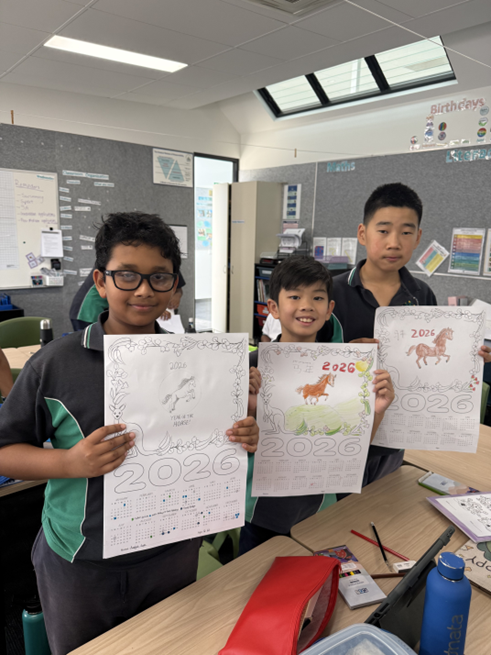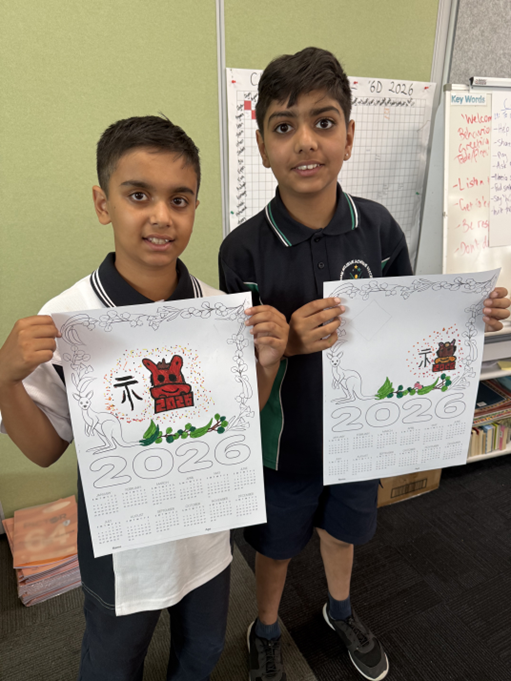
Languages
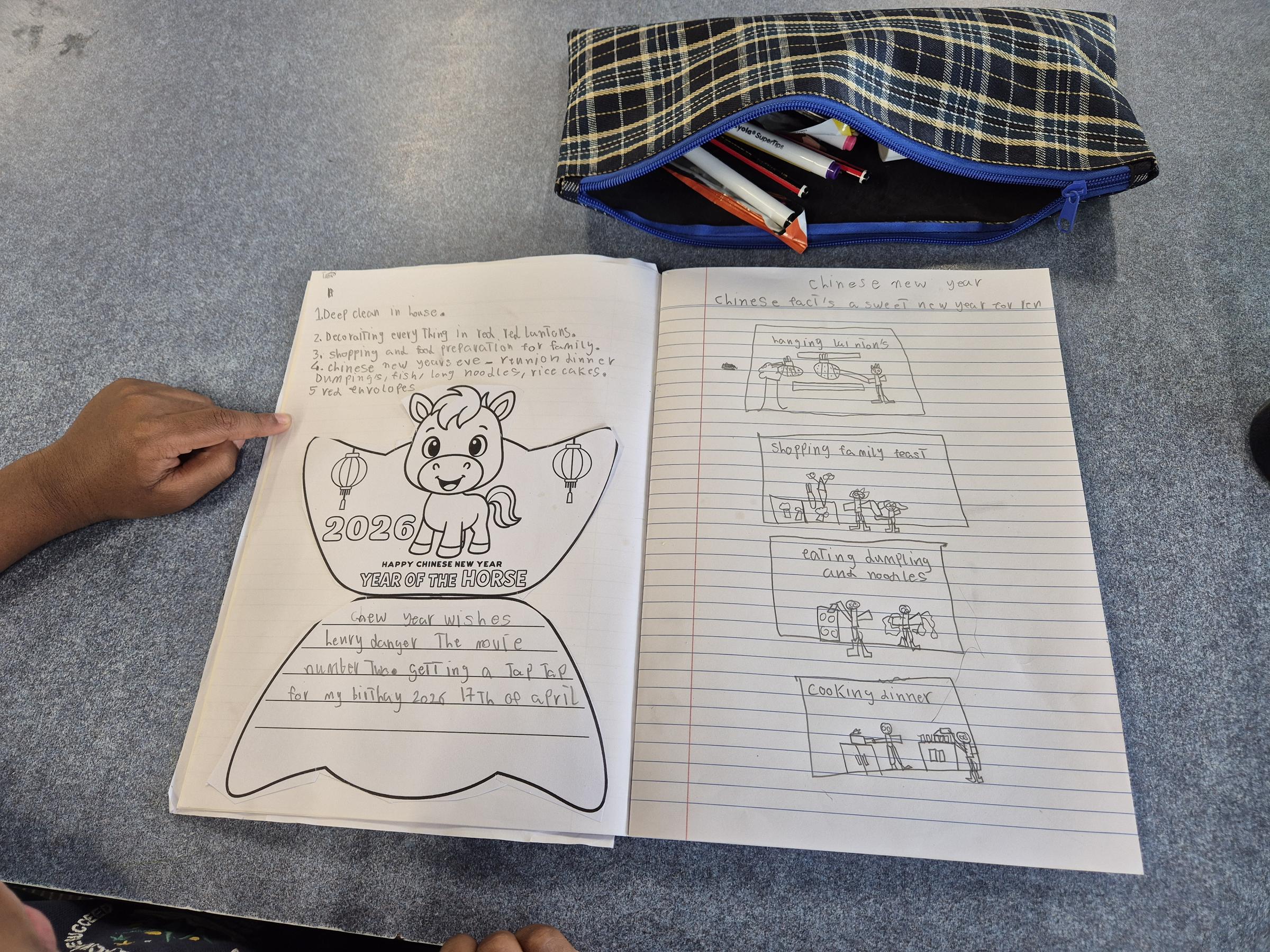
Happy Year of the Horse! Welcome back to Term One! We hope you had a refreshing holiday break and made wonderful memories with your loved ones. To all our families celebrating Chinese New Year, we wish you a joyful, prosperous, and exciting start to the year filled with happiness, health, and success. 年(nián) 快(kuài) 乐(lè)!
This term promises to be full of energy and discovery! Students will dive into language learning linked to their Inquiry units and the vibrant Chinese New Year celebrations. They’ll continue to develop their language skills while exploring new ideas, taking on exciting challenges, and uncovering amazing learning experiences. We can’t wait to see their curiosity, creativity, and achievements shine this term!
Prep
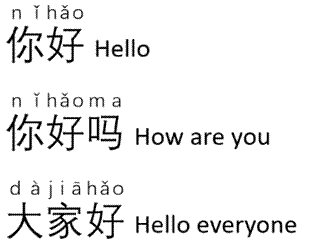
This term, Preps will be introduced to Chinese language and culture, learning basic greetings such as “How are you?” and “I’m fine,” as well as numbers from zero to ten. Through a variety of fun and interactive classroom activities, like Chinese character colouring, singing, dancing, and group games. Students will begin to develop an interest in learning Mandarin and build foundational communication skills through hands-on practice.
Curriculum Links:
- Notice that Chinese looks and sounds different to other languages (VC2LC2E01)
- Explore connections between language and culture through play and/or imagination (VC2LC2E04)
Key Vocabulary:
Year 1
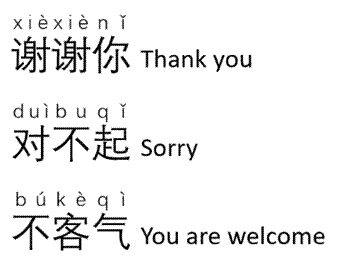
In Term One, students will continue to explore Mandarin topics related to family members. Students will use a range of everyday language in classroom activities, such as thank you, you’re welcome, sorry, and never mind. They will practise using more complete sentences to introduce their family members during communication activities. At the end of the unit, building on their previous learning about numbers, students will create their own family posters to review and demonstrate what they have learnt.
Curriculum Links:
- Identify sound combinations to produce simple words, and then an increasing number of frequently used words and phrases (VC2LC2U02)
- Communicate using formulaic and modelled language relating to aspects of their personal world (VC2LC2C01)
Key Vocabulary:
Year 2
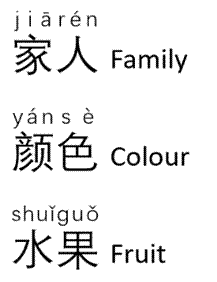
Year Two students will focus on learning how to introduce themselves in Chinese. This will include topics of family, colours and fruit. Students will express the preferences of different family members by using likes and dislikes. They will also learn how to greet each other at different times of the day. At the end of the unit, students will create a poster to introduce themselves.
Curriculum Links:
- Identify that written and spoken Chinese has grammatical structures and other language features that may be similar to or different from English and/or other languages (VC2LC2U04)
- Explore connections between language and culture through play and/or imagination (VC2LC2E04)
Key Vocabulary:
Year 3
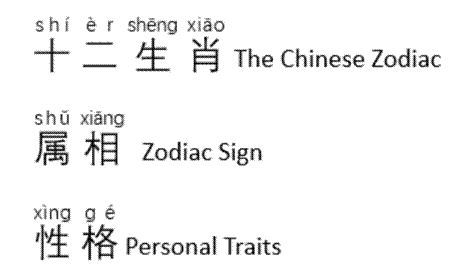
This term, Year Three students will explore the fascinating world of the Chinese zodiac. They will learn to describe the zodiac calendar in Chinese and discover the legends, stories, and traditions behind each animal sign. As part of their oral language practice, students will engage in conversations about zodiac signs in Chinese. To consolidate their learning, they will create a bilingual poster that showcases their understanding of the Chinese zodiac calendar and highlights its connections to diverse cultural narratives.
Curriculum Links:
- Identify connections between personal identity and aspects of culture (VC2LC4U04)
- Create and present spoken and written texts using formulaic expressions, simple phrases and sentences, modelled textual conventions and familiar Hanzi and Pinyin. (VC2LC4C05)
Key Vocabulary:
Year 4
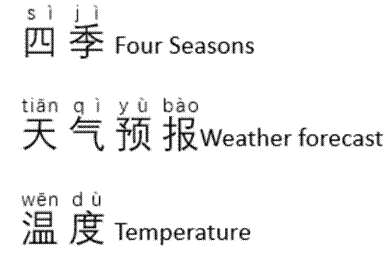
This term, Year Four students will focus on describing the weather in Mandarin. They will explore the similarities and differences between Mandarin and English sentence structures, deepening their understanding of language patterns. By the end of the term, students will create a seasonal wheel poster that brings together elements from the Western four-season calendar, Australian Indigenous seasonal calendars, and Chinese cultural traditions.
Curriculum Links:
- Locate and respond to key information about familiar content obtained from spoken, written, viewed and multimodal texts. (VC2LC4C03)
- Recognise and use Hanzi and Pinyin as well as modelled language, formulaic phrases, simple grammatical structures and language conventions (VC2LC4U02)
Key Vocabulary:
Year 5
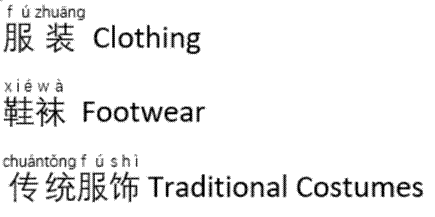
Students in Year Five will develop the ability to use complex sentence structures in Chinese to introduce their daily outfit. To deepen their cultural knowledge and understanding, students will explore traditional Chinese costumes and national ethnic costumes along with information about history and culture. They will have the opportunity to present their inquiry study in front of the whole class.
Curriculum Links:
- Participate in activities that involve discussion with others, using language that expresses information, preferences and ideas VC2LC6C02
- Initiate and sustain modelled exchanges in familiar contexts related to their personal worlds and school environment VC2LC6C01
Key Vocabulary:
Year 6
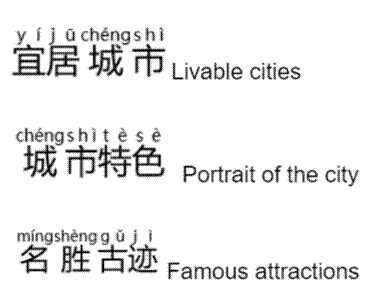
Students in Year 6 will learn about major cities in China and around the world. They will focus on using essential words and sentences to express their thinking about different cities in Chinese. The inquiry-based learning will help learners to experience and engage with the cities through a global lens. Students will transfer their learning and deepen their thinking on the indispensable factors of liveability as well as what makes liveability for people high quality. As a celebration of their learning journey, they will prepare a group presentation to share their learning.
Curriculum Links:
- Create and present spoken and written texts, using a variety of vocabulary, modelled sentences and conversations appropriate to text type, using familiar Hanzi with Pinyin as support VC2LC6C05
- Locate information and ideas in a range of spoken, written, viewed and multimodal texts, and respond in different ways to suit purpose VC2LC6C03
Key Vocabulary:
How can you support your child’s Language learning at home?
- Sing or listen to Chinese songs to spark interest in the language
- Practise writing Chinese characters via App “Writer”
- Borrow bilingual Chinese storybooks from the school library or local library
- Watch educational Chinese shows or movies, listen to audiobooks, or play songs together. Discuss the content afterward to reinforce new vocabulary.
- Surrounding your child with language to encourage learning. Label household items (e.g., door, table, bookshelf) and create opportunities for them to use new words in context. Set aside a dedicated space or time for language-related activities.