Dr Rangan Chatterjee on screen time.
It’s the most urgent public health issue’: Dr Rangan Chatterjee on screen time, mental health – and banning social media until 18
‘We are in the middle of an experiment that no one consciously signed up to’
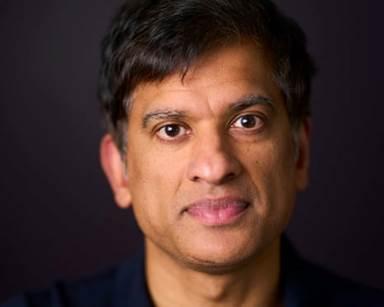
… Dr Rangan Chatterjee at home in Wilmslow, Cheshire. Photograph: Christopher Thomond/The Guardian
A16-year-old boy and his mum went to see their GP, Dr Rangan Chatterjee, on a busy Monday afternoon. That weekend, the boy had been at A&E after an attempt at self-harm, and in his notes the hospital doctor had recommended the teenager be prescribed antidepressants. “I thought: ‘Wait a minute, I can’t just start a 16-year-old on antidepressants,’” says Chatterjee. He wanted to understand what was going on in the boy’s life.
They talked for a while, and Chatterjee asked him about his screen use, which turned out to be high. “I said: ‘I think your screen use, particularly in the evenings, might be impacting your mental wellbeing.’” Chatterjee helped the boy and his mother set up a routine where digital devices and social media went off an hour before bed, gradually extending the screen-free period over six weeks. After two months, he says the boy stopped needing to see him. A few months after that, his mother wrote Chatterjee a note to say her son had been transformed – he was engaging with his friends and trying new activities. He was, she said, like a different boy from the one who had ended up in hospital.
Chatterjee believes that “the widespread adoption of screens into our children’s lives is the most urgent public health issue of our time”. He was never very political, he says. He is the affable host of a successful health podcast, Feel Better, Live More, and his books strike an optimistic, inspiring tone – but on this issue he is passionate, his frustration obvious. “I think successive governments have been very weak here, and they are failing a whole generation of children. I think they’ve already failed a generation of children.”
‘I’m not judging parents.’ Chatterjee saw that young patient more than 10 years ago, and since then children’s screen use has soared. To clinicians, he says, the harm “has been obvious for over a decade”. This has led to a swell of action, from Australia’s social media ban for under-16s to Spain’s just-announced plans for one. In the UK, grassroots parents’ organisations such as Smartphone Free Childhood and SafeScreens want the UK to follow suit. Chatterjee, who is involved with campaign organisation Close Screens Open Minds over the proliferation of “ed tech” in schools, believes the legal age for using social media should be 18, as with gambling and access to pornography. “As a society, we have safeguards in place to protect children,” Chatterjee says. “At the moment, we are in the middle of a widespread experiment that no one consciously signed up to.”
Tech bosses, he says, have had too much influence over deciding “what’s best for our children. If we’re expecting Elon Musk or Mark Zuckerberg to regulate technology better for our children’s wellbeing, we’re being, frankly, delusional. Their whole business model wants more people on their devices for longer.” Adults struggle with screen use, he points out. “Our children have got no chance. Their prefrontal cortex, the part of the brain where we exercise rational decision-making, is not fully developed till the age of 25.”
Every additional hour of screen time increases the risk of myopia by 21% in children
He rattles off the harms, which include the effect on children’s mental health and anxiety. “We know it’s affecting their sleep.” It is affecting posture, and causes neck and shoulder pain. For younger children, it causes language delay. “There’s research coming out now saying it’s affecting their eyesight. Every additional hour of screen time increases the risk of myopia by 21% and in children already diagnosed with myopia, an extra hour increases risk of progression by 54%. I think we’re raising a generation of children who have low self-worth, who don’t know how to conduct conversations. The content children have been exposed to is really alarming – 10% of nine-year-olds have seen pornography, and 27% of 11-year-olds.”
We’re speaking over video call, Chatterjee at his home studio where he makes his podcast. He barely stops for breath. He is warm and likable, and seems to have the supreme self-assurance that all successful podcasters develop. But he stresses that he doesn’t blame parents (or teachers, who are dealing with the encroachment of “ed tech”, the increased use of devices and software, in schools). Screen use is higher in children in lower socioeconomic groups. “People are living stressed-out lives. There are a lot of families who are struggling with the cost of living.” Screens are, he says, “an easy babysitter. And I say it with compassion, I get that.”
Screen-based homework ‘should be abolished immediately’, says Chatterjee.
Chatterjee’s own children are 13 and 15. They have smartphones, but with almost all apps, including the internet browser, disabled. They are not allowed to access social media. “I’m not judging other parents, because I do understand the pressures. For me, because I’ve seen so many suicidal, depressed, anxious teenagers – and I could directly see a correlation between that and their screen and social media use – I thought I cannot allow my children on to these platforms.”
He and his wife have always had open conversations with their children and he says: “So far, it’s been fine. But I think they may be the only two kids in their school not on social media. It’s very hard for most parents to do that.” Chatterjee has already complained to the headteacher about screen-based homework, which “should be abolished immediately”. Bright light from screens in the evening, he says, is wreaking havoc on teenagers’ sleep. He is always turning down the screen brightness on his kids’ laptops when they’re doing homework, and screens have to go off at least an hour before bed.
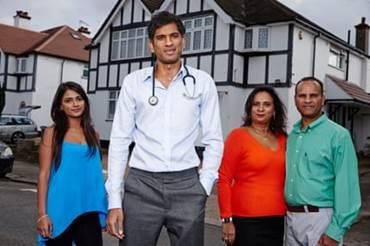
Chatterjee stopped practising as a GP nearly two years ago. He misses it, he says, but he realised he could reach many more people with his broadcasting work than he could with 10-minute appointments at his surgery (he is also visiting professor of health education and communication at the University of Chester). His broadcasting career took off after he made the 2015 BBC series Doctor in the House, and now his podcast has had more than 350m listens, with 1.3 million subscribers to his YouTube channel. He is a big advocate of lifestyle change, which gives Chatterjee something of a holistic air.
Chatterjee says he decided to pause practising medicine and put his attention instead to raising awareness because: “We’re in a health landscape now where 80 to 90% of what doctors see is driven by our collective modern lifestyles … Whether we’re talking about obesity, type 2 diabetes, anxiety, depression, insomnia, these things are downstream from the way we live our lives.”
For most of his life, Chatterjee says he absorbed his dad’s mentality: “You don’t complain, you just get on with things.” In late 2018, however, at a meeting at his publishing house, someone (not an employee of the publisher) said that a major retailer had not stocked his first book because “they already had a book on their shelves by an Indian doctor. I remember hearing it. I didn’t say anything. I felt uncomfortable, I think a few people felt uncomfortable, but we just continued our meeting.” He went over it on the train home. The term “Indian doctor” is not accurate. “I was born and brought up in the UK. There was a lot of guilt and shame that came up for me when I thought: I didn’t say anything.” (He did later bring it up with his publisher.)

‘The No 1 factor for long-term health, happiness and longevity is the quality of your relationships.’ “I don’t want this to come across as blaming my parents. Back then, there was quite a lot of discrimination and the way their child doesn’t have to face the struggles they had is to be a straight-A student. I get that, but I think I took on, as a child, the belief that I was only really loved if I got top grades. On one hand, that’s great, it drives you to work hard, you go into a prestigious profession. But I realised that for all my so-called success, I wasn’t actually that happy or content.”
He started to separate his sense of self-worth from his achievements. “I realised that where my happiness comes from is the unmeasurables in life.” This was in looking after his father, and now his mother, who lives five minutes away and whom he sees most days.
“I’m happily married for 18 years. I’ve got children who I spend a lot of quality time with.” He’s not saying that to sound superior, he says. “I’m saying I’ve understood that actually, I’m prepared to have less ‘societal success’ if necessary, in order to make sure my relationships with my mum, my wife, my children, my friends, are front and centre. We know from the research that the No 1 factor for long-term health, happiness and longevity is the quality of your relationships.”
He brings the conversation back to what screen use is doing to all of us, but especially to children. “One thing I worry about is that we start to lose touch with our emotions and how we feel. We’re distracted constantly. And everything good in our lives comes from our ability to be present – our relationships, how we feel about ourselves. We have to be able to be present. And these devices are training distraction.”