
Principal's Message
TERM 1 SEMESTER 1

Principal's Message
TERM 1 SEMESTER 1
OBonjour à tous.
Welcome everyone. It was so nice to see all the smiling faces yesterday. We welcomed 21 new foundation students who were all very brave and excited to start their educational journey and another 4 new students who started in various other grades. We look forward to working towards the best possible learning outcomes for every one of our students.
For our foundation students there will be a rest day each Wednesday for the month of February. Each family will have received a testing time for one of these Wednesdays. Please contact Emily on foundation@stlleongatha.catholic.edu.au for more information.
Please familiarise yourself with our school procedures by reading the 'School Information' and 'School Contacts' pages in this newsletter.
BUS ZONES ON OGILVY STREET
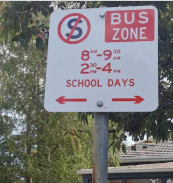
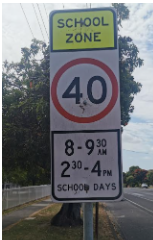
Please be aware of the Bus zones and times on Ogilvy St. The bus zone includes our drive ways. This means that you cannot drop your child/ren off OR pick up your children up on Ogilvy Street, including our drive ways, at any time during bus zone times.
PAM ACCESS: Some families are still having trouble getting back onto PAM after last terms disruption to functionality. If so, please click the link below for guidance information. Alternatively, we can send you a reset password.
SIMON EVERYWHERE: Simon Everywhere remains OFFLINE. PLEASE DELETE THIS APP UNTIL FURTHER NOTICE.
CDFpay: For new families, when purchasing via CDFpay please use your child's class. Foundation students' class will be under Foundation. Existing families will need to update their child's class for the 2026 year as well before ordering on CDFpay.
P & F Meeting: Our P & F are holding their first meeting of the year on Monday 9th February at the RSL in Leongatha, 6-8pm. Everyone is most welcome to join us. This is a great opportunity to meet other parents and share your ideas. Please let the school know if you will be attending (for numbers).
______________________________________
This is an interesting and important 5 minute read posted by CTL+SIIFT.
If you’ve ever posted a photo of your child with a smiley face or heart emoji over their face, you’re not alone. It’s become a kind of digital parenting ritual. A signal that says, I love them, but I’m protecting them too.
That instinct, to protect while still sharing, is deeply human. But here’s what most of us haven’t been told: the tools we’ve been using to protect our kids online haven’t kept up with the technology, which is now learning from them.
It’s time to gently, but honestly, update what we understand about online safety because the internet doesn’t just watch anymore. It learns.
What’s Changed
Artificial intelligence no longer needs a full face to identify a child. It can spot them from the shape of an ear, the tilt of a head, the badge on a school uniform, the pattern of candles on a birthday cake, or the garden behind your house. It pieces it all together, not because it’s malicious, but because it’s designed to learn. Once it has learned, it doesn't forget.
Even one image, posted at the right time and place, can become part of a data set. That data can be used to create synthetic images of children. Sometimes for advertising. Sometimes for uses that are deeply disturbing.
While we were focusing on covering faces with emojis, the systems were watching everything else. The backgrounds, captions, hashtags, geotagged location and more. They weren’t just learning from our photos. They were learning from us how much engagement a post received, what we posted more of, what got attention and what didn’t.
We weren’t just encouraged to share, we were trained to, and that’s what no one told us.
The platforms did not wait for us to become influencers. They turned everyday parenting into a feedback loop. Each time a photo of a child received more likes than a sunset, more comments than an adult achievement, the system took note. Each time a birthday post travelled further than a work milestone, the algorithm quietly learned what mattered most to us and then fed it back, amplified.
Over time, visibility became confused with love. Not posting started to feel like hiding, or worse, like not being proud. That was not a coincidence; it is the basis of a social media platform's business model, known as the attention economy.
The dopamine wasn’t accidental either. The surge of connection after sharing a milestone, the reassurance of being seen in our parenting, the relief of belonging to a community that seemed to value our children as much as we did. These responses were measured, refined, and reinforced. The system algorithms rewarded emotional exposure, not because it cared, but because it performed.
Slowly, without any announcement or consent, parenting became public-facing. Not because parents were careless, but because the architecture of these platforms was designed to exploit the most vulnerable, loving instincts we have.
This is why emojis became a ritual. They offered the illusion of control in a system that had already moved past it. They allowed us to believe we were protecting our children while still feeding the machine.
Understanding this matters. Once you see how the training worked, the pressure to participate begins to ease. You realise you were never failing to protect your child. You were operating inside a system that quietly taught you that sharing was the price of belonging, and now that we know better, we are allowed to choose differently.
What We Can Do Now
This isn’t about blame. It’s about awareness. Once we know better, we do better. So here are some grounded, gentle steps to consider as you navigate this space, especially as the school year begins and those first-day photos flood our feeds:
1. Take a pause before you post
Ask: Who is this really for? If it’s for grandparents or loved ones, consider a private message, a shared album, or a printed photo you can stick on the fridge. Sharing doesn’t always need to be public.
2. Be mindful of context
It’s not just the face. It’s the school logo, the front of your house, the birthday banner, the uniform, the personalised water bottle in the corner. These are breadcrumbs. AI doesn’t need the whole puzzle; it only needs a few pieces.
3. Think beyond the emoji
Covering a face can give the illusion of safety, but it doesn’t hide identity from machines. If you’re going to post, consider photos that show hands, backs, or silhouettes without revealing identifying context.
4. Delay before sharing
Let the moment happen offline first. Give yourself a day or two. If it still feels important to post later, you can do it with more clarity and intention.
5. Build digital consent early
Even with young children, begin asking, Do you want me to post this photo? Involving them in the decision, even when they’re small, models respect and give them a sense of ownership over their own image.
6. Don’t let the algorithm shape your parenting
If it starts to feel like not posting means you’re not proud — pause. That’s not your instinct speaking. That’s the system doing what it was designed to do…reward content, not parenting.
The Bigger Picture
We have been told that sharing our children online is a way to stay connected to family and friends. That it was harmless. That a face sticker was enough to keep them safe. But none of that was true, and not because we failed, but because no one warned us what we were feeding.
Our kids are growing up in a world where their likeness is data. Machines are trained on their images, their homes, their routines, long before they understand what any of it means.
Tech platforms are not designed to protect them, but we can step back into our power.
We can choose fewer public posts. Presence over performance. We can choose not to give their story away before they’ve had a chance to live it.
Please remember that pride doesn’t need an audience; it just needs to be real.
One day, our children will ask us not just what we shared — but why.
Let’s make sure we can say – “Because I didn’t know at first. But when I did, I chose you over the feed"
That answer will be more than enough.
____________________________________
DIARY DATES 2026
| Date | Event |
|---|---|
| TERM 1 | |
| JANUARY | |
| FEBRUARY | |
| Wed 4 | Foundation Rest Day |
| Thurs 5 | 3-6 Swimming Carnival |
| Mon 9 | 3-6 Swimming Program Commences P & F Meeting - All welcome. RSL Leongatha 6-8pm |
| Tues 10 | 3-6 Swimming |
| Wed 11 | Foundation Rest Day |
| Thurs 12 | 3-6 Swimming |
| Fri 13 | 3-6 Swimming |
| Mon 16 | 3-6 Swimming |
| Tues 17 | 3-6 Swimming |
| Wed 18 | Ash Wednesday Mass |
| Foundation Rest Day | |
| Thurs 19 | 3-6 Swimming |
| Fri 20 | District Swimming |
| Mon 23 | 3-6 Swimming - Last lesson |
| Wed 25 | Foundation Rest Day |
| Fri 27 | Division Swimming |
| MARCH | |
| Mon 9 | Public Holiday |
| Tues 10 | SCHOOL CLOSURE |
| Wed 11-13 | 5/6 Licola Camp |
| Mon 16 | 5/6 Staff and Student rest day |
| Fri 20 | 3-6 House Athletics |
| APRIL | |
| Thurs 2 | End of Term 2.30 finish |
| Fri 3 | Good Friday Public Holiday |
| Mon 20 | Term 2 Commences |
______________________________________
Merci,
Have a lovely weekend.
Liz
______________________________________