Hampshire House
Through a Kaleidoscope Lens: Patterns and Symmetry in Nature
This week in our Preschool Grey class the children have been investigating patterns in nature, framed through their inquiry into kaleidoscopes, symmetry, patterns, and colour.
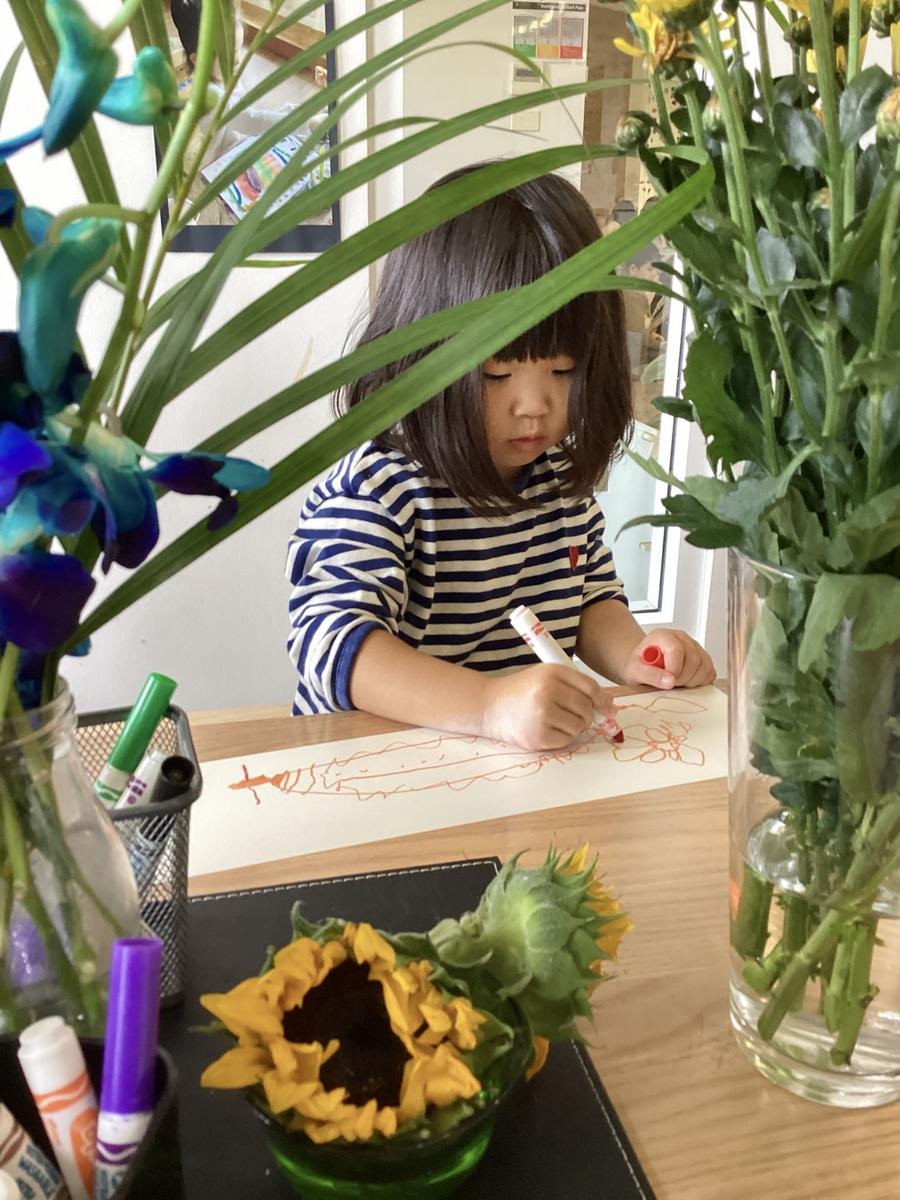
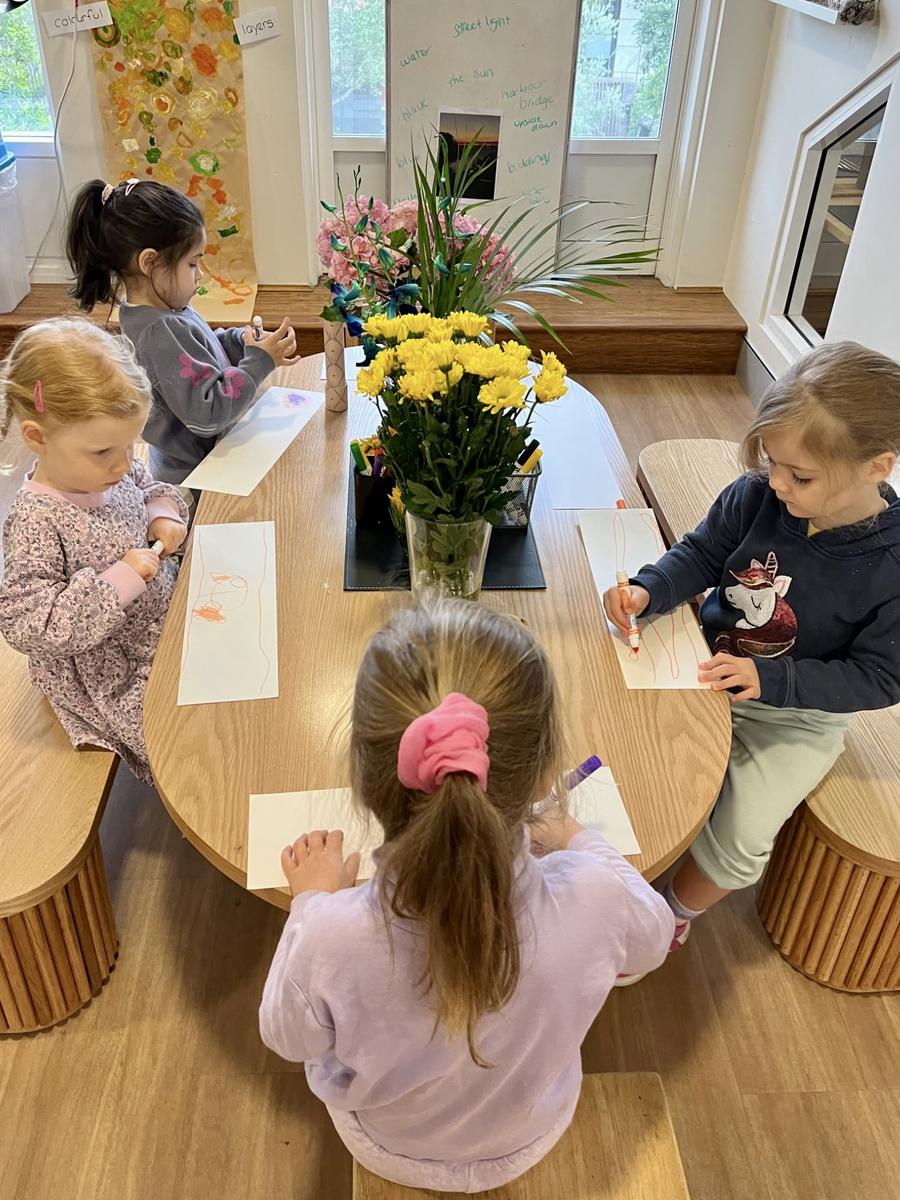
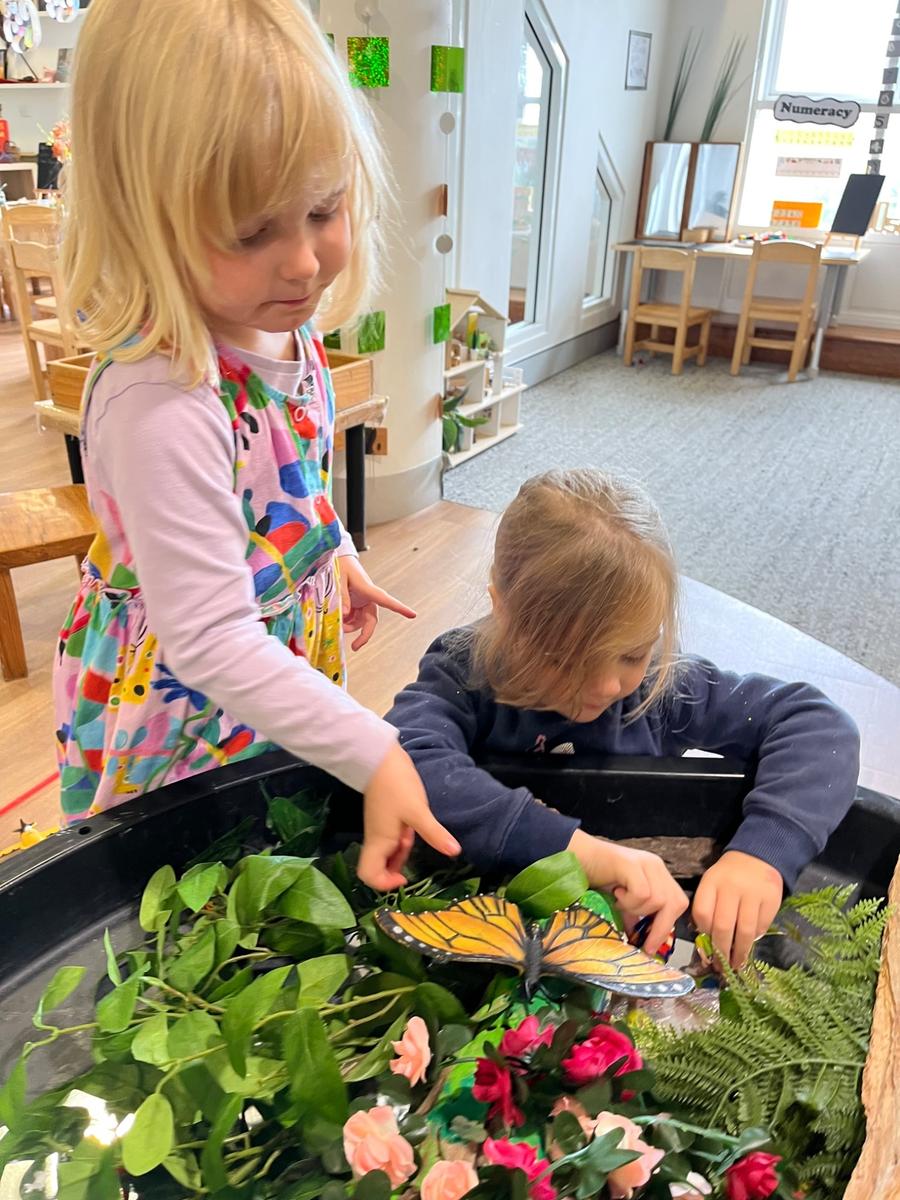
The provocation began with a carefully curated environment. Tables were arranged with fresh flowers of varying shapes, sizes, and colours, alongside mirrors, kaleidoscopes, and digital microscopes. The invitation to explore was intentionally open-ended, encouraging the children to observe, question, and hypothesise. From the outset, the children were drawn to the visual complexity of the flowers. Some began by simply turning them in their hands, noticing repeating shapes and vibrant colour gradients. Others held petals up to mirrors, delighted by the symmetrical reflections seen through kaleidoscopes. These early observations sparked questions: Why do the petals look the same on each side? Are all flowers symmetrical?
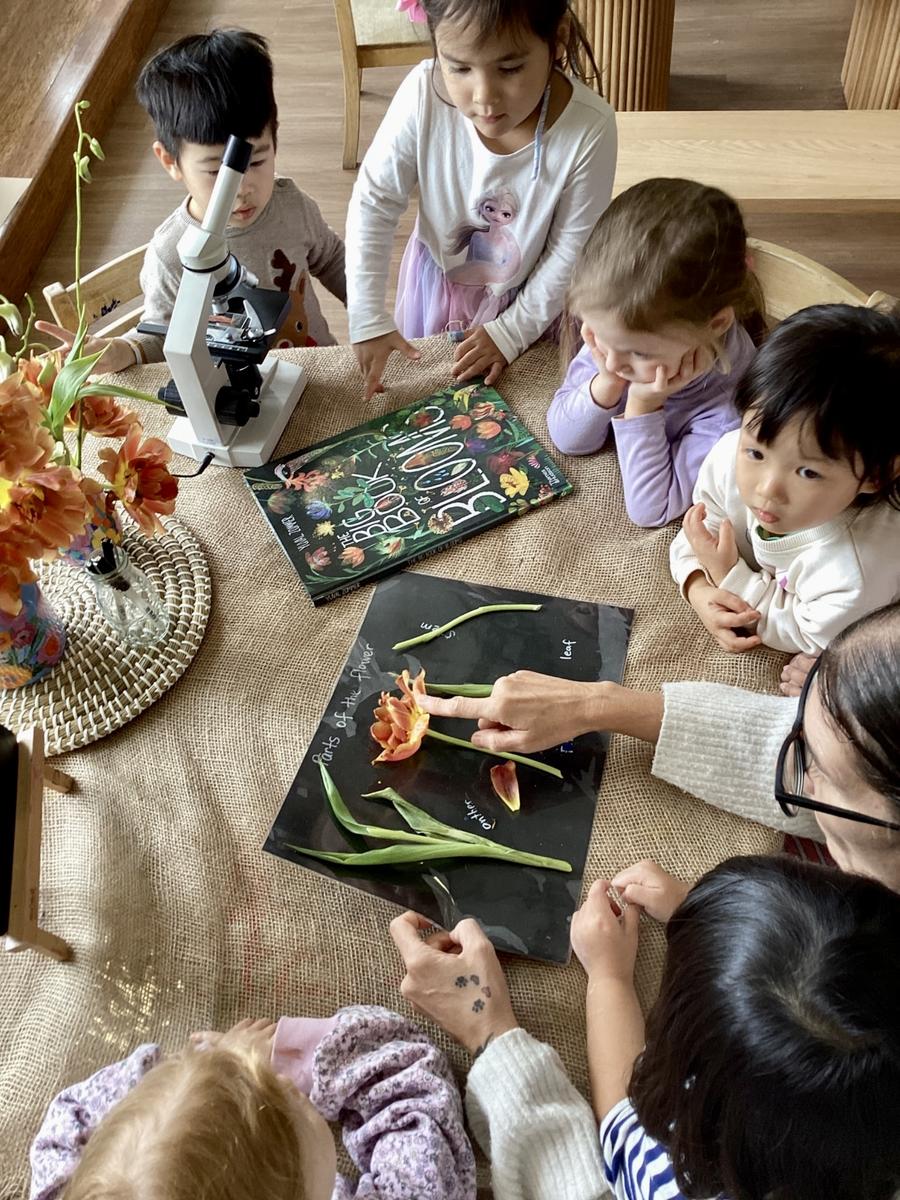
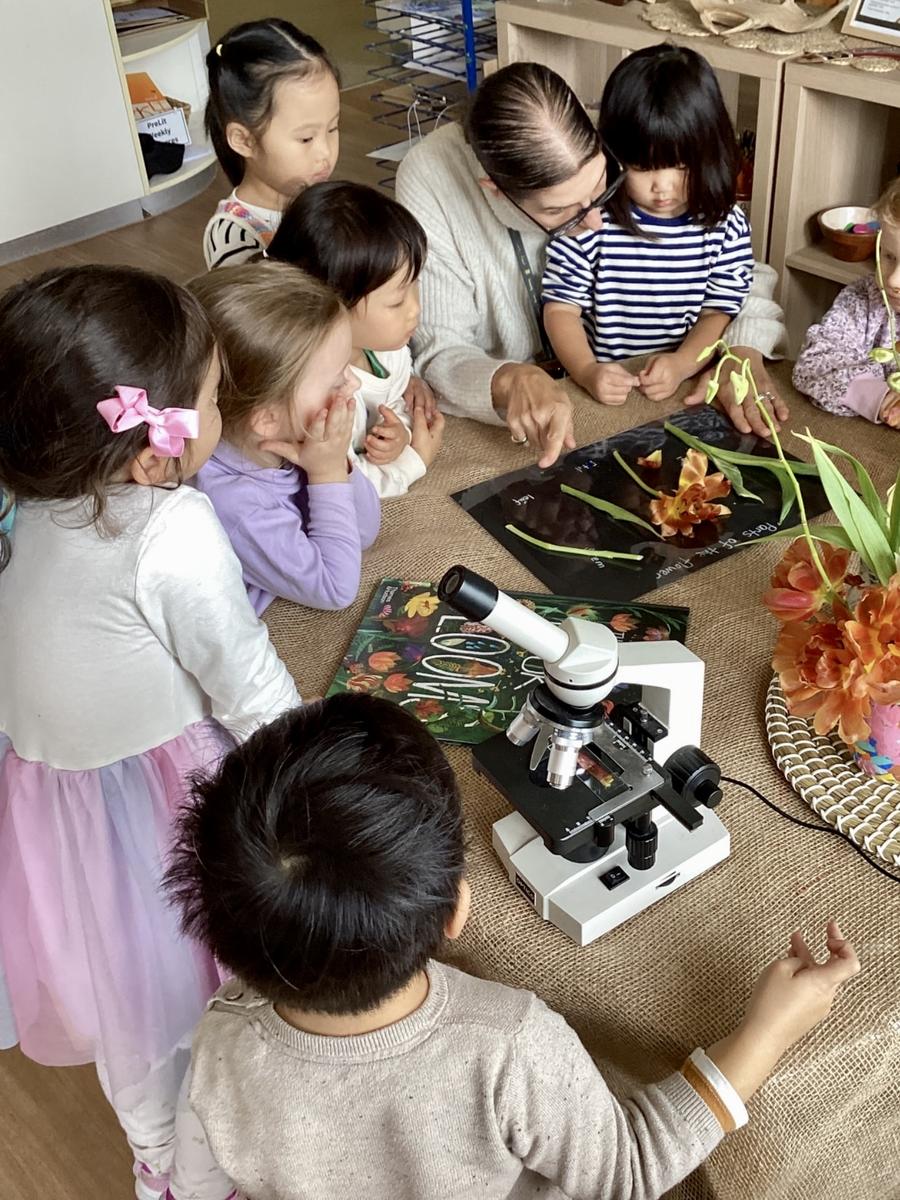
In line with our Reggio Emilia principles, our teacher’s role was to listen, document, and extend thinking rather than direct it. The children’s questions led naturally into deeper investigation using microscopes. Through magnification, previously unseen details came into focus, such as the tiny veins in petals, pollen grains clustered on stamens, and subtle variations in texture and colour. The children began to compare what they saw. Some noticed that while flowers appeared symmetrical at a glance, closer inspection revealed irregularities. This challenged their initial assumptions and encouraged more nuanced thinking.
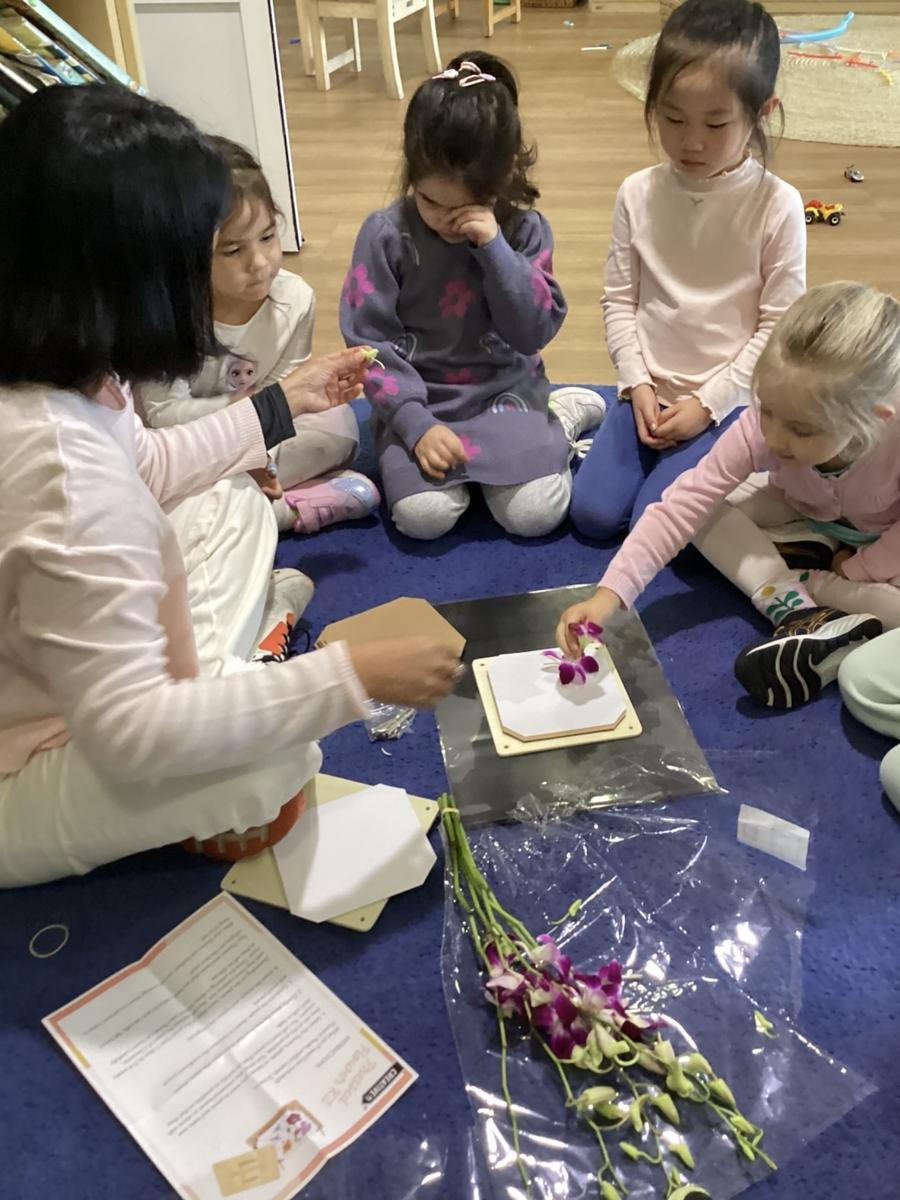
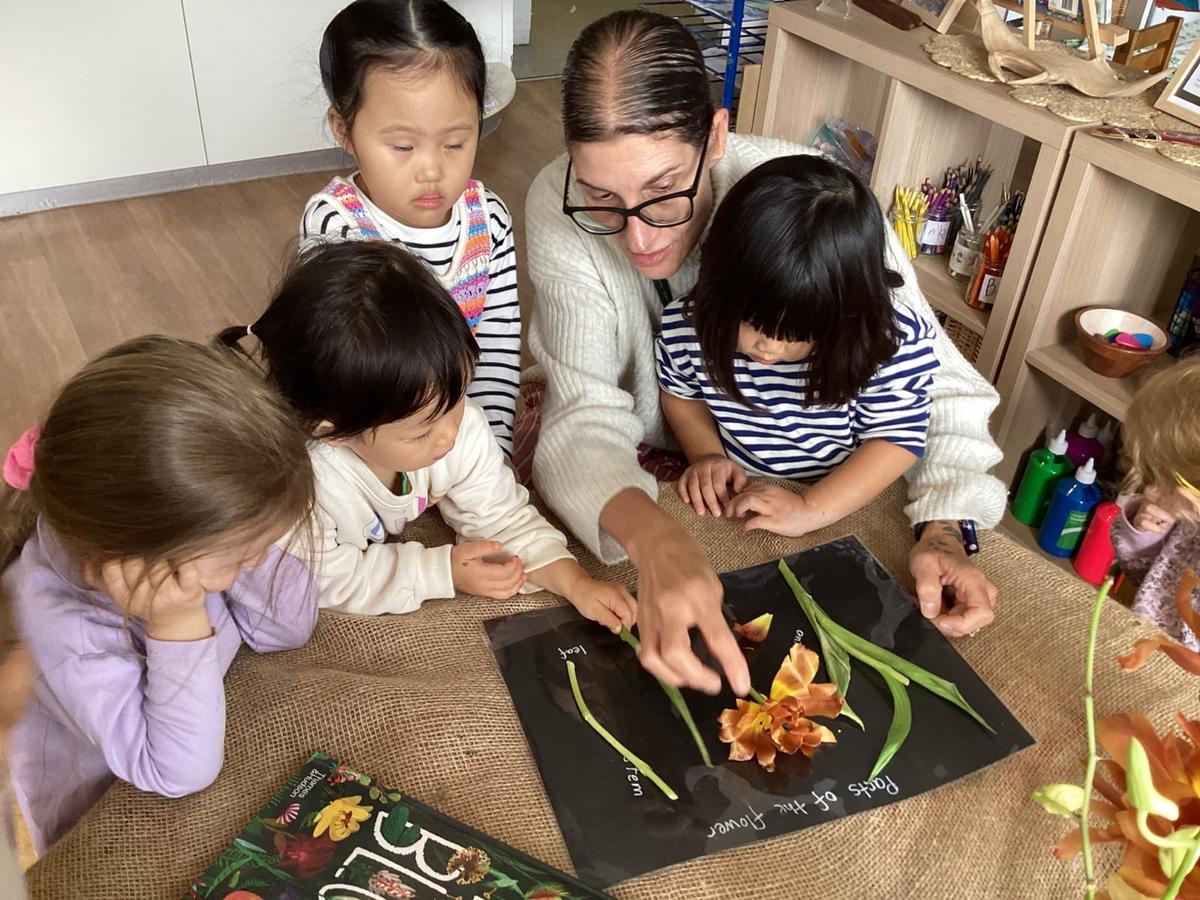
The inquiry evolved further as children began dissecting the flowers. Carefully pulling apart each component, from petals, sepals, stamens, and pistils, they explored both the function and form of each part. This process was not merely scientific but also aesthetic. The children arranged the dissected pieces into patterns, often recreating symmetrical designs or inventing new ones inspired by their observations. Some placed petals in radial patterns, mimicking the natural structure of the flower, while others experimented with asymmetry, questioning whether patterns must always be “perfect” to be meaningful. The children also delighted in pressing the flowers using a flower press, using real materials and tools to move beyond a surface level observation to deeper understandings.
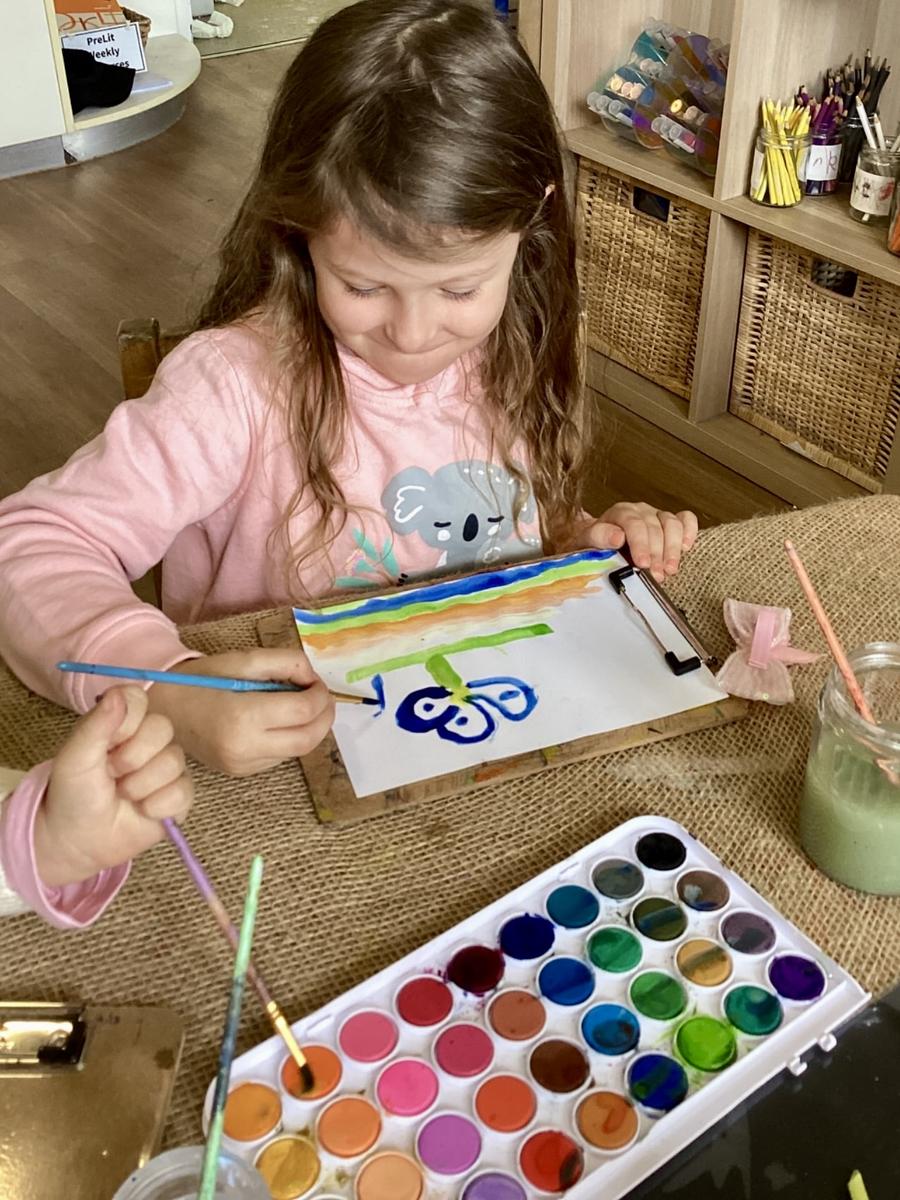
Importantly, the project highlighted how scientific inquiry and artistic exploration are not separate domains but deeply intertwined. As children investigated plant parts, they were also engaging with mathematical ideas such as pattern, repetition, and symmetry. Their work with colour was extended in their paintings where they compared shades and created visual compositions, which further enriched their understanding.
In the spirit of Reggio Emilia, the learning was not about reaching a predetermined outcome but rather it was about the richness of the journey, one shaped by curiosity, collaboration, and the joy of discovery.
Simone Cooke
Director Hampshire House