
Careers Update

Year 10 Mock Job Interviews
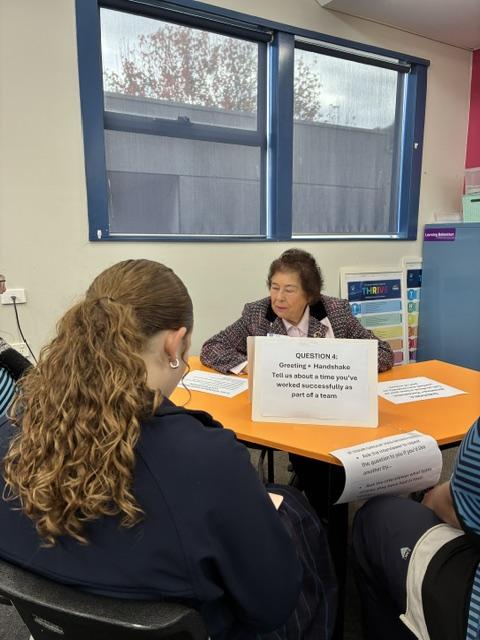
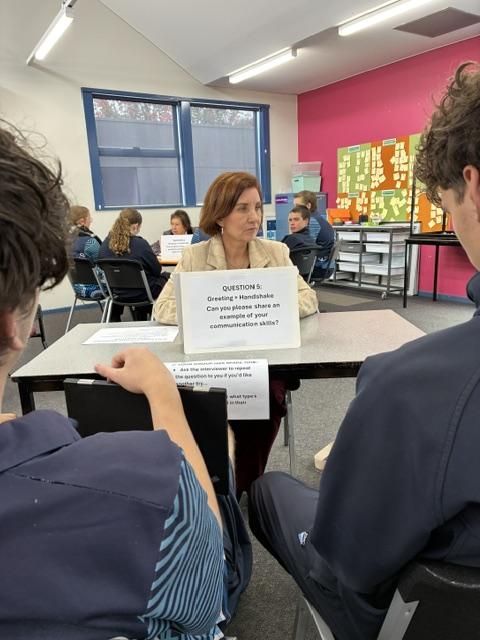
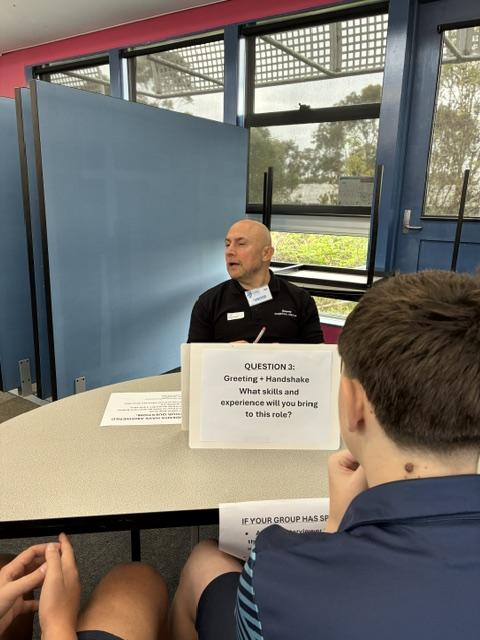
Our Year 10 cohort currently studying Pathways to Success did an excellent job participating in our Mock Job Interviews during May. Mrs Issa arranged community members from a range of organisations locally to attend and "pretend" to interview our students for a casual fast food job.
Students prepared their responses during their Pathways classes, and learnt to use the S.T.A.R. method to construct strong answers to common interview questions.
Admittedly many students were nervous before the interview event, but all are commended for rising to the occasion and impressing our community members.
The students and the interviewers alike reported that the event was really enjoyable and a valuable experience.
Big thanks to the following community groups that were kind enough to contribute volunteer interviewers: Langwarrin Community Centre, Ebenezer Retirement Village, Jodie Belyea MP, Rotary, Frankston Youth Services, Connect Church Frankston, Langwarrin Charcoal Chicken, and Headstart.



Trade and Tech Fit excursion
A group of female and female-identiying students from years 9-11 attended the Trade ad Tech Fit excursion at the Melbourne Convention and Exhibition Centre with Mrs Carroll and Mr Hobbs.
This event is organised and funded by the Victorian Government and features a range of exhibitors and presentations from industries that have been traditionally considered male-dominated in a space that is just for female and female identifying young people.
There was a wide selection of TAFE and private education providers and the major universities, as well as plenty of demonstrations including the wiring of a house frame for lighting and activities for students from every trade run by Chisholm. Exhibitors also included Defence and emergency services, aviation, media and communications plus loads more. The ice-cream machine was a popular feature at the RMIT stand and it was great to see Ruby P and Mia S putting their skills to work on the tools, joining pieces of metal together. Many of our students had a go at testing their strength on the hammer exhibits, including Chelsea C and Katelyn O.
This event runs every year so if you are female or female-identifying and have an interest in a trade or technical car, keep an eye on the student bulletin next year for info. Sign up will be in the Careers office.
WHAT IS THE DIFFERENCE BETWEEN AN ARCHAEOLOGIST AND A PALAEONTOLOGIST?
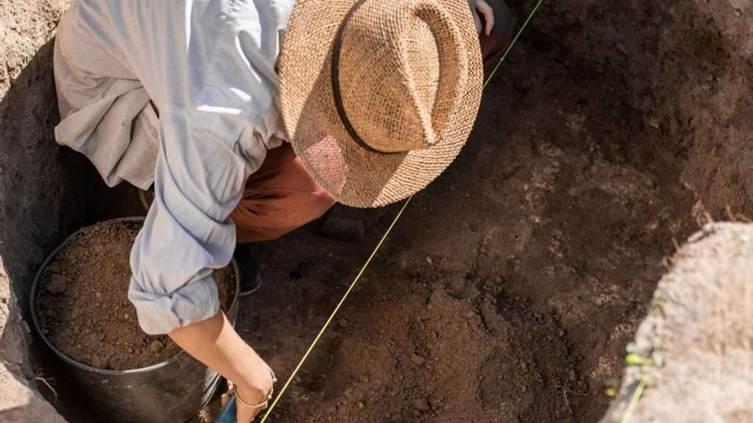
Archaeology and palaeontology both involve uncovering the distant past, but they're investigating entirely different things using methods shaped by what they're looking for. If either field is on your radar, understanding where the two differ is a useful place to start.
Both fields involve excavating ancient material, interpreting what’s been found, and piecing together stories from the distant past. It’s a reasonable source of confusion, especially if you’re someone who’s genuinely drawn to both. But archaeology and palaeontology are asking fundamentally different questions, and understanding where they diverge is worth knowing before you start planning your pathway.
What is an Archaeologist?
Archaeology is the study of human history through physical remains. Archaeologists excavate and analyse objects that people made and left behind, things like tools, pottery, jewellery, burial sites, and structures, to understand how past societies lived, what they valued, and how they changed over time.
The scope of the field is broader than it might first appear. It spans ancient temple complexes, medieval settlements, shipwrecks, and sites that are only a few hundred years old. What connects all of it is the focus on human activity and the traces it leaves behind.
Fieldwork is central to the role, but it’s only part of it. Archaeologists also spend considerable time in laboratories analysing recovered materials, producing detailed reports, and collaborating with historians, anthropologists, and, particularly in Australia, Indigenous communities whose cultural heritage may be directly connected to the sites being studied.
What is a Palaeontologist?
Palaeontology is the study of ancient life through fossils. Palaeontologists examine the preserved remains of organisms, from dinosaurs and marine reptiles to early plant life and microscopic organisms, to understand how life on Earth has evolved across billions of years.
The field sits at the intersection of biology and geology. Understanding how rock formations develop, how fossils form within them, and how to read geological timescales is just as important to the work as understanding the biology of the organisms being studied. A Palaeontologist might spend years focused on a single species, comparing specimens, analysing bone structure, or using isotope testing to understand how and where an animal lived.
Where archaeology centres on human activity, palaeontology is concerned with life itself, lots of which existed long before humans arrived on the scene.
Where the two overlap and where they don’t
Both roles share real common ground. Careful excavation, laboratory analysis, and the ability to draw meaningful conclusions from incomplete evidence are central to both disciplines. Fieldwork, detailed documentation, and long stretches of methodical work are familiar to practitioners in each field.
The distinction comes down to what each discipline is actually trying to understand. Archaeology asks questions about people: how did this community function, what did they trade, what did they believe? Palaeontology asks questions about life: what did this organism look like, how did it behave, and where does it fit in the history of evolution? That difference in focus shapes almost everything else about the two careers.
How they work
Archaeologists typically excavate using trowels, brushes, and systematic grid-based recording. Context is everything in archaeological fieldwork. Where an object was found, how deep it was buried, and what surrounded it can be just as informative as the object itself.
Palaeontologists often work with material embedded in rock, so extraction can involve chisels, rock saws, and chemical treatments alongside finer tools. Laboratory work tends to be more technically intensive, with CT scanning, microscopy, and comparative specimen analysis all playing a regular part in the research process.
Where they work
Archaeologists are employed by universities, museums, and government heritage agencies, but a significant portion of the profession works in private consulting. Heritage protection legislation means that construction and development projects frequently require archaeological assessment before work can proceed, which creates steady demand across both the public and private sectors.
Palaeontologists are more commonly based in universities, natural history museums, and research institutions. Government geological surveys also employ people in the field, particularly for work related to understanding geological formations. Academic and research roles are a common destination, though they’re competitive, and postgraduate study is generally expected for those pursuing that path seriously.
Study pathways
Archaeology can be studied as a standalone Bachelor of Arts or Bachelor of Science at many universities, or as a major within a broader humanities or social science program. Field schools, where students gain supervised excavation experience, are often a built-in component of the degree. Honours and postgraduate study are common next steps for those moving into research or specialised roles.
Palaeontology is less commonly available as a standalone undergraduate degree. Most people enter the field through a Bachelor of Science majoring in geology, biology, or earth sciences, then specialise at honours or postgraduate level. If palaeontology is a clear goal from the outset, it’s worth researching which institutions offer the strongest pathway before committing to an undergraduate program, as the foundation each degree provides can vary considerably.
Choosing between them
If you’re drawn to human stories, cultural heritage, and the idea of recovering how communities lived before written records, archaeology is likely the closer fit. It’s a field that connects history, anthropology, and material culture, and one where the work often has direct relevance to living communities today.
If deep time and evolutionary biology are what excite you, and you’re more interested in the biological history of the planet than the human story within it, palaeontology is probably the better direction. It rewards a strong grounding in the natural sciences and a genuine appetite for detailed, long-term research.
Both are fields built on curiosity and careful thinking. If either has genuinely captured your interest, that’s a worthwhile thing to explore further.
WHERE LEGAL STUDIES CAN TAKE YOU!

Legal studies goes well beyond learning about courts and legislation, giving you the critical thinking, research, and communication skills that are useful in almost any career. Whether you're drawn to law, policy, advocacy, or media, understanding how legal systems work can give you a genuine edge in the professional world.
At school, legal studies introduces you to the way laws are made and applied, how courts and governments operate, and what rights people have. You might examine real cases, debate ethical dilemmas, or analyse how legislation affects different communities. It’s a subject grounded in critical thinking and argument, and for students who enjoy questioning how things work and why, it can open the door to a surprisingly wide range of career pathways.
The skills you build studying legal studies
One of the biggest advantages of studying legal studies is the broad set of transferable skills you develop along the way.
Critical thinking and analysis
Legal studies trains you to look at a situation from multiple angles before forming a view. You learn how to identify assumptions, weigh up competing arguments, and recognise when reasoning is flawed. This kind of structured thinking is useful well beyond the courtroom, in any role where careful judgement matters.
Research and evidence
In legal studies, claims need to be supported. You learn how to find relevant information, evaluate its reliability, and use it to build a coherent argument. These research skills carry across into almost any career where decisions need to be grounded in evidence rather than opinion.
Communication
Legal studies places a strong emphasis on clear and precise communication. Whether you’re writing a persuasive argument, summarising a complex issue, or presenting a case verbally, you develop the ability to express ideas in a structured and convincing way. Employers across many industries value people who can communicate with clarity and confidence.
Ethical reasoning
Law is rarely black and white. Legal studies asks you to consider what’s fair, what’s just, and what the consequences of different decisions might be. Developing this ethical awareness helps you navigate situations where the right answer isn’t immediately obvious.
Legal studies in a changing world
The law doesn’t sit still. As society changes, so do the rules and systems that govern it, and legal studies puts you in a strong position to understand why.
Technology is reshaping legal questions in significant ways. Issues around data privacy, artificial intelligence, cybercrime, and digital rights are creating new challenges that legal systems are still catching up with. Understanding the principles behind how laws are made and applied helps make sense of these emerging debates.
Social movements and shifting community values continue to push for changes in areas like human rights, environmental protection, and workplace fairness. Legal studies gives you the tools to follow these conversations critically and understand what they mean in practice.
Global interconnection also means that legal frameworks increasingly cross borders. Trade agreements, international human rights law, and treaties shape what governments and businesses can and can’t do, making legal literacy more relevant than ever across a range of fields.
Careers directly related to legal studies
Some career pathways build directly on what you study in legal studies. If you’re drawn to the idea of working within legal systems or advocating for others, there are roles where this subject is central to the work.
Law and legal practice
The most well-known pathway from legal studies is into the legal profession itself. Lawyers, Solicitors, and Barristers advise clients, draft legal documents, and represent people in court or in negotiations. Reaching this level requires further study at university, but legal studies at school builds the foundational thinking and communication skills that make that pathway more accessible.
Paralegals and Legal Assistants support qualified lawyers by conducting research, preparing documents, and managing case files. These roles sit closer to the entry level and can be entered through both vocational and university pathways.
Community and advocacy
Legal knowledge is also central to roles focused on supporting people who are navigating difficult situations. Community Legal Workers and Legal Aid Officers help individuals understand their rights and access the legal system, often working with people who face significant barriers to doing so on their own.
Advocacy roles in the non-profit and community sector also draw on legal knowledge. Human rights advocates, tenant support workers, and consumer advocates all use an understanding of legal frameworks to support and empower the people they work with.
Careers where legal studies gives you an edge
Even if you don’t pursue a law-specific role, the skills and knowledge you develop in legal studies can strengthen a wide range of other pathways.
Government, policy, and compliance
Government agencies, regulatory bodies, and large organisations all need people who understand rules, rights, and responsibilities. Policy Officers research and develop legislation and government programs, drawing on skills in analysis, research, and written communication that legal studies builds directly. Compliance Officers work within businesses to ensure they meet legal obligations, a role that has grown significantly as regulation has become more complex across industries like finance, healthcare, and technology. Human resources is another area where legal literacy is genuinely useful, particularly when it comes to employment law, workplace rights, and navigating disputes fairly.
Journalism and media
Journalists who cover politics, courts, and public affairs need to understand the legal landscape they’re reporting on. Legal studies builds exactly the kind of critical reading and analytical thinking that helps a journalist assess whether a claim holds up, understand a court decision, or identify when something that’s been said publicly doesn’t match what the law actually says. Beyond reporting, roles in communications and public relations also benefit from an understanding of what can and can’t be said, and the potential consequences of getting it wrong.
Where could it take you?
Legal studies teaches you to think carefully, argue clearly, and understand the systems that shape people’s lives. Those skills are useful whether you go on to practise law, work in government, advocate for a community, or build a career in media.
Many people who study legal studies at school don’t become lawyers, and that’s completely fine. What they do carry with them is a way of approaching problems, reading situations, and communicating with confidence that proves useful in almost any professional setting.
If you’re motivated by fairness, interested in how larger systems work, and enjoy making a well-reasoned argument, legal studies could be a strong and flexible foundation for your future.