
Mental Health and Wellbeing

Happy end of Term 2. I hope all our students take a proud moment to reflect on their social, emotional and academic successes of this term.
What is Student Voice?
Student voice is the meaningful involvement of students in decisions about their learning, wellbeing, school environment, and experiences. It provides students with opportunities to share their ideas, opinions, perspectives, and feedback, and ensures that their contributions are listened to, valued, and acted upon where appropriate.
Why is Student Voice Imporatnt?
- Empowers students to take ownership of their learning.
- Develops confidence, self-esteem, and leadership skills.
- Creates a sense of belonging and connection to the school community.
- Helps teachers better understand students' needs, interests, and perspectives.
- Promotes inclusion by ensuring all students have opportunities to be heard.
- Supports student wellbeing by helping students feel valued and respected.
- Encourages critical thinking, problem-solving, and decision-making skills.
- Contributes to positive school culture and continuous school improvement.
At Doncaster Primary School, student voice is an important aspect of our daily practice. We believe that students learn best when they are active participants in their education. Through classroom discussions, feedback opportunities, leadership roles and collaborative learning experiences, we encourage all students to share their ideas and help shape our school community.
At DPS Student Voice Looks Like:
- Students setting personal learning goals.
- Students providing feedback on lessons and learning experiences.
- Classroom discussions where students share ideas and opinions.
- Students helping to establish classroom expectations and routines.
- Student leadership roles and responsibilities.
- Surveys that gather student opinions and experiences.
- Students reflecting on their learning and identifying next steps.
- Student-led conferences and presentations.
- Choice in learning tasks, activities, or assessment methods.
- Peer feedback and collaborative learning opportunities.
- Students leading assemblies, events, or special projects.
- Teachers adapting learning experiences based on student feedback.
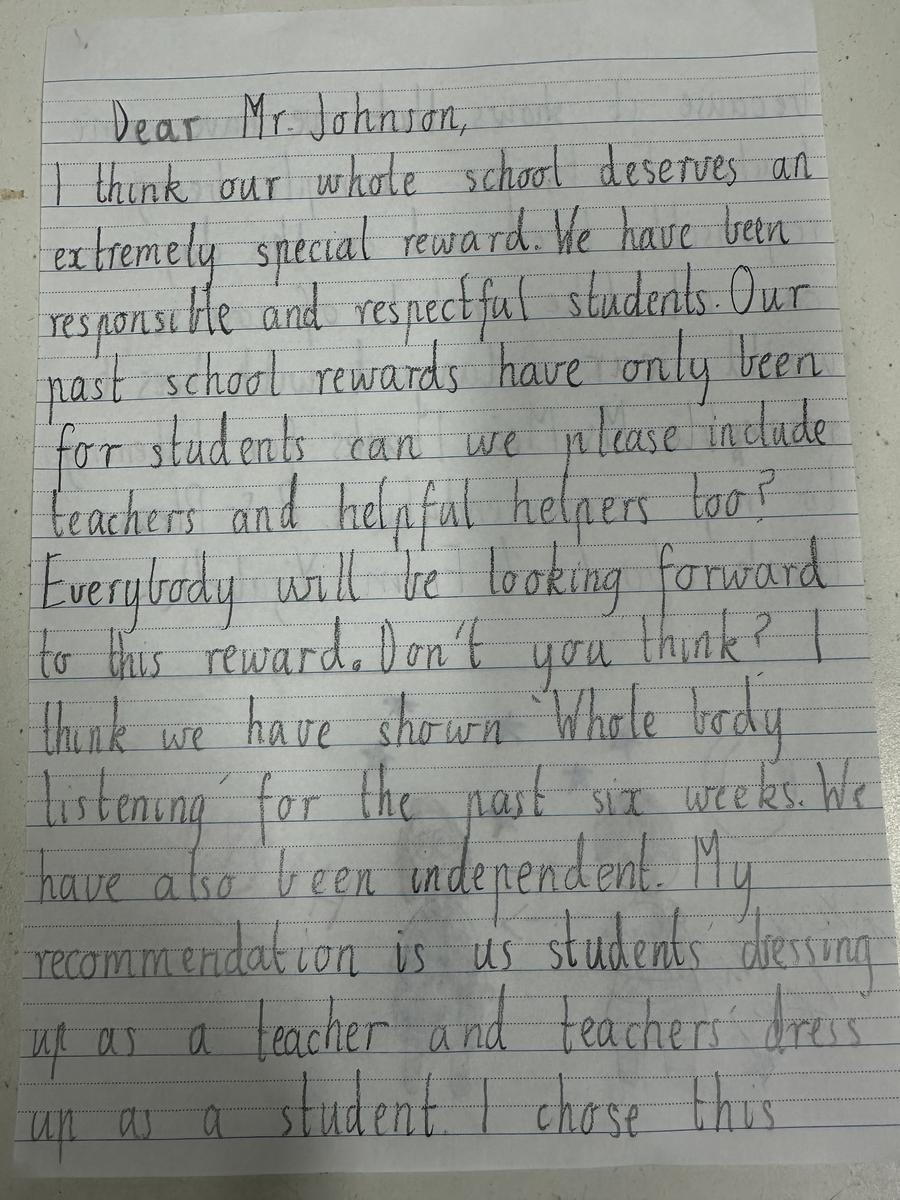
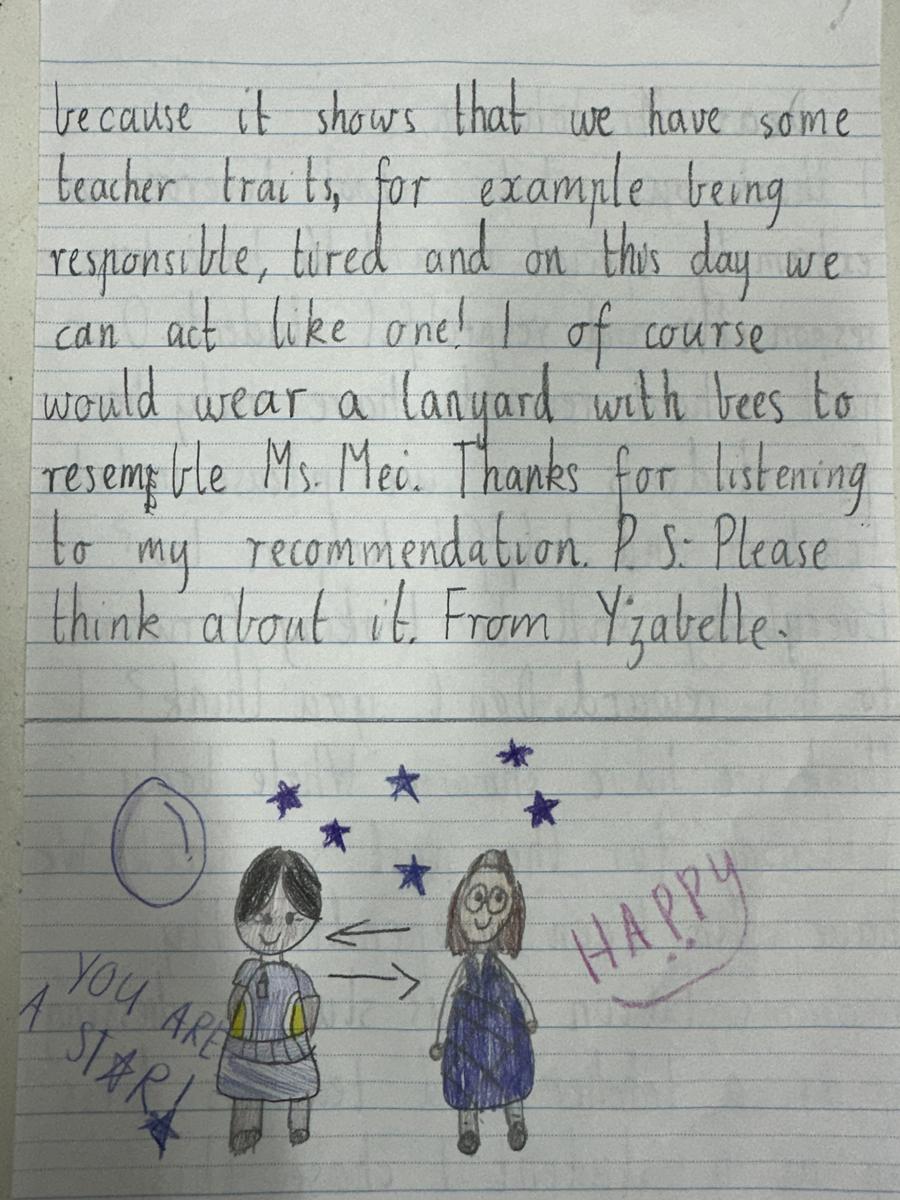
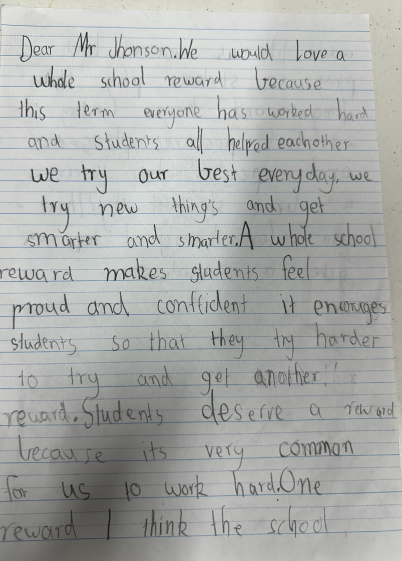
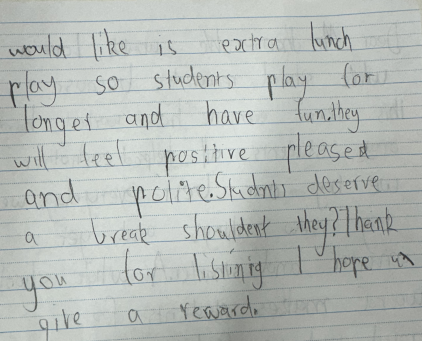
An example of Student Voice- Recently, our Grade 2 students wrote a letter expressing their ideas for celebrations for School Wide Positve Behaviour celebrations. You will have to let me know which ideas you think would be a good fit for our school.
Attitudes to School Survey
In Week 8, our Grade 4–6 students participated in the Attitudes to School Survey. This anonymous survey provides valuable insights into the practices that are working well within our school and helps us identify areas for improvement. The survey allows us to use student voice to inform future planning and goal setting.
The survey explores a range of areas, including:
- Sense of connectedness to school
- Student voice and agency
- Teacher-student relationships
- Peer relationships
- Classroom behaviour and learning environment
- Effective teaching practices
- Learning confidence and self-belief
- Motivation and engagement in learning
- School safety and wellbeing
- Inclusion and respect for diversity
- Emotional awareness and regulation
- Resilience and coping skills
- Experiences of bullying and student safety
- High expectations for learning
- Stimulating and challenging learning experiences
- Student leadership opportunities
- Attendance and attitudes towards school
Social and emotional wellbeing
The information gathered from the survey helps us celebrate our strengths, identify future areas of focus, and ensure that student perspectives continue to shape the direction of our school.
I hope all of our wondeful community members have a relaxing school holidays.
Mr Johnson
Mental Health and Wellbeing Leader