Unleashing Our "Learning Powers" at St Joseph’s
At St Joseph’s, we aren't just teaching students what to learn; we are teaching them how to learn. You may have heard your children mentioning our Learning Powers—a set of essential dispositions that help our students navigate challenges, stay curious, and take ownership of their educational journey.
These powers are the "muscles" of the mind, and to make them tangible for our students, each one is embodied by a member of our local fauna—animals that share the same characteristics we want to see in our classrooms.
Our Core Learning Powers
Here is the full list of our Learning Powers and how they connect to the unique creatures found in our local environment:
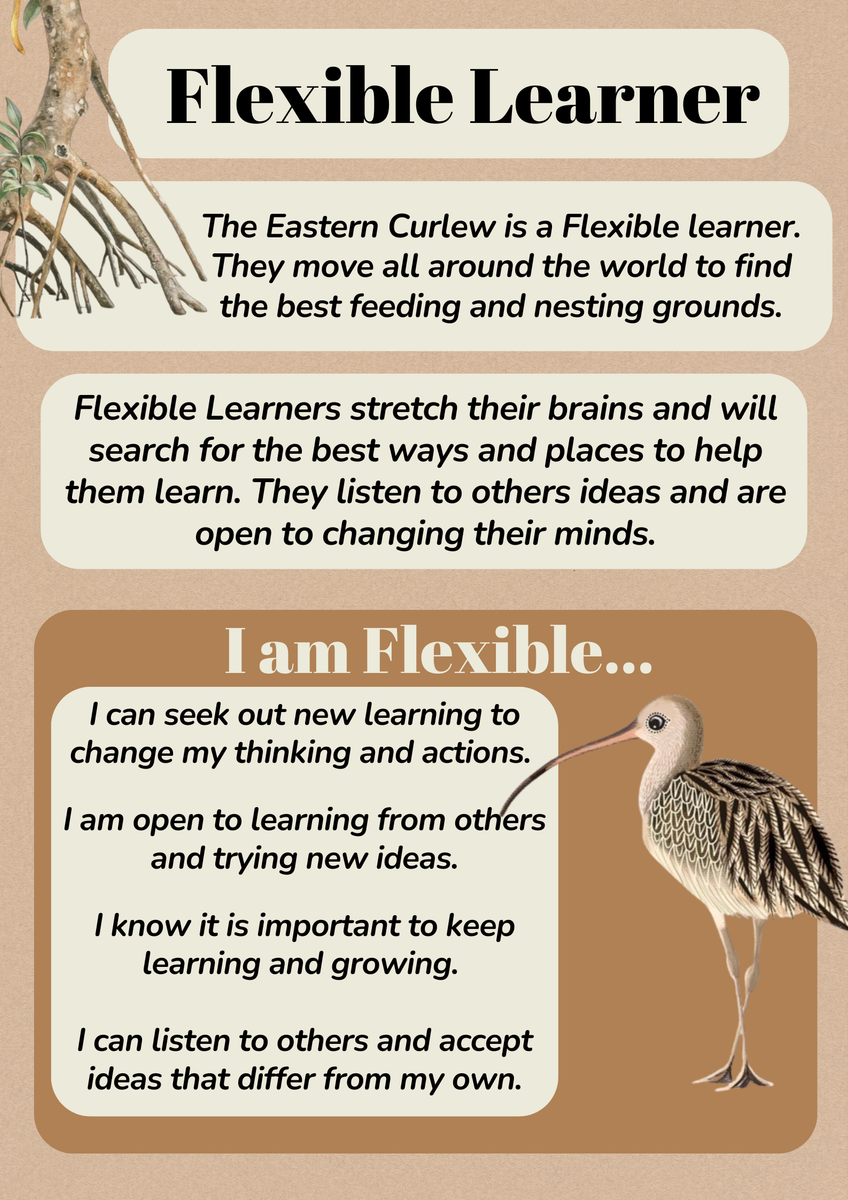
- The Flexible Eastern Curlew: Just as these birds move all over the world to find the best grounds, flexible learners stretch their brains to find the best ways to learn. They are open to changing their minds and listening to new ideas.
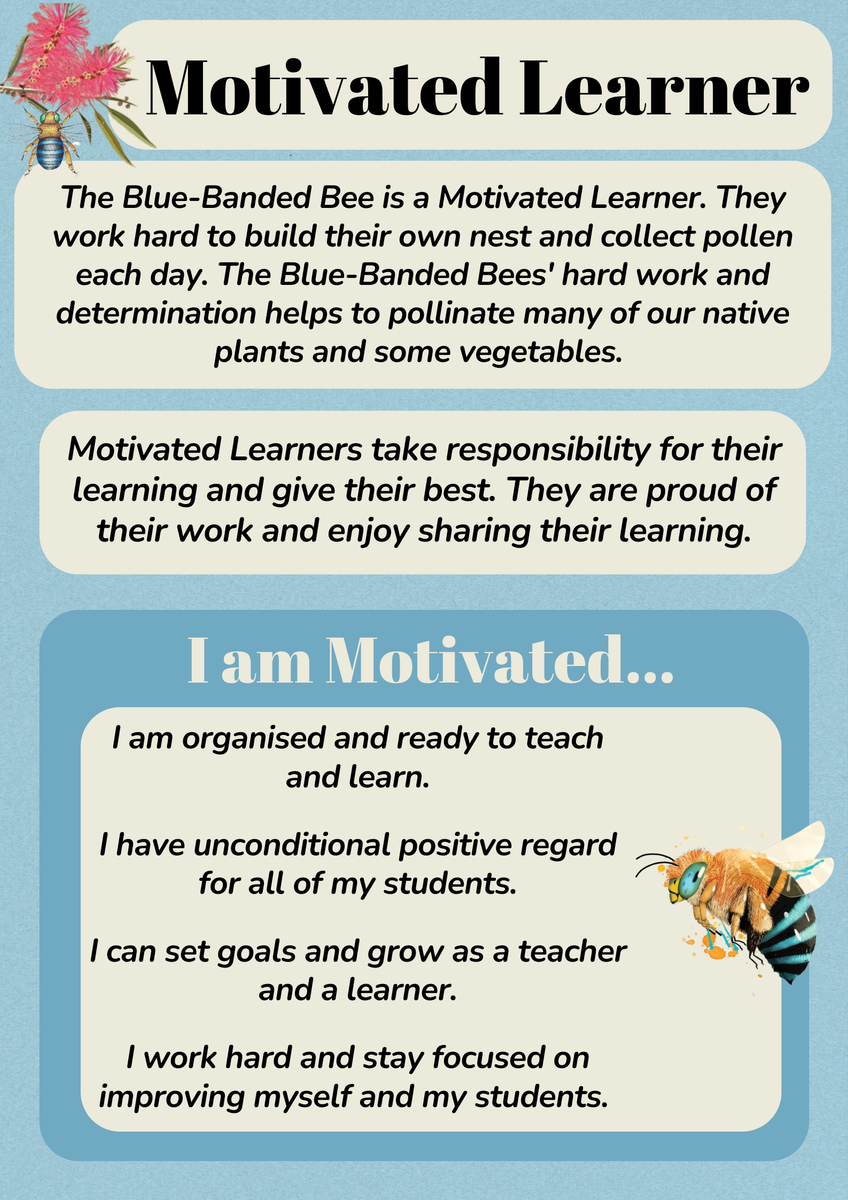
- The Motivated Blue-Banded Bee: This bee works hard every day to build its nest and collect pollen. Motivated learners take responsibility for their work, give their best, and feel proud to share what they have achieved.
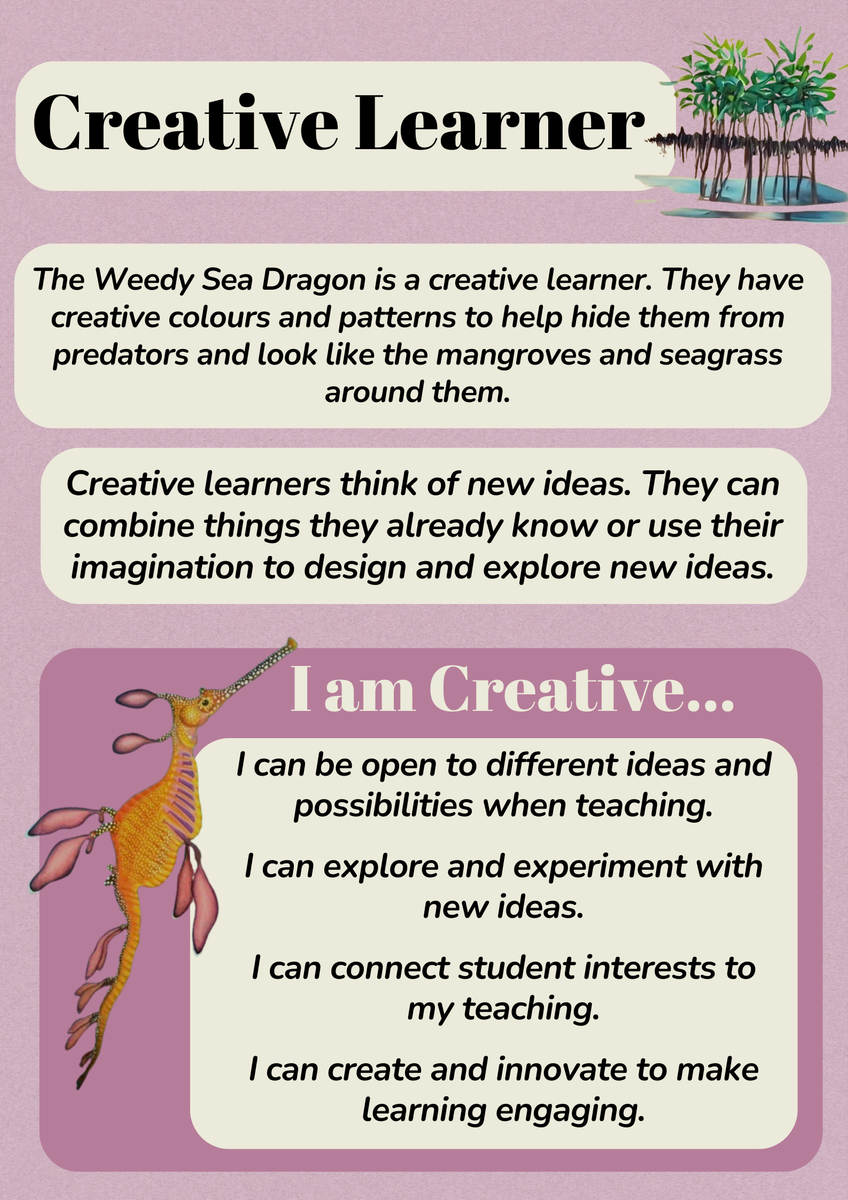
- The Creative Weedy Sea Dragon: With colors and patterns that mimic mangroves and seagrass to hide from predators, this creature is a master of design. Creative learners use their imagination to combine existing knowledge into brand-new ideas.
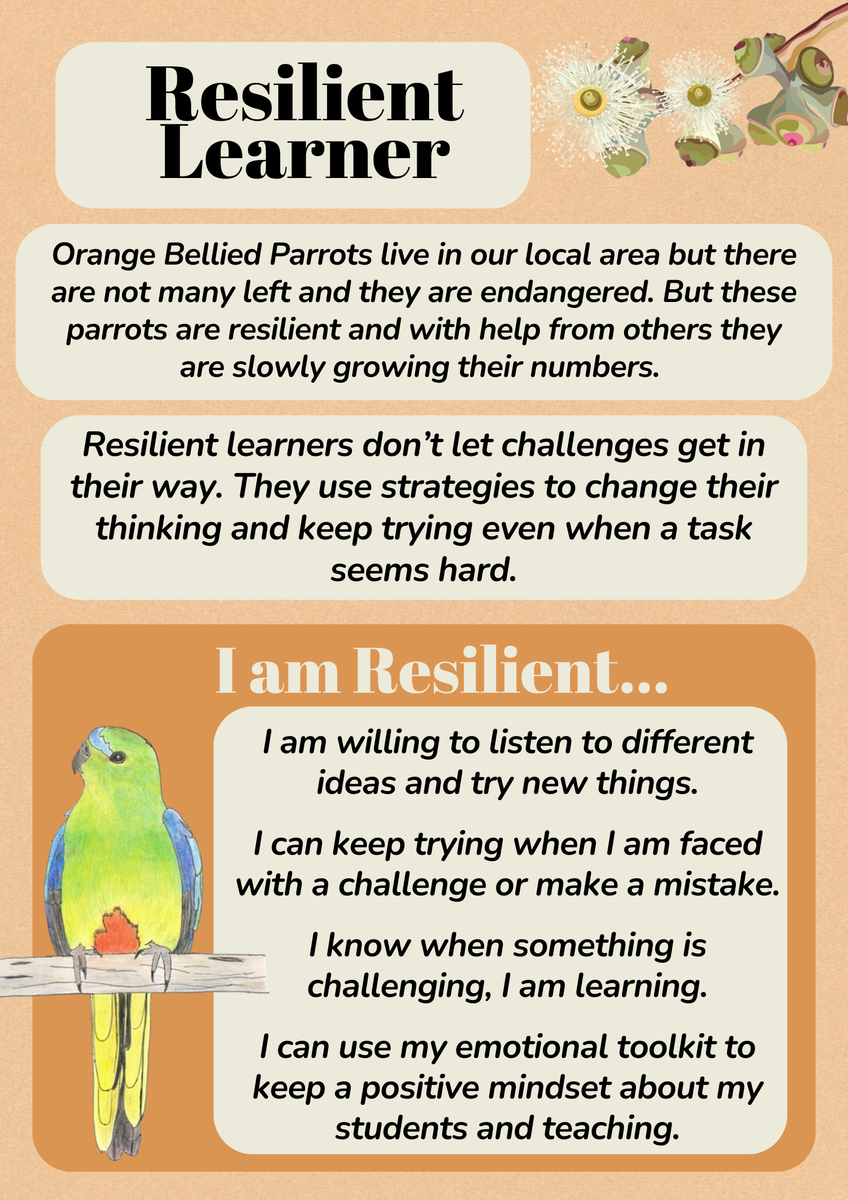
- The Resilient Orange-Bellied Parrot: Although endangered, these parrots are slowly growing their numbers with help from others. Resilient learners don't let challenges stop them; they use strategies to stay positive even when a task is hard.
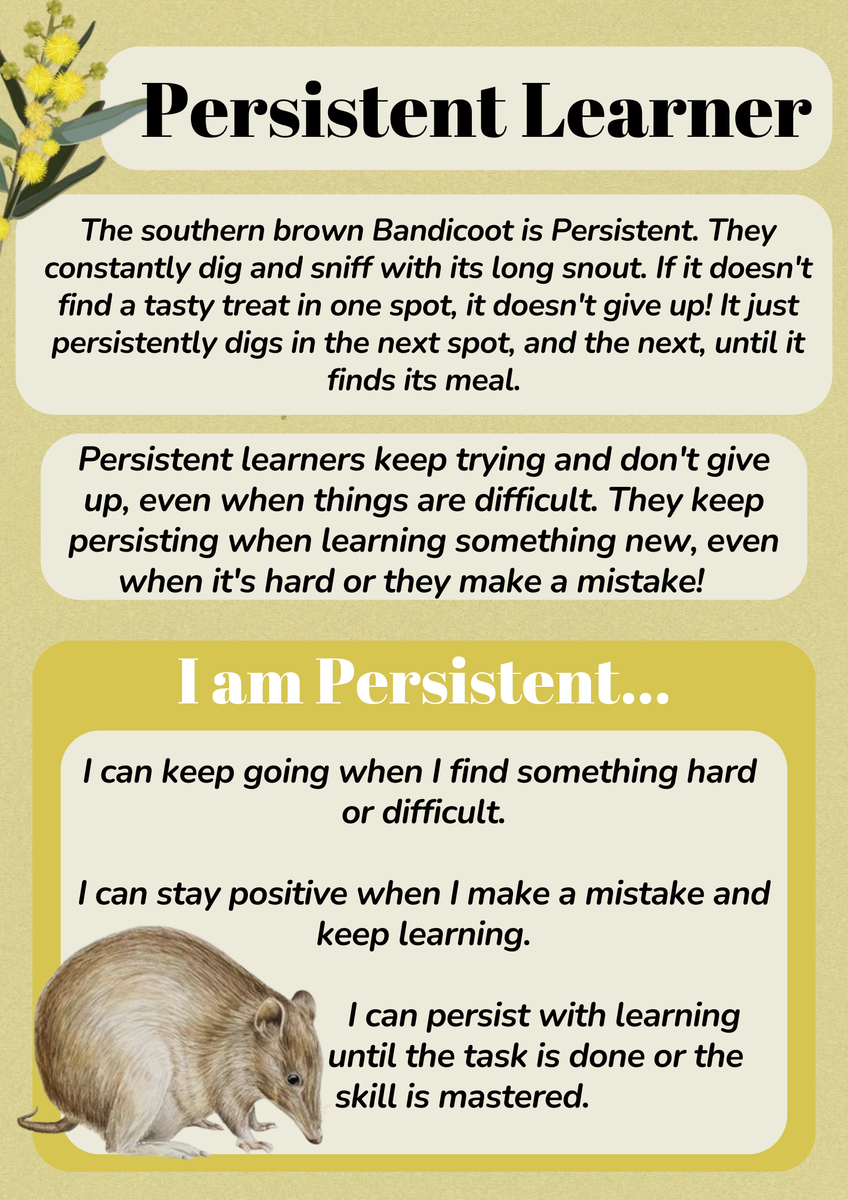
- The Persistent Southern Brown Bandicoot: If this animal doesn't find food in one spot, it doesn't give up—it just keeps digging in the next spot. Persistent learners keep trying until a task is finished or a skill is mastered.
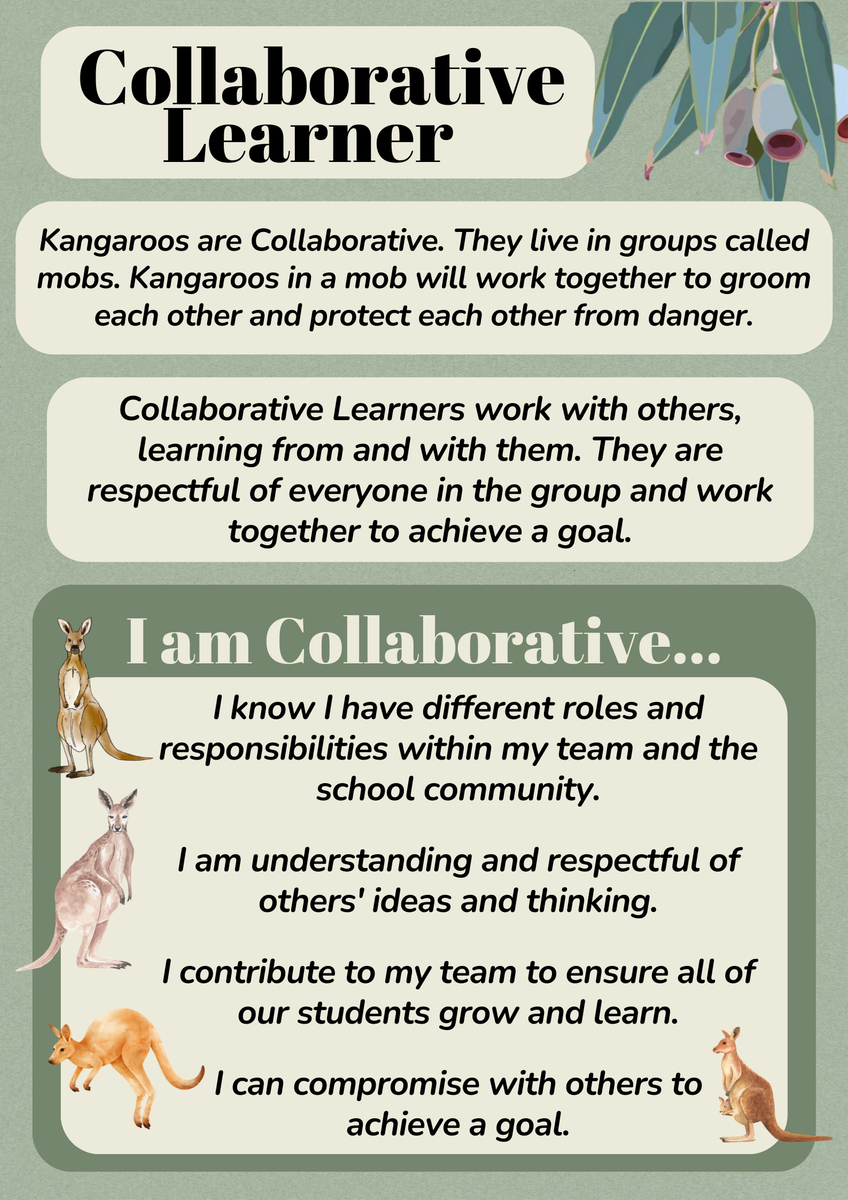
- The Collaborative Kangaroo: Kangaroos live in "mobs" where they work together to groom and protect one another. Collaborative learners work respectfully with others to achieve a common goal.
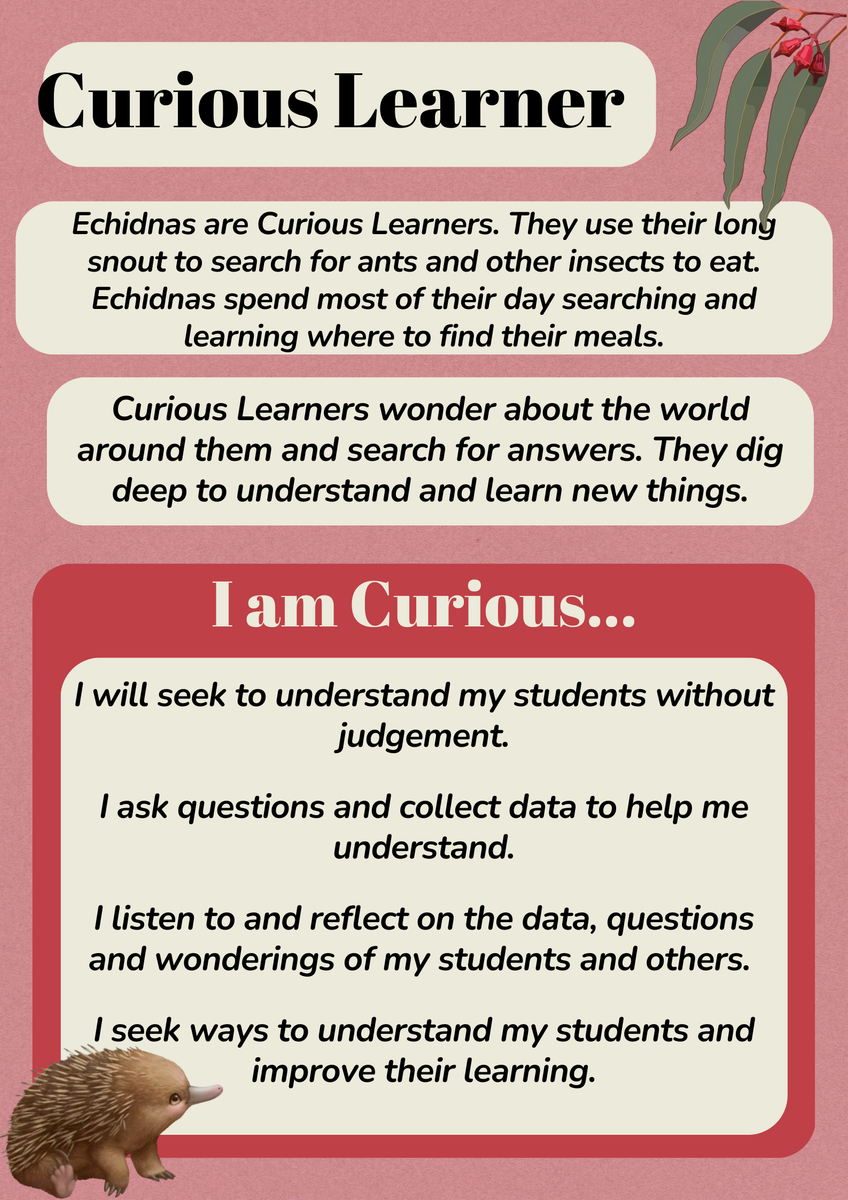
- The Curious Echidna: Echidnas spend their days digging deep and searching for ants. Curious learners "dig deep" into the world around them, asking questions and searching for answers.
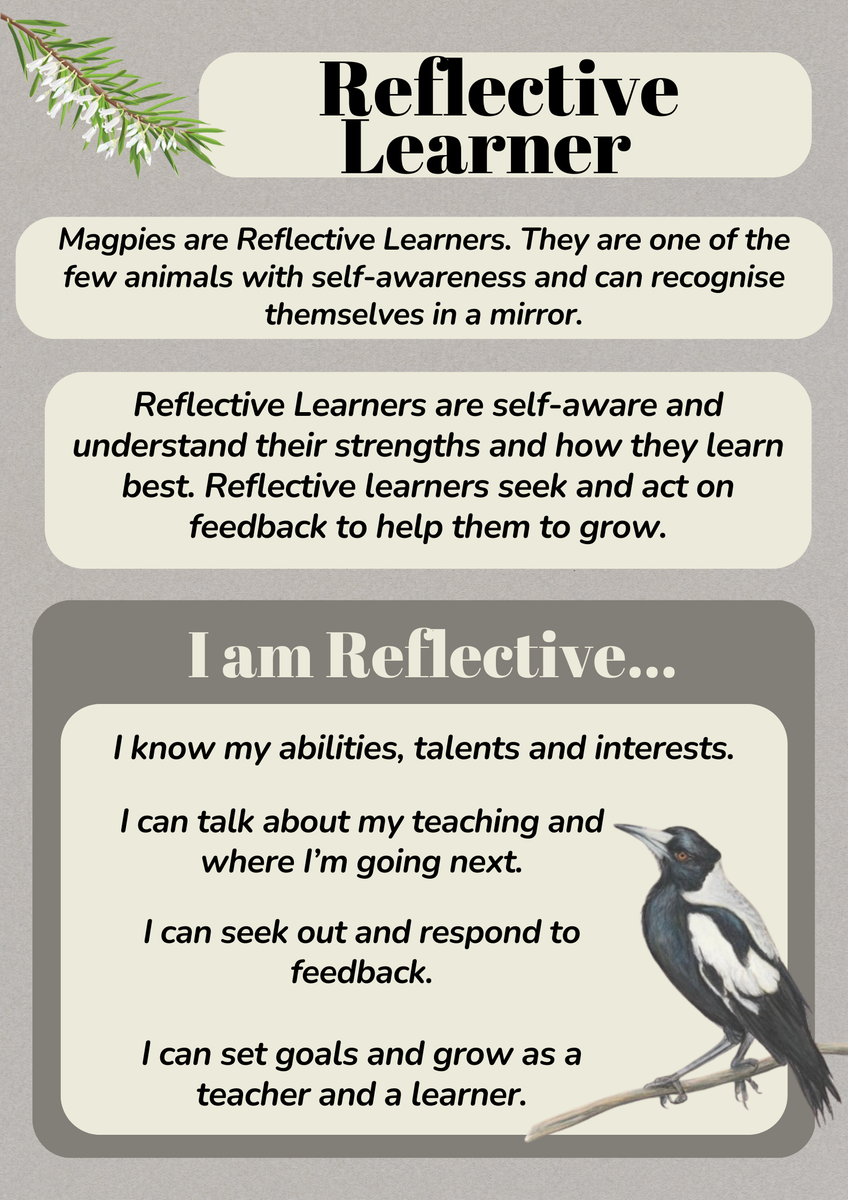
- The Reflective Magpie: Magpies are self-aware and can even recognize themselves in a mirror. Reflective learners understand their own strengths and seek out feedback to help themselves grow.
A Partnership in Learning
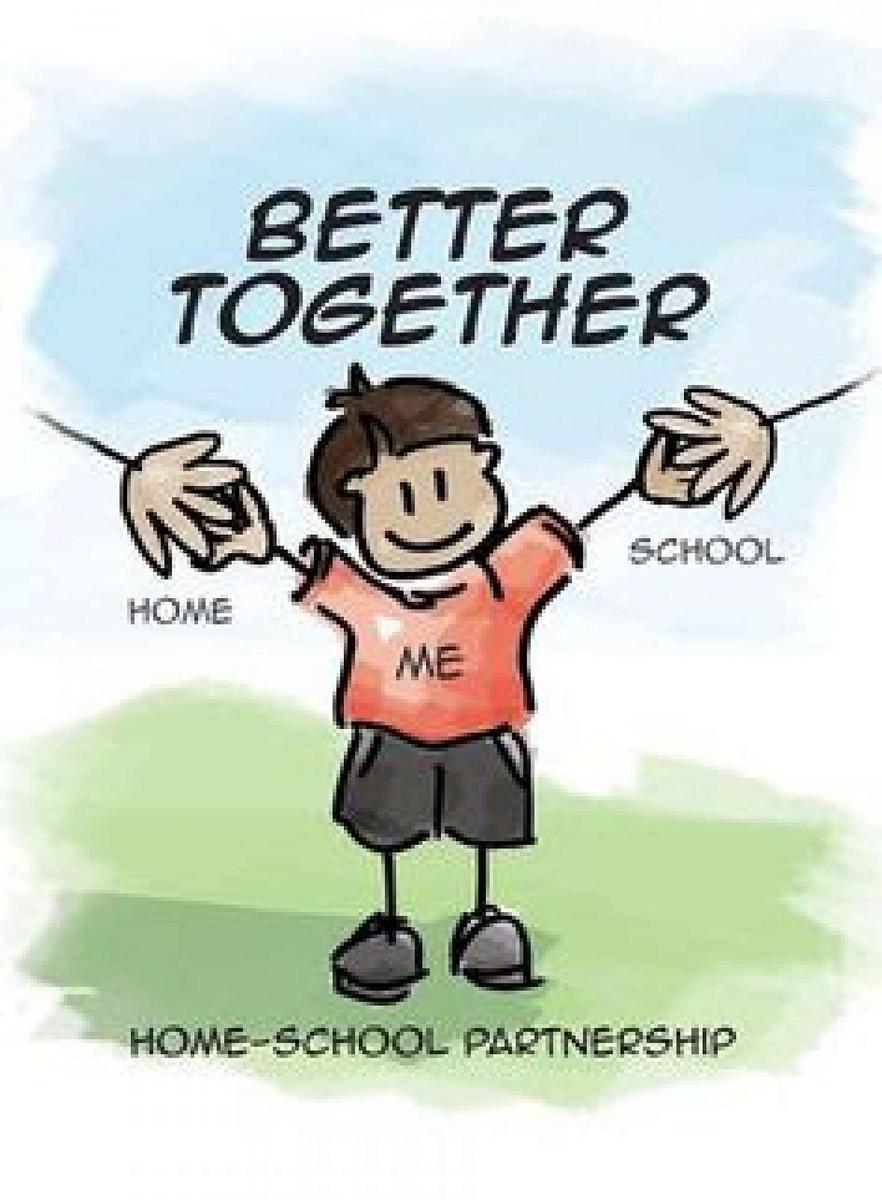
Education is a journey we take together. When we use the same language at home and school, it helps these powers grow. Here are a few ways we can partner together:
- Spot the "Power" in Action: When you see local wildlife, talk about their strengths! Ask, "How is that bandicoot being persistent right now?".
- Model "Flexible" Thinking: If plans change at home, talk through how you are being like the Eastern Curlew—staying open to new ideas and changing your mind to find a better way.
- Celebrate "Marvellous Mistakes": When a child faces a challenge, remind them of the Orange-Bellied Parrot. Encourage them to use their "emotional toolkit" to keep trying even when things feel difficult.
- Goal Setting Together: Just as our teachers set goals to grow, you can work with your child to pick one Learning Power to focus on for the week.