From the Principal
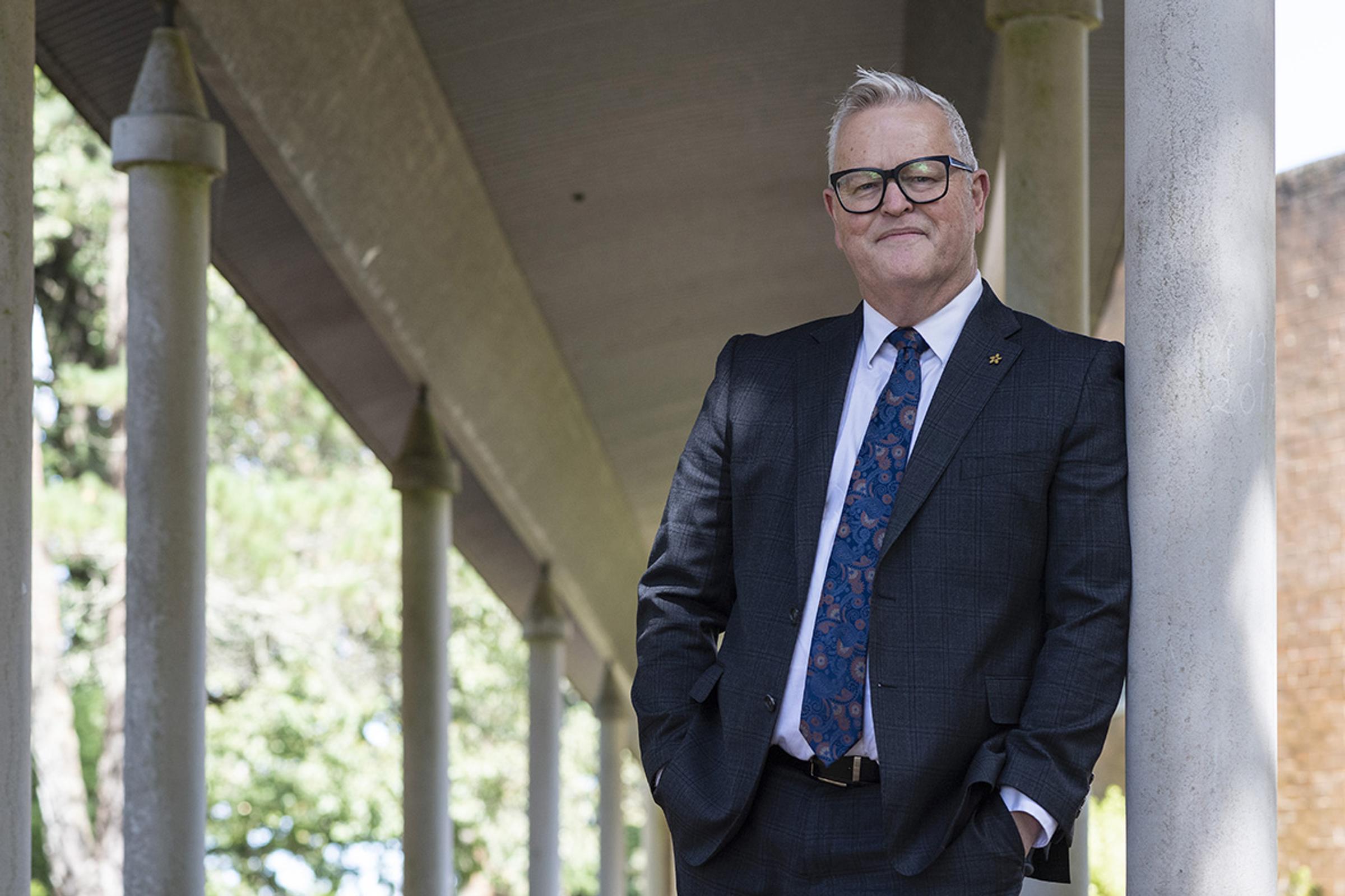
Dear Blue Mountains Grammar School Families,
Education, Formation, and the Question We Cannot Avoid
In the past week, I have had the opportunity to speak at several school gatherings, from Year 7 Icebreakers to our Junior School Parent Evenings and the Scholarship Testing Morning. The audiences have varied, but one idea kept returning as I spoke: the importance of distinguishing between education and formation. These two words sound like companions, and indeed they should be. But they are not identical. The more time I spend with young people, the more convinced I am that failing to draw this distinction leads us to misunderstand why a school like Blue Mountains Grammar School exists.
Education: necessary, noble, but not enough
Education, that is, the transfer of knowledge, the development of skills, and the pursuit of intellectual excellence, is an unquestionable good. We should never downplay its value. Yet we can too often slip into the assumption that if a young person knows enough, if we fill their minds with the right answers, then the rest will take care of itself.
But knowledge alone does not teach a young person what or how to love. It does not tell them who to trust, what is worth giving themselves to, or how to stand firm when life becomes complex or, at worst, seemingly unbearable.
C.S. Lewis saw this clearly when he observed that “education without values…seems rather to make man a more clever devil.” His point was not to critique education, but to remind us that intellect without orientation can become unanchored power. A young person may be brilliantly educated and yet feel profoundly unsure of who they are or who they are becoming.
Formation: the slow, intentional work of becoming
Formation concerns itself with deeper questions like “What kind of person am I becoming? What shapes my desires? What story am I living within?”
James K.A. Smith famously argues that humans are not merely thinking beings but desiring beings, guided not only by what we know, but by what we love. Formation, therefore, is the shaping of those loves toward what is good, wise, and life-giving.
This is why a student can excel academically and yet struggle to navigate disappointment. Or speak eloquently about justice while lacking the habits required to act justly. The intellect is developed, but the inner life may still be searching for coherence.
A Christian vision of the whole person
As an Anglican school, our commitment to formation is grounded in the belief that every person is made in the image of God, created with worth, potential, and dignity. This conviction leads us to see each student not merely as a receptacle for knowledge but as a whole person whose character, agency, and moral imagination deserve careful attention.
The Bible speaks of this integrated view of the person: “Above all else, guard your heart, for everything you do flows from it” (Proverbs 4:23), and “Be transformed by the renewing of your mind” (Romans 12:2). It is not simply the mind or the heart that matters, but the whole person, renewed and growing.
This holistic outlook does not exclude those of different faiths or none at all. Rather, it invites every member of our community into a deeper reflection on the purpose of education and the shape of a meaningful life.
What sets us apart
This commitment to formation sets a school like ours apart. Many schools educate brilliantly. Fewer intentionally ask the question about formation. At BMGS, we view young people as more than “brains on sticks.” They are not yet fully formed, and of course, neither are we. But they are, from the beginning, deeply valued because they are made in the image of God.
The psychologist Haim Ginott once wrote a line that has stayed with me for many years:
“My request is this: Help your children become human. Your efforts must never produce learned monsters, skilled psychopaths or educated Eichmanns. Reading, writing, and arithmetic are important only if they serve to make our children more human.”
I have not included the entire reflection here; some parts could be distressing to some in our community. If you wish to explore it further, you can Google Haim Ginott’s statement, “I Am Suspicious of Education.”
Ginott’s point, though deliberately confronting, echoes a truth many of us instinctively know: education must serve something deeper. Knowledge requires a moral and spiritual frame. Skills require purpose. Achievement requires identity. And formation is the bridge that connects education to the flourishing of a whole person.
As we embark on another year filled with academic pursuits, new knowledge, new experiences, and new challenges, I offer this hope: that when our students reach the end of the year, they will not simply know more:
I hope they will know themselves more.
I hope they will have asked deeper questions about the gifts they have been given and how they might use them.
I hope they will be clearer about the kind of person they are becoming.
This matters most within the wider, richer picture of their formation, the picture of a young person learning not only what to think, but who they should be and how to respond to the world around them with wisdom, courage, humility, and compassion.
Perhaps this is why, in the end, we feel so honoured to walk beside you in the formation of your children. The calling to educate, in the fullest sense of the word, is not merely professional. It is moral. It is relational. It is eternal. The shaping of a young person’s heart for others, imagination, character, and sense of belonging is work that reaches beyond the classroom.
And ultimately, I hope that in this process they discover not only who they are, but whose they are - that they are held, known, and deeply valued by the One in whose image they are made.
Warm regards
Steven Coote
Principal
This document has been reviewed for spelling and grammar. Please note that as such, it may identify some content as being generated by AI.