
Teens & Screens
Digital Habits - tips for parents/carers

Teens & Screens
Digital Habits - tips for parents/carers
AI chatbots and companions designed to simulate personal relationships are growing in popularity, but they pose some very serious risks.
READER WARNING: The content below includes references to self-harm, suicide and sexual abuse.
AI companions are chatbot apps powered by artificial intelligence, designed to simulate personal relationships through human-like conversations. The conversations can be via text or spoken word. The chatbots adapt to inputs from users and learn to respond in ways that feel personal and realistic.
Some AI companions are created for support roles, such as personalised tutors, fitness coaches or travel planners. Others are marketed for friendship, emotional support, and even romantic relationships.
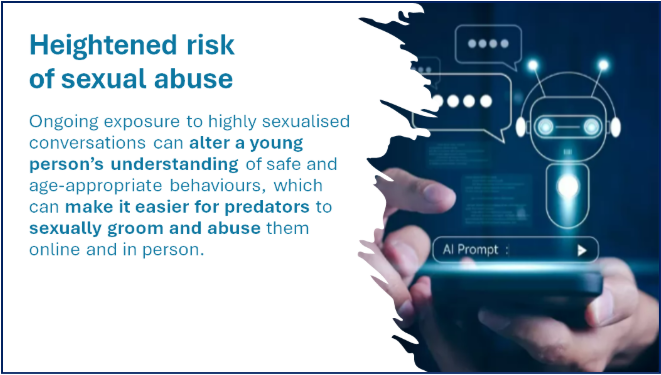
Some AI companion apps enable sexually explicit conversations, particularly through premium subscriptions. Users can often customise the behaviour or personality of the AI companions to be highly inappropriate or be led that way by the app itself. For example, they can include characters such as ‘the naughty classmate’, ‘the stepmother’, or ‘the teacher’.
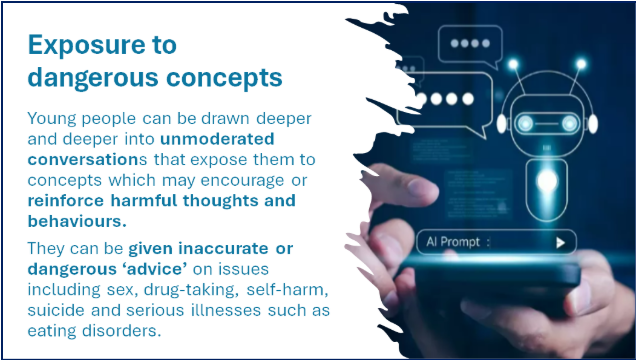
Recent reports indicate some children and young people are using AI-driven chatbots for hours daily, with conversations often crossing into subjects such as sex, self-harm and suicide. Chatbots are not generally designed with user safety in mind to have these conversations in supportive, age-appropriate and evidence-based ways, so they may say things that are harmful.
Young people are particularly vulnerable to mental and physical harms from AI companions. Their age means they are still developing the critical thinking and life skills needed to understand how they can be misguided or manipulated by computer programs, and what to do about it. The risk is even greater for those who struggle with social cues, emotional regulation and impulse control.
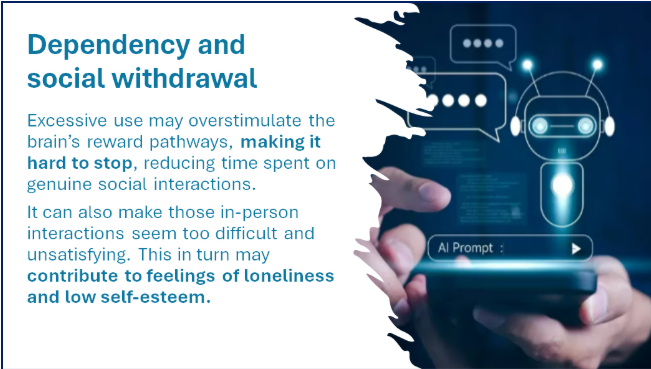
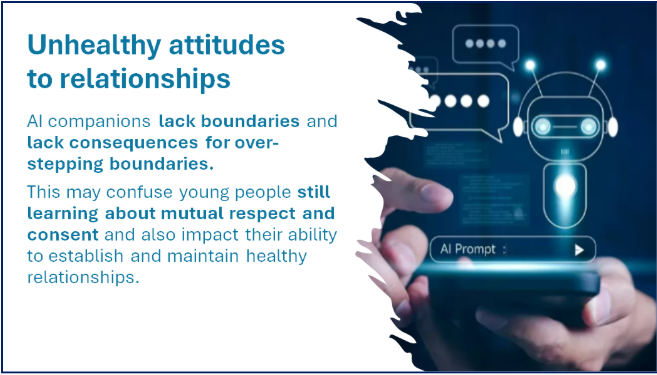
Without safeguards, AI companions can lead to a range of issues:
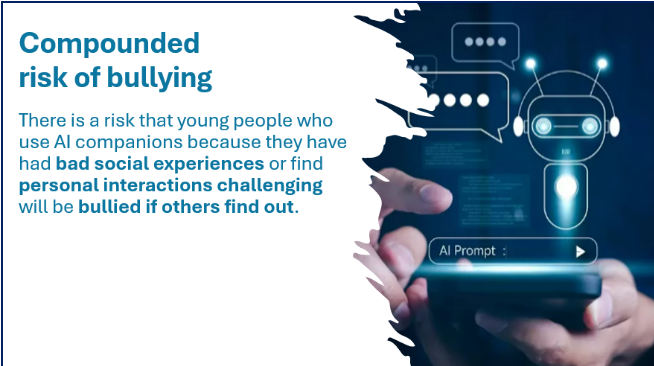
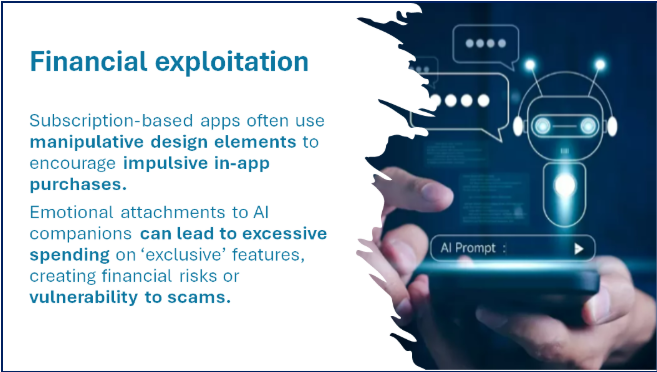
There is cause for concern – here are some headlines from around the world in recent times:

Are you worried about having conversations with your teens about AI companions?
Avoiding these hard to have conversations is not the answer.
Ask your teens about their online interactions to help them recognise the risks and remind them they are not alone.
Explain how overuse can overstimulate the reward pathways of the brain which.
Discuss the differences between artificial and genuine relationships, emphasising the importance of respect, boundaries and consent.
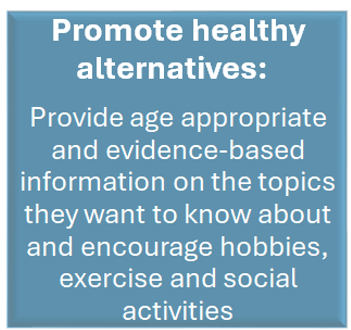
Talk about things that may prompt use, such as loneliness, boredom and stress which can lead to reliance on AI companions, then encourage them to explore healthier alternatives.
Develop critical thinking and digital literacy skills together to develop a shared but cautious approach when using AI websites and apps.
Access the eSafety’s AI companion advice for educators, with more information about the risks and benefits.
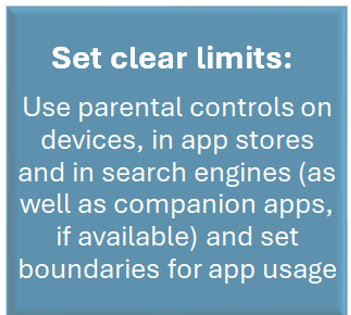
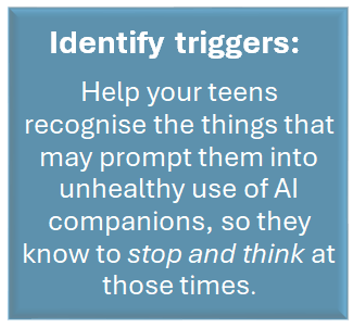
Reach out for support: Support is also available through services including:
Tanya Moran
Leader of Professional Practice
Excerpts above are taken from the Safety Commission website published on 18/2/2025:https://www.esafety.gov.au/newsroom/blogs/ai-chatbots-and-companions-risks-to-children-and-young-people