
RE News
SCRIPTURE REFLECTION
Matthew 24:37-44
The Lord is coming when we least expect.
The Gospel
The first Sunday of Advent sees the commencement of the new liturgical year. This new liturgical cycle is referred to as Year A and features the gospel of Matthew. (Year B features the gospel of Mark and Year C, that we have just completed, features the gospel of Luke.) Advent comes from the Latin word Adventus which literally means ‘coming’; it is also reflected in the Greek word Parousia, which is used to describe the second coming of Jesus. So Advent is a time of preparation and anticipation of the coming of Christ into the world that is celebrated in the Nativity at Christmas. The gospel passage chosen for today’s reading richly expresses that anticipation and need for preparation.

It may seem a little confusing that we begin our year-long exploration of the gospel of Matthew by taking a reading from chapter 24. However, the need for readiness and alertness that Jesus speaks about in relation to the coming of the Kingdom is equally suitable for a modern audience when preparing to celebrate once again the coming of Jesus into the world. Jesus is the best expression of the Kingdom that we have yet experienced and so rather than seeing the choice of this passage as a confusion, we should recognise the alignment that exists between the anticipation of the Kingdom and the anticipation of the Nativity.
The two great feasts of Christianity – the Nativity and Easter – are each preceded by a period of preparation: Advent and Lent. The emphasis of these seasons is on the mental and spiritual preparation to fully enter into one of the great mysteries of faith. In the Nativity, we celebrate God become human; God present in the world in a physical way. Advent is a time to remember the many and varied ways that God continues to be present in the world.
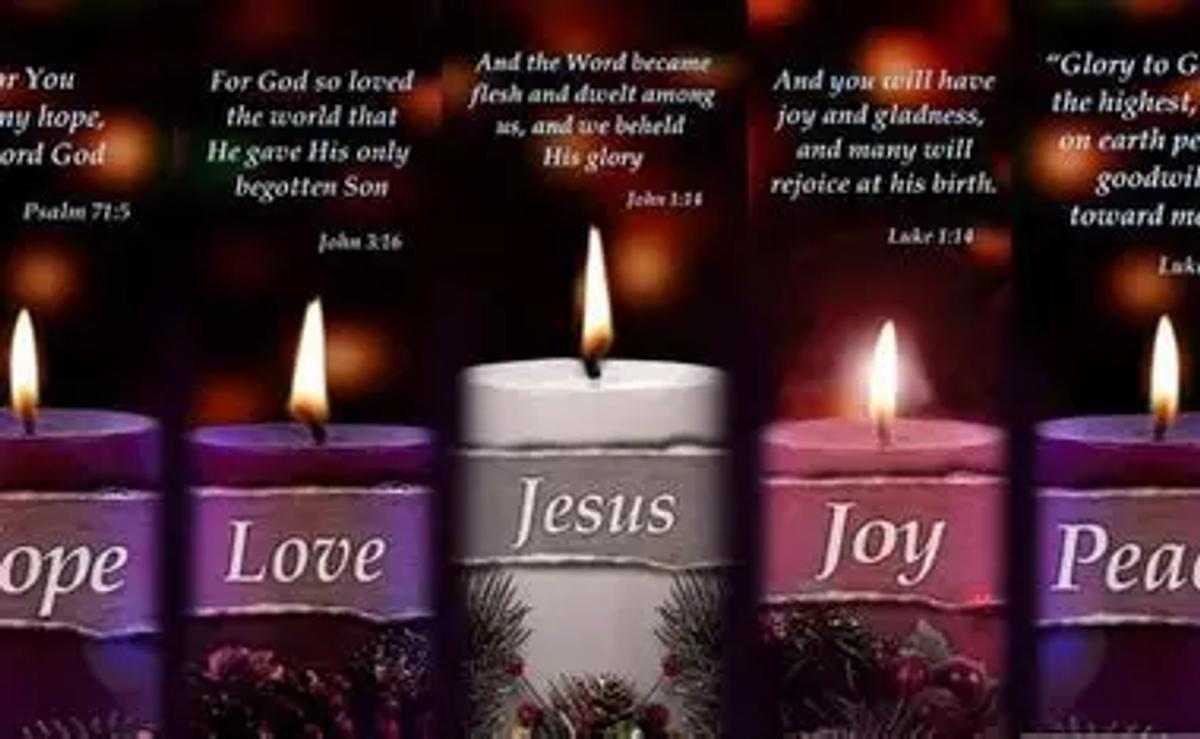
Historical Context – The Advent Wreath
One of the major symbols of the Advent season is the wreath. The encircling wreath is symbolic of God without beginning or end and the green foliage represents our hope in God. There are usually five candles in the wreath, a central white candle representing the light of Christ that came into the world and then four outside candles that are usually purple and rose coloured. The first candle is generally symbolic of Hope and Expectation. The third candle – the rose or pink candle – celebrates the Joy that is anticipated in the coming of Christ. The progressive lighting of the candles marks the journey towards the Nativity.
By Greg Sunter
Sacrament of Reconciliation
Please be aware that if you wish for your child to receive the next year, they will need to enrol in the Parish Sacramental Program. While the school provides learning about our faith and the Sacraments, children must be formally enrolled and attend the program through St John Vianney’s Parish in order to receive the Sacrament.
The Parish will be holding an information session on Tuesday 2nd December 2025, with two available times: 10.00am or 7.00pm.
Enrolments for the Reconciliation Program will close on 12th December 2025. After this date, enrolments cannot be accepted.
Families who do not enrol by the closing date will need to have their child complete the Sacrament the following year or through a program offered by another parish.
Other key dates include:
Rite of Acceptance: Saturday 7th February at 6.00pm, or Sunday 8th February at 8.30am, 10.00am, or 5.30pm Masses
Workshop: Saturday 14th March at 11.00am
Sacrament of First Reconciliation: Saturday 21st March at 11.00am
If you wish to enrol, please contact the Parish Office on (03) 9546 3831.
If you have any questions, feel free to reach out to the Parish or the school.