
Wellbeing at TPS
Talk Plan Play & Supporting Student Wellbeing During NAPLAN

Wellbeing at TPS
Talk Plan Play & Supporting Student Wellbeing During NAPLAN
Our Wellbeing Leaders, Mitch, Eli, Zoe and Ayla, have started implementing ‘Talk, Plan, Play’ to support students in having a positive and enjoyable experience in the yard. The team thoughtfully considered the type of environment that best supports regulation and play planning, and have created a relaxing and inclusive space for students to access during break times.
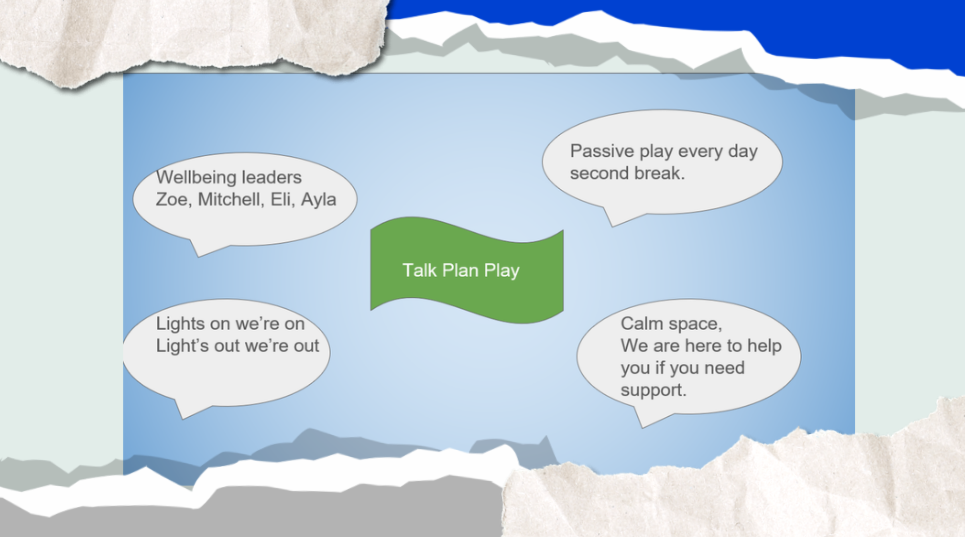
The area includes fidgets, games, books and simple play plans to help guide students who may feel unsure about what to do. It’s a wonderful option for those who would prefer a calm space to relax, reset, or plan their play before joining others.
The leaders have been introducing this structured activity during the Morning Message, and students can access the space every second break. Stay tuned for more updates at Assembly and in upcoming newsletters!
For many children, the thought of taking a test can feel confusing and sometimes a little scary. For our Year 3 students sitting NAPLAN for the first time, it may feel overwhelming. Others may seem unfazed and comfortable with the idea of participating.
It’s completely normal for children to experience a mix of emotions in the lead-up to NAPLAN. As parents and carers, your reassurance and the language you use can make a significant difference.
Dr Helen Schiele, Principal Consultant and Early Years Specialist at Independent Schools Victoria, emphasises the importance of positive messaging:
“It’s important your child knows that you will remain incredibly proud of them no matter the test results, as long as they tried their best and were able to draw upon a series of strategies to help them manage the testing space. A test should be seen as a celebration of what your child knows, understands and how they can demonstrate their thinking.”
If your child is feeling worried or anxious, here are some practical ways you can support them.
Have positive and encouraging conversations
Prioritise sleep and healthy eating
Encourage active play and limit screen time
Celebrate effort, not outcomes