Healthy Community

Thunderstorm Asthma
We have entered a period of the year where we must prepare for an uncommon, yet a potentially life-threatening event: Thunderstorm Asthma.
This is triggered by a mix of high levels of grass pollen and a certain type of thunderstorm. When exposed, the tiny particles of pollen are breathed deep into your lungs, triggering an asthma flare-up or attack.
People that have a higher chance of a sudden asthma flare-up triggered by a thunderstorm are ones who have:
- Seasonal hay fever
- Current asthma
- A history of asthma
- Undiagnosed asthma
Things you can do to lower the chance of having thunderstorm asthma:
- Use your preventer during the spring thunderstorm season
- Keep your hay fever under control/taking necessary hay fever medication
- Checking pollen levels and where possible, avoid being outside on these days
- Be prepared with scripts and necessary medicines needed.
During school hours to help protect ourselves and our students we also need to follow advice from the department:
- Act on advice and warnings from the department's Emergency Management Division associated with a potential thunderstorm asthma activity, and implement a communication strategy to inform the school community and parents or carers
- Implement procedures to avoid exposure, such as staying indoors with windows and doors closed
- Implement emergency response procedures and follow individual asthma action plans as needed.
Download the VicEmergency App to receive advice and warnings
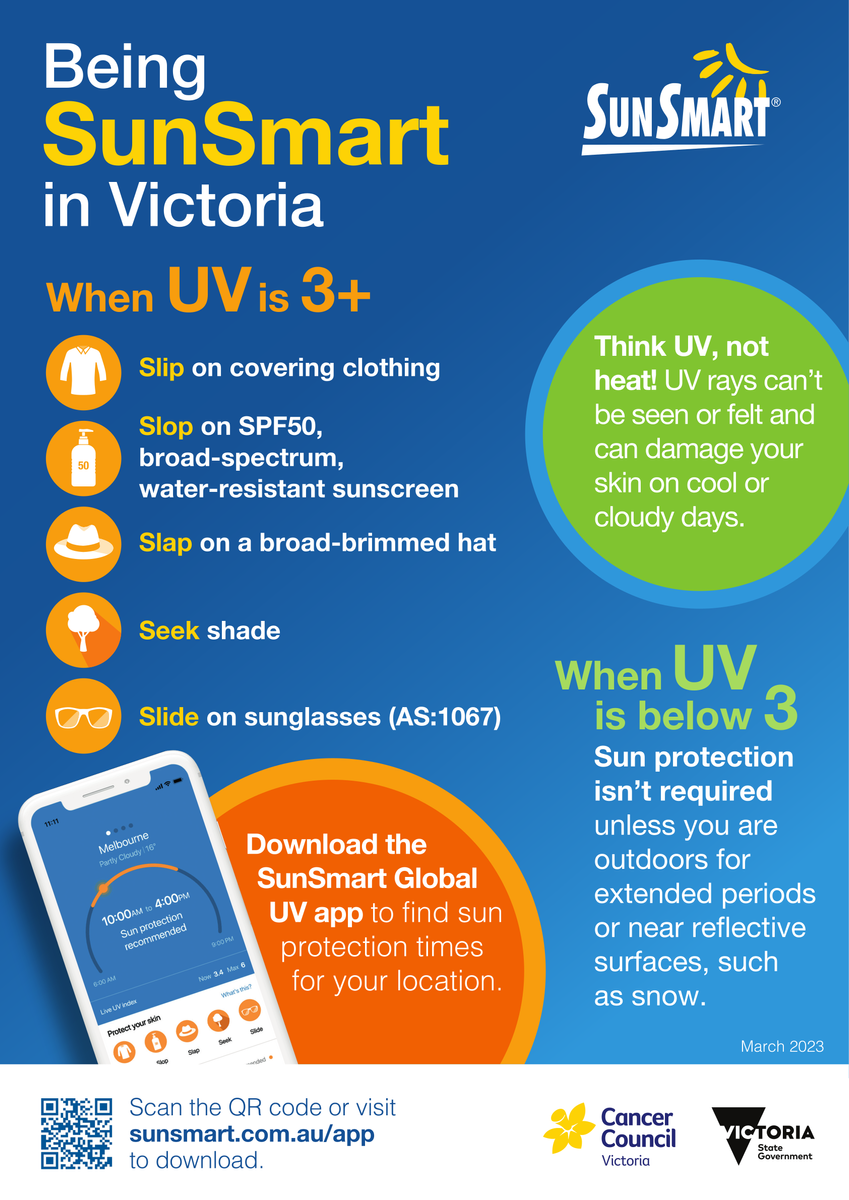
Being Sun Smart
Vaping
Smoking and Vaping is banned in and around schools
The Tobacco Act 1987 bans smoking or vaping on school premises or within 4 metres of any pedestrian access point to school premises. The smoking and vaping ban applies to:
- anyone present on school premises during and outside of school hours including students, teachers, and school visitors
- all activities that take place on school premises.
Smoking and vaping are also not permitted during school events and excursions held off school premises.
Smoking is burning something to breathe smoke into the lungs, such as a cigarette. Vaping is breathing in vapor from heated liquid.
Both smoking and vaping involve breathing in chemicals that can harm your health.
How vaping affects your child's body
Vaping can cause significant harm to your child’s body:
- Short-term it can cause vomiting, nausea, coughing, shortness of breath, mouth irritation and asthma
- Long-term it can cause lung damage, heart disease and cancers.
E-cigarettes are still being studied, but most experts think it is likely vaping will cause lung and mouth cancers.
Nicotine is a poison that can make people sick if swallowed and has been linked to the deaths of small children.
Exposing children and teens to nicotine can harm their brain development and lead to higher risk of dependence. Children and teens who use e-cigarettes are more than three times more likely to move onto smoking cigarettes.
E-cigarettes can also explode and catch fire.
Talking to your child or teen about smoking and vaping
As a parent or carer, you have an important role in protecting your child from smoking and vaping. Parent views on smoking and vaping can influence their children’s behaviours. The most important thing you can do is to talk to your child or teen about smoking, vaping and other drugs.