
RE News

Class Masses
Week | Date | Class | Chosen theme |
Term 2 2026 | |||
1 | 24 April | NO MASS | |
2 | 1 May |
5/6 M | We Are One |
3 | 8 May | 5/6 N | Mother’s Day |
4 | 15 May | 5/6 O | International Day of Families |
5 | 22 May | 3/4 W | Pentecost – Gift of the Holy Spirit |
6 | 29 May | 3/4 B | National Reconciliation Week |
7 | 5 June | 5/6 K | Friendship |
8 | 12 June | 5/6 G | Sacred Heart of Jesus |
9 | |||
10 | 26 June | Whole School Mass | Mr Mullaly Farewell |
Term 3 2026 | |||
1 | 17 July | 3/4 T | Open your heart |
2 | 24 July | 1/2 C | Grandparents Day |
3 | 31 July | 1/2 B | Be the Light |
4 | 7 August | 1/2 D | St John Vianney Feast Day |
5 | 14 August | 1/2 S | Assumption of Mary |
6 | 21 August | 1/2 M | Peace In God’s Family |
7 | 28 August | 0 W | God Loves me |
8 | 4 September | 0 C | Father’s Day |
9 | 11 September | 0 L | God’s Creation |
10 | 18 September | 3/4 AL | Jesus the Good Shepherd |
Term 4 2026 | |||
1 | 9 October | 3/4 L | Mission of the Apostles |
Scripture Reflection
The Twelve are sent on a mission.
Gospel Reflection
The portrait of Jesus that is painted by the gospel of Matthew is as the one who has come to fulfil the Jewish tradition. This is sometimes incorrectly interpreted as being anti-Jewish but that is not the case at all. The community for whom Matthew was writing were Jewish Christians and they saw the pathway taught by Jesus as the best way to live out the Jewish tradition. It is in this context that today’s gospel passage must be considered. The way the commissioning of the Twelve begins is very significant: ‘When Jesus saw the crowds he felt sorry for them because they were harassed and dejected, like sheep without a shepherd.’ This is the gospel writer describing the people of Israel as a whole – harassed and dejected and without a shepherd. For the Matthew community, Jesus was that shepherd the Jews needed. But Jesus also knew that one person alone could not bring about the change within Judaism that was required. He chose the Twelve and named them as apostles (those who are sent) to continue the work that he had begun.
The gospel writer describes Jesus as giving the apostles ‘authority’ over unclean spirits. For the Matthew community, authority was a defining question. They had recently been expelled from the Jewish synagogues and the authority of Jesus had been called into doubt. Yet, for this community, real authority lay with Jesus and those whom he sent out to do his work. Throughout this gospel, Jesus is described as exhibiting ‘authority’ so as to reaffirm to the original community that they were right in choosing to follow the way of Jesus and not bend to the authority of the Jewish leaders who were oppressing them.
Scriptural context – The House of Israel
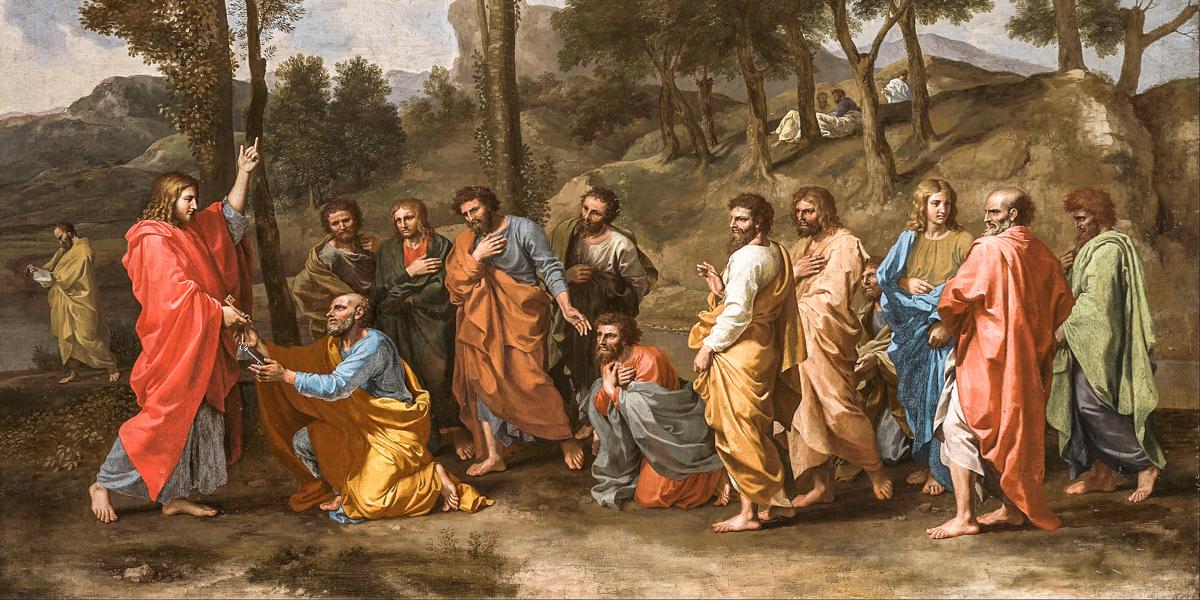
The gospel passage has Jesus telling his newly commissioned apostles to go only to the House of Israel, not to go to Samaritans or into pagan territory; the ministry of the apostles is only to be addressed to Jews. But this is the first part of a two-phase ministry. At the conclusion of the gospel, the Risen Jesus directs his followers to ‘make disciples of all the nations’. For the Matthew community, (unlike the community of Luke) it was the House of Israel that needed renewal first before the message of Jesus could be taken to gentile and pagan communities.
Have you thought? – The labourers are few
This passage is often used as the basis for sermons, conversations or even marketing about vocations – vocations to religious life as well as lay vocations. The image of a rich harvest with not enough labourers to reap the harvest is a powerful one. In the Western world in particular today it is very true of priestly and religious vocations. However, it is equally true of lay vocations. Too few people are prepared to ‘own’ their faith and live the message of the gospel in their day to day work and interactions with others. In what way are you a labourer in the harvest?
By Greg Sunter